Artwork
The Infant Jesus Sleeping
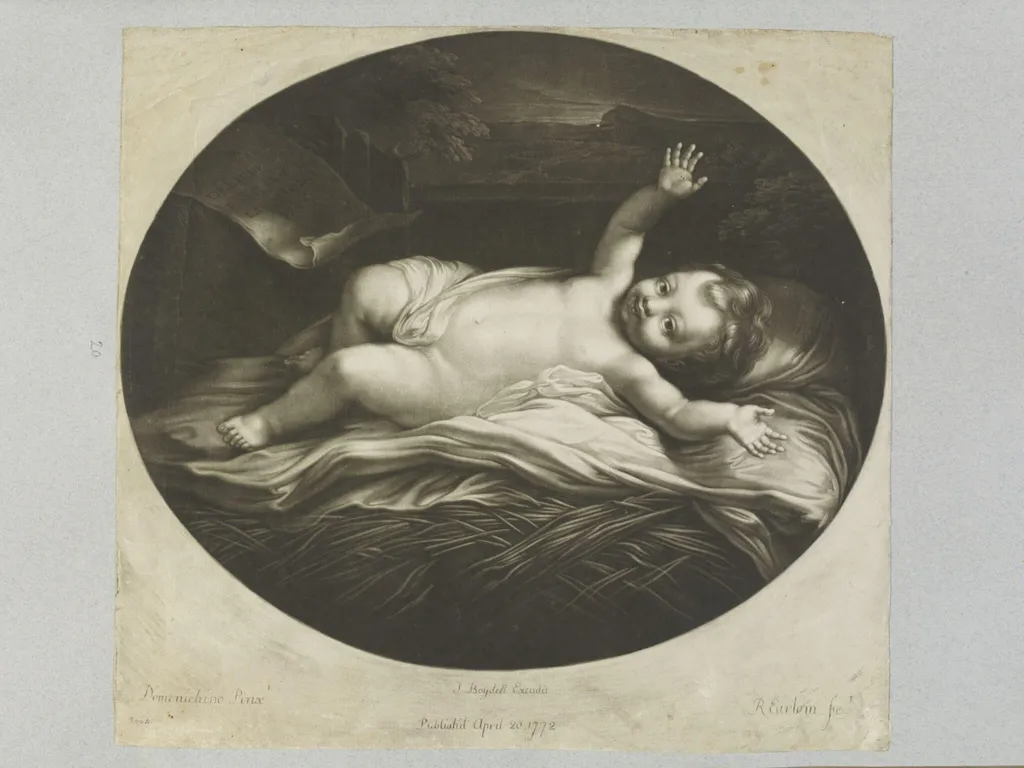
The Infant Jesus Sleeping is a print by Richard Earlom. It is held in the collection of the Victoria and Albert Museum.
About this work
Overview
This print, created by Richard Earlom in 1850, reproduces a composition originally by Domenichino. Executed as an open-letter proof on paper, it captures a quiet moment of the infant Jesus at rest. The work is not an original painting but a carefully rendered translation of an earlier image, emphasizing the quietude and vulnerability of the subject through tonal contrast and delicate line work.
Subject & Meaning
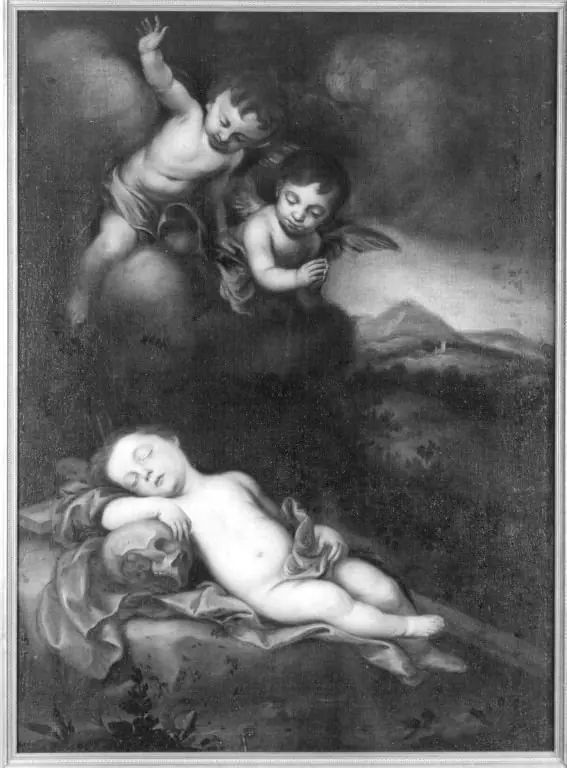
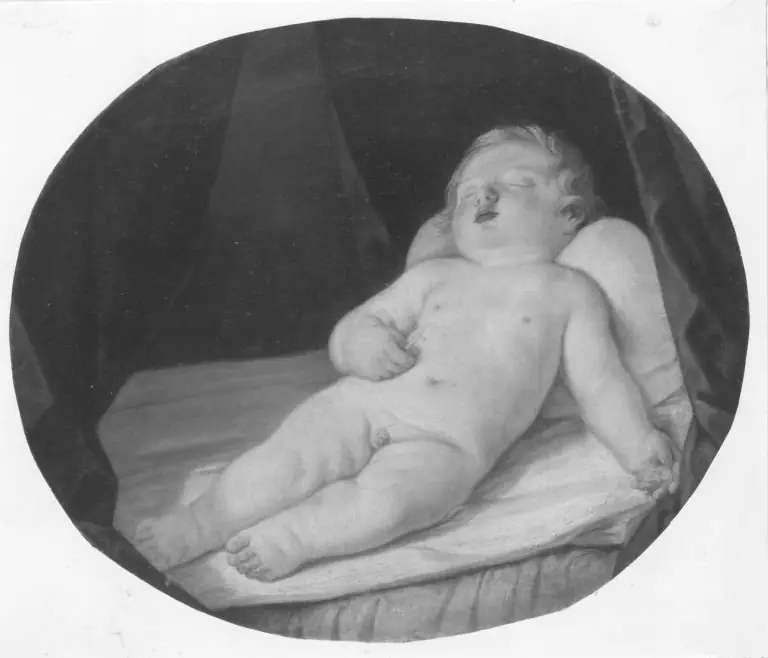
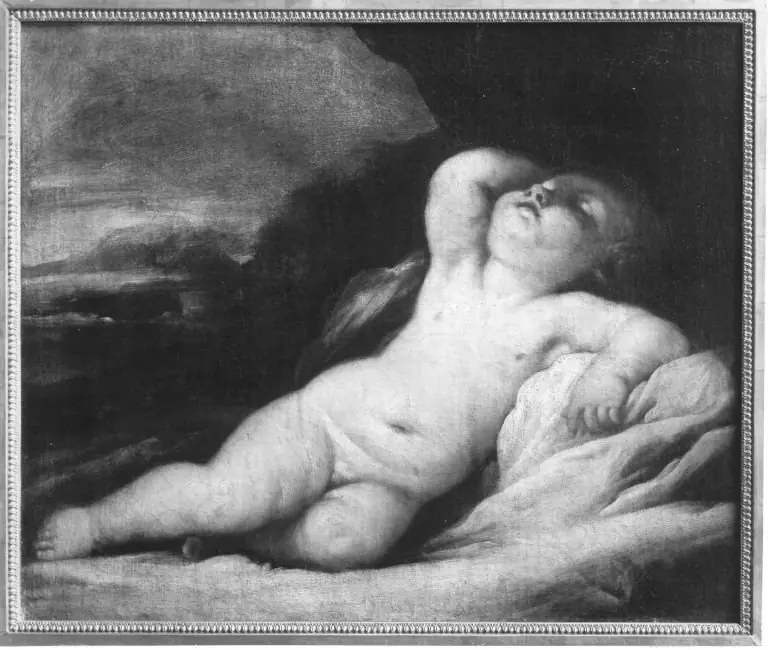
The infant Jesus is depicted asleep on his back, one arm raised gently above his head, suggesting both innocence and human fragility.
The infant Jesus is depicted asleep on his back, one arm raised gently above his head, suggesting both innocence and human fragility. Wrapped in a soft, loosely draped cloth, his form conveys tenderness and stillness. The absence of other figures or overt symbolism invites contemplation of childhood purity, aligning with devotional traditions that emphasize Christ’s humanity alongside his divine nature.
Technique & Style
Earlom employed chiaroscuro to model the child’s form, using deep shadows to isolate the softly lit skin against a dim, indistinct background. The contrast enhances the three-dimensionality of the body while drawing focus to the serene facial expression. The print’s delicate lines and graded tones reflect the artist’s skill in translating painterly effects into the medium of etching and mezzotint.
History & Provenance
The print was produced in 1850 as part of Earlom’s efforts to reproduce significant European paintings for wider audiences. It derives from a composition by Domenichino, a Bolognese painter of the early 17th century, whose works were admired for their classical harmony. Earlom’s version preserves the original’s emotional tone while adapting it to the technical constraints and aesthetic preferences of mid-19th-century printmaking.
Context
In the 19th century, reproductive prints like this one played a key role in disseminating religious imagery beyond church walls and elite collections. Earlom’s work responded to a growing public interest in accessible art, particularly subjects with devotional resonance. The choice of a sleeping Christ child reflects broader cultural ideals of domestic piety and the sanctity of childhood in Victorian religious thought.
Legacy
Though not widely exhibited today, this print exemplifies the role of reproductive engraving in shaping visual culture during the 19th century. Earlom’s technical precision helped preserve the emotional gravity of Domenichino’s original for generations of viewers who would never see the painting. It stands as a quiet testament to the enduring appeal of serene, intimate religious imagery.
Artist & collection