Artwork
Endpaper with Birds
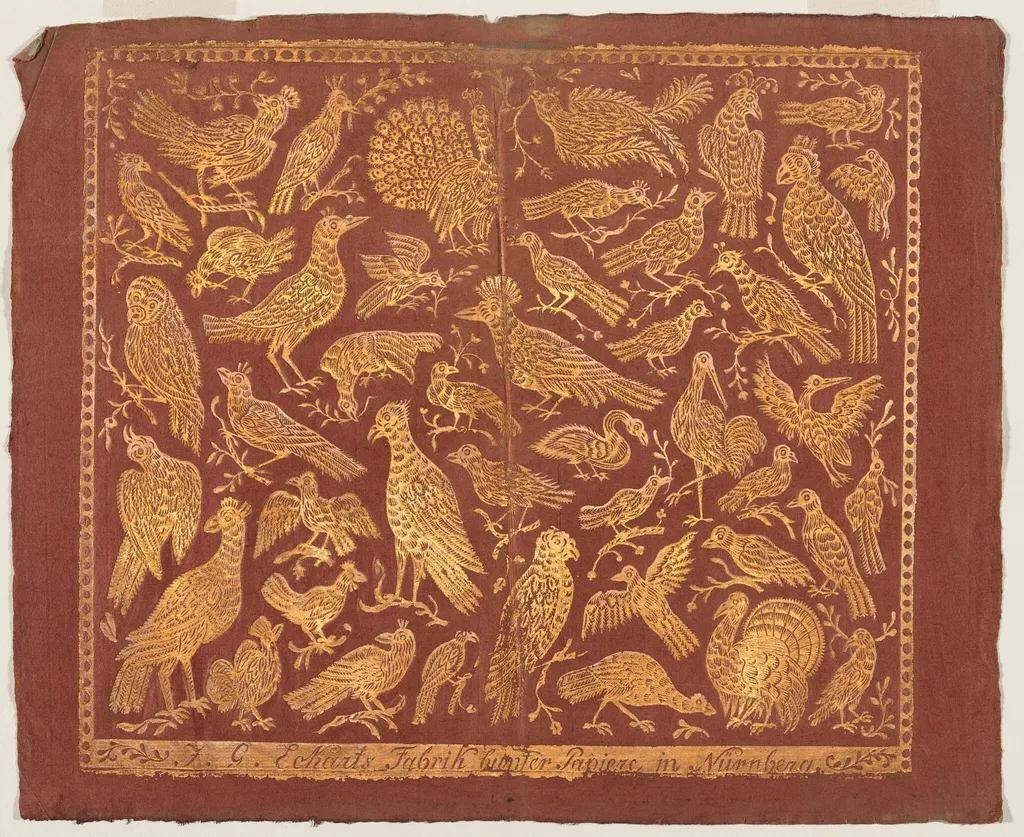
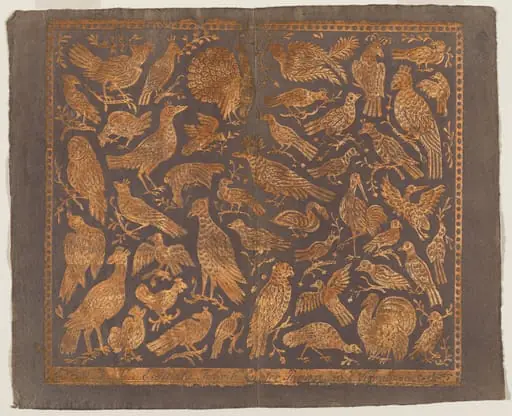
Endpaper with Birds is an ink print by the Romanticist artist Johann Georg Eckart. It dates from 1827 and is held in the collection of the National Gallery of Art.
About this work
Overview
The composition is sparse yet deliberate, with no landscape or architectural elements—only birds in varied postures against a uniform background.
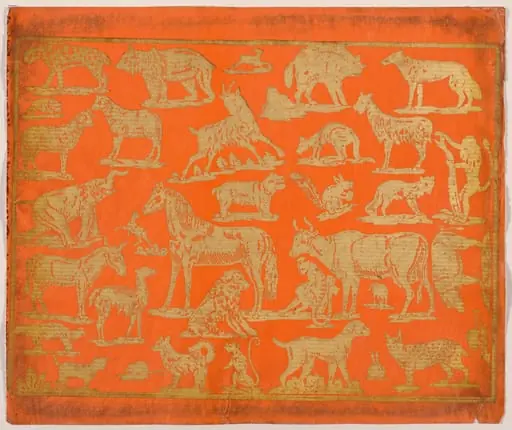
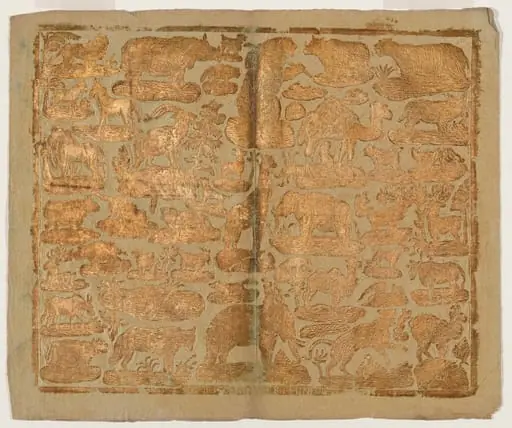
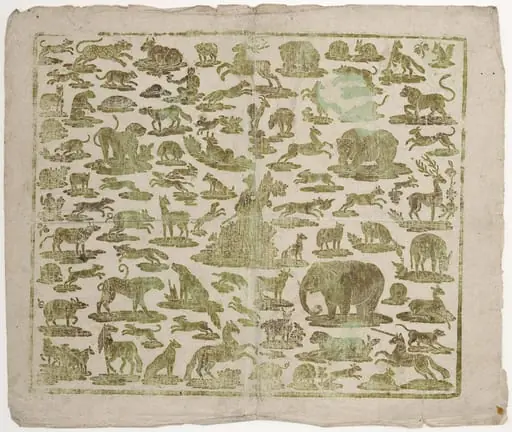
Created in 1827 by Johann Georg Eckart, this woodcut serves as an endpaper, originally intended to line the inside cover of a book. It features a series of birds rendered in gold metallic ink on a hand-washed red paper ground. The composition is sparse yet deliberate, with no landscape or architectural elements—only birds in varied postures against a uniform background. The contrast between the warm red and luminous gold gives the impression of movement and life.
Subject & Meaning
The birds depicted are diverse in form and activity—some perched, others in flight or foraging. Their variety suggests an observation of natural behavior rather than symbolic representation. No narrative or allegorical context is evident; the focus remains on the visual rhythm and variety of avian forms. The absence of text beyond the artist’s signature reinforces the work’s role as a decorative, non-narrative element within a bound volume.
Technique & Style
Eckart employed a woodcut technique, carving lines into a wooden block to create the bird forms, then printed them using gold metallic ink. The simplicity of the design—clean outlines, minimal detail—relies on the brilliance of the metallic pigment to command attention. The hand-washed red paper, with its subtle texture and uneven tone, enhances the luminosity of the gold, making the birds appear to float or glow against the dark ground.
History & Provenance
The work dates from 1827, a period when decorative book arts were still valued in European publishing. As an endpaper, it was likely part of a limited-run or luxury edition, though no specific book has been definitively linked to it. Its survival suggests it was preserved for its aesthetic quality rather than its functional role. The artist’s signature at the bottom confirms authorship but offers no further contextual clues about its original commission.
Context
In early 19th-century Germany, woodcuts were commonly used for book illustration and ornamentation, often in combination with metallic inks for special editions. Eckart’s work reflects this tradition, aligning with the era’s interest in combining craftsmanship with natural observation. While not part of a major artistic movement, the piece exemplifies the quiet sophistication of bookbinding arts during a time when print culture was expanding rapidly.
Legacy
Though not widely exhibited or studied, the work remains a quiet example of the intersection between printmaking and book design. Its preservation highlights the enduring appeal of handcrafted book elements in an age of industrial reproduction. The piece contributes to understanding how artists like Eckart elevated functional book components into objects of visual quietude, valued for their subtlety rather than spectacle.
Artist & collection