Artwork
Monument of Philopappos
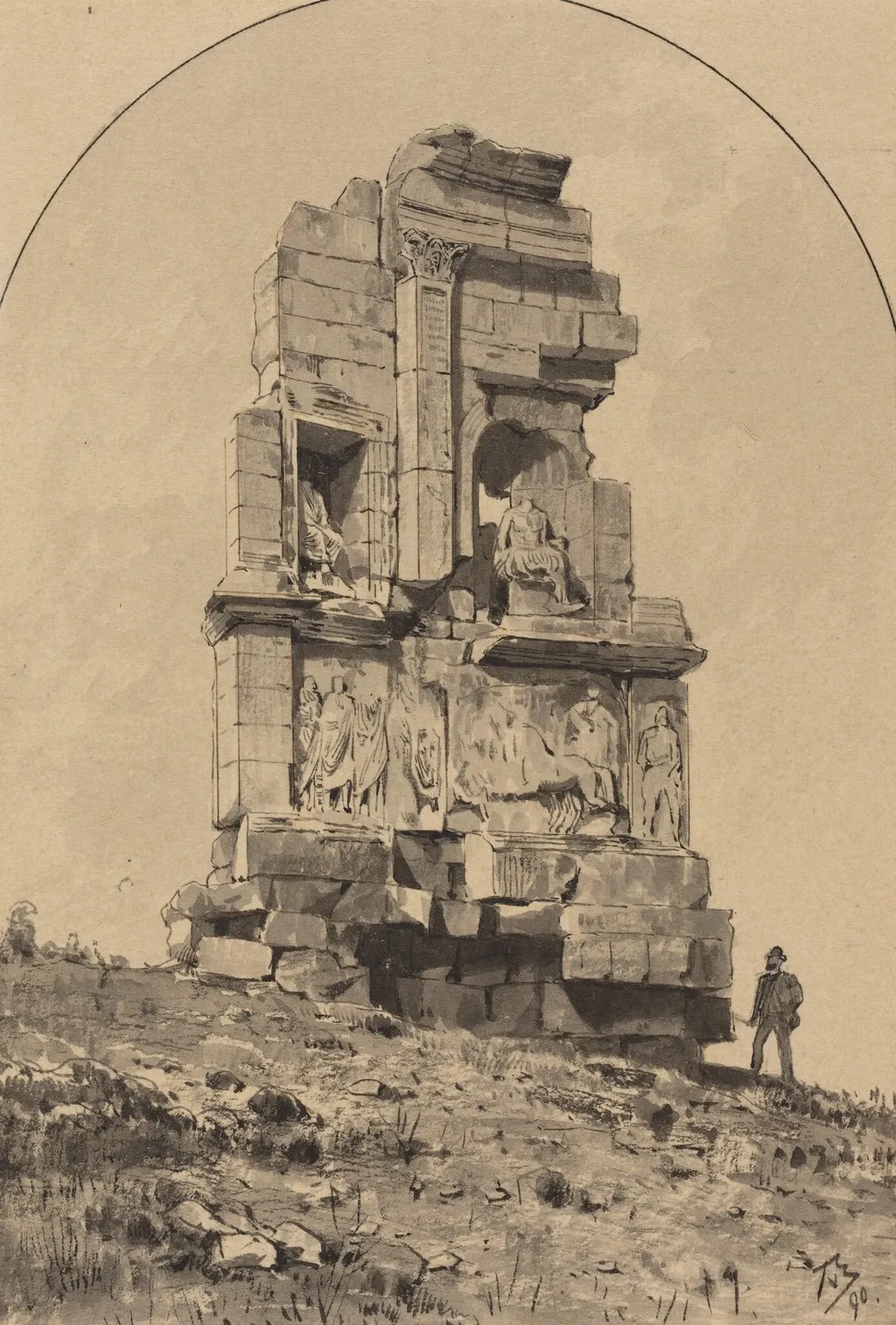
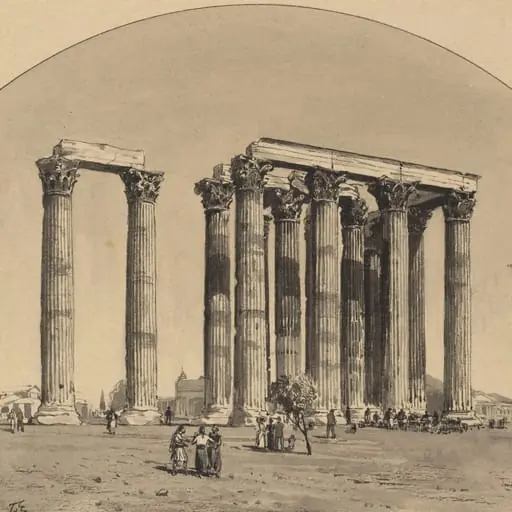
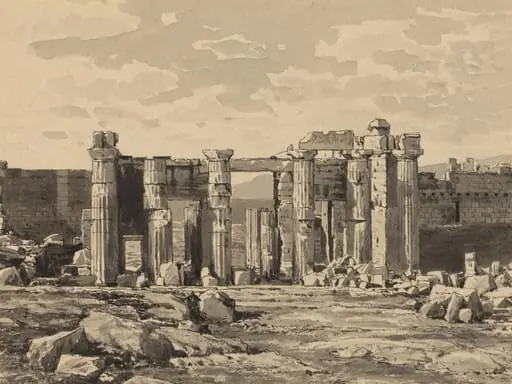
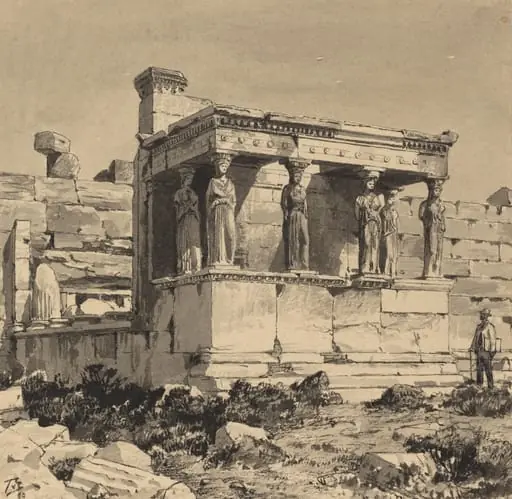
Monument of Philopappos is an ink drawing by the Impressionist artist Themistocles von Eckenbrecher. It dates from 1890 and is held in the collection of the National Gallery of Art.
About this work
Overview
The work titled *Monument of Philopappos* dates from 1890 and is executed in pen and black ink with watercolor applied over a black chalk ground. Classified as a drawing, it reflects the hand of Themistocles von Eckenbrecher, a German artist whose career unfolded in the latter half of the nineteenth century.
Technique & Style
Von Eckenbrecher combined drawing and painting by first laying down a dark chalk base, then rendering the composition with fine ink lines and delicate watercolor washes. This layered approach yields a tonal depth characteristic of late Romantic drawing, where atmospheric effects and expressive line intersect to convey a sense of historic gravitas.
Context
Although German by nationality, von Eckenbrecher was born in Athens, a circumstance that informed his lifelong interest in Mediterranean subjects. He earned a reputation for rendering natural landscapes and seascapes, aligning his practice with the Romantic tradition that emphasized the sublime qualities of nature and historic architecture.
History & Provenance
Created in 1890, the drawing entered the market through the artist’s usual channels for works on paper, though specific ownership records are limited. Its survival in good condition attests to the durability of the mixed media technique and to the continued interest in Romantic-era renderings of historic sites.
Artist & collection

Artist
Karl Paul Themistokles von Eckenbrecher (17 November 1842, Athens – 4 December 1921, Goslar) was a German landscape and marine painter, in the late Romantic style.

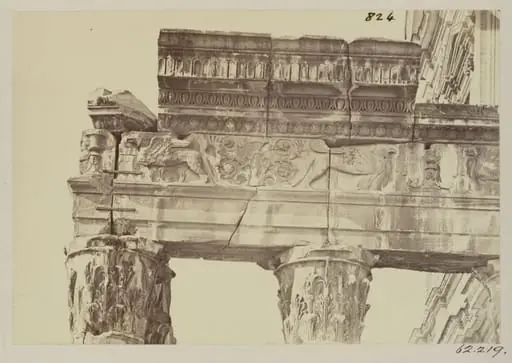 Sculptures - Frieze of the Temple of Antonius and Faustina, A.D. 138.
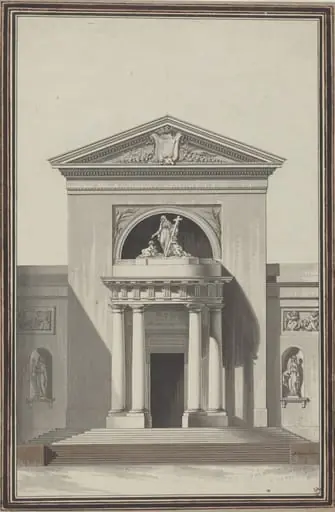 Facade for a Church with a Sculpture Representing Faith
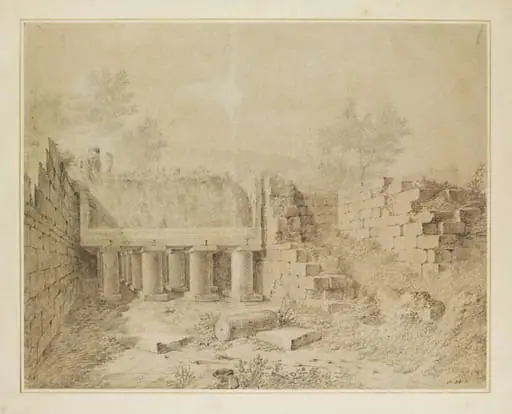 Figures among Classical Ruins, probably in Sicily
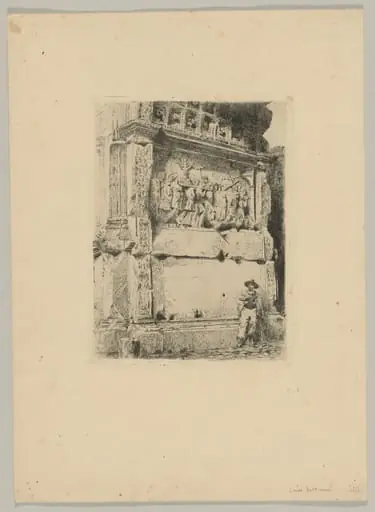 Rome, Arch of Titus
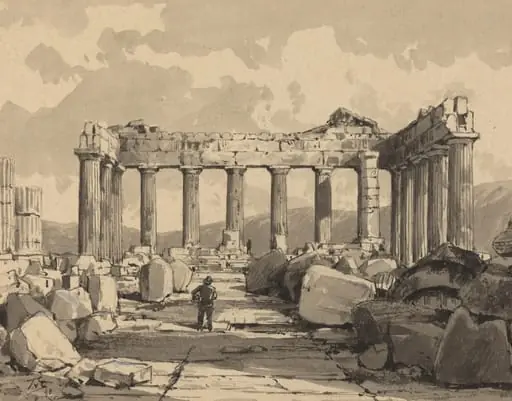
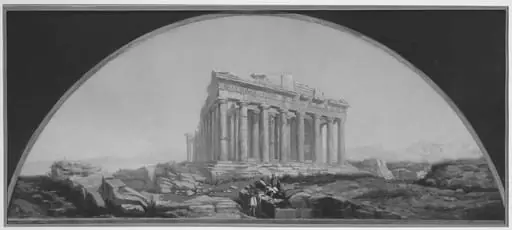 The Parthenon
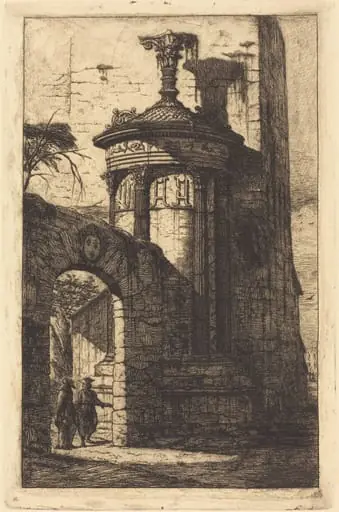 Entrée du Couvent des Capucins français à Athenes (Entrance to the French Capuchin Convent at Athens)
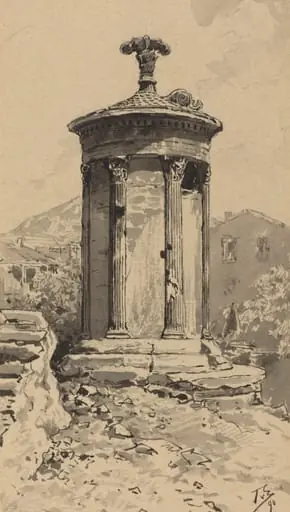 Monument of Lysicrates