Artwork
Peasant Attacked by Bees
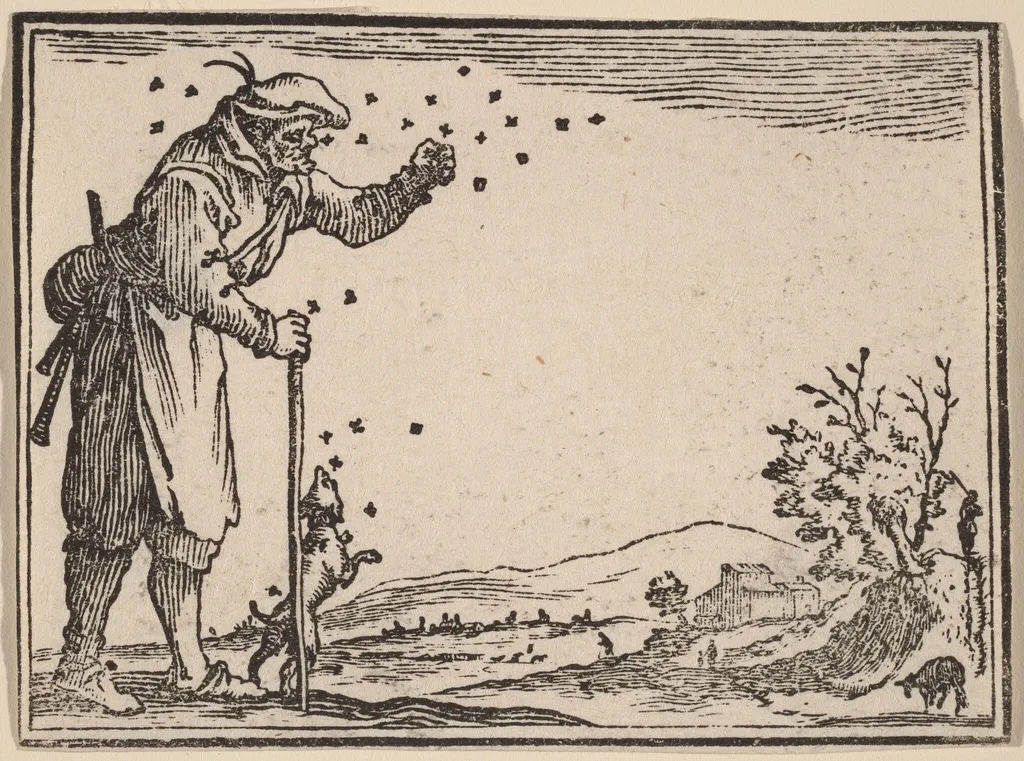
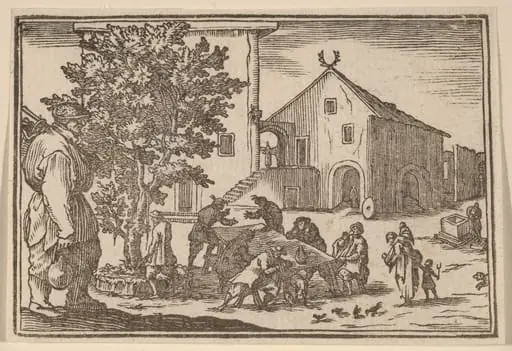
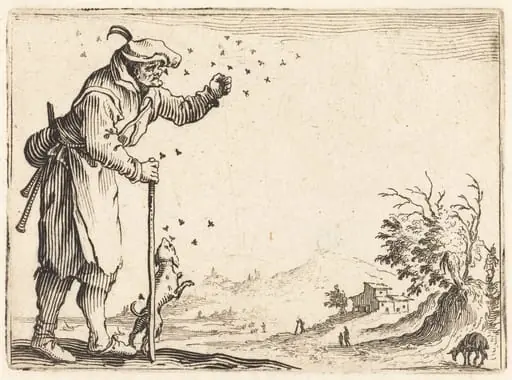
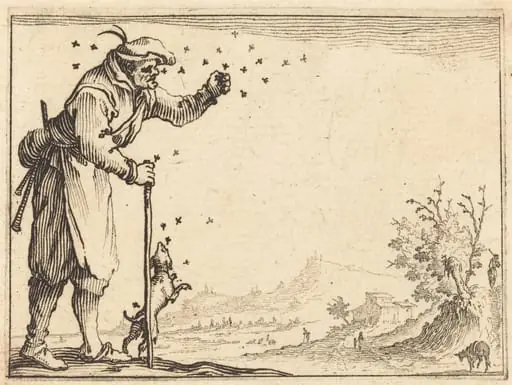
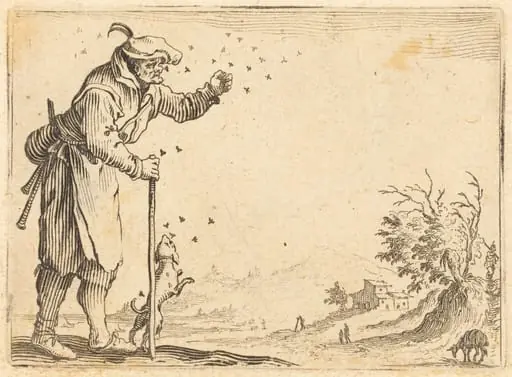
Peasant Attacked by Bees is an ink print by the Baroque artist Edouard Eckman. It dates from 1621 and is held in the collection of the National Gallery of Art.
About this work
Overview
Created in 1621 by Edouard Eckman, this woodcut depicts a rural laborer confronted by a swarm of bees. Executed on laid paper, the print belongs to the early 17th-century Northern European tradition of genre scenes rendered in bold, linear relief. Its simplicity and immediacy suggest it was intended for broad circulation, possibly as a moral or allegorical image rather than mere illustration.
Subject & Meaning
The man’s isolation in the landscape may reflect vulnerability to nature’s unpredictability, inviting interpretation as a cautionary vignette.
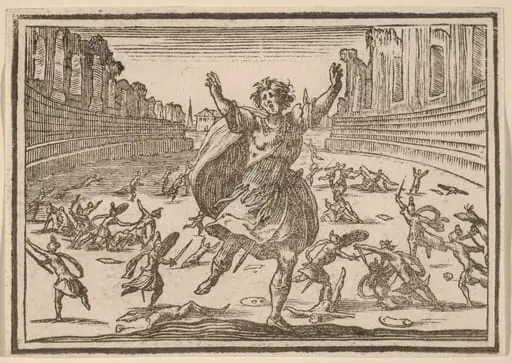
The figure, dressed in simple rural attire and raising his arms in distress, is shown mid-reaction to an unseen but aggressive swarm. The scene’s tension implies more than a literal encounter—bees in this period often symbolized divine retribution, industriousness, or chaos. The man’s isolation in the landscape may reflect vulnerability to nature’s unpredictability, inviting interpretation as a cautionary vignette.
Technique & Style
Eckman employed a rough, expressive woodcut technique, using thick, uneven lines to convey motion and urgency. The bees are rendered as clusters of jagged dots, contrasting with the loose, sketch-like contours of the figure and landscape. The absence of fine detail and the high contrast between black and white areas emphasize drama over realism, typical of popular printmaking of the era.
History & Provenance
The print’s survival in limited numbers suggests modest initial production, likely intended for domestic or educational use. No documented early ownership records exist, and its current whereabouts are known only through museum and institutional holdings. Its attribution to Eckman rests on stylistic comparison with other signed works from the same regional workshop tradition.
Context
In early 17th-century Europe, woodcuts were widely used to disseminate religious, moral, and folk narratives. Scenes of rural life, especially those involving nature’s threats, resonated with audiences familiar with agricultural labor. This print aligns with broader trends in Northern European print culture that blended observation with symbolic meaning, often without overt religious framing.
Legacy
Though not widely studied today, the print exemplifies the capacity of humble print media to capture human vulnerability through minimal means. It contributes to the understanding of how everyday fears were visualized in pre-modern Europe, offering insight into the visual language of common experience beyond elite artistic traditions.
Artist & collection