Artwork
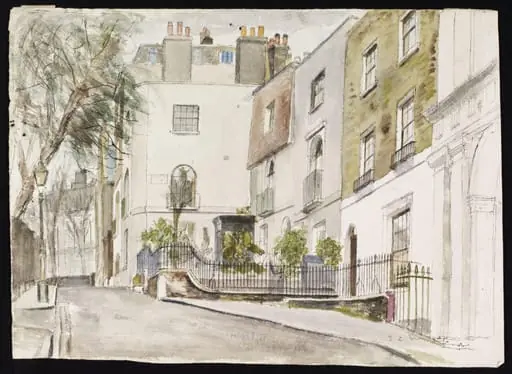
Little Chester Street, S.W.1
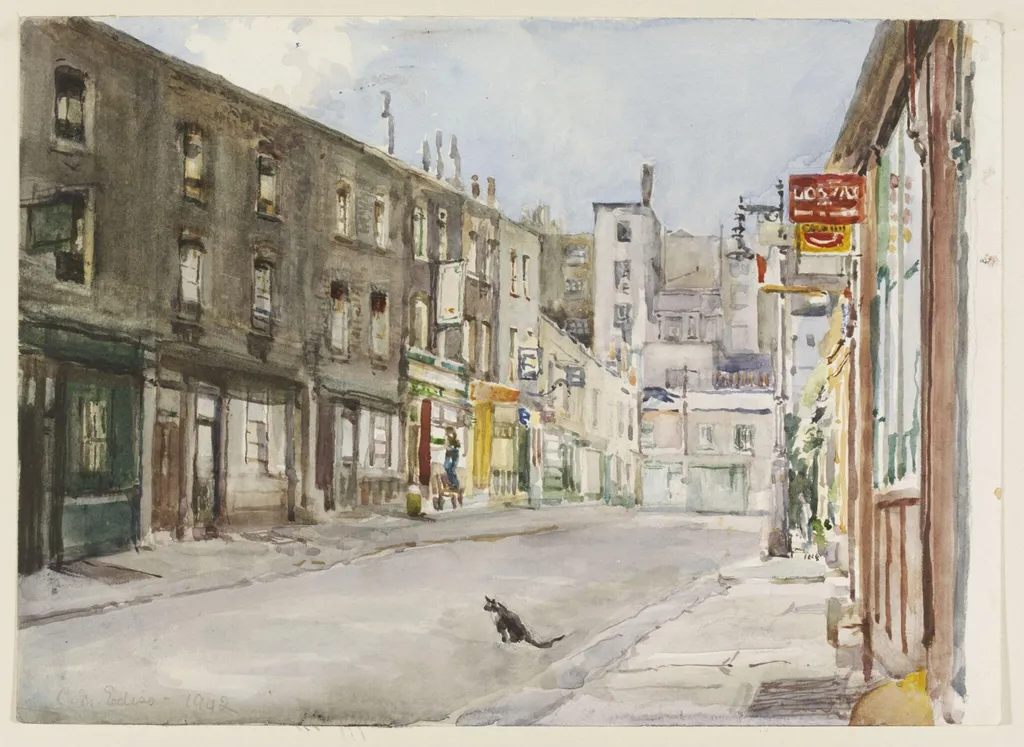
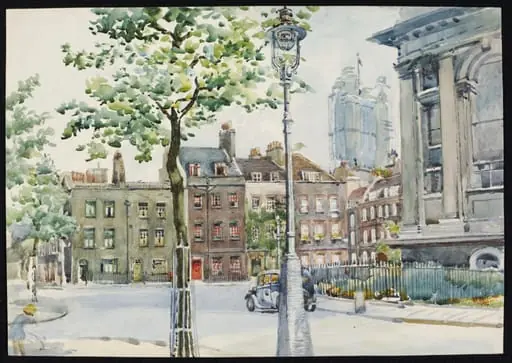
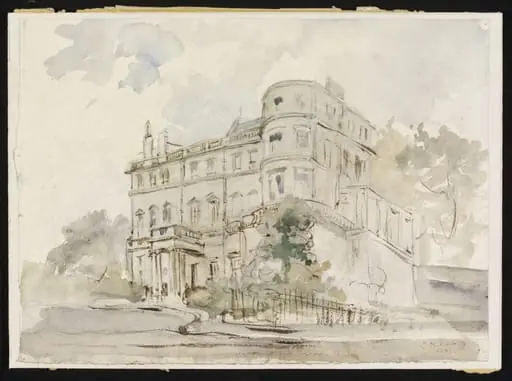
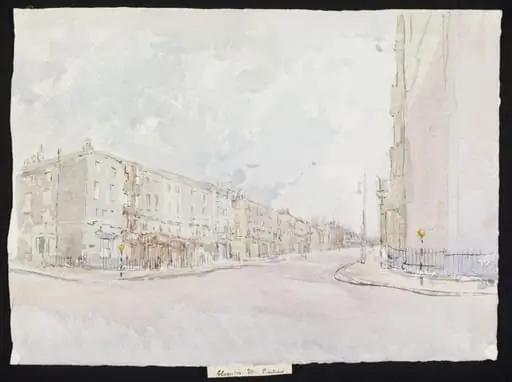
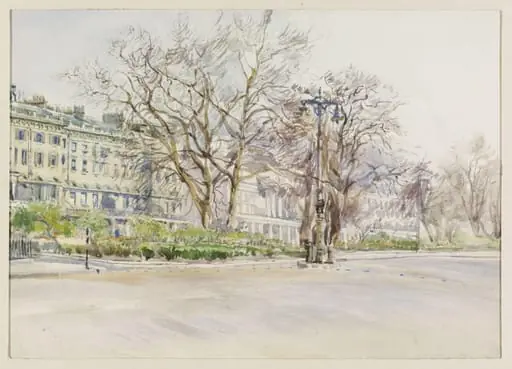
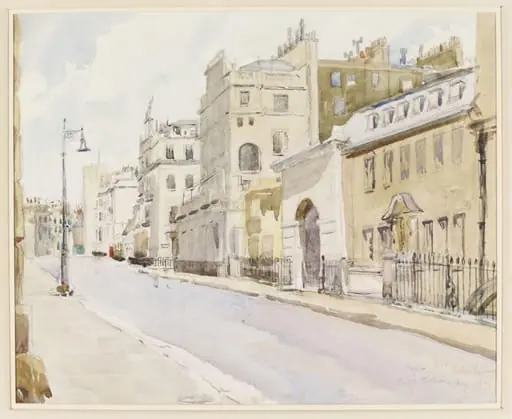
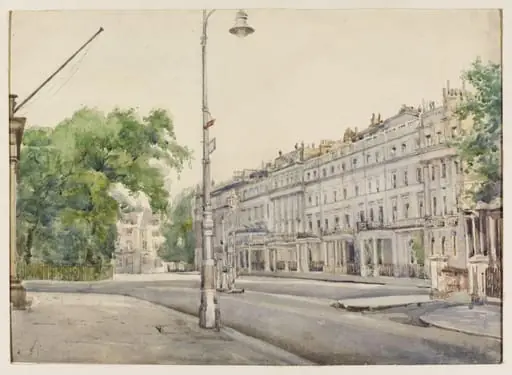
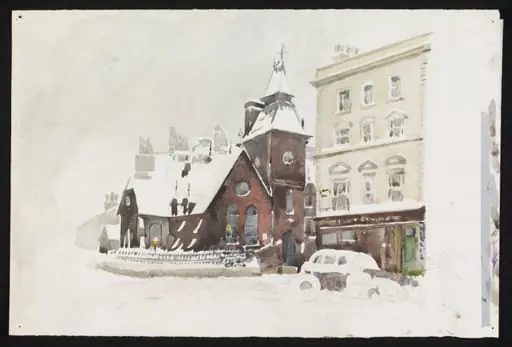
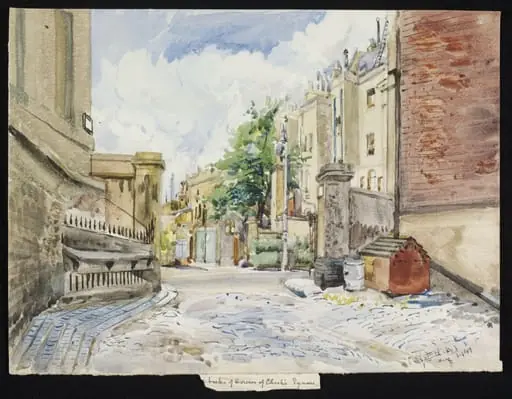
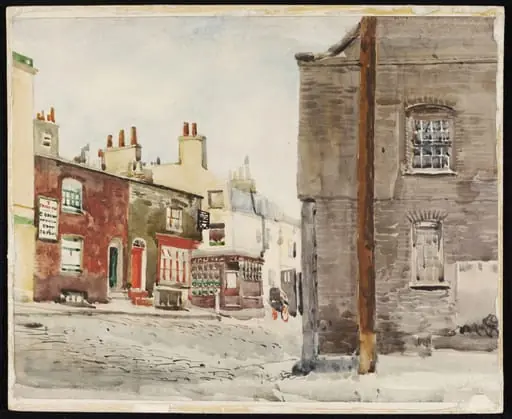
Little Chester Street, S.W.1 is a watercolor work on paper by the Social Realist artist Ediss. It dates from 1942 and is held in the collection of the Victoria and Albert Museum.
About this work
Overview
Its purpose was not grandeur but preservation — to record everyday spaces vulnerable to neglect or destruction during the conflict.
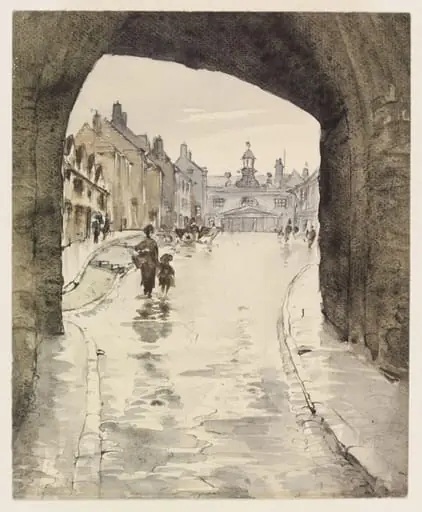
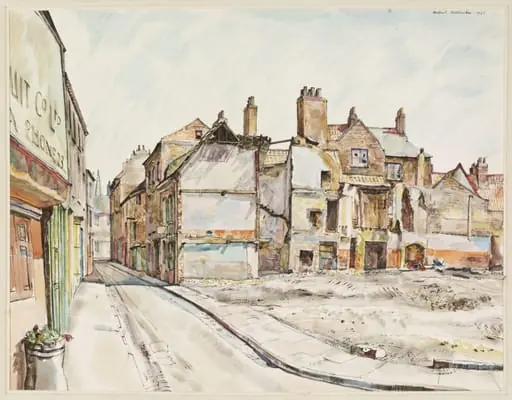
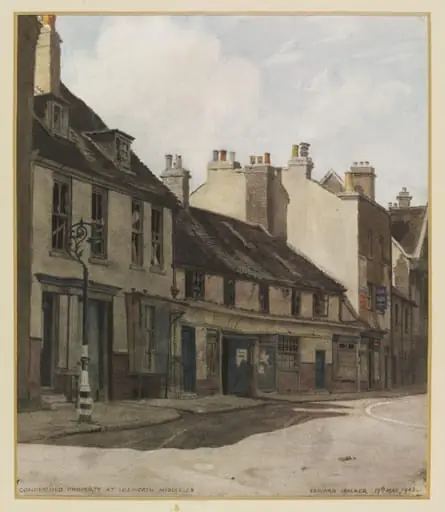
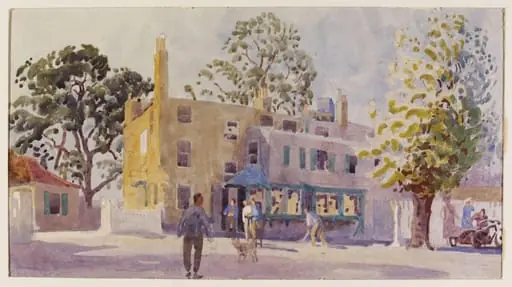
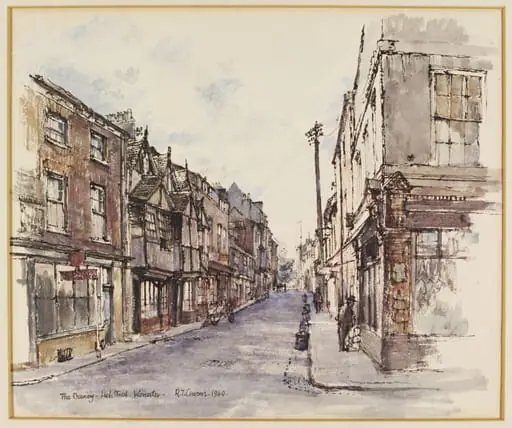
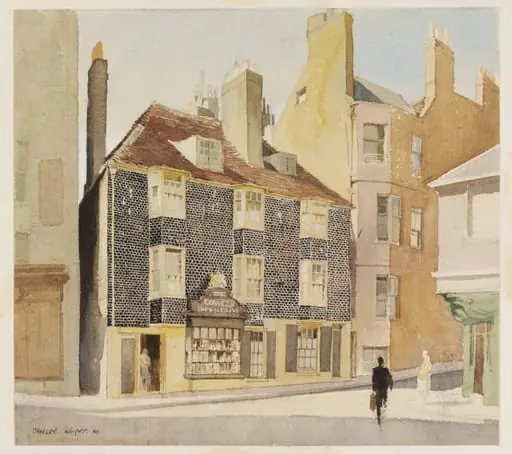
Created in 1942, this watercolour by Ediss is one of many works produced for the Recording Britain project, a wartime initiative to visually archive the nation’s changing environment. The piece captures a modest London street in the S.W.1 district, rendered with quiet attention to architectural detail and atmosphere. Its purpose was not grandeur but preservation — to record everyday spaces vulnerable to neglect or destruction during the conflict.
Subject & Meaning
The scene portrays a quiet, unremarkable urban lane lined with aging brick buildings, their surfaces worn by time. A single black cat rests in the center of the road, the only living presence, amplifying the stillness. The faint signs above the shops suggest local commerce, but no people are visible. This absence underscores the project’s aim: to memorialize ordinary life under threat, where solitude became a quiet emblem of resilience.
Technique & Style
Ediss employed loose, fluid brushwork to suggest texture and form without detailed rendering. The palette is restrained — muted greys and browns dominate, with selective highlights on shop signs adding subtle contrast. The watercolour medium allows for transparency and spontaneity, capturing light and weathered surfaces with economy. The technique conveys immediacy, as if the scene was observed and recorded in a single moment.
History & Provenance
The work was commissioned under the Recording Britain project, initiated by Sir Kenneth Clark and supported by the Pilgrim Trust. Artists were sent across the country to document landscapes and streetscapes deemed at risk from war, urban renewal, or cultural erosion. This piece entered the collection of the Victoria and Albert Museum, where it remains as part of a larger archive of wartime visual documentation.
Context
During the Second World War, Britain faced widespread disruption — bombings, evacuations, and shifting social structures. The Recording Britain project responded to fears that traditional environments would vanish. Artists like Ediss focused on unassuming streets, cottages, and marketplaces, offering a counter-narrative to wartime propaganda by valuing the quiet, the ordinary, and the enduring.
Legacy
The Recording Britain collection endures as a vital historical record, preserving the visual character of Britain during a period of upheaval. Ediss’s street scene, though modest in scale, contributes to a collective portrait of resilience through observation. Today, it stands as a testament to the power of art to document not just grand events, but the subtle rhythms of daily life under duress.
Artist & collection
Artist
Ediss painted London’s quiet streets and squares in delicate watercolours during the early 1940s.