Artwork
L'abside de Notre-Dame de Paris (The Apse of the Cathedral of Notre-Dame, Paris)
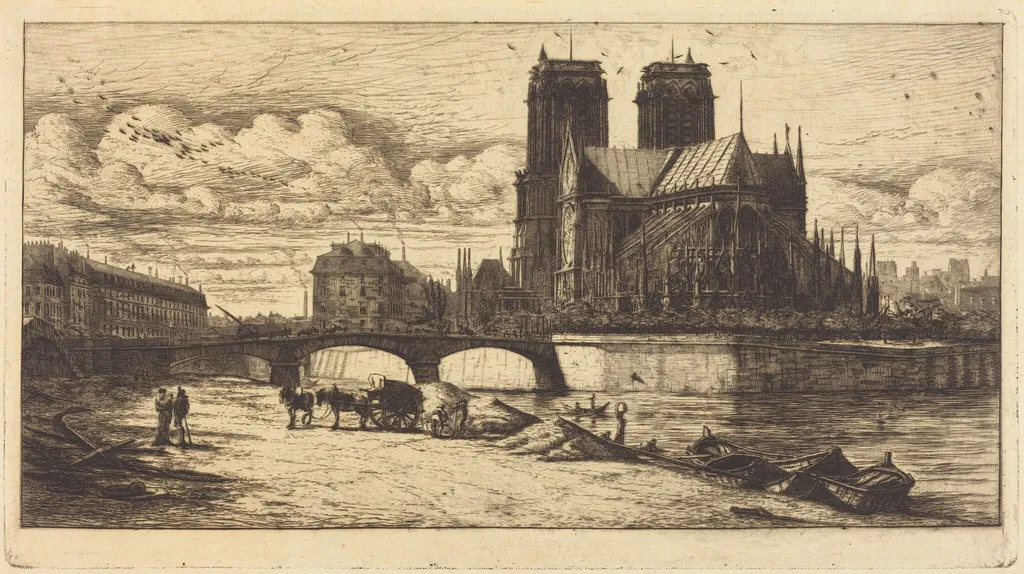
L'abside de Notre-Dame de Paris (The Apse of the Cathedral of Notre-Dame, Paris) is an ink print by the Impressionist artist Charles Meryon. It dates from 1854 and is held in the collection of the National Gallery of Art.
About this work
Overview
L'abside de Notre-Dame de Paris is a 1854 print by Charles Meryon, combining etching, drypoint, and engraving on laid paper. It depicts the apse of Notre-Dame Cathedral in Paris, showcasing Meryon's affinity for Gothic architecture and atmospheric cityscapes.
Subject & Meaning
The print focuses on the imposing apse of Notre-Dame, set amidst simpler adjacent buildings, a river scene with a bridge, wagon, and boats, and figures on the riverbank. The composition highlights the cathedral's intricate details against a textured, expressive sky.
Technique & Style
Meryon, largely limited to etching due to colour blindness, employed lines to achieve depth, creating a near three-dimensional effect. The interplay of precise architectural rendering and expressive, rough skies reflects his distinctive Gothic vision of Paris.
History & Provenance
Created in 1854, this work is part of Meryon's renowned series of Parisian views. The artist's life was later marked by mental illness, leading to his death in an asylum in 1868.
Artist & collection
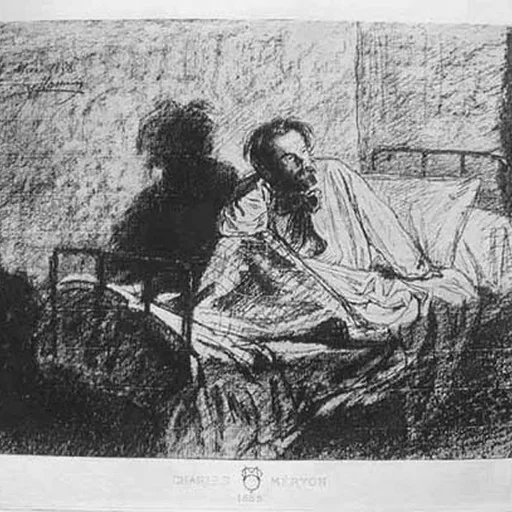
Artist
Charles Meryon (sometimes Méryon, 23 November 1821 – 14 February 1868) was a French artist who worked almost entirely in etching, as he had colour blindness.

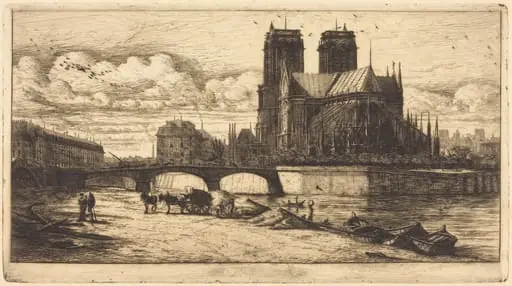 L'abside de Notre-Dame de Paris (The Apse of the Cathedral of Notre Dame, Paris)
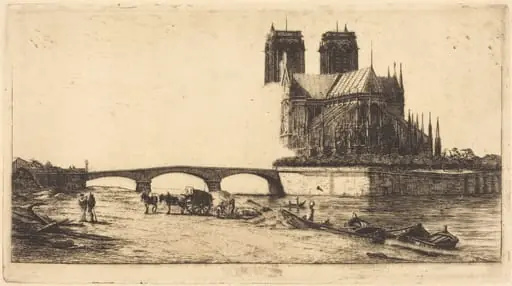 L'abside de Notre-Dame de Paris (The Apse ofthe Cathedral of Notre-Dame, Paris)
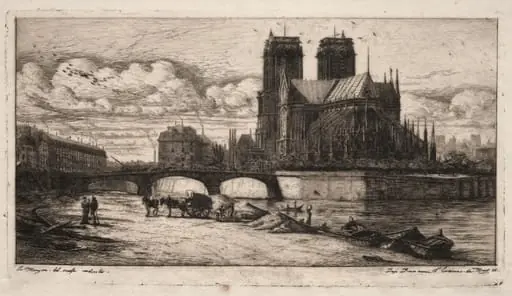 Etchings of Paris: The Apse of the Cathedral of Notre Dame
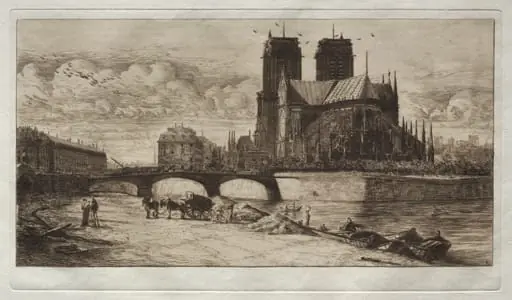 L'Abside de Notre Dame de Paris
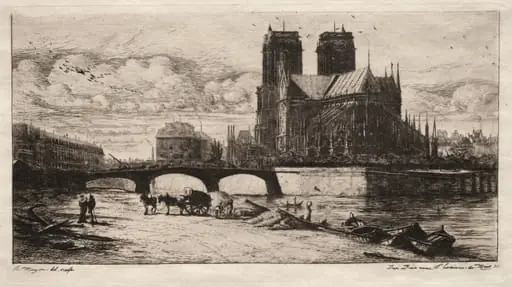 Etchings of Paris: The Apsis of the Cathedral of Notre Dame
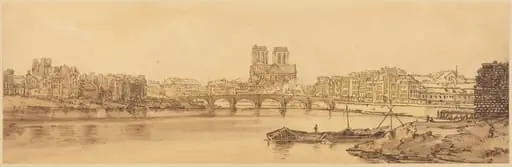 View of Pont de la Tournelle and Notre Dame Taken from the Arsnel: pl.11
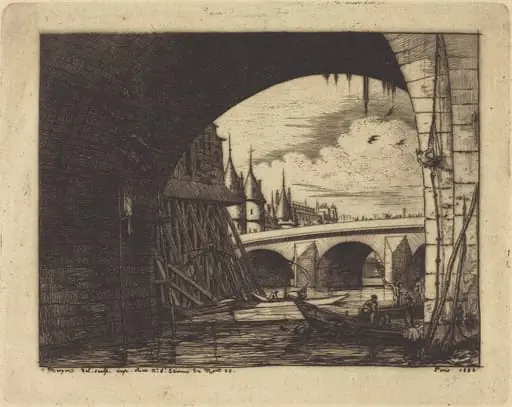 L'arche du Pont Notre-Dame, Paris (An Arch of the Notre-Dame Bridge, Paris)
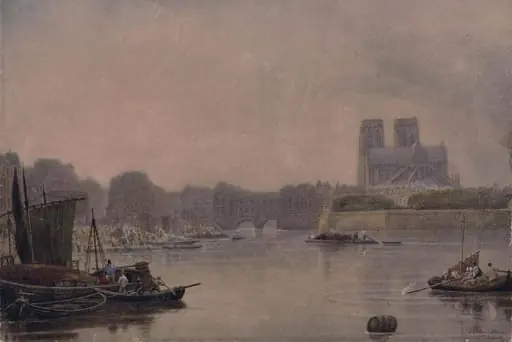 Notre Dame, Paris
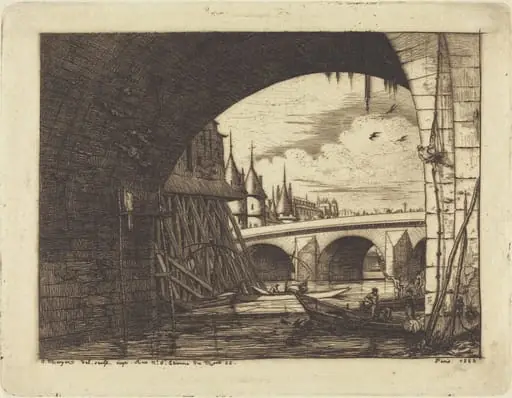 L'arche du Pont Notre-Dame, Paris (An Arch of the Notre-Dame Bridge, Paris)
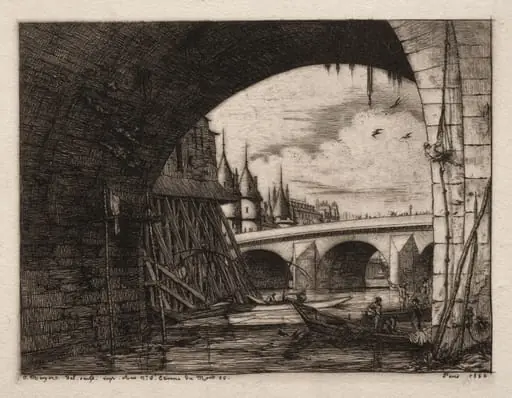 L'arch du Pont Notre Dame, Paris
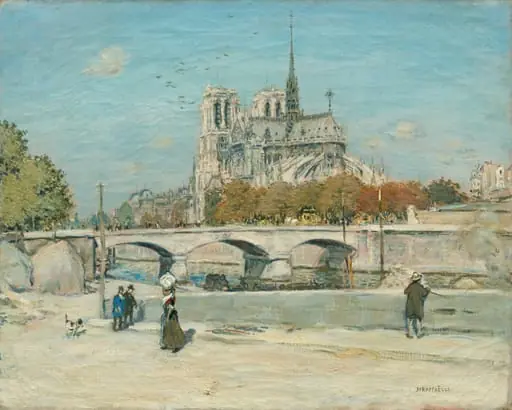 Notre Dame Seen from the Quai de la Tournelle
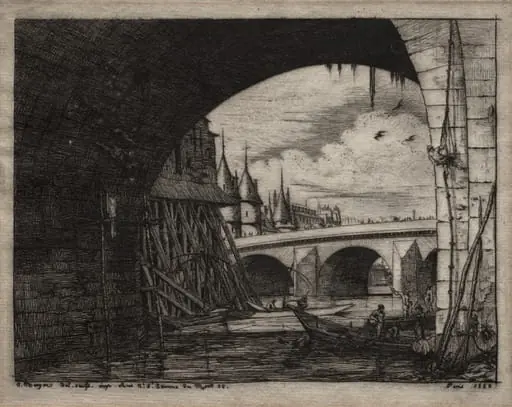 Etchings of Paris: An Arch of the Notre Dame Bridge