Artwork
Pont Neuf, Paris
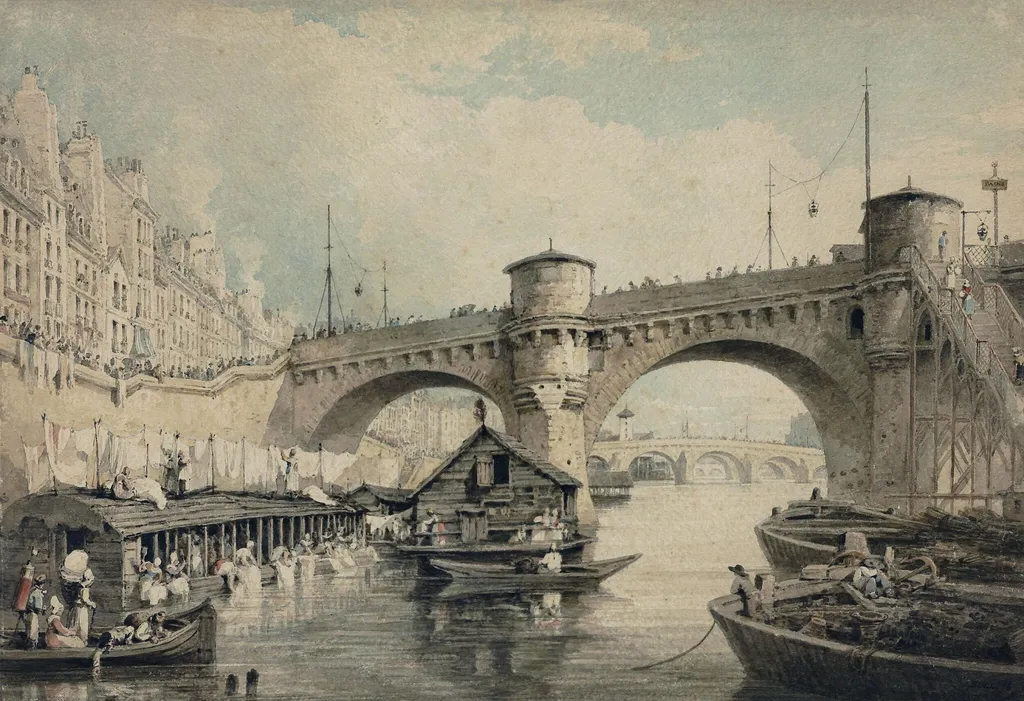
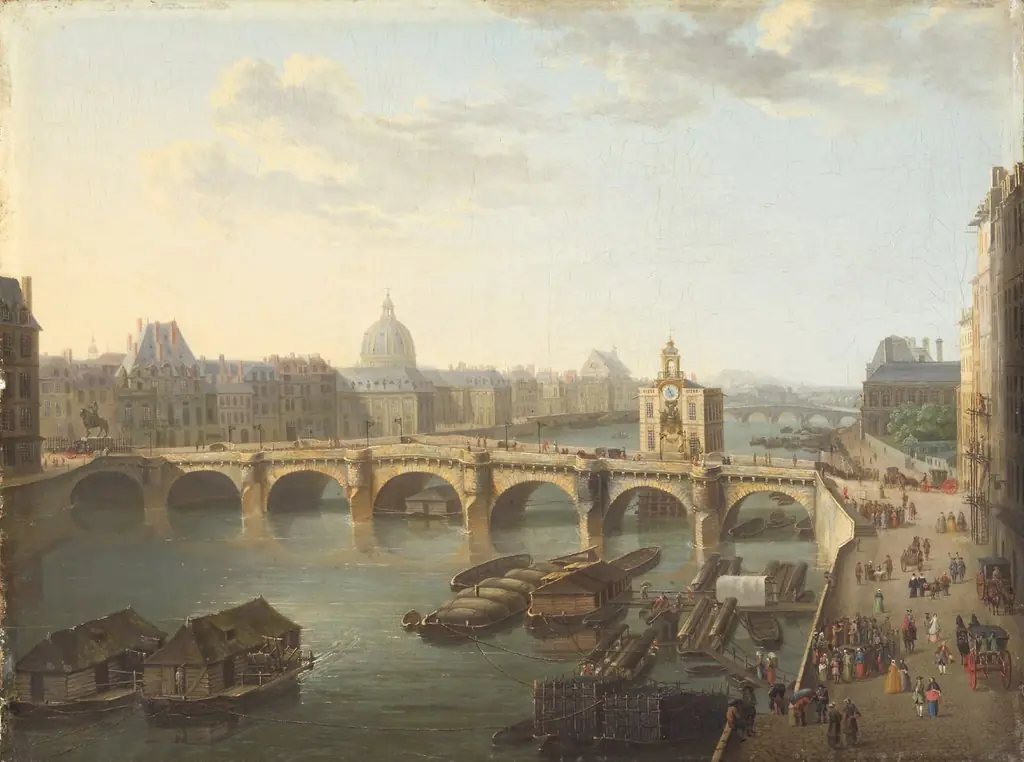
Pont Neuf, Paris is a watercolor work on paper by the British Romanticist artist Henry RA Edridge. It dates from 1817 and is held in the collection of the Victoria and Albert Museum. Henry Edridge’s watercolour presents a panoramic view of Paris’s Pont Neuf spanning the Seine.
About this work
Overview
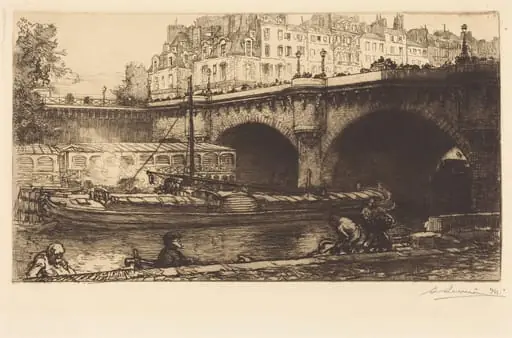
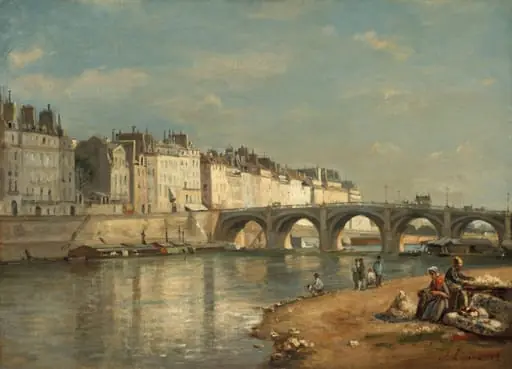
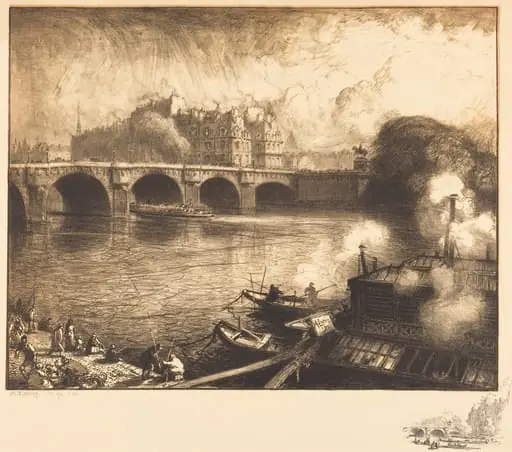
Henry Edridge’s watercolour presents a panoramic view of Paris’s Pont Neuf spanning the Seine. The composition centers on the stone bridge, flanked by riverbanks dotted with modest buildings and everyday activity. Small boats populate the water, while figures traverse the bridge and walk along the quays, conveying the bustling urban life of early‑19th‑century Paris.
Subject & Meaning
The scene captures a moment of ordinary commerce and leisure: passengers in rowboats, vendors drying laundry on the banks, and pedestrians navigating the bridge’s arches. By foregrounding these quotidian details, the work reflects a Romantic interest in the lived experience of the city, emphasizing the interplay between architecture, river, and human activity.
Technique & Style
Edridge employs a muted palette of soft blues, grays, and earth tones, applying light, fluid brushstrokes that suggest the ripple of water and the hazy sky. Delicate washes render the texture of stone and the translucency of the river, while fine lines delineate figures and architectural elements, creating a sense of depth without sacrificing atmospheric subtlety.
Context
Created during the Romantic period, the painting aligns with the movement’s focus on emotion, atmosphere, and the picturesque qualities of urban landscapes. While not overtly dramatic, its emphasis on mood, the fleeting quality of light, and the integration of everyday scenes exemplify Romantic sensibilities within the medium of watercolour.
Artist & collection
Artist
A prolific watercolour artist working at the turn of the 19th century, Henry Edridge captured daily life in soft, detailed strokes.