Artwork
Le Pont-Neuf, Paris
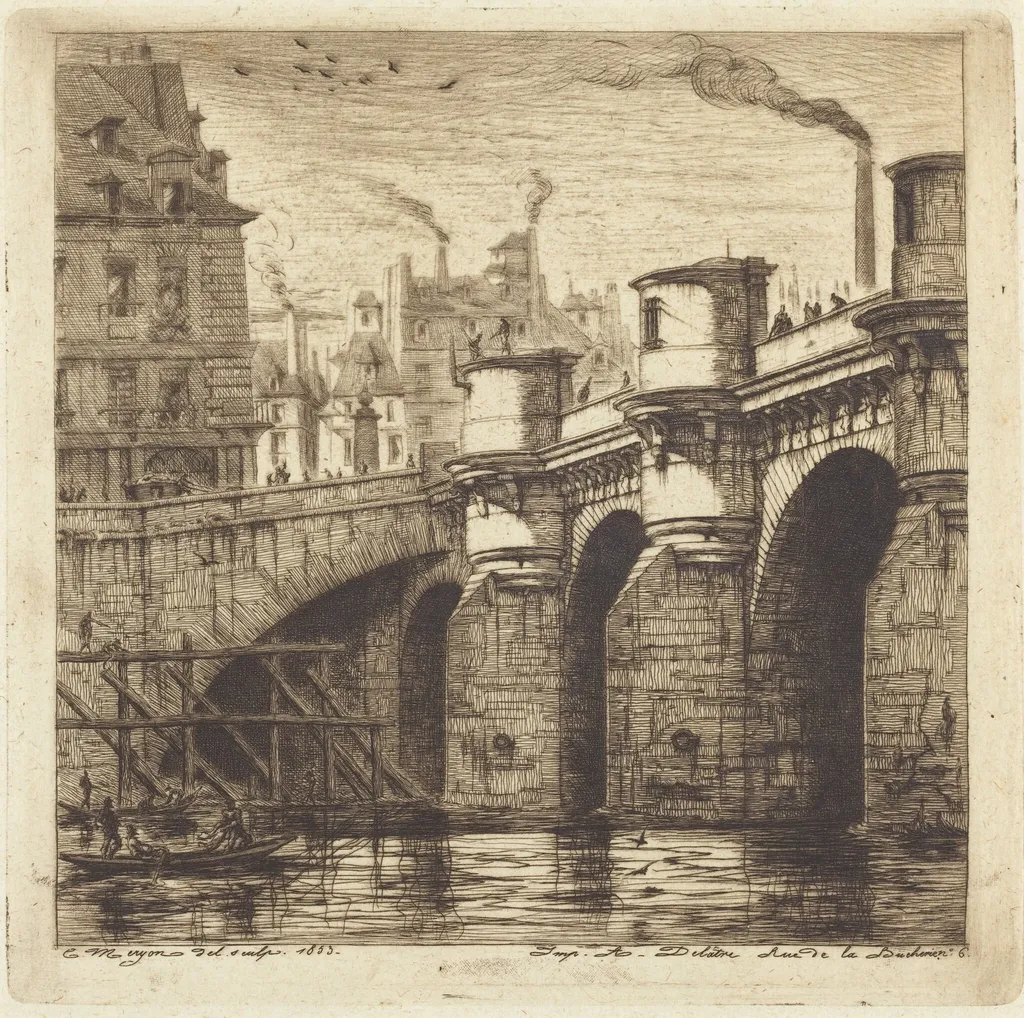
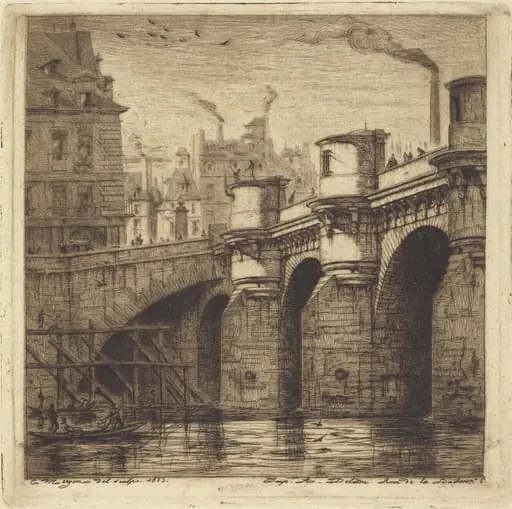
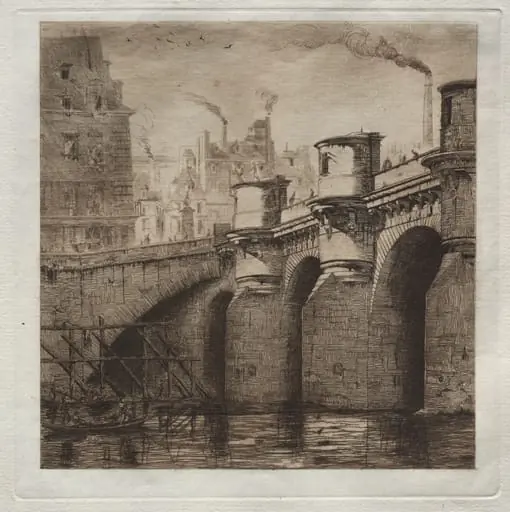
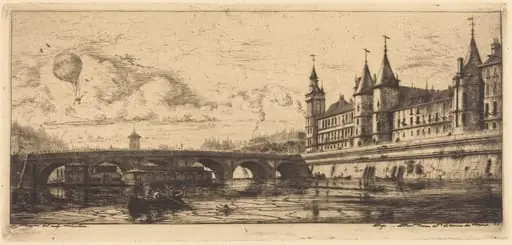
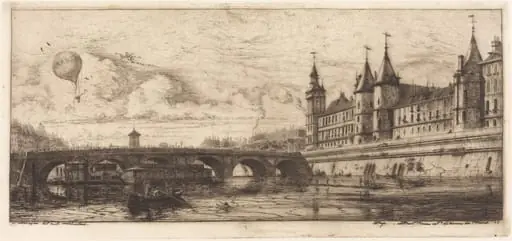
Le Pont-Neuf, Paris is an ink print by the Impressionist artist Charles Meryon. It dates from 1853 and is held in the collection of the National Gallery of Art.
About this work
Overview
Created in 1853, *Le Pont‑Neuf, Paris* is a print made by French artist Charles Meryon. Executed on green laid paper, the image combines etching with dry‑point techniques to depict the bustling activity on Paris’s oldest bridge.
Subject & Meaning
The composition presents the Pont‑Neuf crowded with pedestrians, horse‑drawn carriages, and a river teeming with boats. Tall, densely built façades line the banks, while smoke curls from chimneys, conveying the everyday vitality of mid‑nineteenth‑century Paris.
Technique & Style
Meryon employed traditional copper‑plate etching for the broad architectural forms and added dry‑point, a process of incising lines directly into the plate with a sharp needle. The dry‑point work yields a characteristic velvety, grainy texture that softens details and enhances atmospheric depth.
History & Provenance
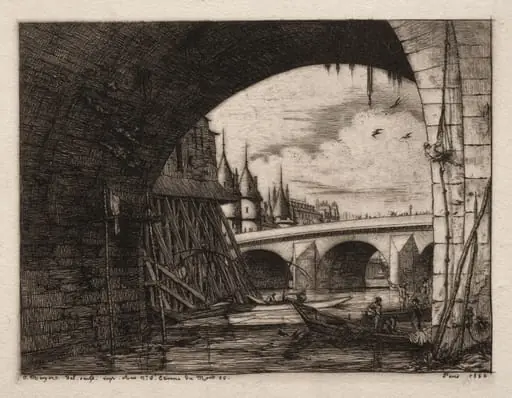
Part of a larger series of Parisian views, the print reflects Meryon’s lifelong focus on the city’s architecture, a focus shaped by his colour‑blindness which led him to work almost exclusively in monochrome printmaking. The series established his reputation as the pre‑eminent French etcher of the 19th century.
Context
Meryon’s depictions of Paris emerged during a period of rapid urban change, preceding Haussmann’s extensive renovations. His Gothic‑inflected perspective offers a counterpoint to the more polished cityscapes of his contemporaries, emphasizing the gritty, lived experience of the capital’s historic core.
Own this work as a print
Artist & collection
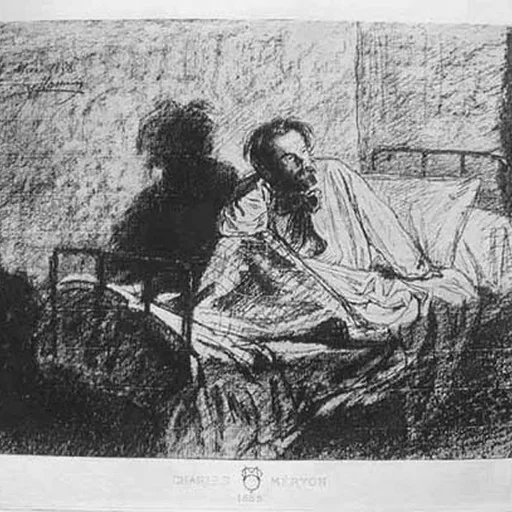
Artist
Charles Meryon (sometimes Méryon, 23 November 1821 – 14 February 1868) was a French artist who worked almost entirely in etching, as he had colour blindness.