Artwork
The Human Mountain
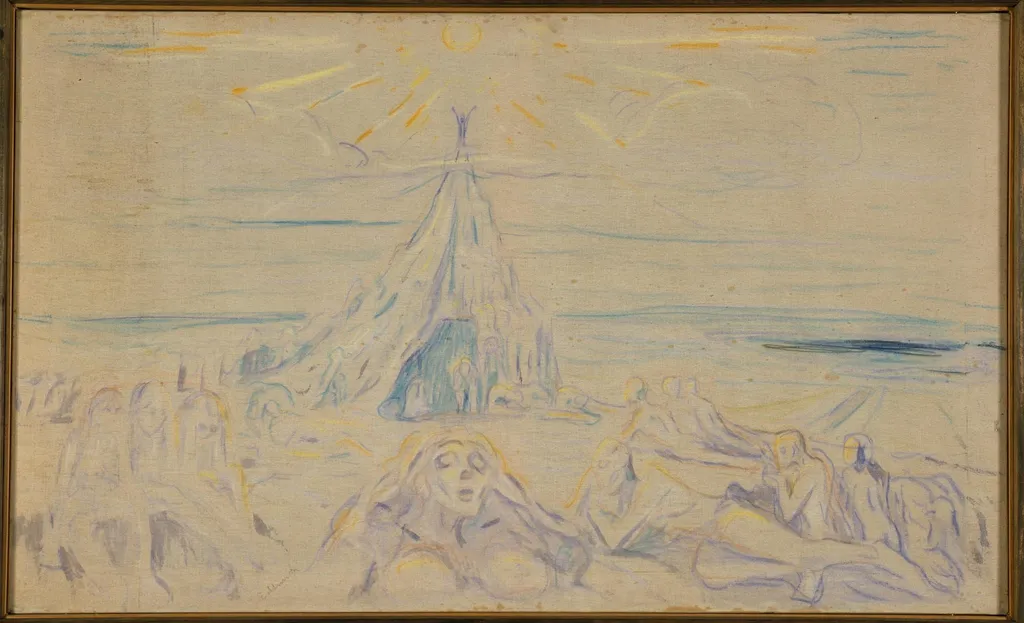
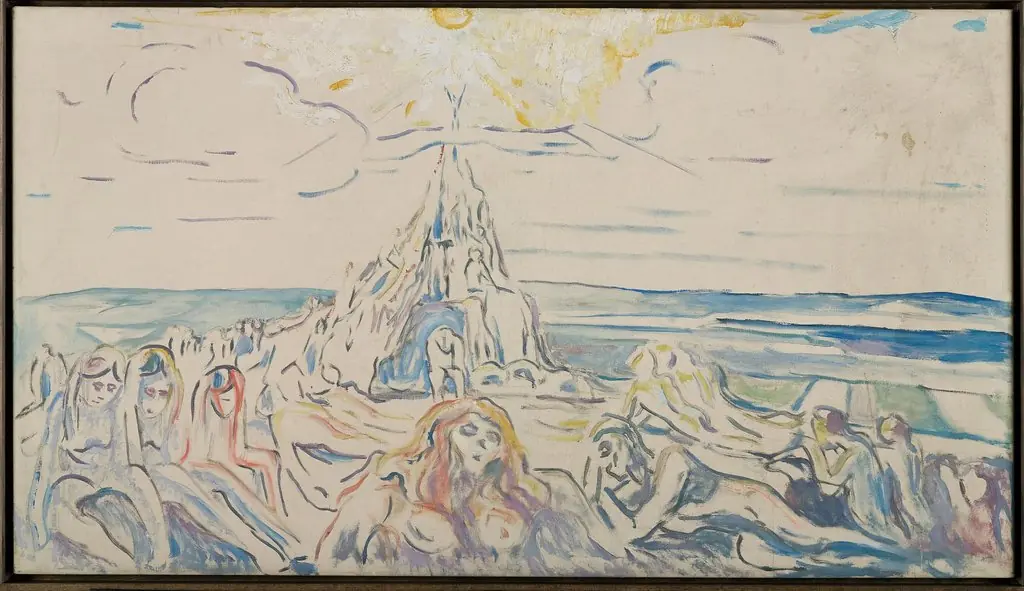
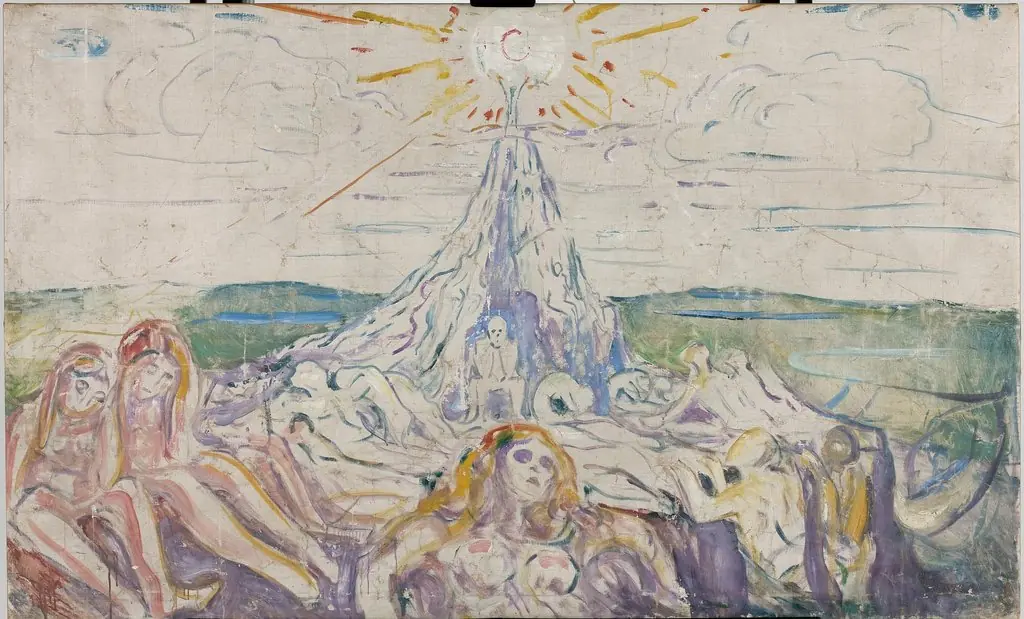
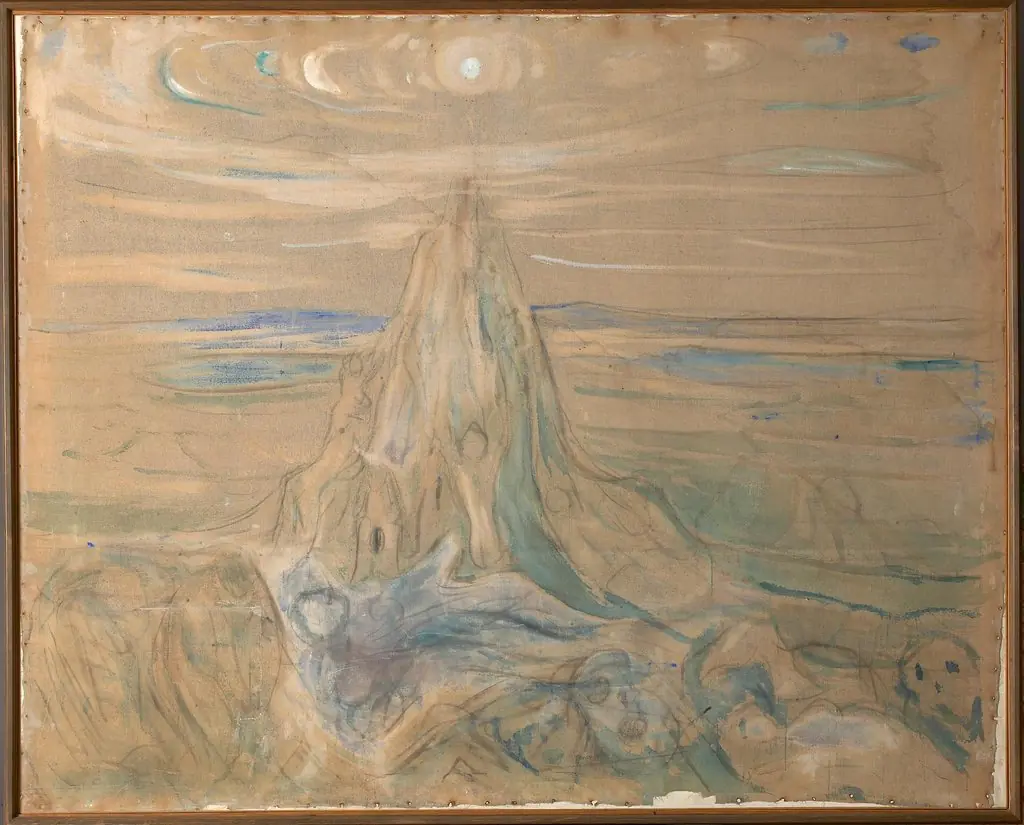
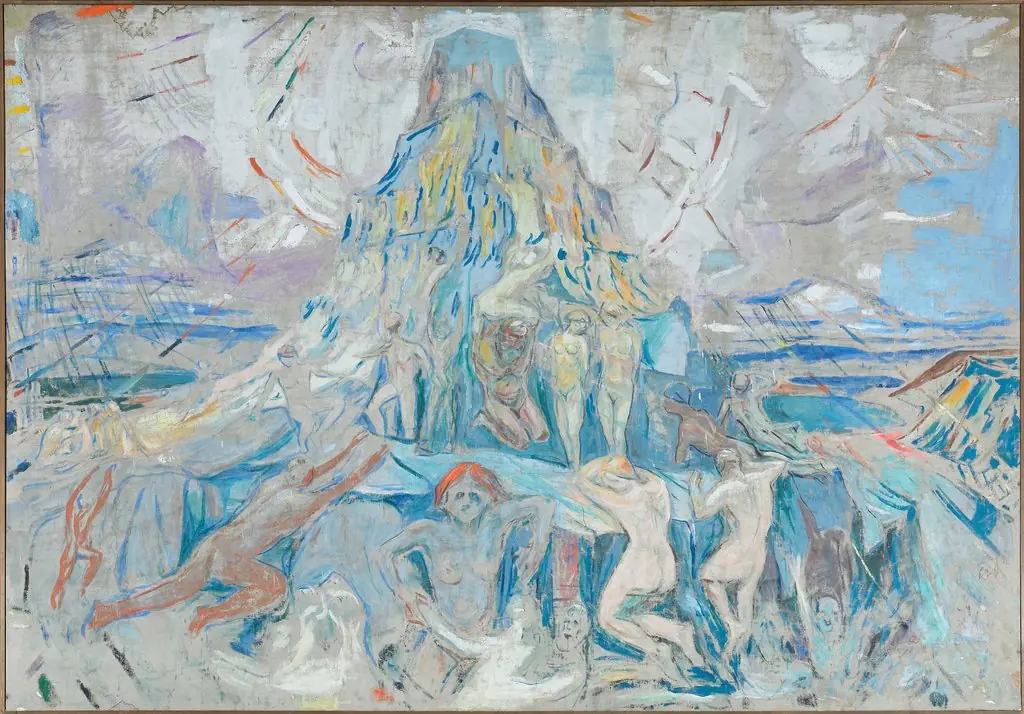
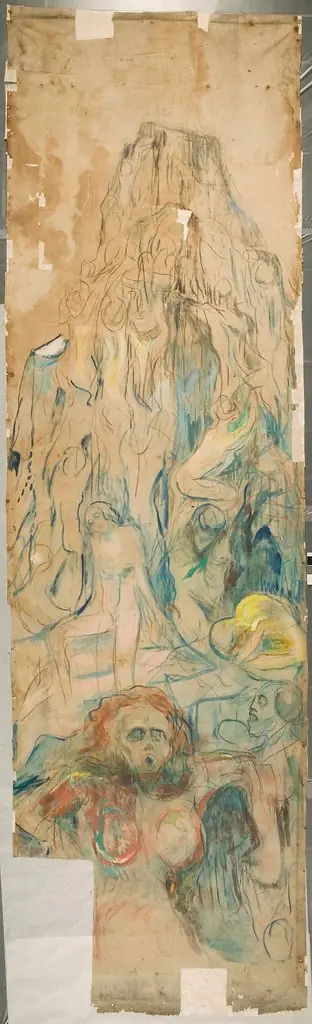
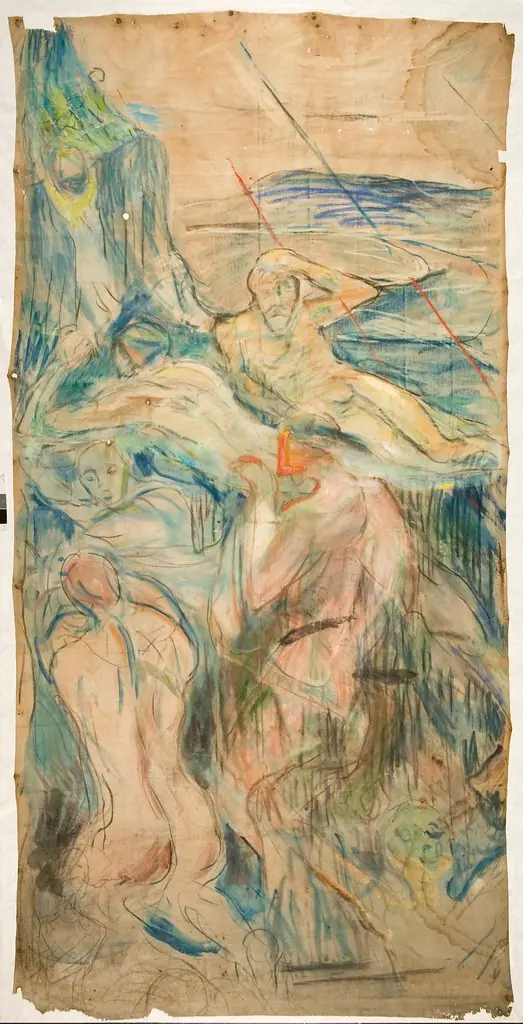
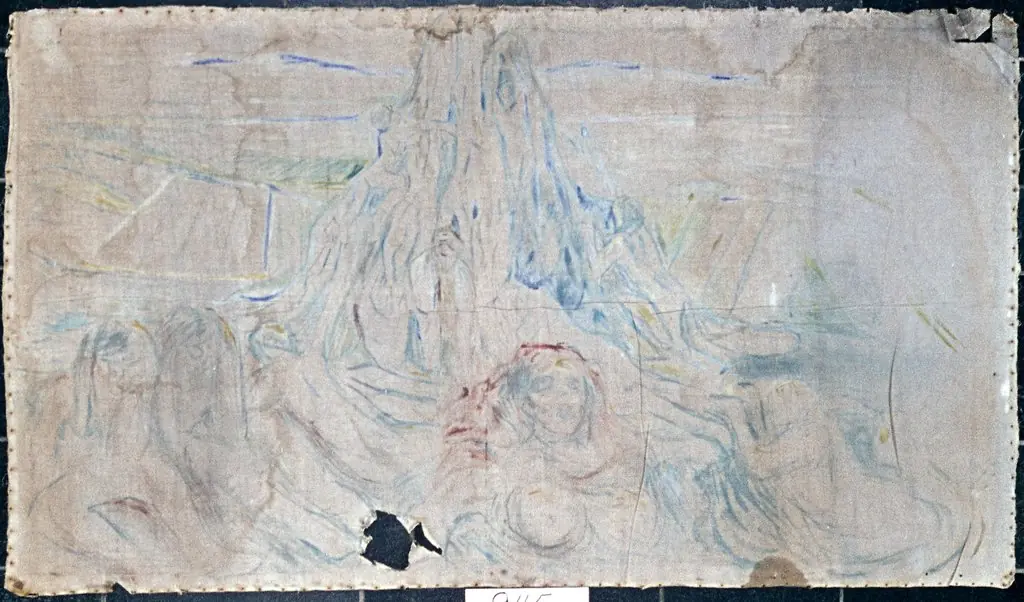
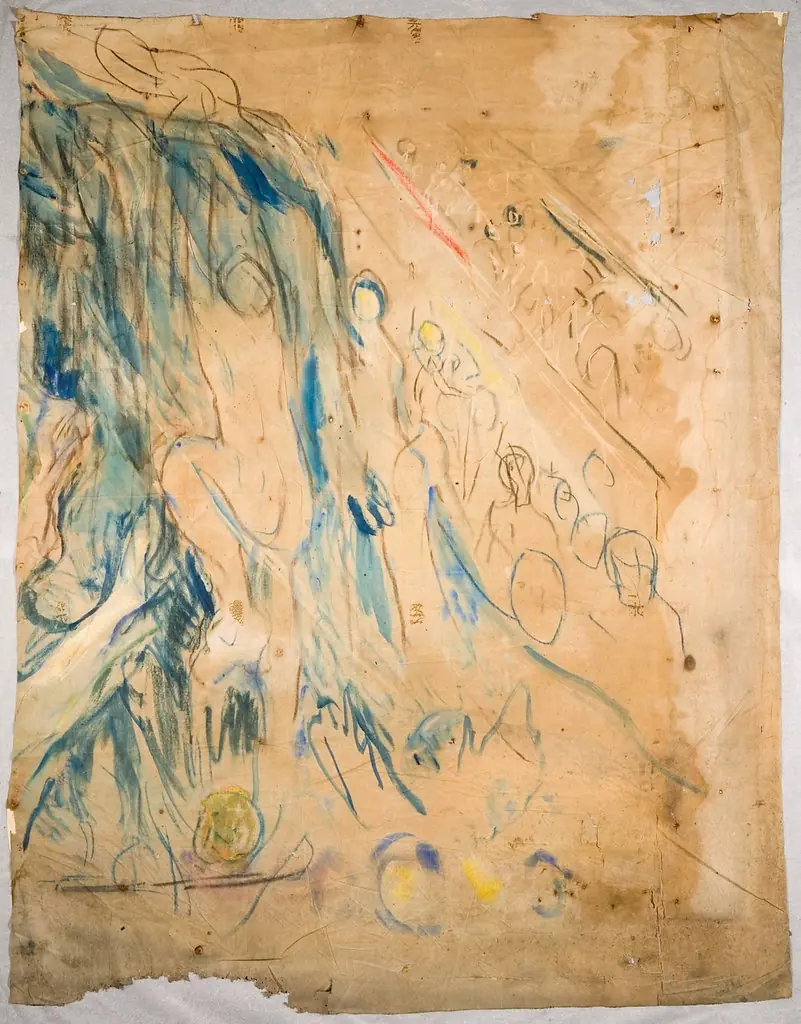
The Human Mountain is an oil painting by the Post-Impressionist artist Edvard Munch. It dates from 1909 and is held in the collection of the Munch Museum.
About this work
Overview
Created in 1909, *The Human Mountain* is a wax‑crayon work by Norwegian artist Edvard Munch. The composition presents a gathering of largely unclothed figures clustered around a towering, cone‑shaped form. Rendered in subdued tones, the scene is outlined with vigorous, sketch‑like strokes that convey a sense of collective tension and anonymity.
Subject & Meaning
The central motif—a massive, almost geological shape surrounded by people—suggests a symbolic mass of humanity, each individual reduced to a component of a larger whole. The raised arms of a woman and the bowed head of a man evoke gestures of supplication or resignation, hinting at existential concerns that preoccupied Munch throughout his career.
Technique & Style
Munch employed wax crayon to achieve a matte, textured surface, allowing for bold, uneven lines that emphasize emotional intensity over precise detail. The palette of muted grays, occasional yellow and blue highlights, and the raw, primitive handling of form align the piece with early expressionist tendencies while retaining a naïve, almost tribal aesthetic.
History & Provenance
The work entered the collection of the Munch Museum in Oslo, where it remains accessible to scholars and the public. Its creation during Munch's mature period reflects his ongoing exploration of personal angst and philosophical nihilism, themes that recur across his oeuvre and inform the piece's enduring scholarly interest.
Artist & collection
Artist
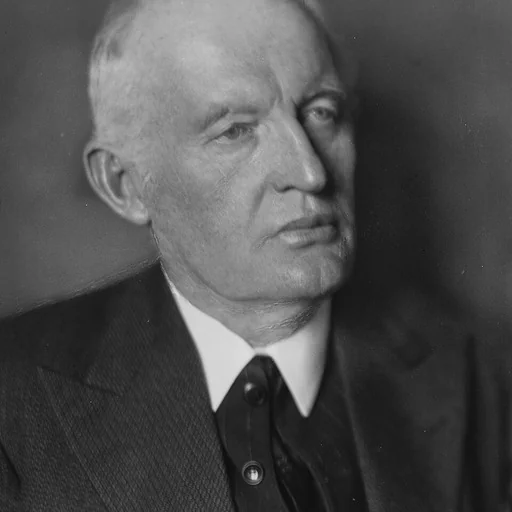
Edvard Munch ( MUUNK; Norwegian: ; 12 December 1863 – 23 January 1944) was a Norwegian painter.