Artwork
The Human Mountain
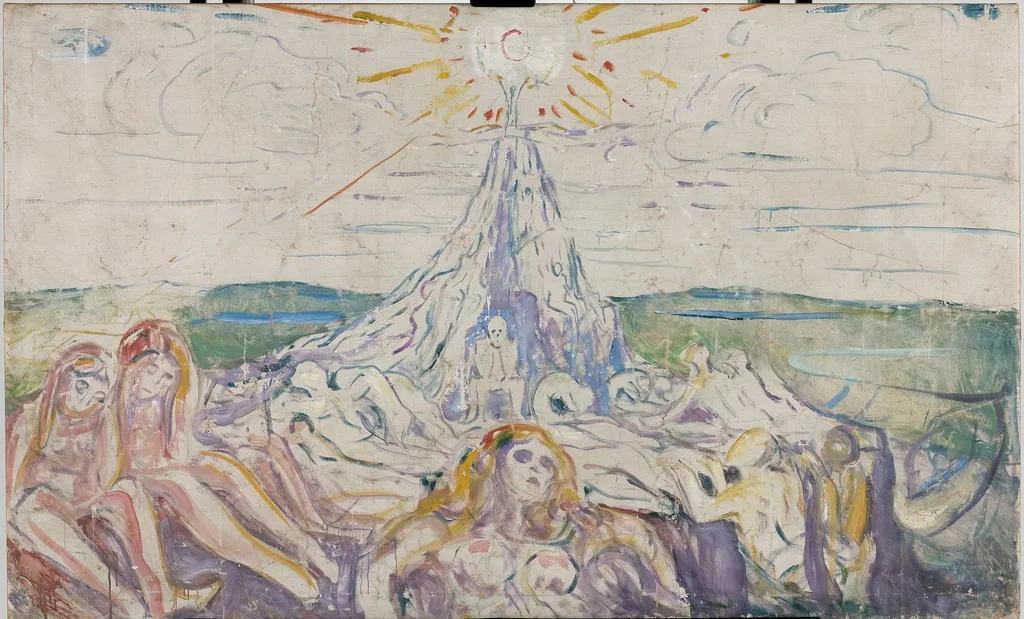
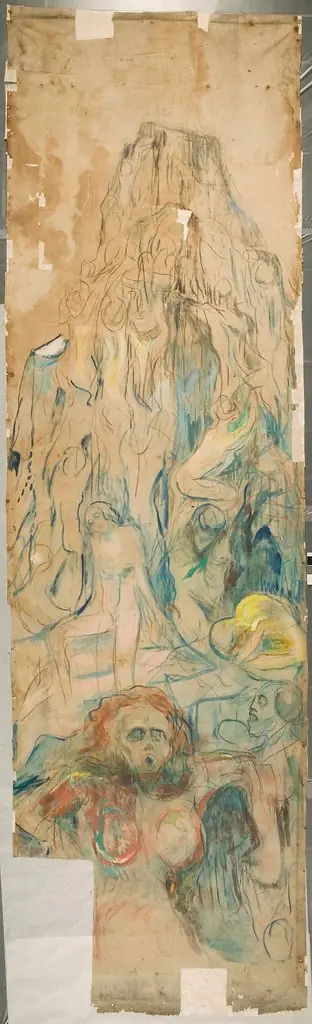
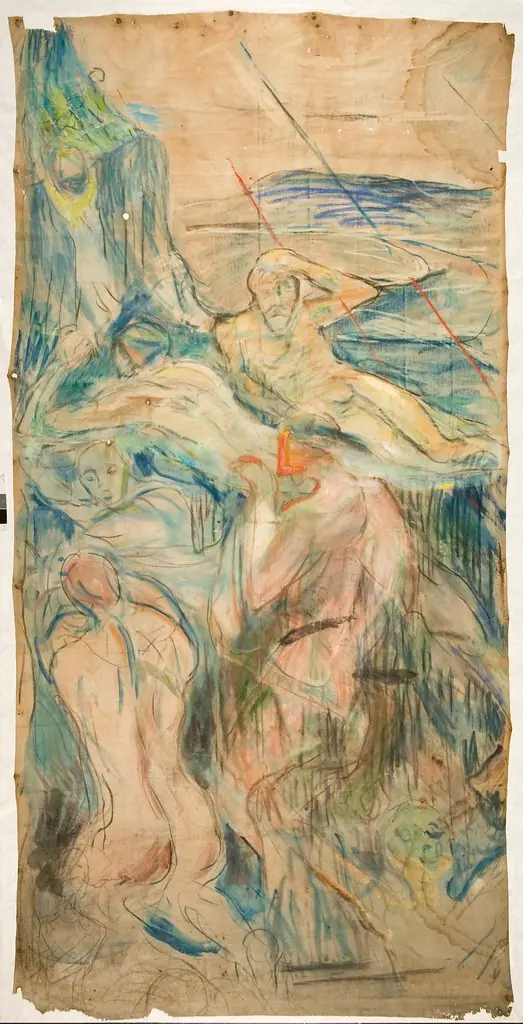
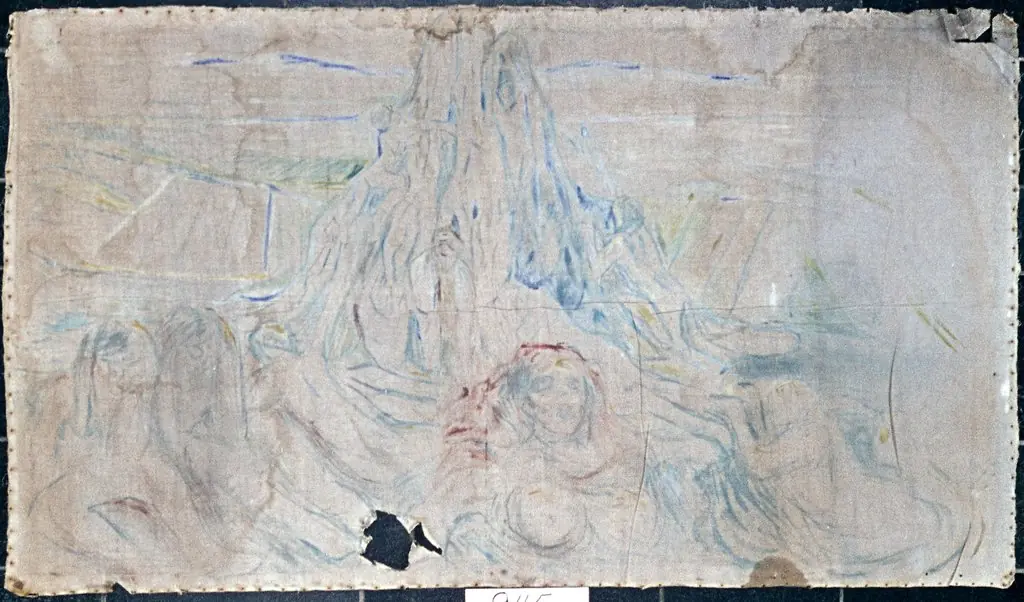
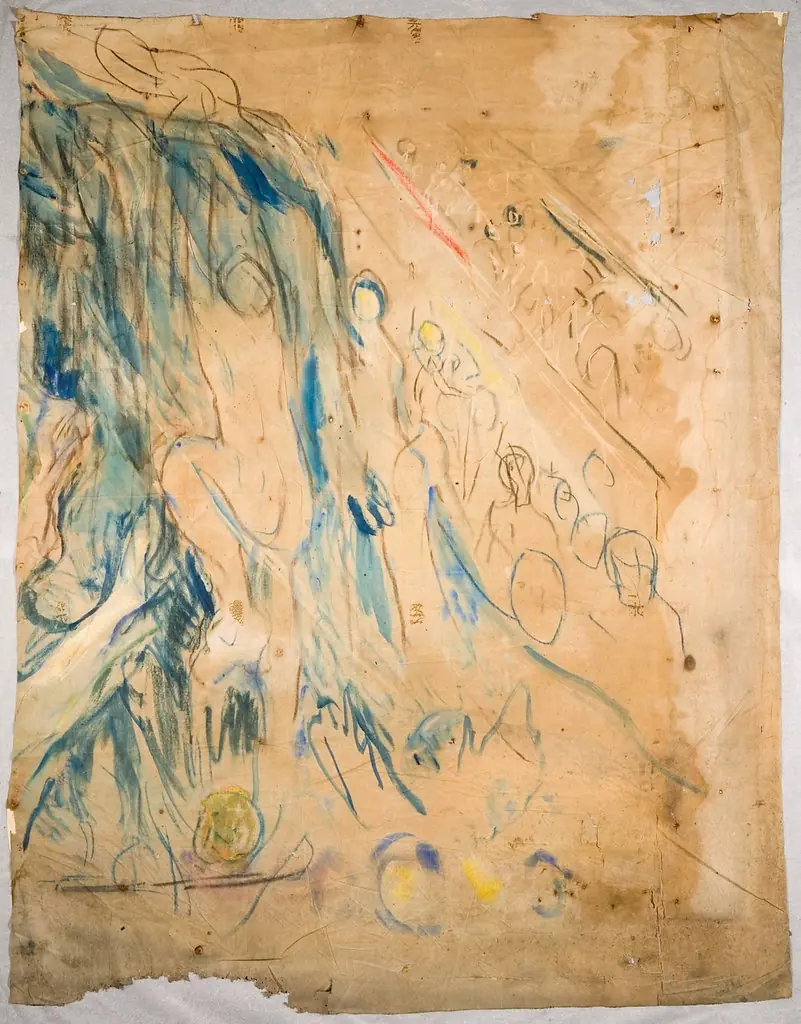
The Human Mountain is an oil painting by the Post-Impressionist artist Edvard Munch. It dates from 1909 and is held in the collection of the Munch Museum.
About this work
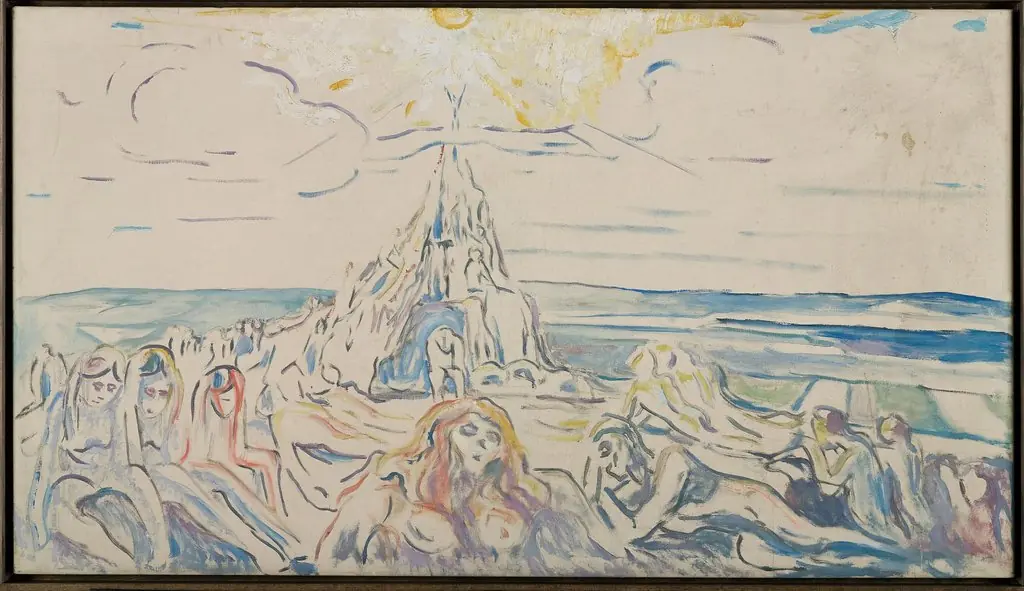
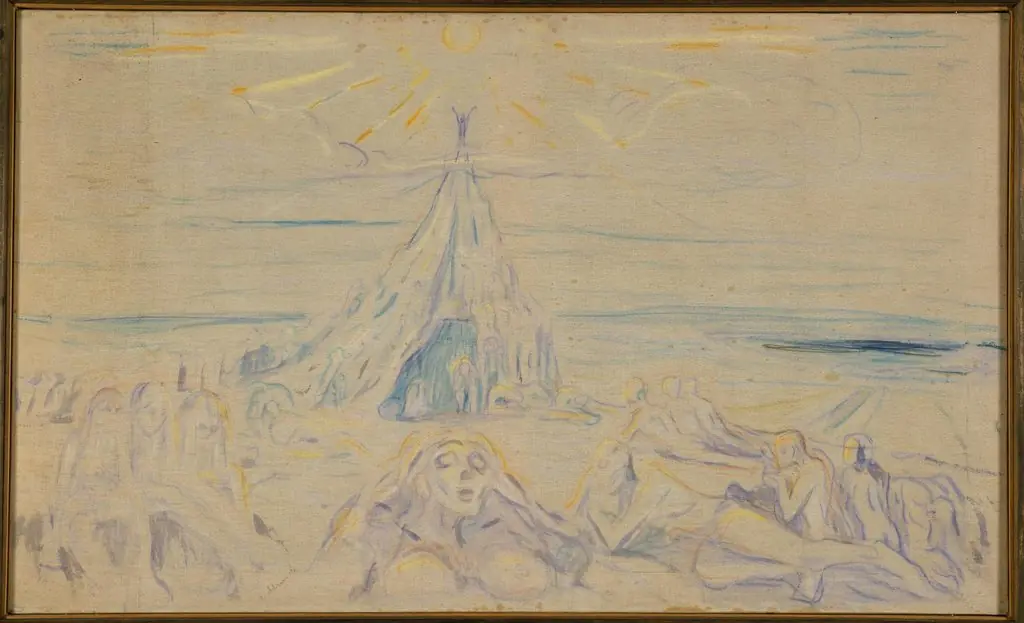
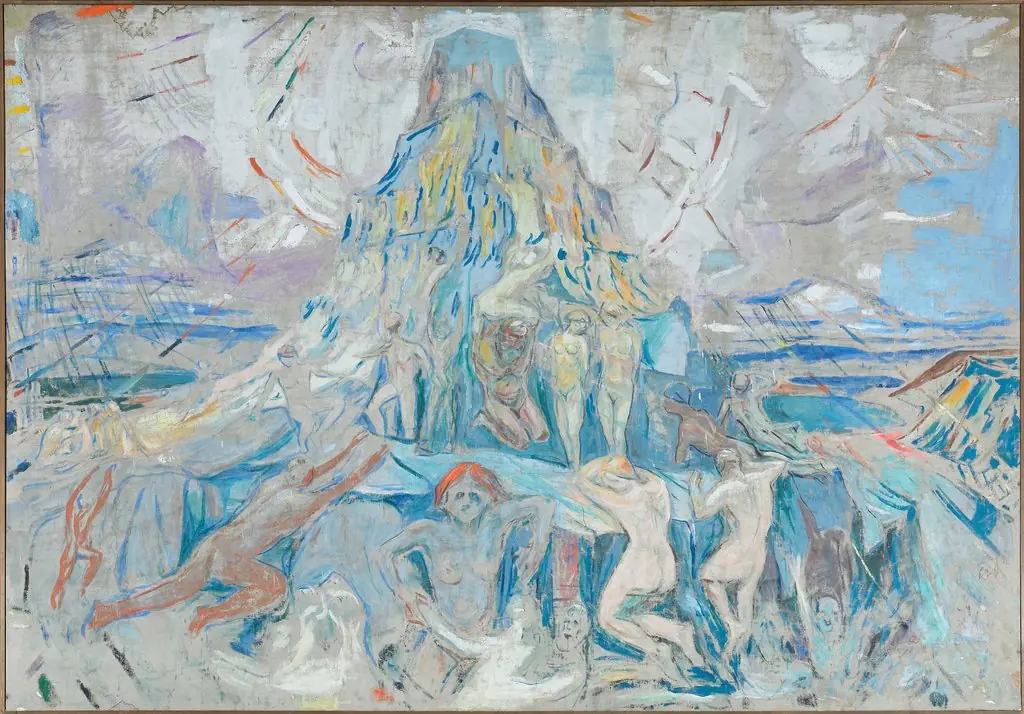
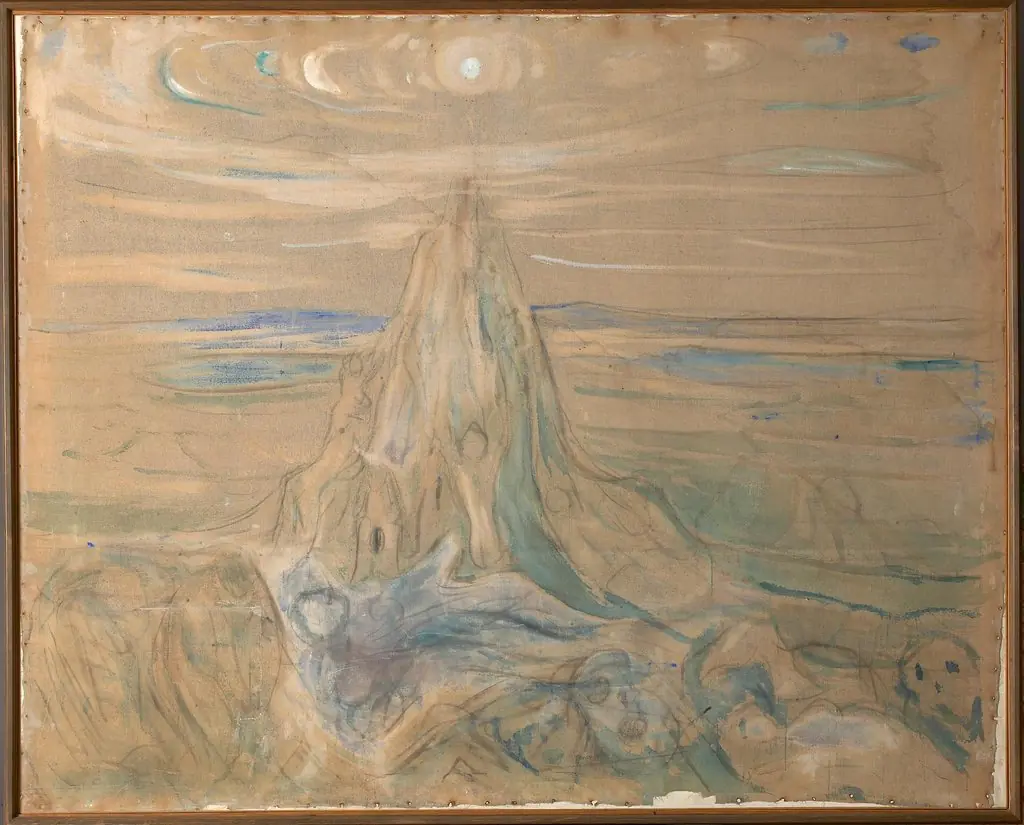
The mountain is depicted in shades of purple and blue, while the figures are shown in various poses, some standing, others sitting or lying down.
The Human Mountain is a painting by Edvard Munch, created in 1909. It features a large mountain in the center, with a few figures scattered around it. The mountain is depicted in shades of purple and blue, while the figures are shown in various poses, some standing, others sitting or lying down. The background of the painting is a light beige color, with some blue and green hues visible in the distance.
The painting has a dreamlike quality to it, with the figures and the mountain blending together in a surreal landscape. The use of color is muted, with a focus on blues and purples that give the painting a sense of calmness.
The Human Mountain is a unique and thought-provoking work that invites the viewer to contemplate its meaning and significance. For more information on Edvard Munch's work, you can explore his paintings at the Munch Museum.
Overview
Created in 1909, *The Human Mountain* is an oil painting by Norwegian artist Edvard Munch. The work belongs to the collection of the Munch Museum and exemplifies Munch’s engagement with post‑impressionist ideas, translating personal emotional currents into a visual language.
Subject & Meaning
The canvas presents a towering, abstracted mountain rendered in muted purples and blues, positioned centrally against a light beige ground. Scattered figures—standing, seated, or reclined—merge with the landscape, producing a dreamlike, almost surreal tableau that suggests a fusion of human presence with natural form.
Technique & Style
Munch employs a restrained palette dominated by cool blues, violets, and subtle earth tones, creating a calm, atmospheric effect. The brushwork is loose yet deliberate, allowing the mountain and figures to dissolve into one another, a hallmark of his post‑impressionist approach to expressing inner states through color and form.
History & Provenance
The painting emerged during a period when Munch’s personal history of illness and family loss heavily influenced his output. His association with the nihilist writer Hans Jæger informed the work’s introspective tone. Since its creation, *The Human Mountain* has remained in the Munch Museum’s holdings, preserving its original context.
Own this work as a print
Artist & collection
Artist
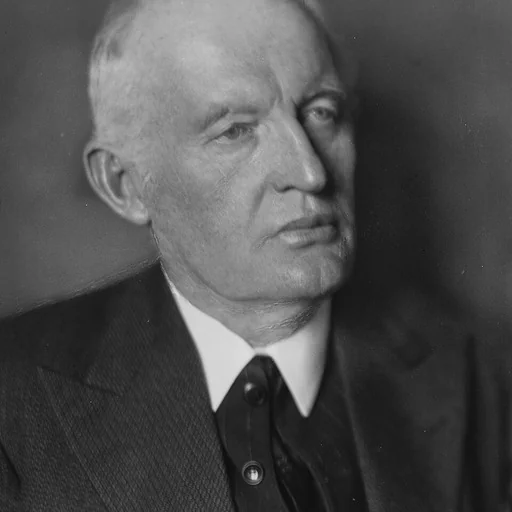
Edvard Munch ( MUUNK; Norwegian: ; 12 December 1863 – 23 January 1944) was a Norwegian painter.