Artwork
The Human Mountain
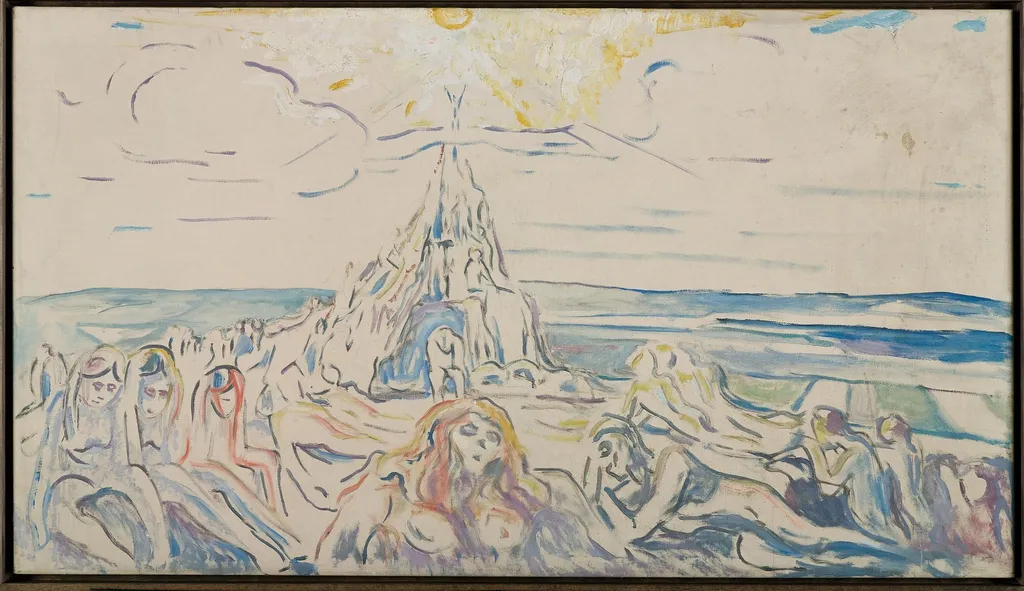
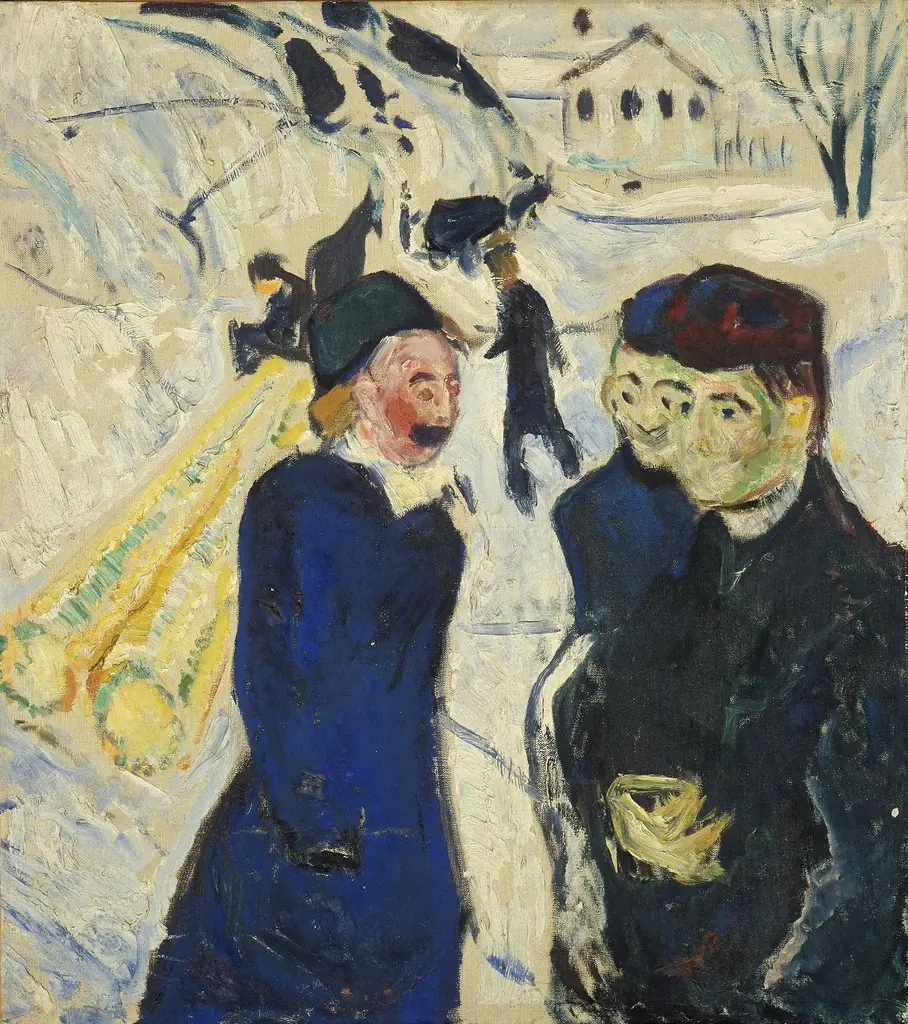
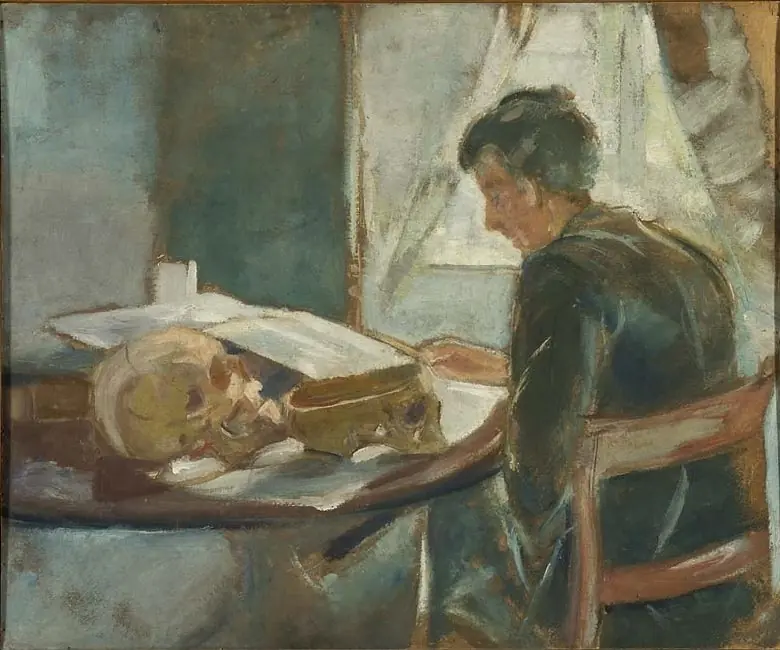
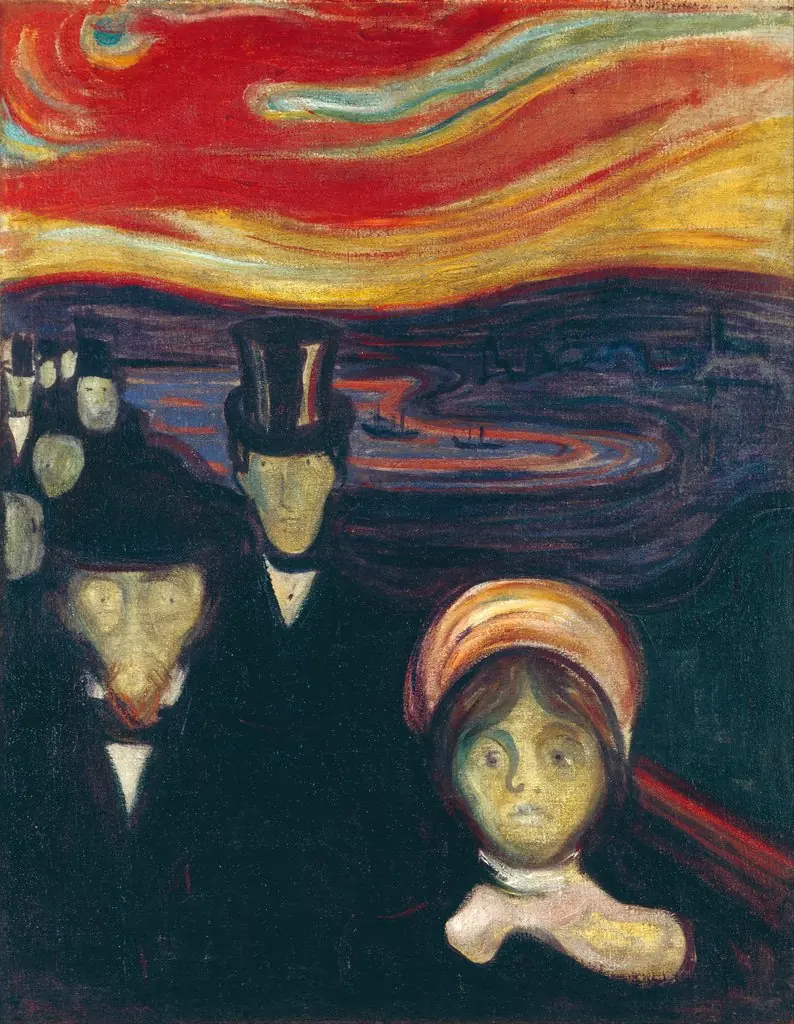
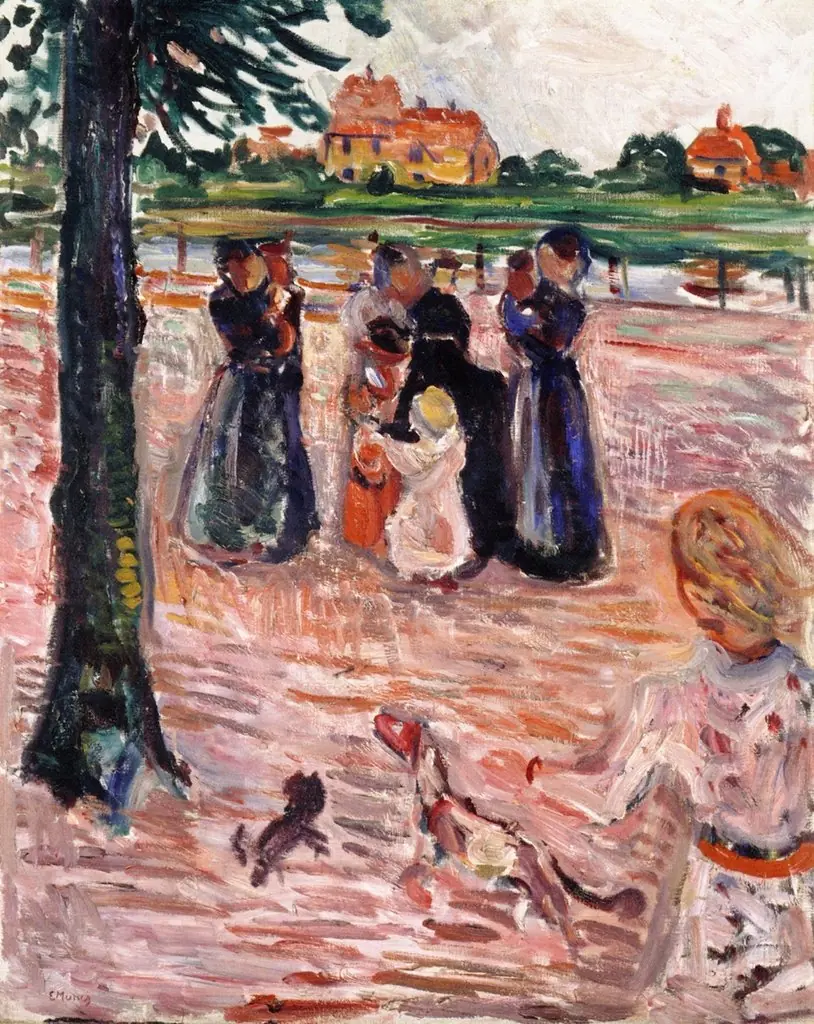
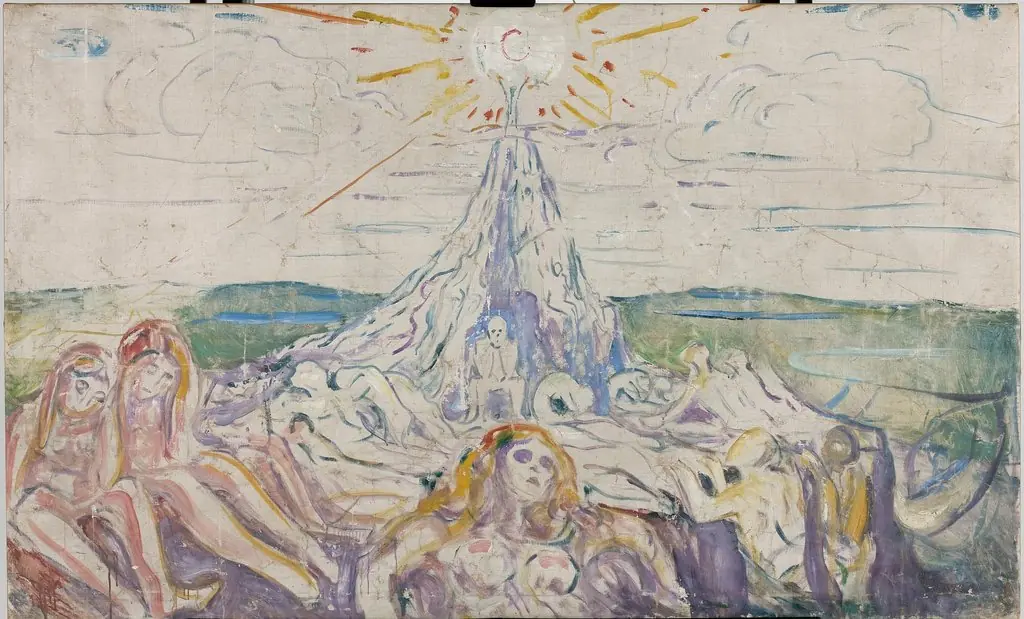
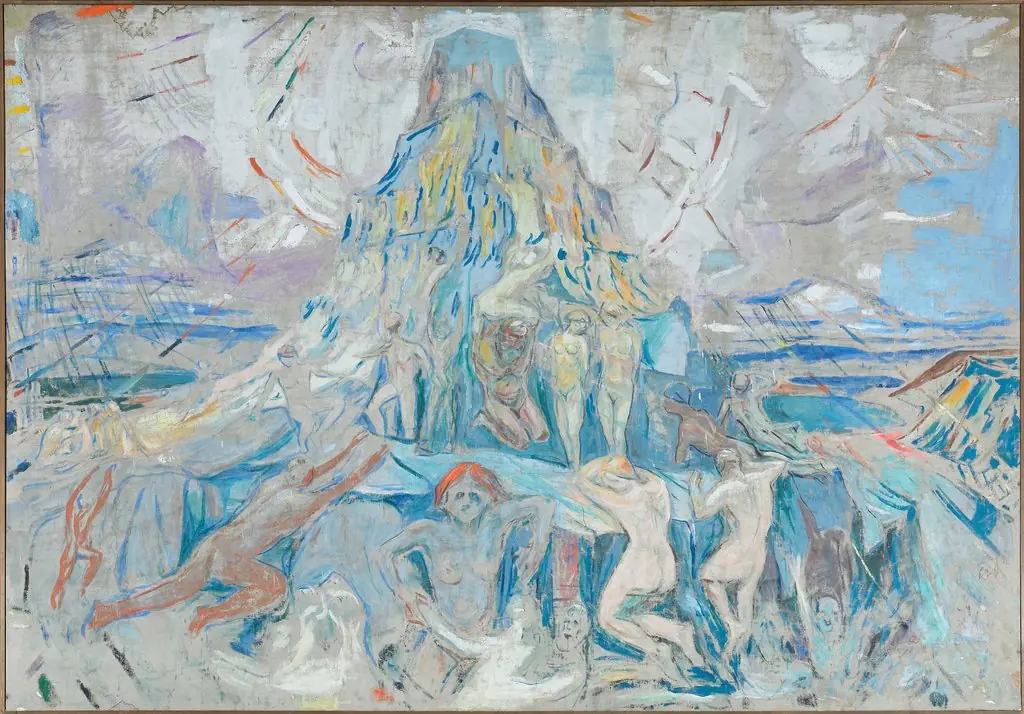
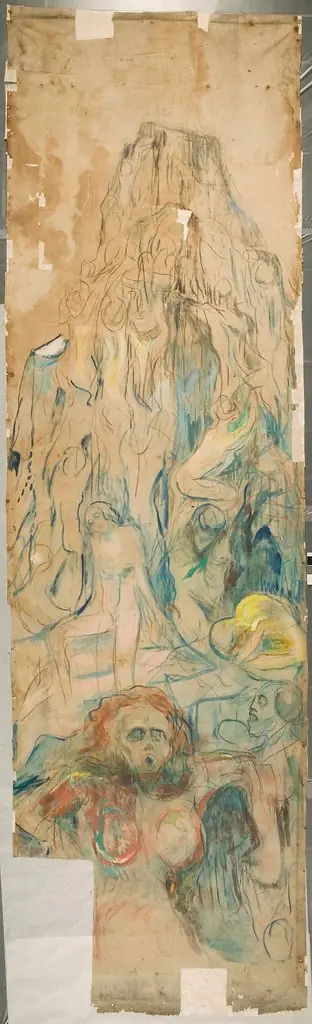
The Human Mountain is an oil painting by the Post-Impressionist artist Edvard Munch. It dates from 1909 and is held in the collection of the Munch Museum.
About this work
Overview
The composition avoids realistic representation, instead conveying a psychological atmosphere through simplified shapes and restrained tones.
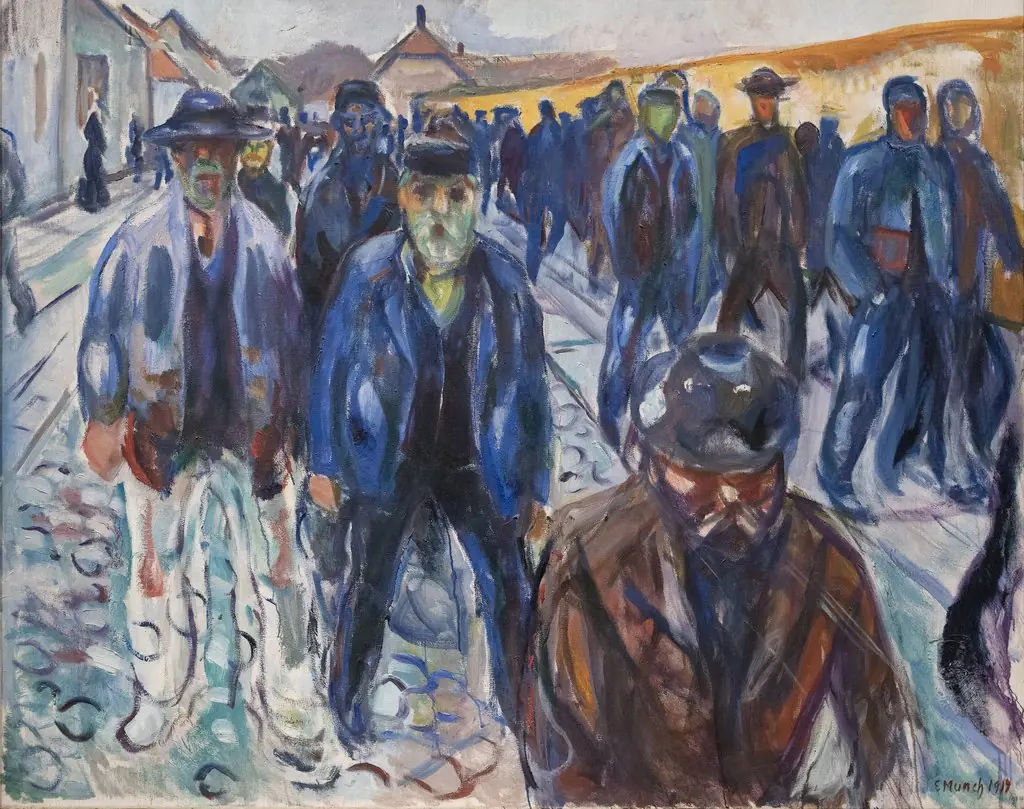
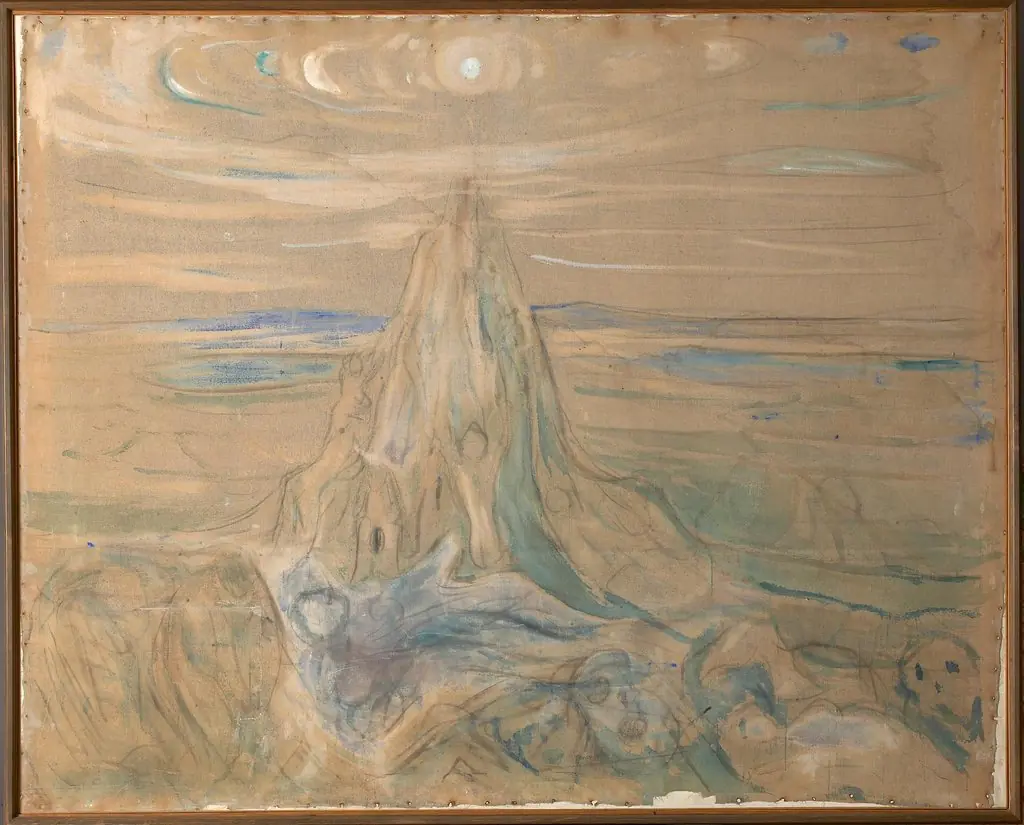
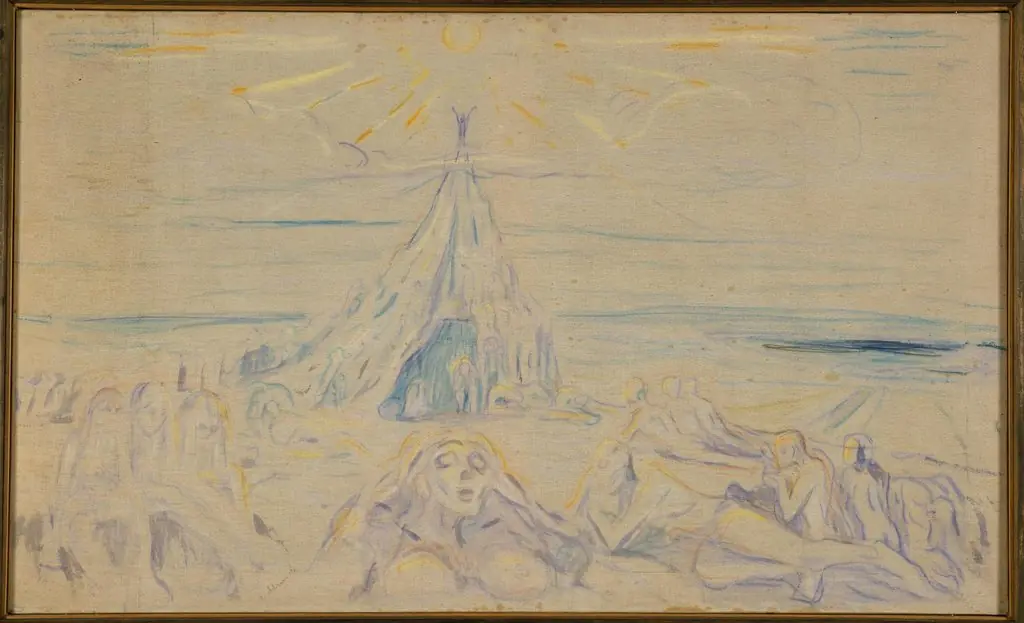
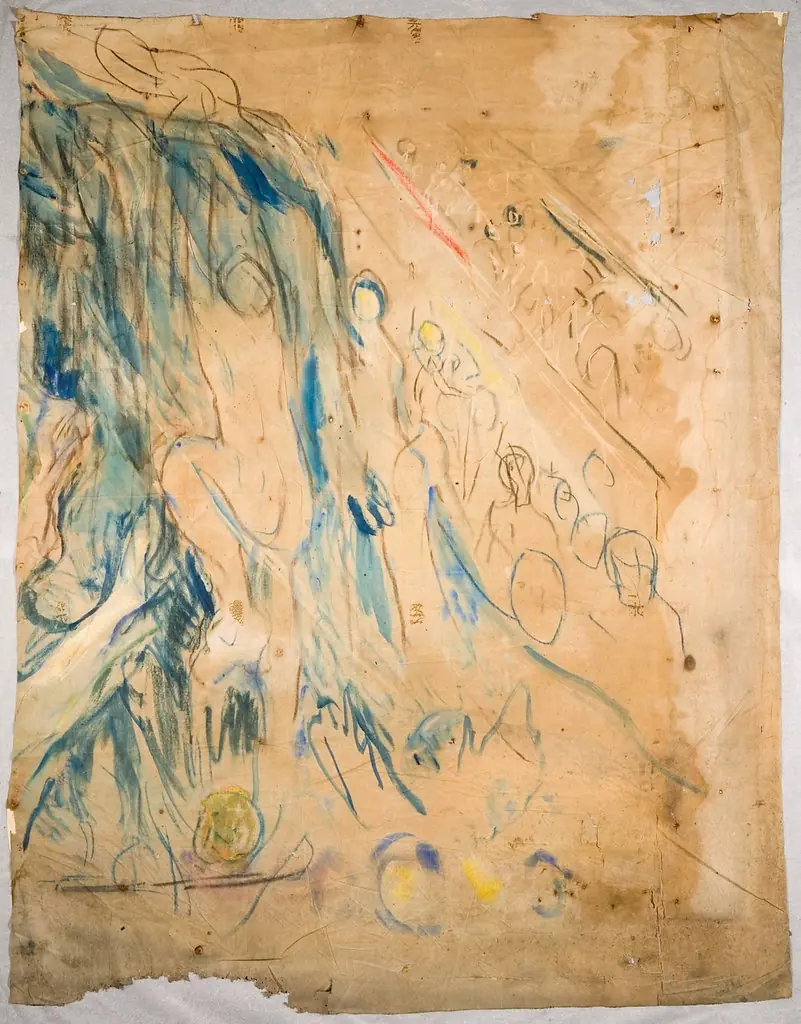
Painted in 1909, *The Human Mountain* is an oil work by Norwegian artist Edvard Munch. It depicts a dense, undulating mass of human figures arranged like a landscape, blending the human form with natural topography. The composition avoids realistic representation, instead conveying a psychological atmosphere through simplified shapes and restrained tones. The painting resides in the Munch Museum, Oslo, as part of the artist’s broader exploration of inner experience.
Subject & Meaning
The painting presents a crowd of figures fused into a single, mountain-like form—some upright, others recumbent—as if human presence has become geological. There is no clear narrative, but the arrangement suggests collective burden, fatigue, or existential weight. Munch often used the human body to externalize emotional states, and here, the mass may reflect alienation, societal pressure, or the anonymity of modern life.
Technique & Style
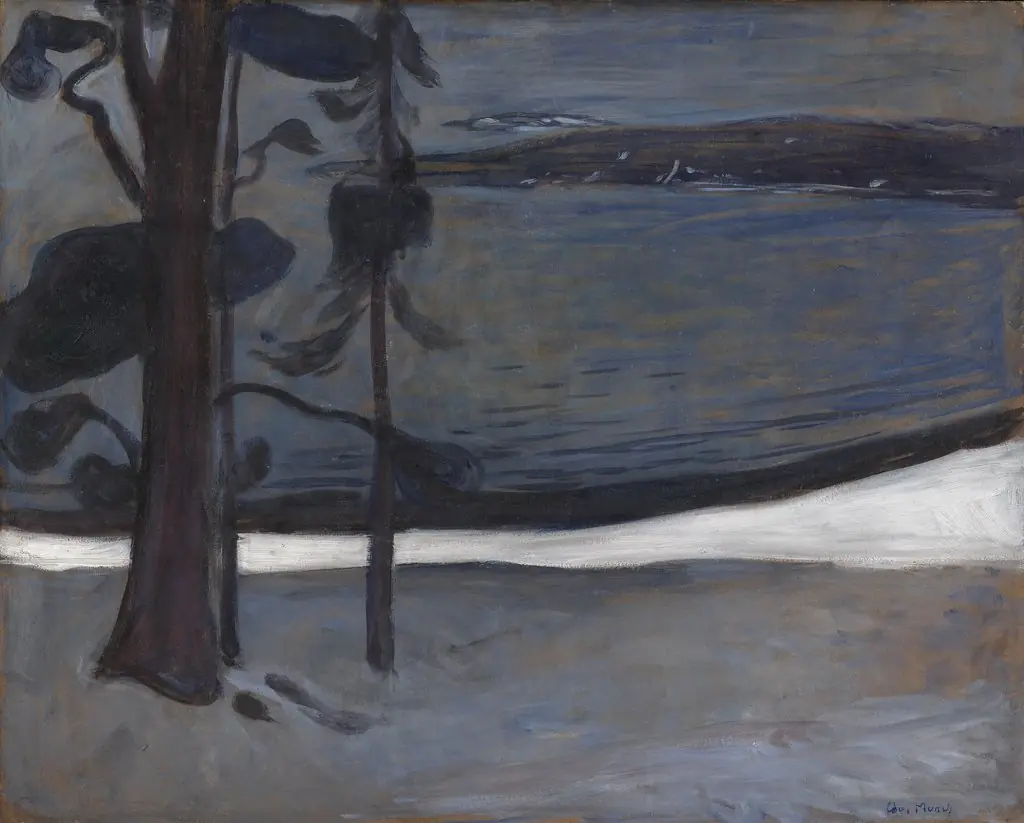
Munch employed loose, gestural brushwork and a muted palette dominated by blues, grays, and earth tones. Forms are simplified, with minimal detail, emphasizing rhythm and emotional resonance over anatomical accuracy. The background features a calm expanse of water and hazy sky, grounding the human mass in a quiet, dreamlike environment. The style aligns with Symbolist and Expressionist tendencies, prioritizing inner feeling over external realism.
History & Provenance
Created during Munch’s mature period, the painting was retained by the artist and later entered the collection of the Munch Museum upon its founding in 1963. It was not exhibited widely during his lifetime, reflecting its introspective nature. The work’s survival within the artist’s own holdings underscores its personal significance, likely tied to his ongoing preoccupations with human vulnerability and psychological depth.
Context
Munch’s work in this era was shaped by his earlier exposure to existential philosophy, particularly through his association with Hans Jæger, and by his training at Oslo’s Royal School of Art. While often linked to Expressionism, his approach diverged from pure abstraction, instead using figurative distortion to convey psychological tension. *The Human Mountain* reflects a broader European turn toward inner experience in art during the early 20th century.
Legacy
Though less known than *The Scream*, *The Human Mountain* exemplifies Munch’s sustained interest in the human condition as a visual metaphor. Its influence is seen in later artists who merged the figure with landscape to express collective emotion. The painting remains a quiet but potent statement within his oeuvre, illustrating how personal trauma and philosophical inquiry could be rendered in form and color without overt symbolism.
Artist & collection
Artist
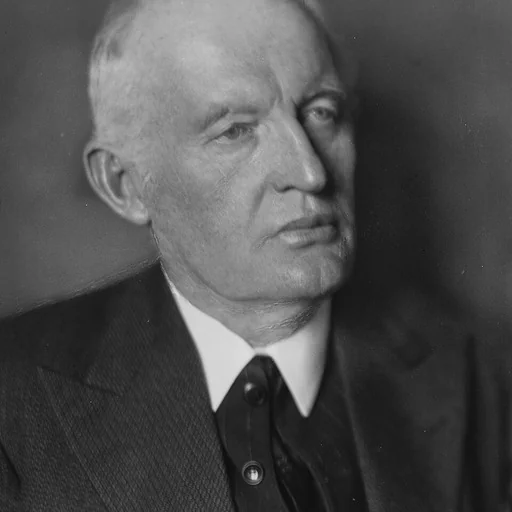
Edvard Munch ( MUUNK; Norwegian: ; 12 December 1863 – 23 January 1944) was a Norwegian painter.