Artwork
Untitled
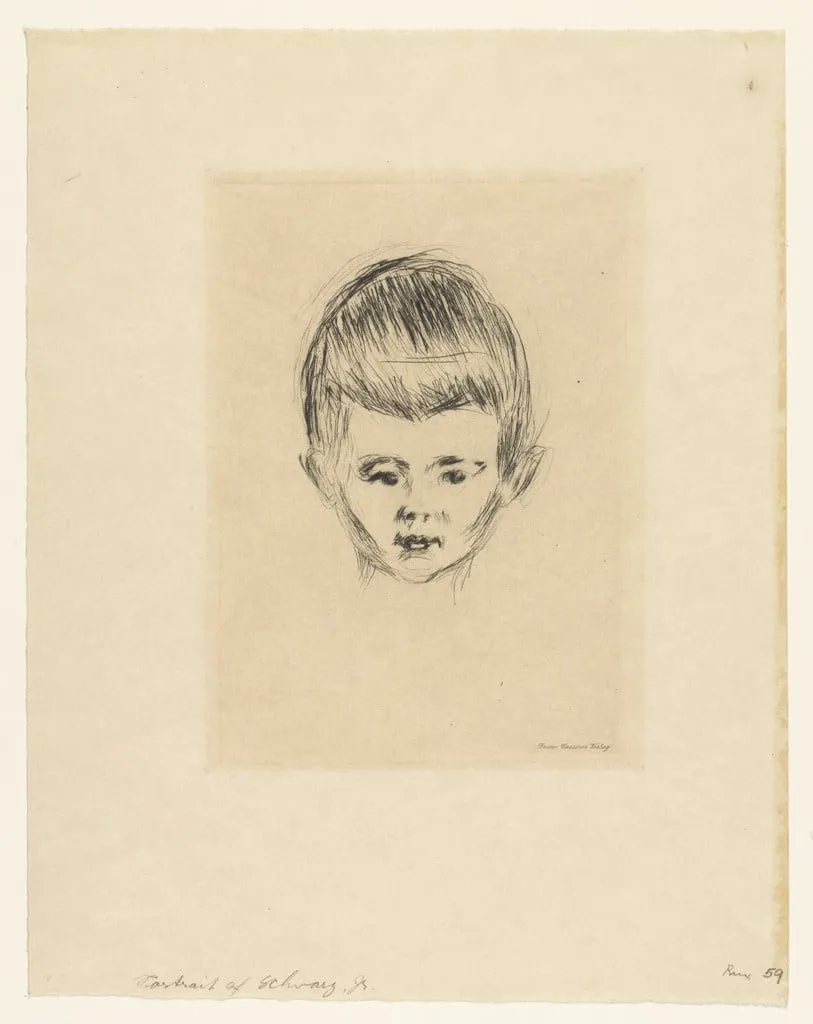
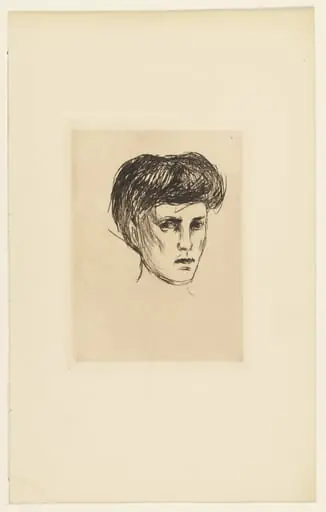
Untitled is an ink print by Edvard Munch. It dates from 1906 and is held in the collection of the Museum of Modern Art.
About this work
Overview
Created in 1906, this drypoint print by Edvard Munch is one of many intimate graphic works produced during a period of intense personal reflection.
Created in 1906, this drypoint print by Edvard Munch is one of many intimate graphic works produced during a period of intense personal reflection. Unlike his large-scale paintings, this piece relies on the immediacy of etched lines to convey psychological tension. The medium’s capacity for fine, irregular marks allowed Munch to translate inner states directly onto paper, bypassing traditional polish in favor of raw expression.
Subject & Meaning
The portrait depicts a male figure with wide, unblinking eyes and a parted mouth, suggesting a moment suspended between thought and speech. There is no narrative context—only the presence of a face caught in a state of quiet agitation. This ambiguity reflects Munch’s interest in universal emotional experiences rather than specific identities, aligning with his broader project of visualizing the invisible weight of anxiety and solitude.
Technique & Style
Using drypoint, Munch incised lines directly into a metal plate, creating burrs that hold dense ink and produce soft, blurred edges when printed. The resulting image is characterized by its tactile roughness and spontaneous energy. The lines appear hurried, as if drawn in real time, reinforcing the sense of an unfiltered mental snapshot. This method contrasts with the smoother finishes of traditional engraving, emphasizing emotional urgency over technical refinement.
History & Provenance
Made nearly a decade after *The Scream*, this print belongs to a series of graphic works Munch produced during his mature years, when he increasingly turned to printmaking as a private outlet. Though less publicly celebrated than his paintings, these prints were central to his artistic development. The work was likely made in his studio in Norway, where he lived intermittently after years spent abroad, returning to themes that had long haunted his imagery.
Context
Munch’s engagement with existential themes was shaped by his exposure to Scandinavian intellectual circles in the 1880s, particularly the writings of Hans Jæger, who championed radical individualism and emotional honesty. Though the print lacks overt symbolism, its intensity echoes the broader fin-de-siècle preoccupation with inner life, alienation, and the fragility of the self—concerns shared by contemporaries across Europe.
Legacy
This print exemplifies Munch’s influence on modern graphic art, demonstrating how simple, direct marks could carry profound psychological weight. His use of drypoint inspired later expressionist printmakers who valued immediacy and emotional authenticity over technical polish. While not widely exhibited, such works remain key to understanding his evolution from painter to a master of intimate, introspective imagery.
Artist & collection
Artist
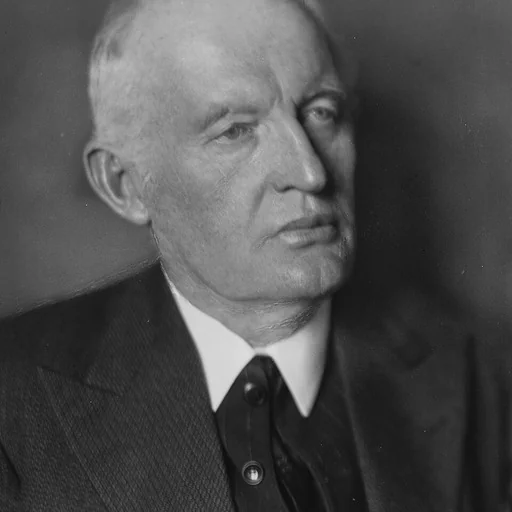
Edvard Munch ( MUUNK; Norwegian: ; 12 December 1863 – 23 January 1944) was a Norwegian painter.

 Pierre Renoir
 Child's Bust, Turned to the Right
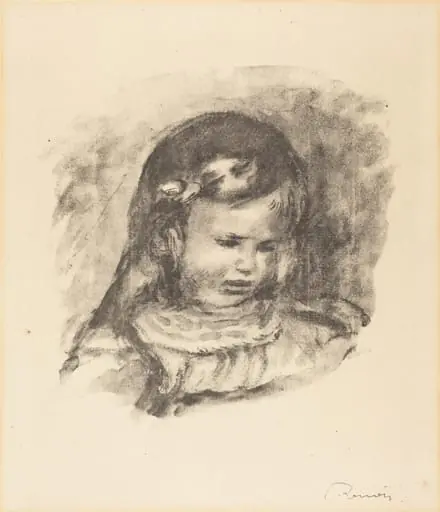 Claude Renoir, with Lowered Head
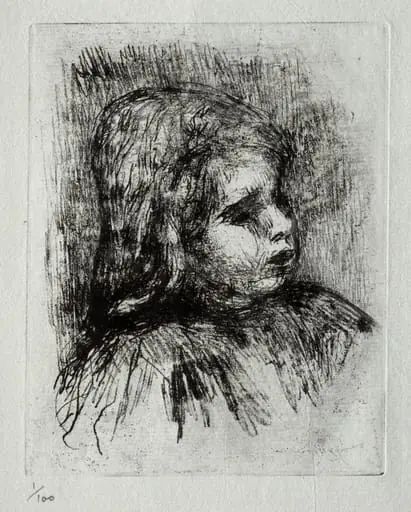 Claude Renoir, de trois-quarts à droite
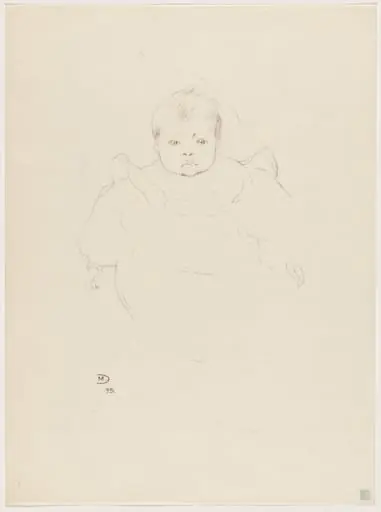 Petit portrait
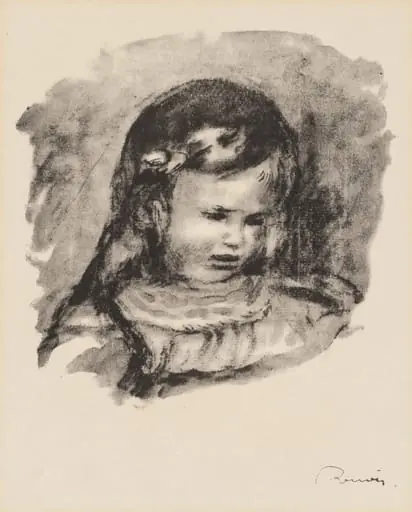 Claude Renoir, the Head Lowered (Claude Renoir, la tête baissée)
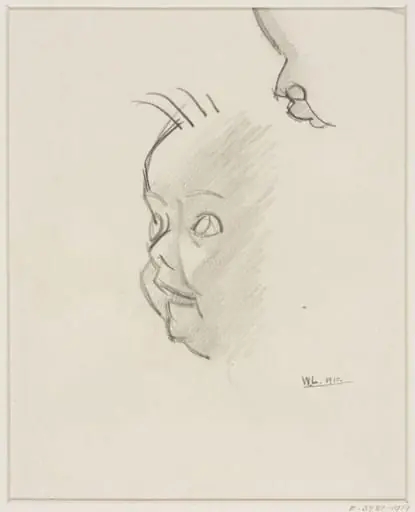 Baby's head
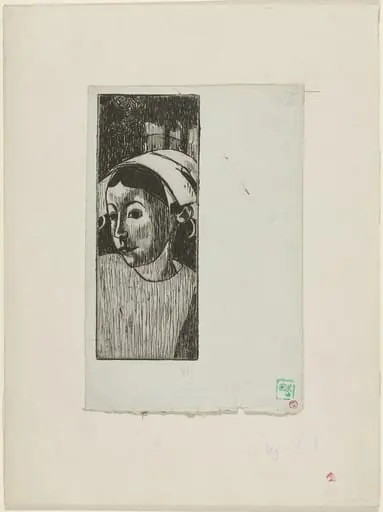 Untitled
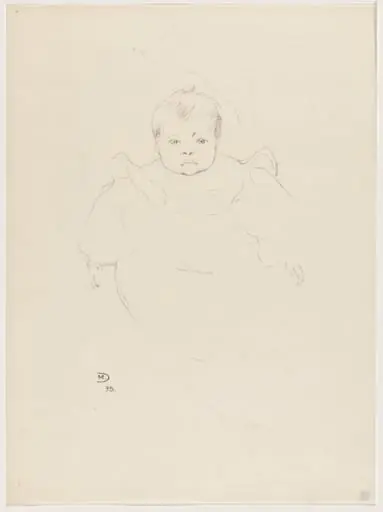 Petit portrait
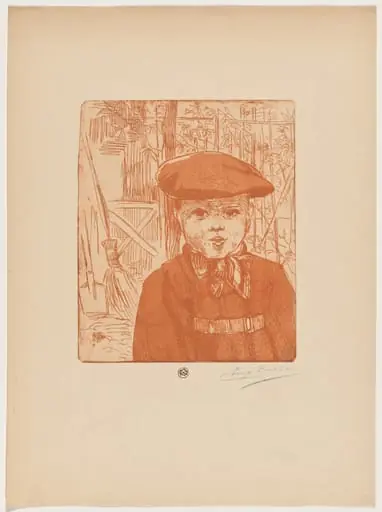 Le petit épicier (Chandlery)
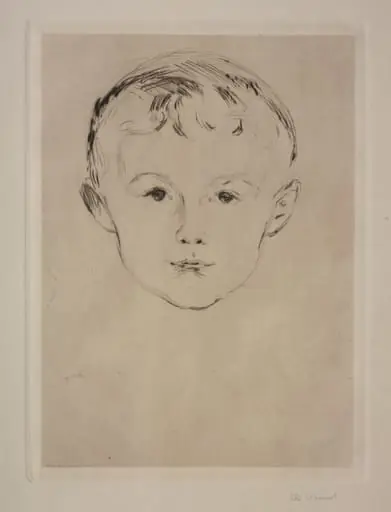 From Max Linde's House: Theodor Linde
 Untitled