Artwork
Sir William Milner, 2nd Bart
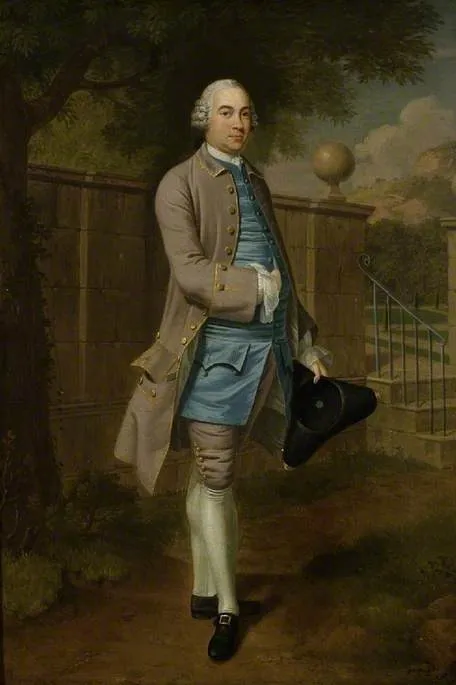
Sir William Milner, 2nd Bart is an oil painting by the Rococo painting artist Edward Haytley. It dates from 1764 and is held in the collection of the Fitzwilliam Museum.
About this work
If you're interested in learning more about the artist who created this portrait, you might want to look up Edward Haytley.
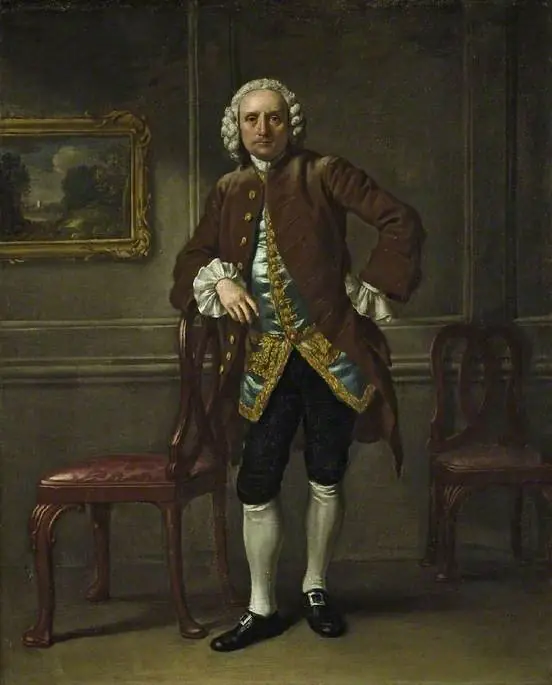
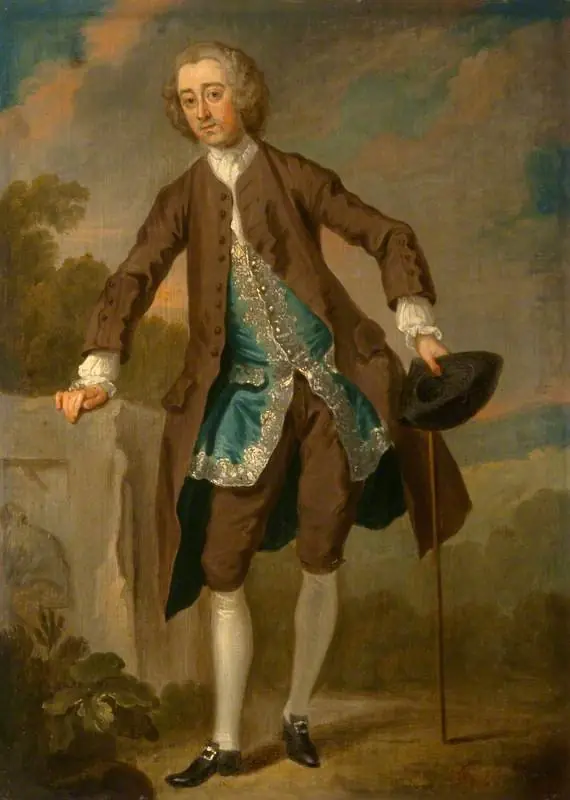
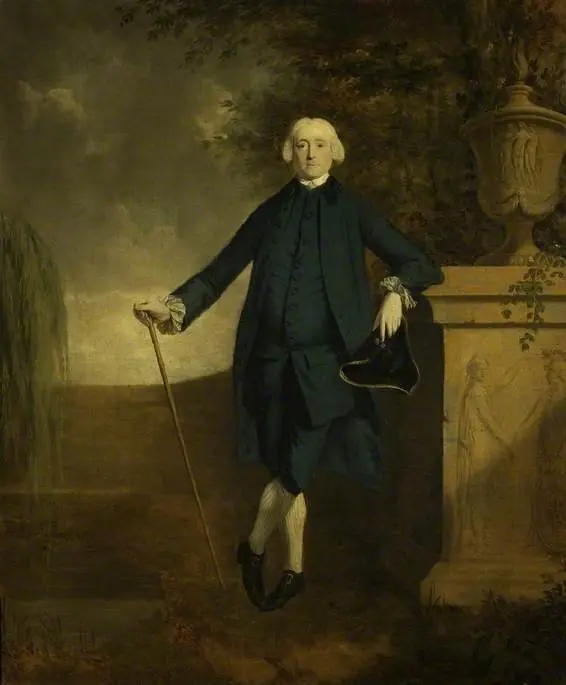
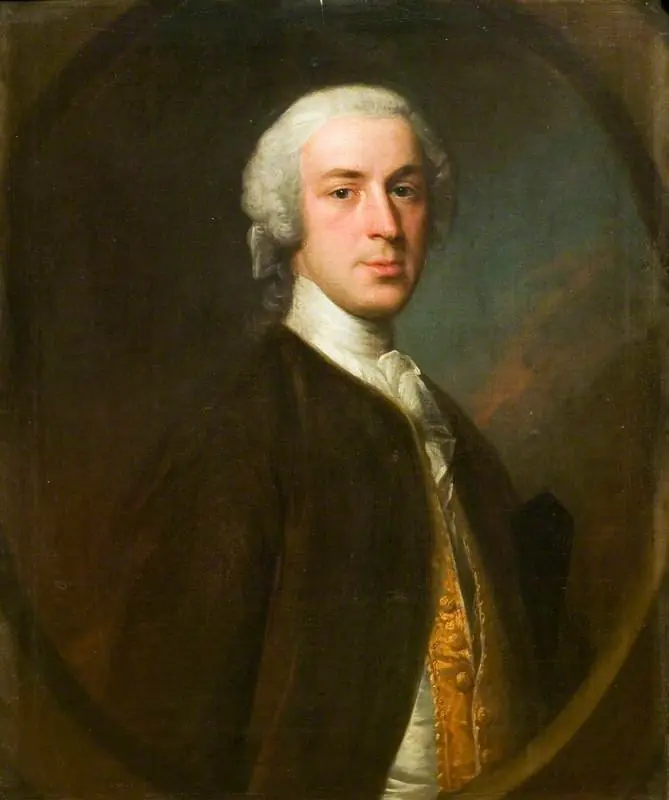
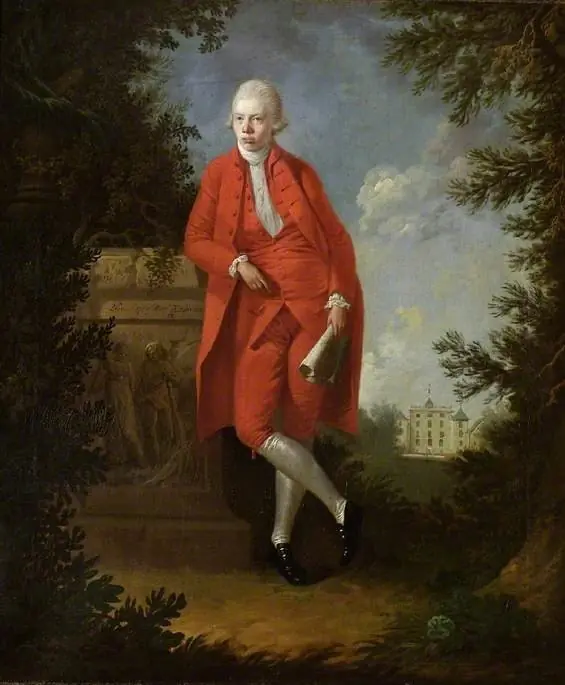
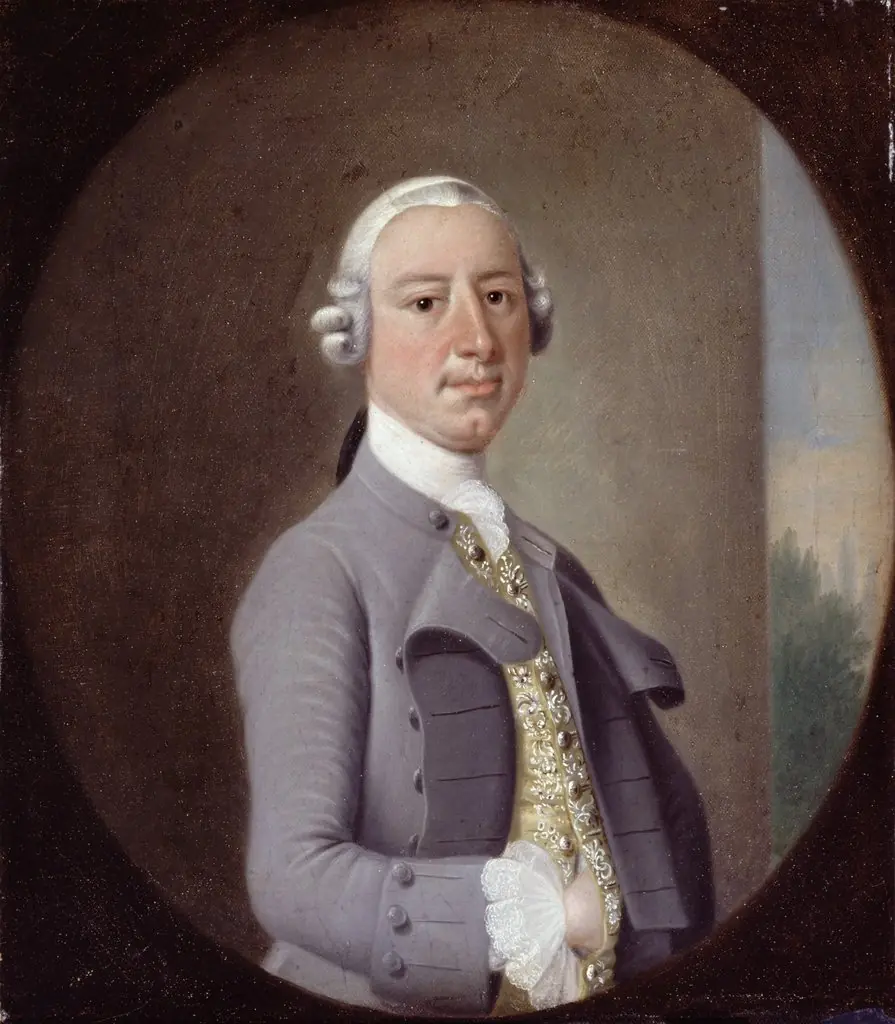
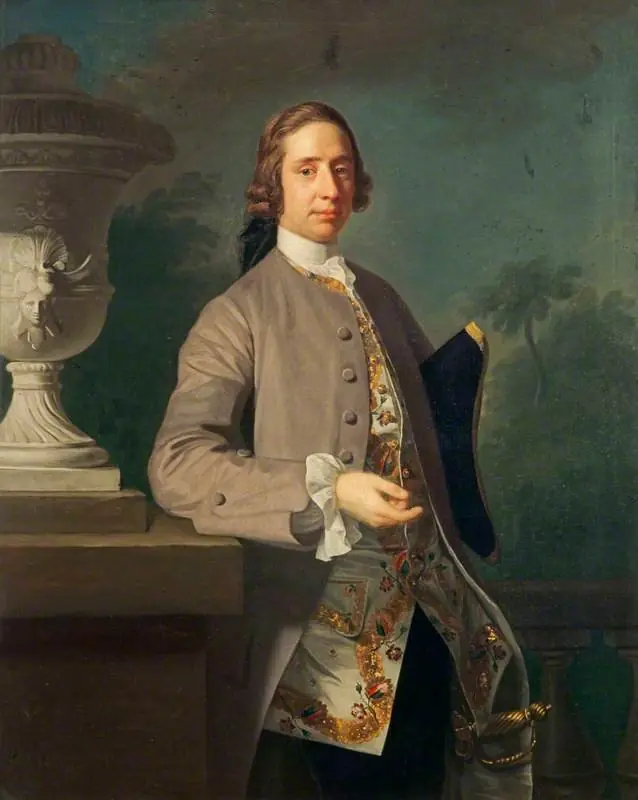
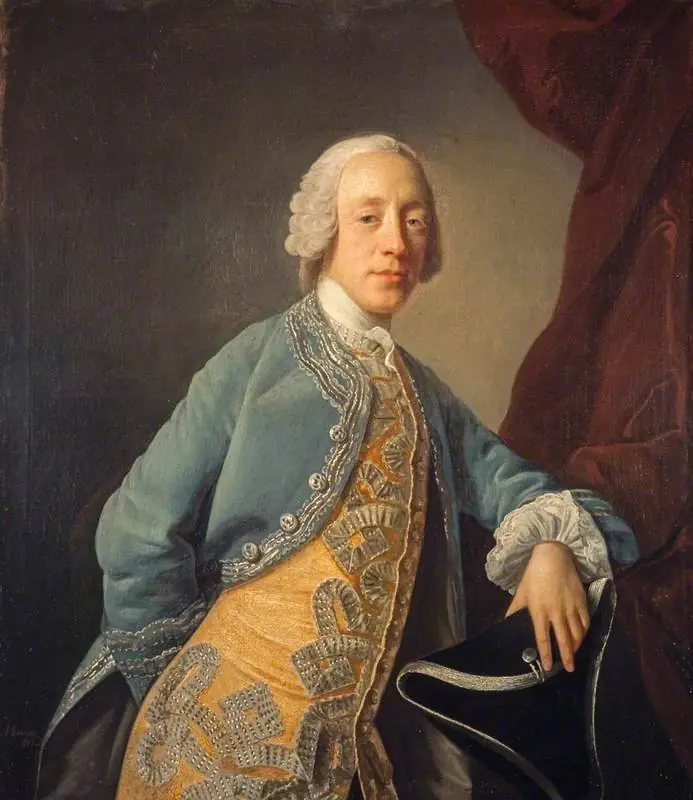
This portrait shows a man standing in front of a stone wall, with a tree on the left and a staircase on the right. He's wearing a brown coat with gold buttons, a blue waistcoat, and white stockings. He holds a black hat in his right hand.
The man's attire and the background suggest a formal setting, possibly from the 18th century. The painting's style and the subject's clothing are consistent with portraits from that era.
If you're interested in learning more about the artist who created this portrait, you might want to look up Edward Haytley.
Overview
Painted in 1764 by Edward Haytley, this oil portrait depicts Sir William Milner, 2nd Baronet, a member of the English gentry. Haytley, active between 1740 and 1764, was known for portraiture and landscape work, though little is known of his personal life beyond possible ties to Lancashire. The painting resides in the Fitzwilliam Museum’s collection, representing a typical example of mid-18th-century British portraiture.
Subject & Meaning
Sir William Milner is portrayed in formal attire, conveying his status as a baronet. His stance, with hat held in hand, suggests a moment of composed dignity rather than action. The inclusion of architectural elements—a stone wall and staircase—implies a private estate setting, reinforcing his landed identity. The portrait serves less as a narrative than as a visual assertion of social position within the Georgian elite.
Technique & Style
Haytley employed oil paint with a restrained palette and soft modeling, characteristic of late Rococo portraiture. The brushwork is precise but not overly ornate, focusing on texture in fabric and the solidity of form. The background is simplified, with a tree and stonework framing the figure without distraction. Lighting is even, emphasizing clarity over dramatic contrast, aligning with the period’s preference for restrained elegance.
History & Provenance
The painting was completed in 1764, near the end of Haytley’s documented career. Its provenance prior to entering the Fitzwilliam Museum is not publicly detailed, but its preservation suggests it remained within the Milner family or their circle for some time. The museum acquired it as part of its broader collection of British portraiture, ensuring its accessibility for study and public viewing.
Context
In mid-18th-century England, portraiture was a key medium for affirming social rank. Haytley’s work reflects the conventions of the time: formal dress, controlled composition, and subtle environmental cues. While not as flamboyant as continental Rococo, the painting shares its emphasis on refined elegance. Such portraits were often displayed in country houses to signal lineage and status to visitors.
Legacy
Edward Haytley’s oeuvre remains limited in scope, with few works surviving or widely studied. This portrait stands as one of his better-documented commissions, offering insight into provincial portraiture practices outside London. Though not influential in artistic movements, it contributes to the historical record of how the gentry visually constructed their identity in the Georgian era.
Artist & collection
Artist
Edward Haytley was an English portrait and landscape painter of the 18th century.