Artwork
Untitled
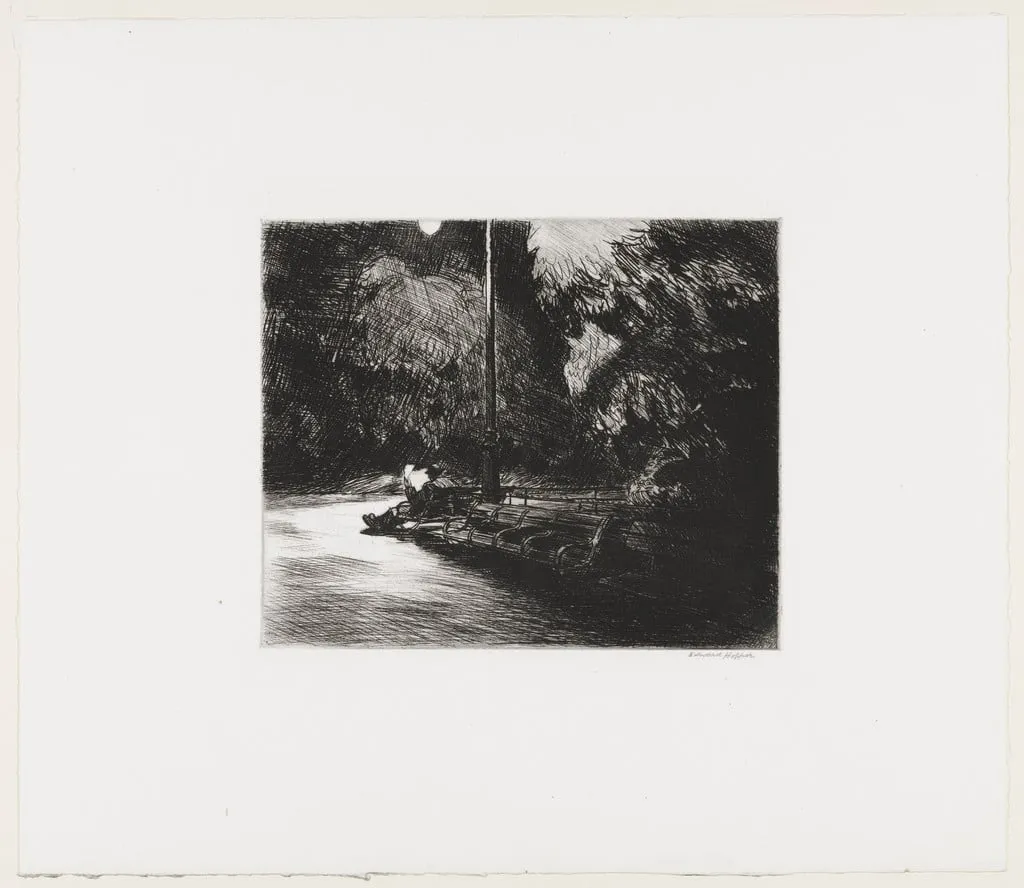
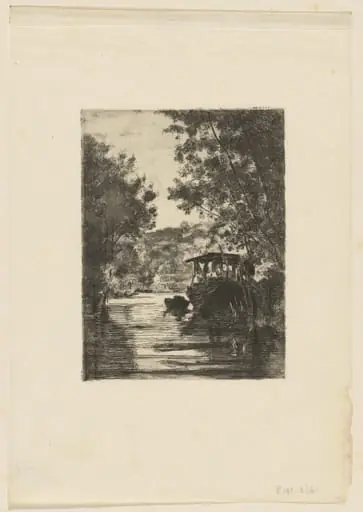
Untitled is an ink print by Edward Hopper. It dates from 1921 and is held in the collection of the Museum of Modern Art.
About this work
Overview
Created in 1921, this etching by Edward Hopper is one of his early printed works, made during a period when he was refining his visual language beyond painting.
Created in 1921, this etching by Edward Hopper is one of his early printed works, made during a period when he was refining his visual language beyond painting. The piece captures a quiet nocturnal scene with minimal elements: a solitary boat, a single figure, and a darkened shoreline. As a print, it reflects Hopper’s interest in tone and composition, using the etching process to isolate mood through contrast and restraint.
Subject & Meaning
The image depicts a lone figure in a small boat, facing a shadowed shore lined with dense trees. The absence of clear narrative invites contemplation rather than storytelling. The stillness of the water and the figure’s inward posture suggest isolation, a recurring theme in Hopper’s work. The scene evokes introspection, not through dramatic action but through the weight of silence and the ambiguity of intent.
Technique & Style
Hopper employed etching, a method involving incising lines into a metal plate with acid, to achieve precise contrasts between light and dark. The sharp, controlled lines define the trees’ tangled branches and the boat’s silhouette, while areas of unetched plate remain bright, suggesting moonlight on water. The technique enhances the atmosphere of stillness, with each mark contributing to a sense of calm tension.
History & Provenance
This work entered the collection of The Museum of Modern Art as part of its early commitment to American printmaking. Though not widely exhibited during Hopper’s lifetime, it was recognized by curators for its formal discipline and emotional resonance. Its presence in MoMA’s holdings underscores its role in documenting the evolution of American graphic art in the early 20th century.
Context
In 1921, Hopper was transitioning from illustration to fine art, influenced by his training under Robert Henri and the Ashcan School’s focus on everyday life. While his paintings would later emphasize urban loneliness, this etching reveals his early fascination with rural solitude and natural settings. The work aligns with broader American artistic interests in mood and atmosphere during the postwar years.
Legacy
Though less known than his paintings, Hopper’s etchings like this one reveal the foundations of his visual language. The interplay of light, shadow, and isolation in this print anticipates themes he would develop over decades. It remains a quiet but significant example of how printmaking contributed to his broader exploration of American solitude and the emotional weight of ordinary moments.
Artist & collection
Artist
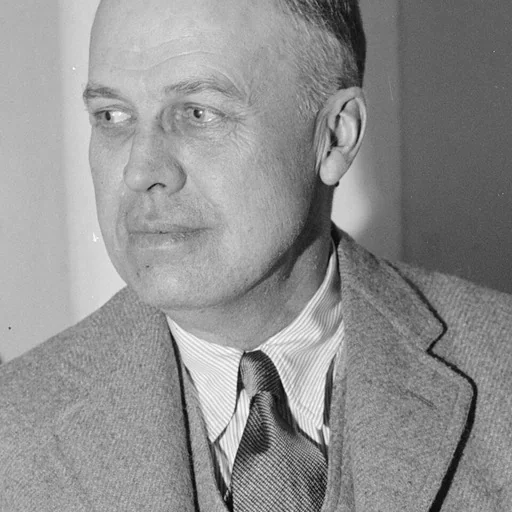
Edward Hopper (July 22, 1882 – May 15, 1967) was an American realist painter and printmaker.

 The Dyer's Boat
 The Little Longparish
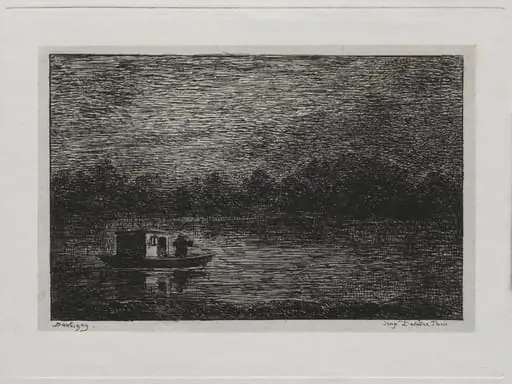 The Boat Trip: Night Voyage or Net Fishing (second version)
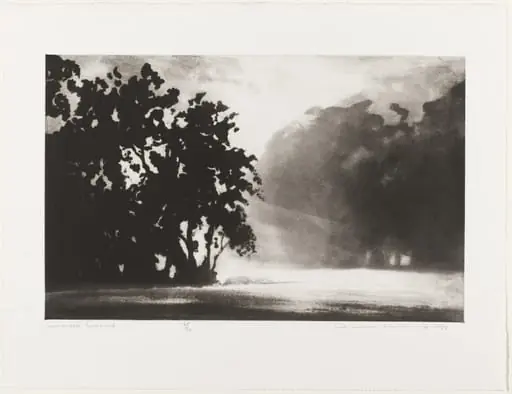 Untitled
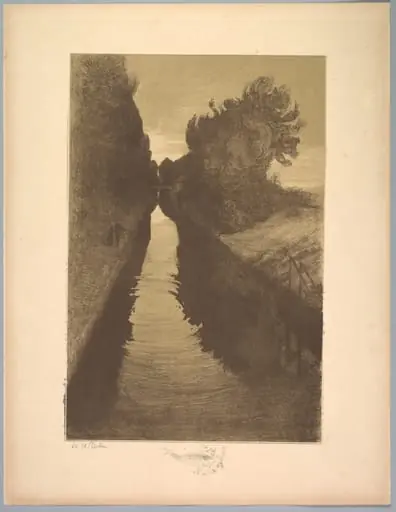 Suite de Paysages: Landscape, Plate 1, Remarque, A Fish
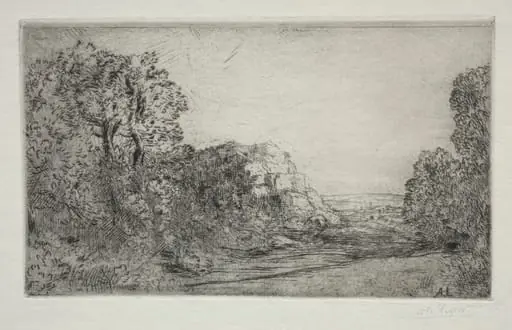 Landscape: Sunrise
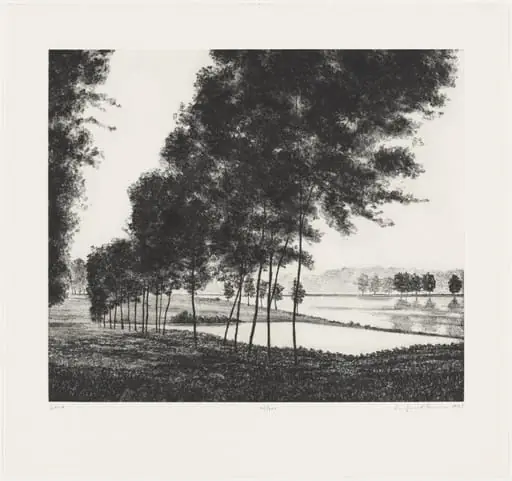 Untitled
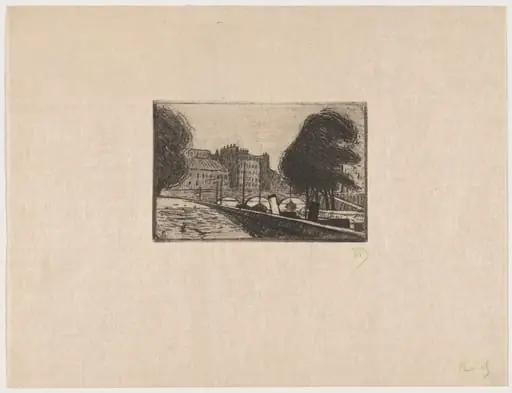 Paysage
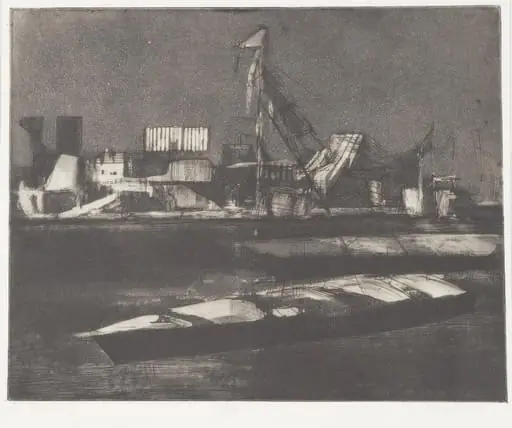 Port
Port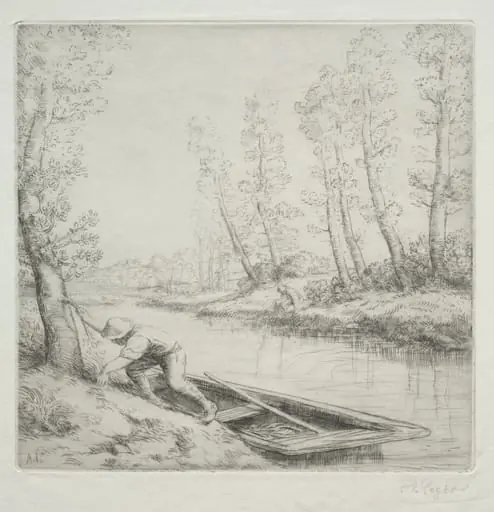 Morning on the River (Le Matin sur la rivière)
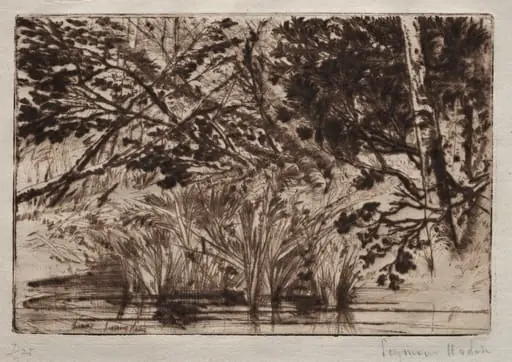 The Mouth of a Brook (Second Plate)
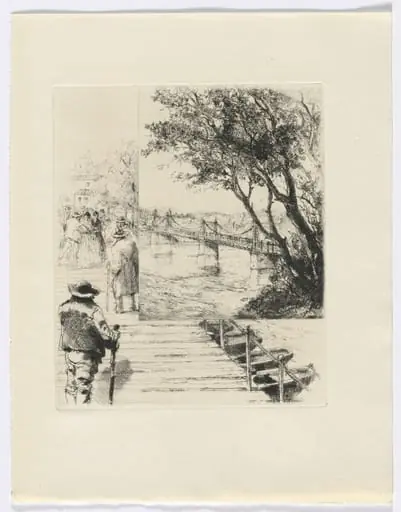 Frédéric Mistral: Mémoires et Recits by Frédéric Mistral: figures on a pier (insert after p.216)