Artwork
Portfolio III, Plate 79: Sioux Chiefs
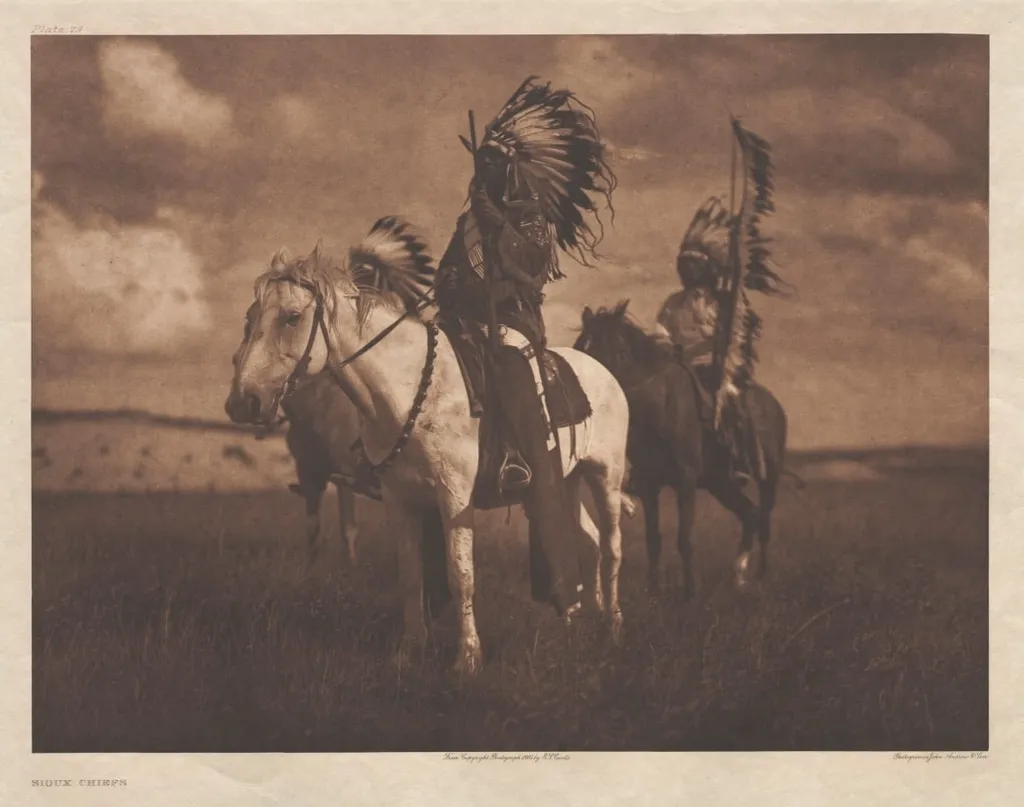
Portfolio III, Plate 79: Sioux Chiefs is a work on paper by Edward S. Curtis. It dates from 1905 and is held in the collection of the Cleveland Museum of Art. Plate 79 from Edward S.
About this work
Overview
Part of Curtis’s larger project to document Native American life, this image was produced during his extensive fieldwork across the northern Plains.
Plate 79 from Edward S. Curtis’s Portfolio III depicts a group of Sioux leaders, photographed in 1905. Part of Curtis’s larger project to document Native American life, this image was produced during his extensive fieldwork across the northern Plains. The photograph is now held in the collection of The Cleveland Museum of Art, where it is preserved as a key example of early 20th-century ethnographic photography.
Subject & Meaning
The image portrays several Sioux chiefs, dressed in traditional regalia, seated in a formal arrangement. Curtis intended to capture what he saw as the dignity and gravitas of Indigenous leaders, though his staging often reflected romanticized ideals rather than contemporary realities. The composition emphasizes stillness and solemnity, reinforcing a narrative of cultural endurance amid rapid societal change.
Technique & Style
Curtis used large-format glass plate negatives and natural light to achieve fine detail and tonal depth. The portrait’s soft focus and careful arrangement reflect his preference for pictorialist aesthetics, blending documentary intent with artistic composition. He often retouched prints by hand to enhance contrast and remove modern elements, shaping the final image to align with his vision of a vanishing way of life.
History & Provenance
This plate was produced as part of Curtis’s multi-volume work The North American Indian, funded by J.P. Morgan and others. It was printed in a limited edition around 1907–1908. The Cleveland Museum of Art acquired the photograph through donation or purchase in the 20th century, integrating it into its holdings of American photographic history.
Context
During the early 1900s, federal policies were displacing Native communities and suppressing cultural practices. Curtis’s project emerged amid growing public fascination with Indigenous peoples as relics of the past. While his images preserved visual records of clothing, adornment, and posture, they also contributed to the myth of the ‘doomed Indian,’ overlooking ongoing resilience and adaptation.
Legacy
Curtis’s photographs, including this one, remain widely referenced in discussions of Native representation. Scholars now critically examine his methods and motivations, recognizing both the historical value of his archive and the ways his work reinforced stereotypes. The image continues to prompt dialogue about authorship, ethics, and the power of visual documentation in shaping cultural memory.
Artist & collection

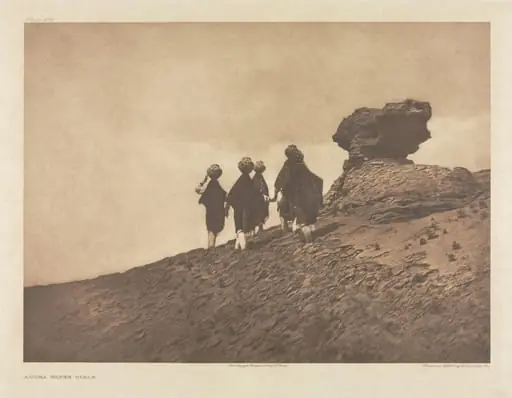 Portfolio XVI, Plate 573: Acoma Water Girls
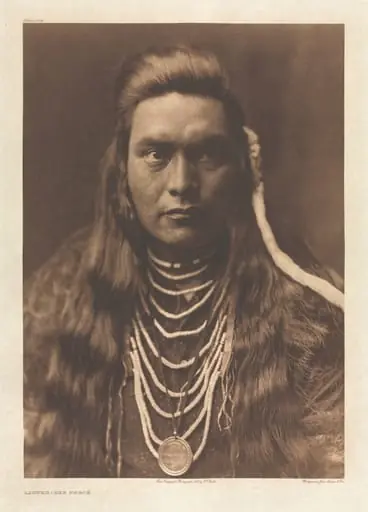 Portfolio VIII, Plate 264: Lawyer - Nez Percé
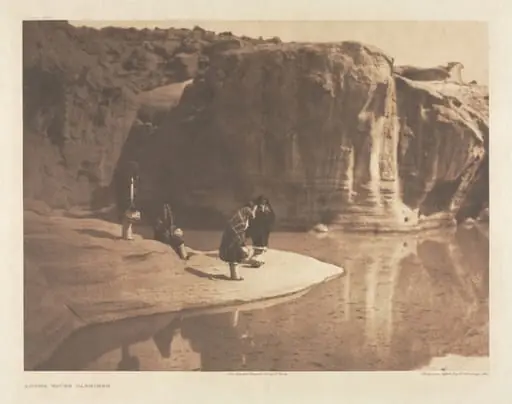 Portfolio XVI, Plate 568: Acoma Water Carriers
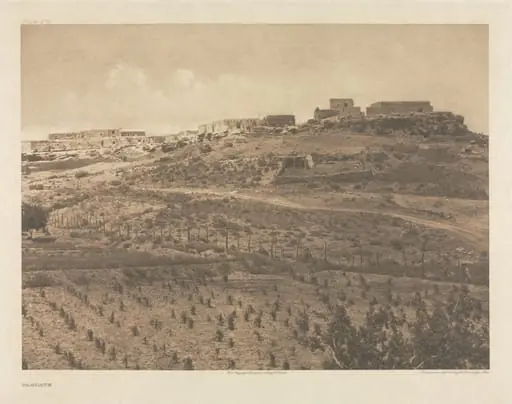 Portfolio XVI, Plate 574: Paguate
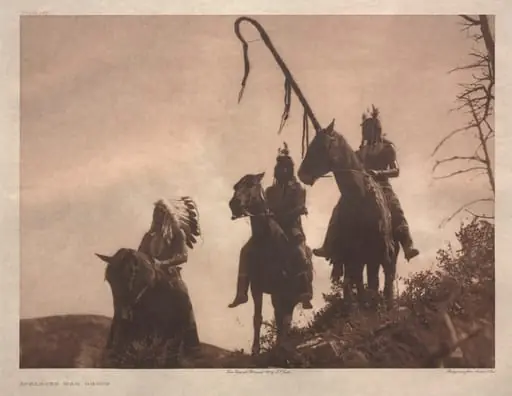 Portfolio IV, Plate 147: Apsaroke War Group
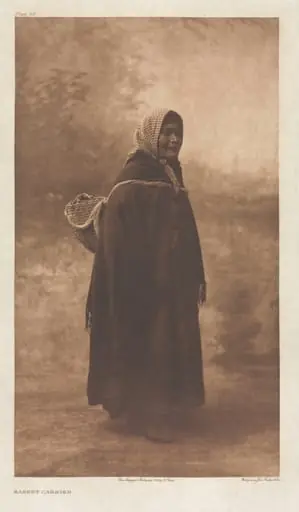 Portfolio IX, Plate 311: Basket Carrier
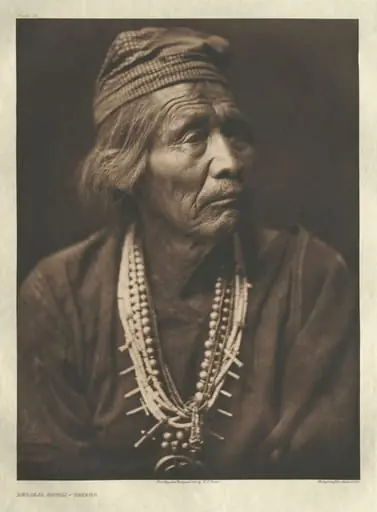 Portfolio I, Plate 31: Nesjája Hatáli-Navaho
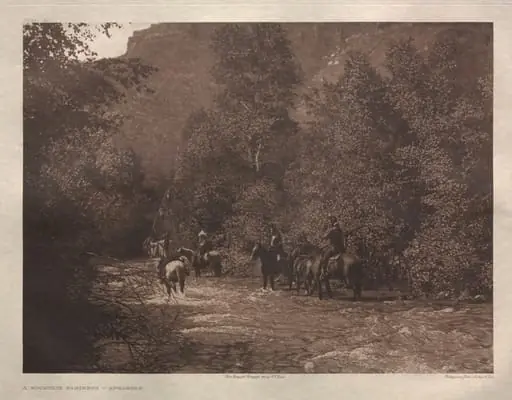 Portfolio IV, Plate 140: A Mountain Fastness--Apsaroke
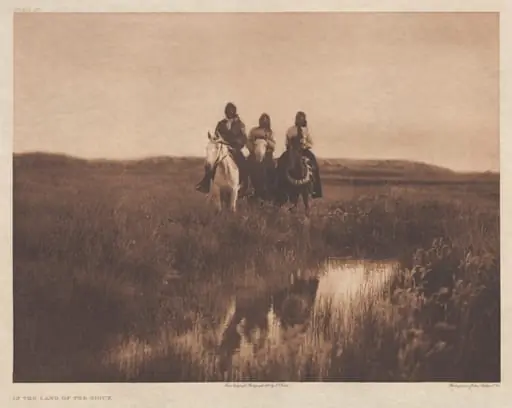 Portfolio III, Plate 95: In the Land of the Sioux
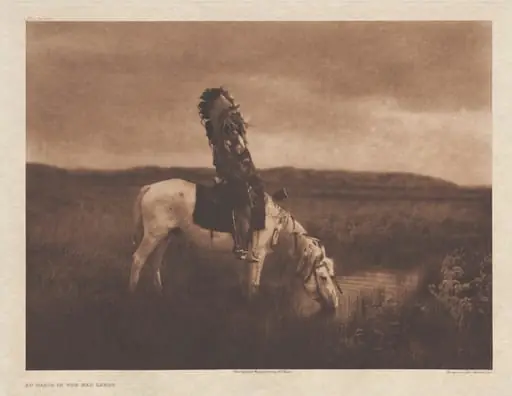 Portfolio III, Plate 80: An Oasis on the Bad Lands
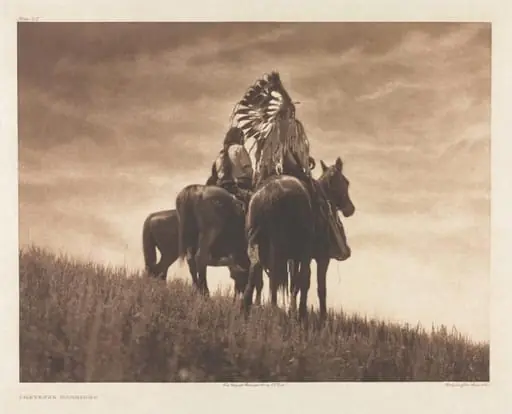 Portfolio VI, Plate 215: Cheyenne Warriors
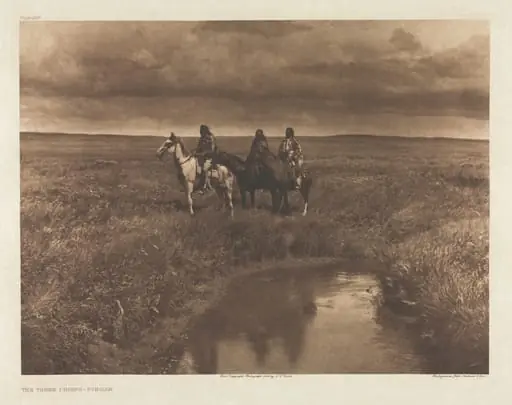 Portfolio VI, Plate 209: The Three Chiefs - Piegan
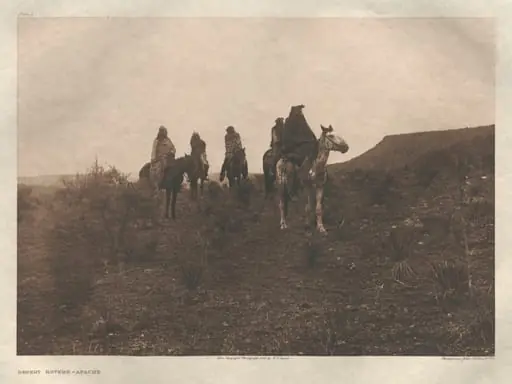 Portfolio I, Plate 3: Desert Rovers-Apache
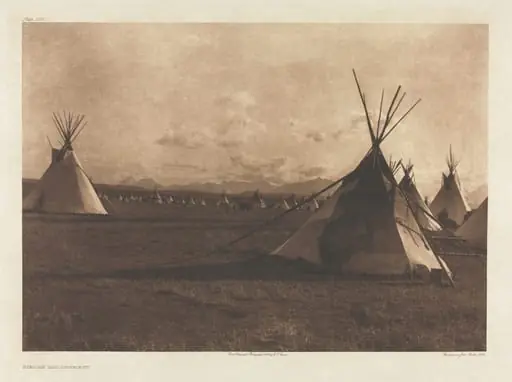 Portfolio VI, Plate 207: Piegan Encampment
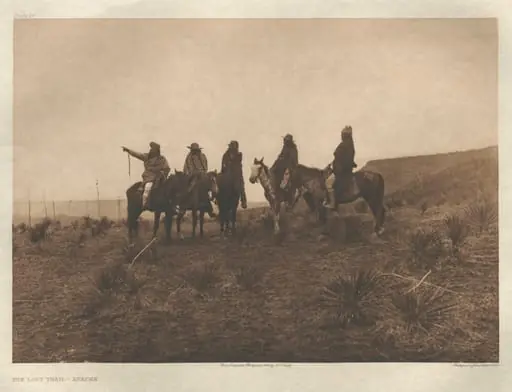 Portfolio I, Plate 19: The Lost Trail-Apache
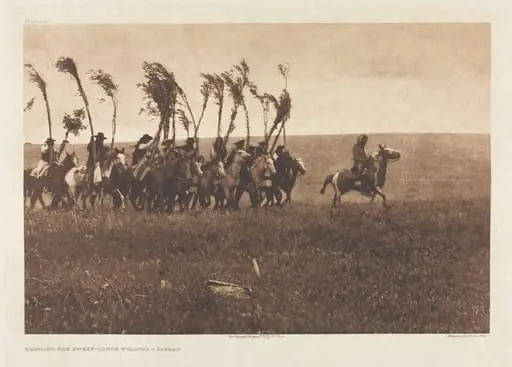 Portfolio VI, Plate 205: Bringing the Sweat-Lodge Willows - Piegan
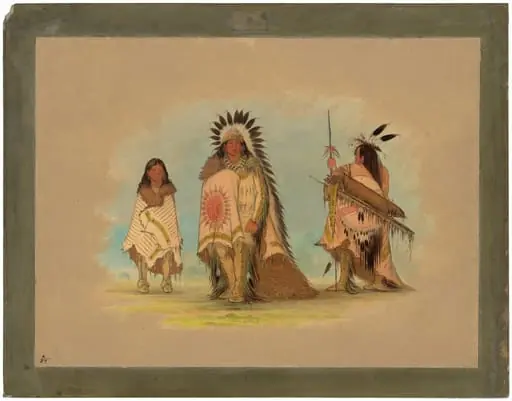 A Sioux Chief, His Daughter, and a Warrior