Artwork
Portfolio III, Plate 80: An Oasis on the Bad Lands
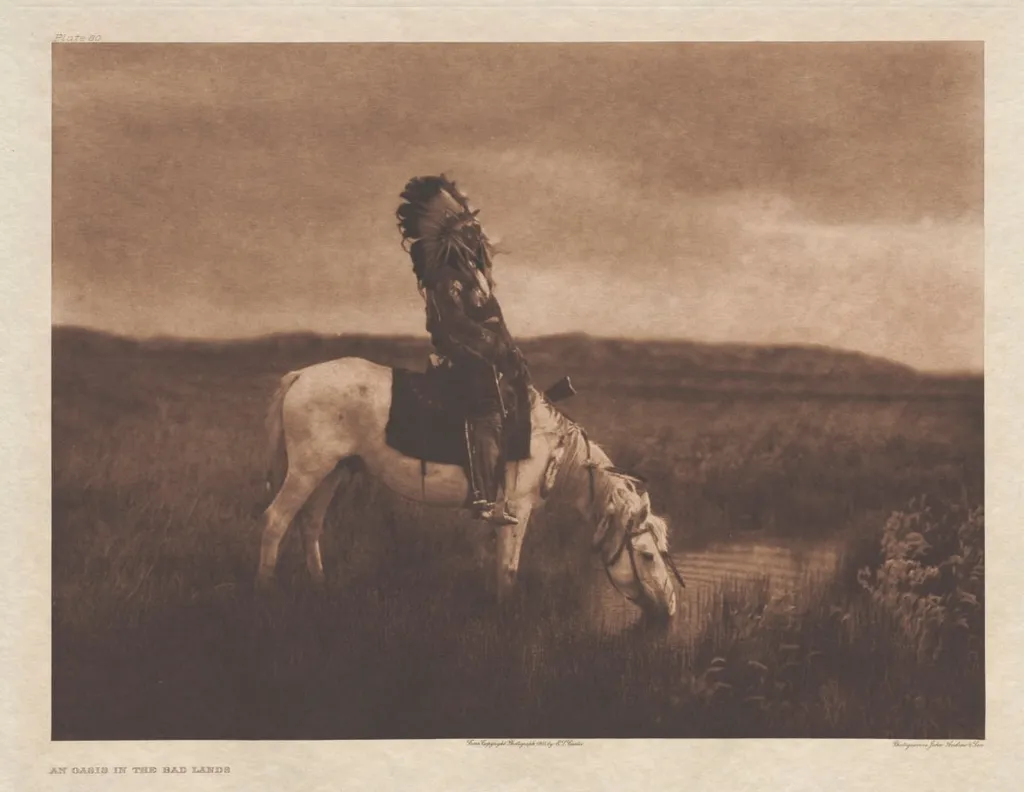
Portfolio III, Plate 80: An Oasis on the Bad Lands is a work on paper by Edward S. Curtis. It dates from 1905 and is held in the collection of the Cleveland Museum of Art. Created in 1905, Plate 80 from Edward S.
About this work
The title calls this spot an "oasis in the bad lands," hinting at a harsh but hopeful scene.
This photo shows a person riding a white horse by a small water hole in dry grass. The rider faces away, wearing traditional clothing and a feathered headdress. The sky is flat and light, with rolling hills in the distance.
The title calls this spot an "oasis in the bad lands," hinting at a harsh but hopeful scene. The photo was made in 1905 by someone documenting life in remote areas.
Next, check out The Cleveland Museum of Art to see this work in person.
Overview
Created in 1905, Plate 80 from Edward S. Curtis’s Portfolio III depicts a solitary figure on horseback near a small water source amid arid terrain. The image is part of a larger project documenting Indigenous life across the American West. Held by The Cleveland Museum of Art, it reflects Curtis’s efforts to record cultural practices he perceived as vanishing, framed within the landscape’s stark beauty.
Subject & Meaning
The rider, dressed in traditional regalia including a feathered headdress, faces away from the viewer, emphasizing anonymity and introspection. The presence of water in an otherwise barren landscape—labeled an 'oasis'—suggests resilience and spiritual significance. The scene avoids romanticization, instead conveying quiet endurance within a harsh environment, subtly challenging stereotypes of the American frontier.
Technique & Style
Curtis used large-format film and long exposures to capture fine detail in low-contrast light. The flat, pale sky and soft horizons create a serene, almost ethereal mood. The composition isolates the rider against expansive terrain, using minimal foreground elements to heighten the sense of isolation. The tonal range is restrained, favoring subtle gradations over dramatic contrast, reinforcing the quiet dignity of the subject.
History & Provenance
This image was produced during Curtis’s decade-long expedition to photograph Native American communities, funded by J.P. Morgan. It was included in his 20-volume ethnographic series, The North American Indian. The Cleveland Museum of Art acquired the print as part of its collection of early 20th-century photographic documentation, preserving it as a historical record of Curtis’s methodology and intent.
Context
In 1905, federal policies and westward expansion were displacing Indigenous populations, prompting Curtis to document what he saw as a disappearing way of life. His work emerged amid growing public fascination with the 'vanishing Indian' myth. While his images are often criticized for staging and idealization, they remain valuable artifacts of a complex era, reflecting both cultural preservation and colonial perspectives.
Legacy
Curtis’s photographs, including this one, continue to be studied for their aesthetic qualities and historical contradictions. They inform contemporary discussions about representation, authenticity, and the ethics of ethnographic documentation. Though not without bias, the image endures as a visual testament to the landscapes and lives shaped by displacement, memory, and resilience.
Artist & collection

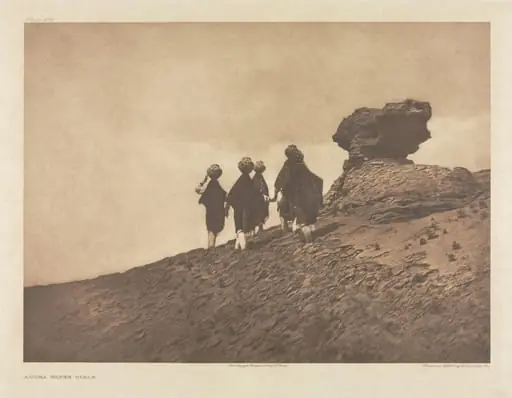 Portfolio XVI, Plate 573: Acoma Water Girls
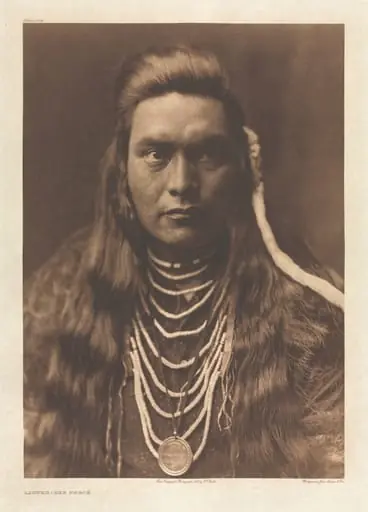 Portfolio VIII, Plate 264: Lawyer - Nez Percé
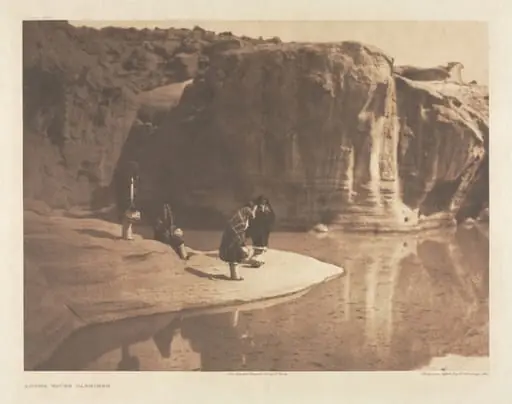 Portfolio XVI, Plate 568: Acoma Water Carriers
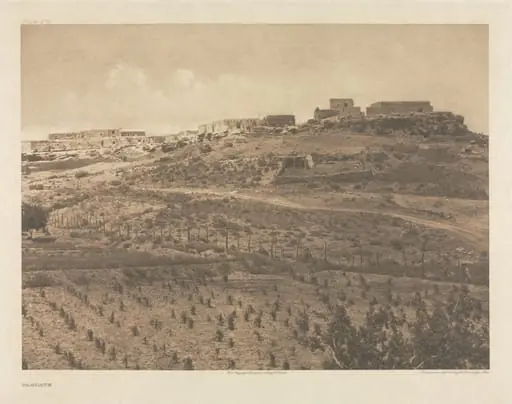 Portfolio XVI, Plate 574: Paguate
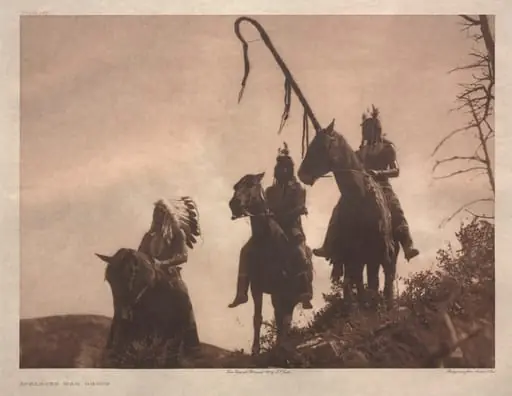 Portfolio IV, Plate 147: Apsaroke War Group
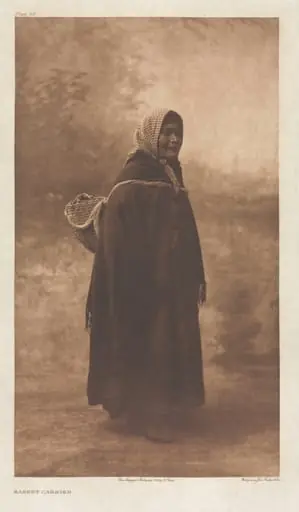 Portfolio IX, Plate 311: Basket Carrier
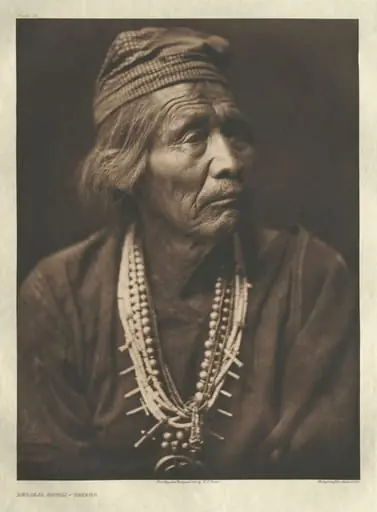 Portfolio I, Plate 31: Nesjája Hatáli-Navaho
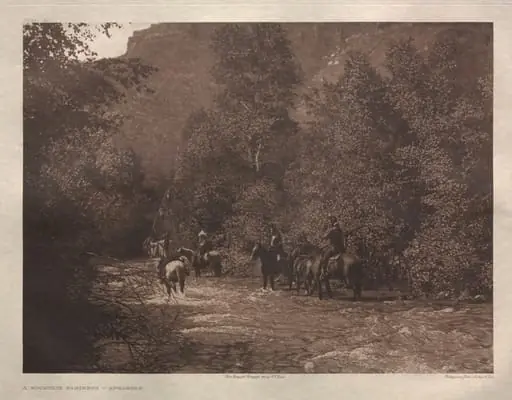 Portfolio IV, Plate 140: A Mountain Fastness--Apsaroke
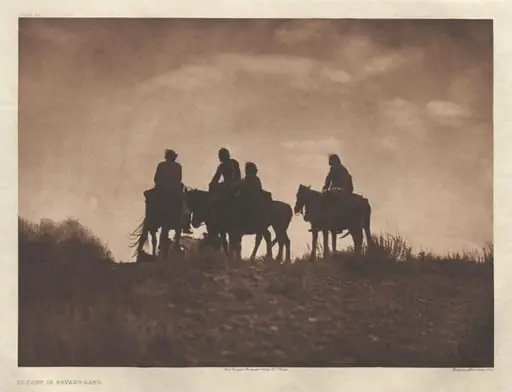 Portfolio I, Plate 38: Sunset in Navaho-Land
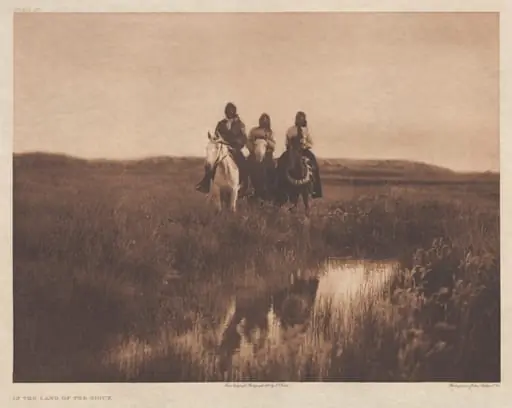 Portfolio III, Plate 95: In the Land of the Sioux
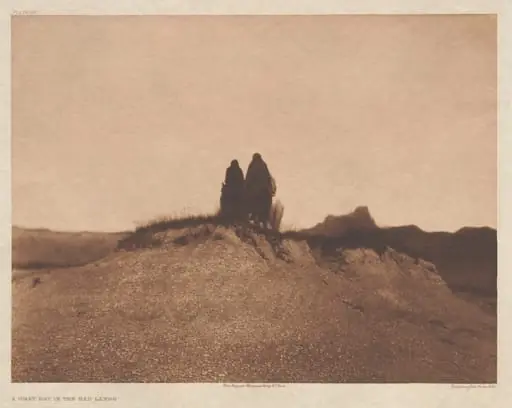 Portfolio III, Plate 86
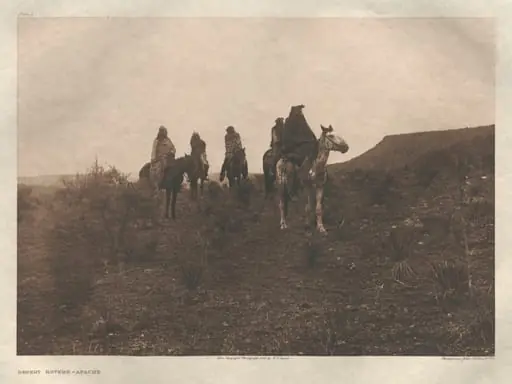 Portfolio I, Plate 3: Desert Rovers-Apache
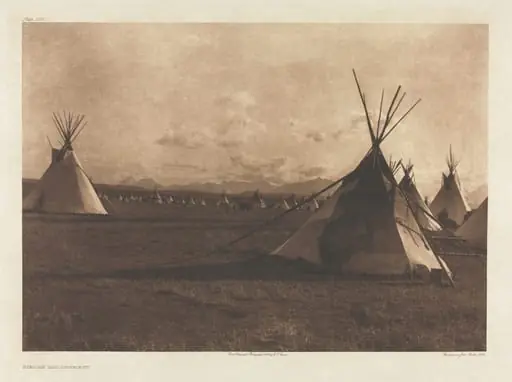 Portfolio VI, Plate 207: Piegan Encampment
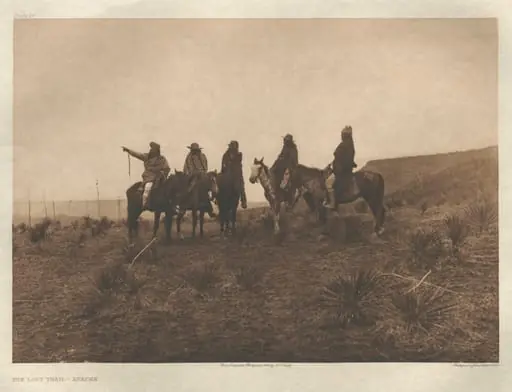 Portfolio I, Plate 19: The Lost Trail-Apache
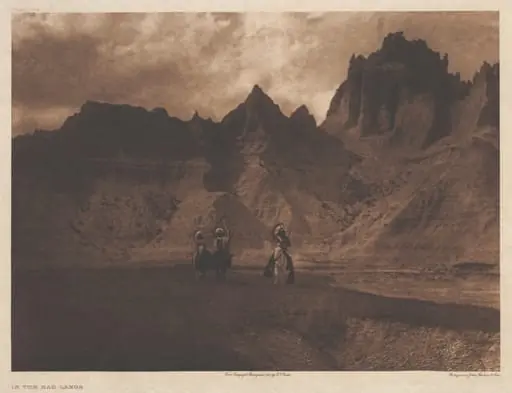 Portfolio III, Plate 119: In the Bad Lands
 Portfolio VI, Plate 208: A Piegan Dandy
 Portfolio I, Plate 4: Apache-Land
 Portfolio III, Plate 110: The Mountain-Sheep Hunter