Artwork
Portfolio VI, Plate 207: Piegan Encampment
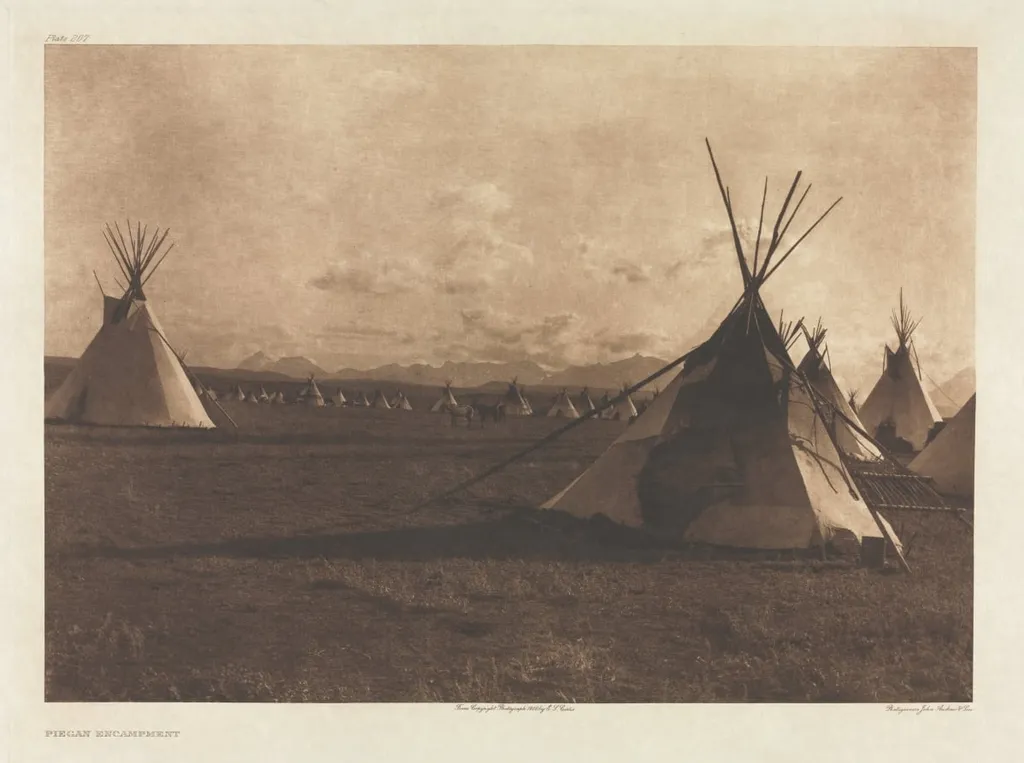
Portfolio VI, Plate 207: Piegan Encampment is a work on paper by Edward S. Curtis. It dates from 1900 and is held in the collection of the Cleveland Museum of Art.
About this work
Curtis, spent a lot of time with Native American tribes, learning about their customs and ways of life.
This painting shows a Piegan encampment with tipis and people.
It's interesting because it gives us a glimpse into the daily life of the Piegan people. The photographer, Edward S. Curtis, spent a lot of time with Native American tribes, learning about their customs and ways of life.
You can learn more about this style of photography by looking at the work of the artist: Edward S. Curtis (American, 1868–1952)
Overview
Portfolio VI, Plate 207: Piegan Encampment is one of 722 photographic plates in Edward S. Curtis’s multi-volume project documenting Indigenous peoples of North America. Created in 1900, this image is part of a systematic effort to record lifeways perceived as vanishing. It resides in the collection of The Cleveland Museum of Art, where it is presented as a historical document rather than a work of fine art.
Subject & Meaning
The photograph captures a Piegan (Blackfeet) encampment in the northern Great Plains, showing tipis arranged in a loose circle with figures engaged in daily activities. Curtis intended the image to convey cultural authenticity, framing the scene as a record of traditional life before widespread displacement. The composition avoids theatricality, emphasizing quiet routine over staged spectacle.
Technique & Style
Curtis used large-format glass plate negatives and natural light to achieve fine detail and tonal range. His method required long exposures and careful staging, often involving hours of preparation. The resulting image exhibits soft focus and high contrast, characteristic of his aesthetic, which favored romanticized realism over documentary neutrality.
History & Provenance
Produced during Curtis’s decade-long expedition funded by J.P. Morgan, the image was originally published in his 20-volume The North American Indian. Plate 207 was later acquired by The Cleveland Museum of Art as part of a broader collection of Curtis’s work, donated or purchased in the mid-20th century to support historical research in ethnography and photography.
Context
Curtis worked amid federal policies that suppressed Native cultural practices and relocated communities. His project emerged from a belief that Indigenous cultures were disappearing, a view shared by many contemporaries. While his images preserve details otherwise lost, they also reflect the paternalistic attitudes of the era, blending observation with romanticized nostalgia.
Legacy
Curtis’s photographs remain widely referenced in studies of Native American history and visual representation. Scholars now critically examine his methods, acknowledging both the archival value of his images and the ways they shaped enduring, sometimes misleading, stereotypes. The Piegan Encampment continues to be studied for its dual role as record and reconstruction.
Artist & collection

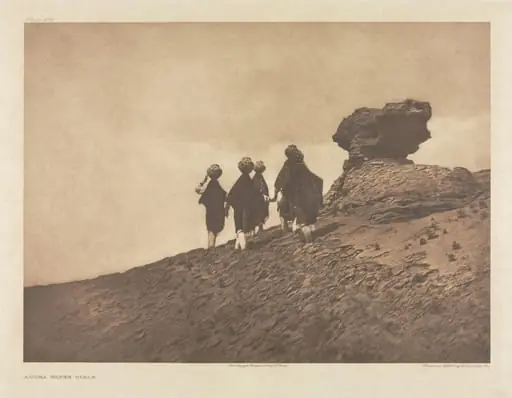 Portfolio XVI, Plate 573: Acoma Water Girls
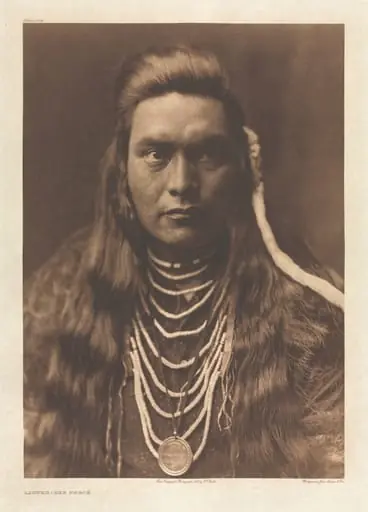 Portfolio VIII, Plate 264: Lawyer - Nez Percé
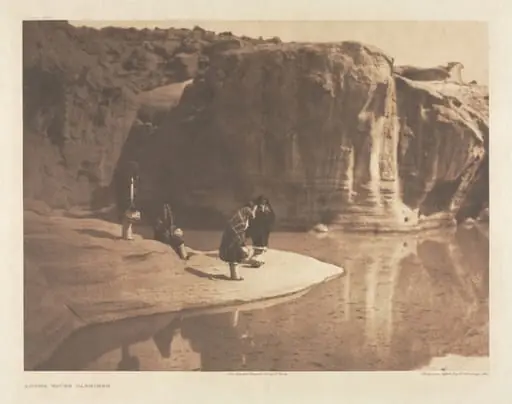 Portfolio XVI, Plate 568: Acoma Water Carriers
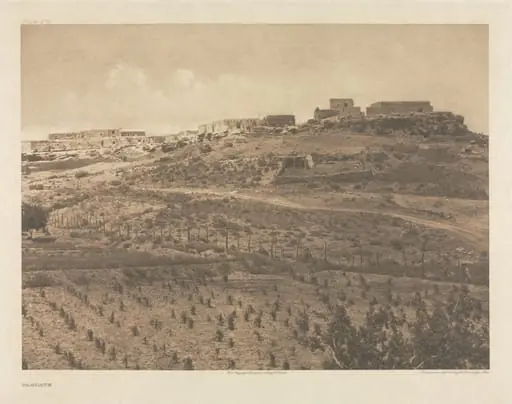 Portfolio XVI, Plate 574: Paguate
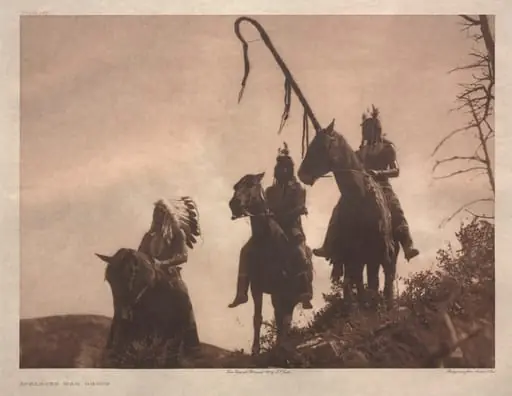 Portfolio IV, Plate 147: Apsaroke War Group
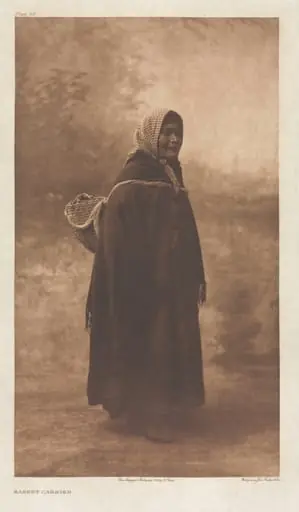 Portfolio IX, Plate 311: Basket Carrier
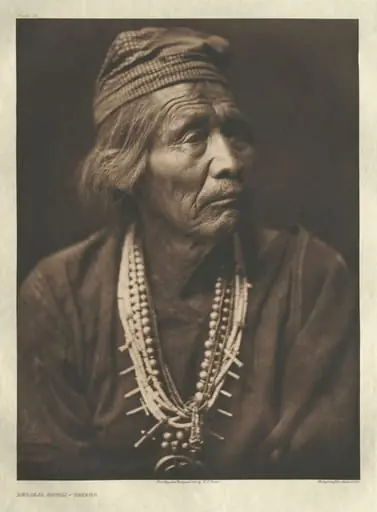 Portfolio I, Plate 31: Nesjája Hatáli-Navaho
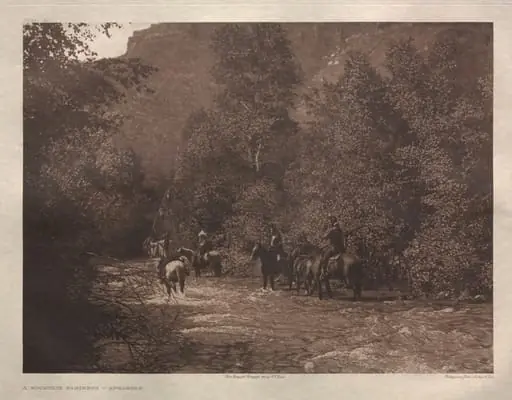 Portfolio IV, Plate 140: A Mountain Fastness--Apsaroke
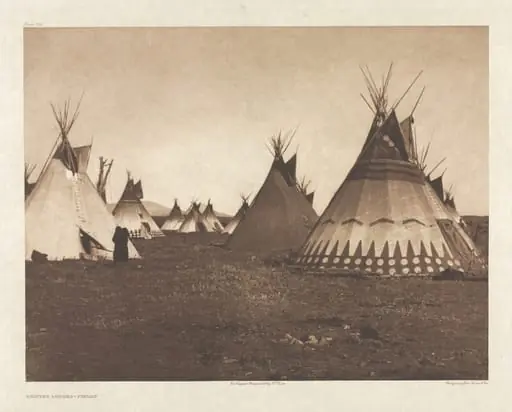 Portfolio VI, Plate 186: Painted Lodges--Piegan
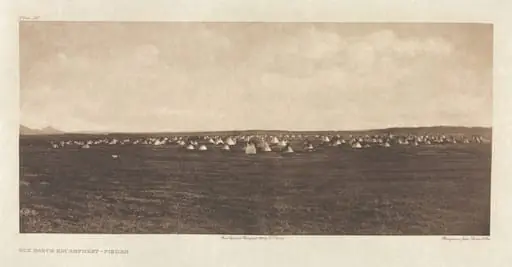 Portfolio VI, Plate 192: Sun Dance Encampment--Piegan
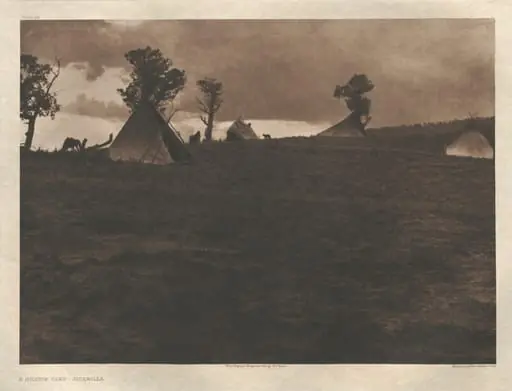 Portfolio I, Plate 24: A Hilltop Camp-Jicarilla
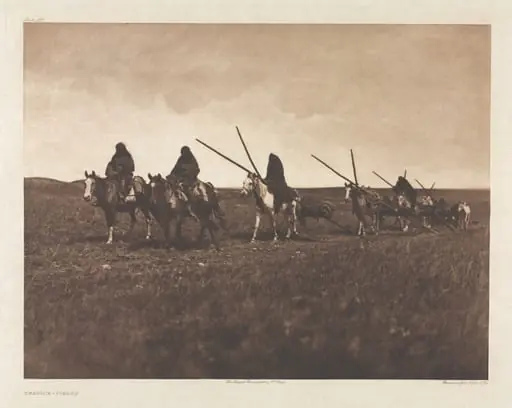 Portfolio VI, Plate 193: Travaux--Piegan
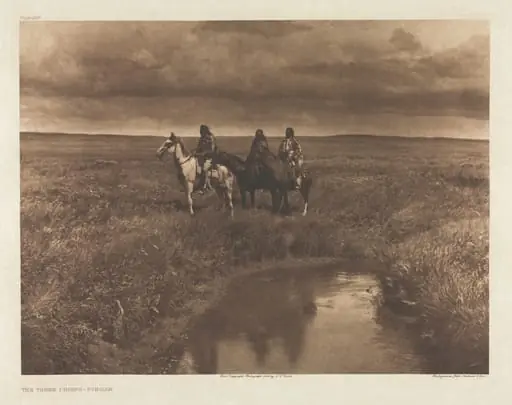 Portfolio VI, Plate 209: The Three Chiefs - Piegan
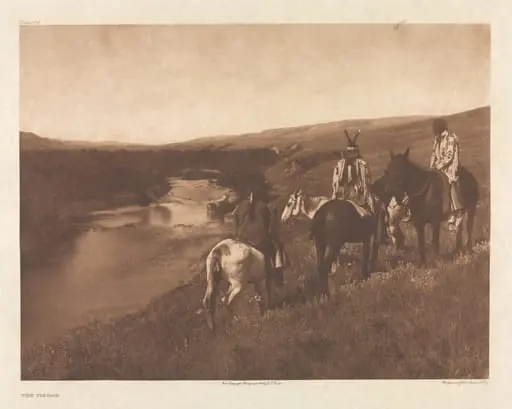 Portfolio VI, Plates 184- 219
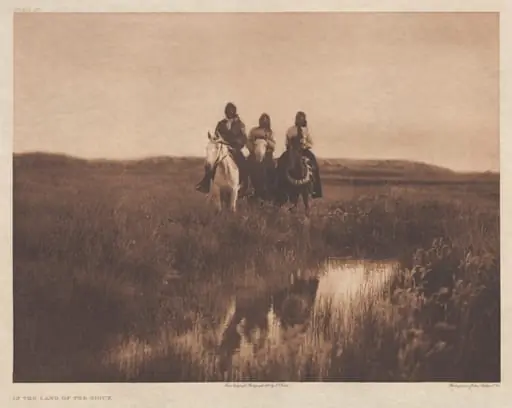 Portfolio III, Plate 95: In the Land of the Sioux
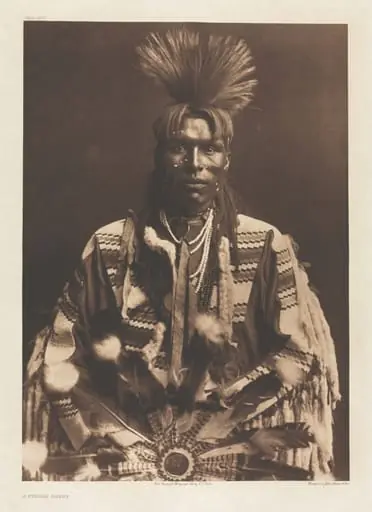 Portfolio VI, Plate 208: A Piegan Dandy
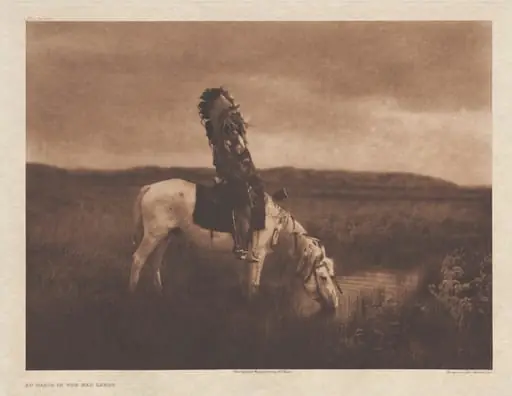 Portfolio III, Plate 80: An Oasis on the Bad Lands
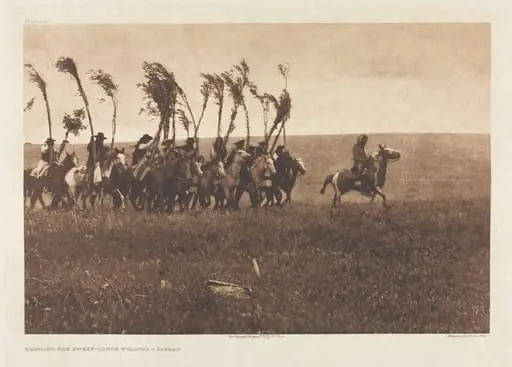 Portfolio VI, Plate 205: Bringing the Sweat-Lodge Willows - Piegan
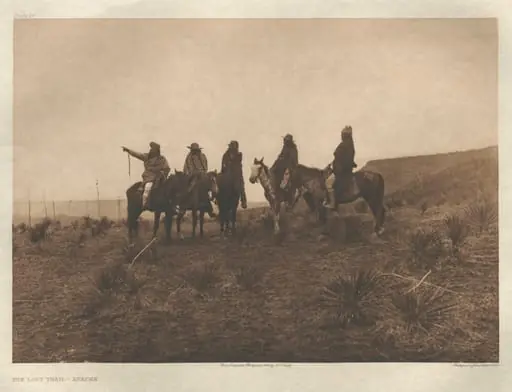 Portfolio I, Plate 19: The Lost Trail-Apache
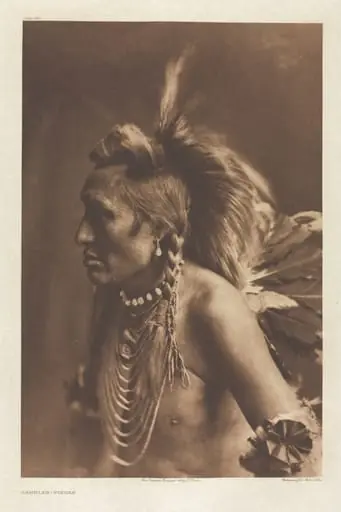 Portfolio VI, Plate 194: Gambler--Piegan