Artwork
Portfolio IV, Plate 139: Upshaw--Apsaroke
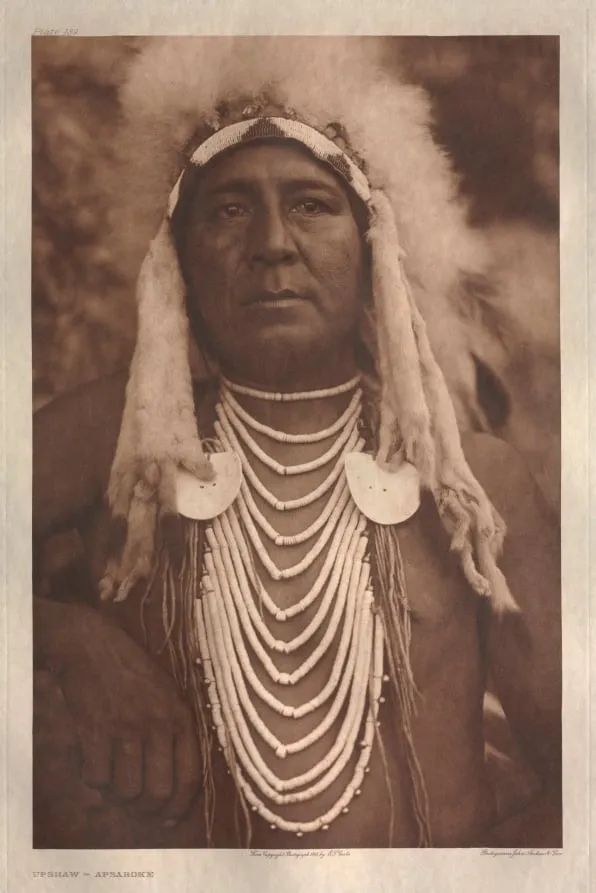
Portfolio IV, Plate 139: Upshaw--Apsaroke is a work on paper by Edward S. Curtis. It dates from 1905 and is held in the collection of the Cleveland Museum of Art.
About this work
The man's attire and accessories suggest that he is from a specific cultural or tribal group, although the exact details are not immediately clear.
This portrait shows a man with a solemn expression, wearing a headdress adorned with long white feathers. He has a necklace made of multiple strands of white beads around his neck, and his right hand is visible in the foreground. The background is blurred, but it appears to be a natural setting.
The man's attire and accessories suggest that he is from a specific cultural or tribal group, although the exact details are not immediately clear. The artist's use of a sepia-toned medium adds a sense of nostalgia and timelessness to the image.
If you're interested in learning more about the artist behind this portrait, you might want to look up Edward S. Curtis (American, 1868–1952).
Overview
Portfolio IV, Plate 139: Upshaw--Apsaroke is a photographic work by Edward S. Curtis, created in 1905, and is part of The Cleveland Museum of Art's collection.
Subject & Meaning
The portrait depicts a man with a solemn expression, identified as Upshaw, an Apsaroke individual, wearing traditional attire including a headdress and necklace, conveying a sense of cultural identity.
Technique & Style
The sepia-toned photograph features a blurred natural background, focusing attention on the subject, and employs a nostalgic tone, characteristic of Curtis's work.
Artist & collection

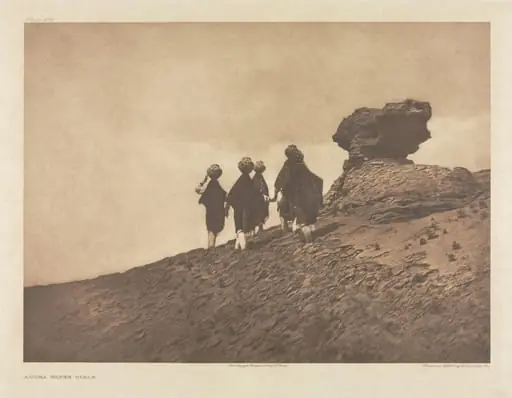 Portfolio XVI, Plate 573: Acoma Water Girls
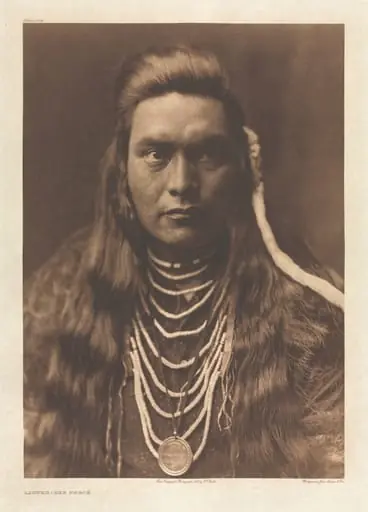 Portfolio VIII, Plate 264: Lawyer - Nez Percé
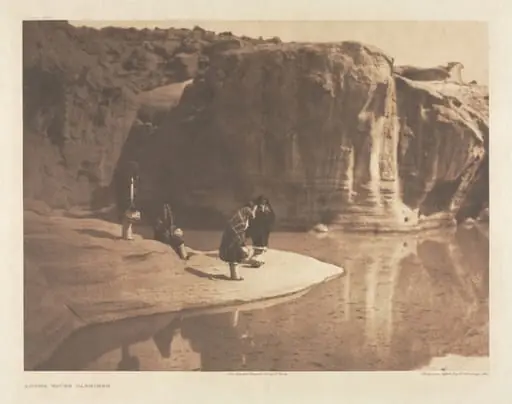 Portfolio XVI, Plate 568: Acoma Water Carriers
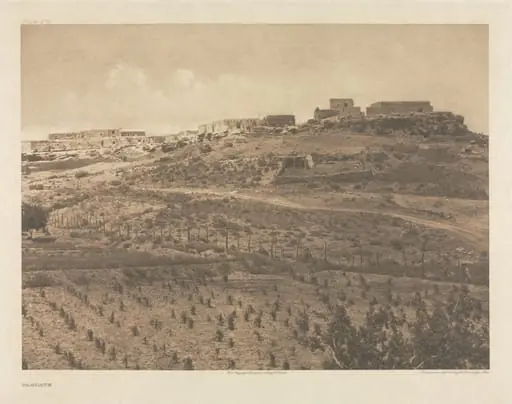 Portfolio XVI, Plate 574: Paguate
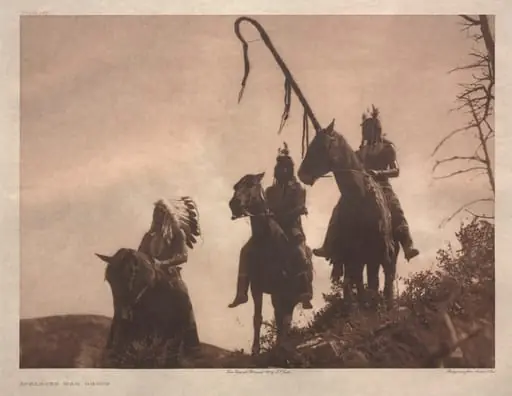 Portfolio IV, Plate 147: Apsaroke War Group
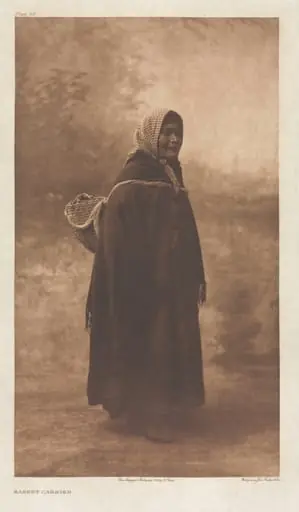 Portfolio IX, Plate 311: Basket Carrier
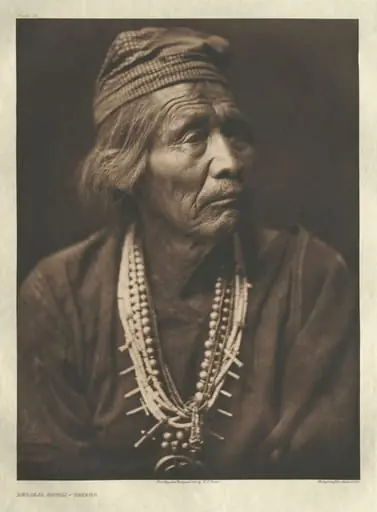 Portfolio I, Plate 31: Nesjája Hatáli-Navaho
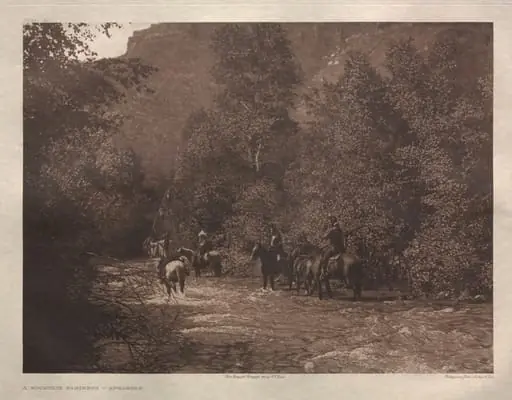 Portfolio IV, Plate 140: A Mountain Fastness--Apsaroke
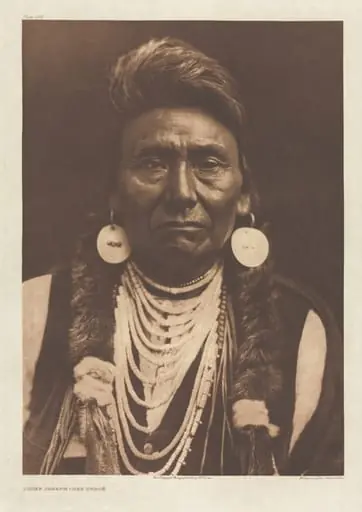 Portfolio VIII, Plate 256: Chief Joseph - Nez Percé
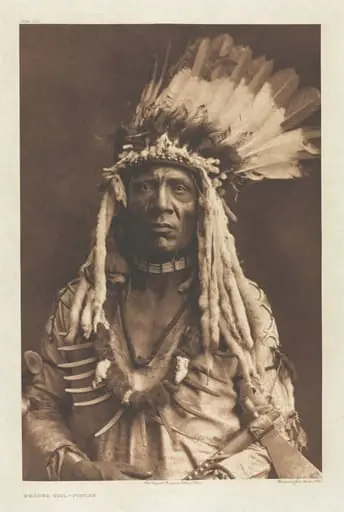 Portfolio VI, Plate 203: Weasel Tail - Piegan
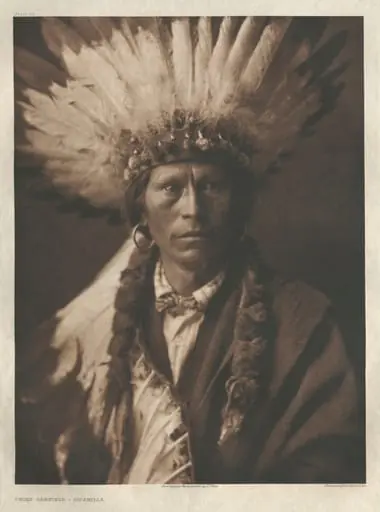 Portfolio I, Plate 21: Chief Garfield-Jicarilla
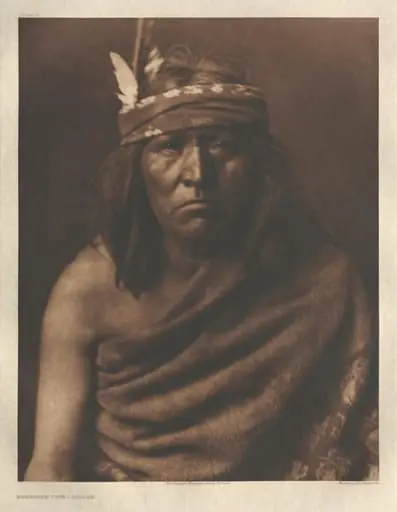 Portfolio I, Plate 12: Renegade Type-Apache
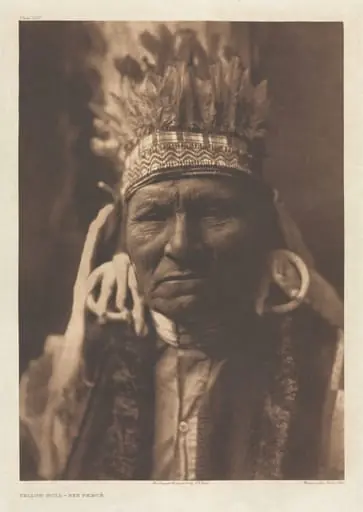 Portfolio VIII, Plate 257: Yellow Bull - Nez Percé
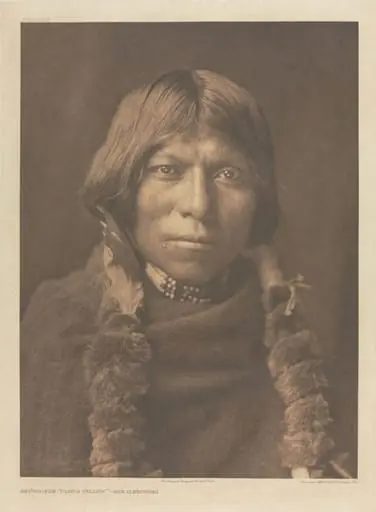 Portfolio XVII, Plate 582: Okúwa-tse ("Cloud Yellow") - San Ildefonso
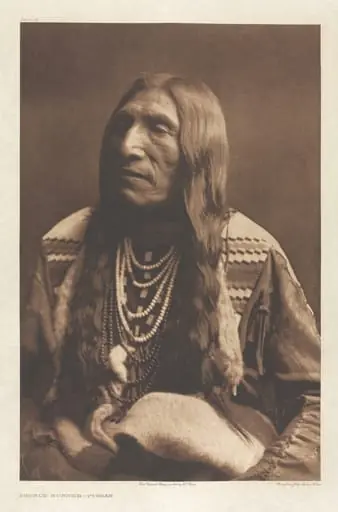 Portfolio VI, Plate 191: Double Runner--Piegan