Artwork
Portfolio VIII, Plate 258: Typical Nez Percé
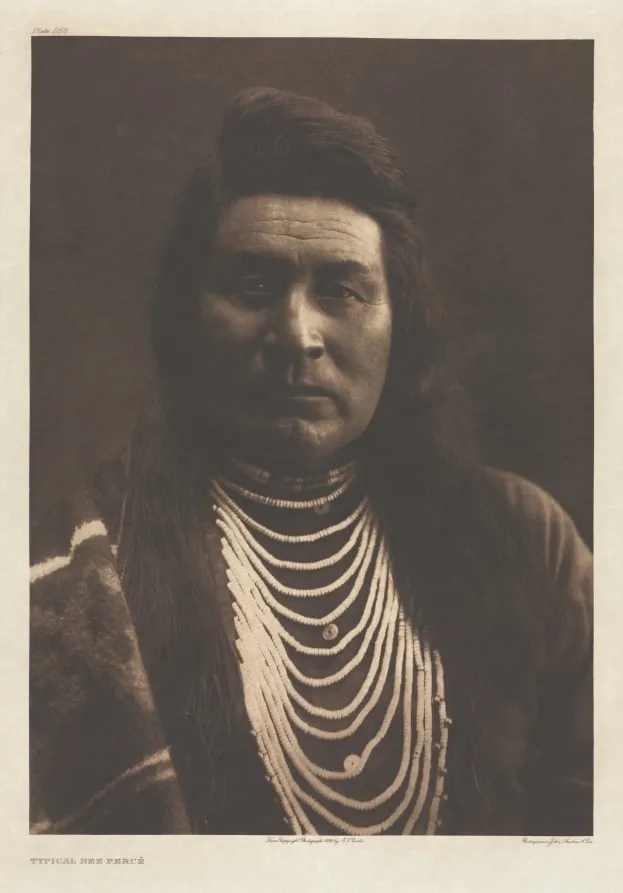
Portfolio VIII, Plate 258: Typical Nez Percé is a work on paper by the Impressionist artist Edward S. Curtis. It dates from 1899 and is held in the collection of the Cleveland Museum of Art.
About this work
This painting is called Portfolio VIII, Plate 258: Typical Nez Percé.
It's by Edward S. Curtis, an American artist, and it's a portrait.
The artist took this photo in 1899, which is interesting because it shows a moment in time from over a century ago.
You can learn more about this type of art at the museum where it's held, The Cleveland Museum of Art.
Overview
The work is part of the Cleveland Museum of Art’s collection, where it is preserved as a historical record rather than a standalone artistic piece.
Portfolio VIII, Plate 258: Typical Nez Percé is a photographic print from Edward S. Curtis’s larger project documenting Indigenous peoples of North America. Created in 1899, it is one of hundreds of images compiled in his multi-volume series The North American Indian. The work is part of the Cleveland Museum of Art’s collection, where it is preserved as a historical record rather than a standalone artistic piece.
Subject & Meaning
The portrait depicts a Nez Percé individual, presented by Curtis as an exemplar of traditional Indigenous identity. The subject’s attire, posture, and gaze were carefully arranged to reflect what Curtis perceived as an unaltered cultural state. While intended as ethnographic documentation, the image reflects the artist’s romanticized vision rather than a neutral record of lived experience.
Technique & Style
Curtis used large-format film and hand-coloring techniques to achieve a soft, painterly effect. The composition emphasizes stillness and dignity, with natural lighting and minimal background detail. His method combined documentary intent with aesthetic conventions of 19th-century portraiture, resulting in images that prioritize mood over contextual accuracy.
History & Provenance
The photograph was produced during Curtis’s fieldwork in the Pacific Northwest, funded by J.P. Morgan. It was later included in the 20-volume The North American Indian series, published between 1907 and 1930. The Cleveland Museum of Art acquired the print as part of its broader collection of early American photography, preserving it as a key artifact of early ethnographic imaging.
Context
Curtis worked during a period of intense cultural disruption for Native communities, as federal policies enforced assimilation and land dispossession. His project emerged alongside rising public interest in Indigenous cultures, yet it often ignored contemporary realities in favor of idealized, pre-contact imagery. The work reflects both fascination with and erasure of Native agency.
Legacy
Curtis’s photographs remain widely referenced in discussions of Indigenous representation, though their historical value is now critically examined. Scholars recognize their role in shaping public perception while acknowledging the limitations of his approach. Today, the image serves as a point of reflection on the ethics of visual documentation and cultural preservation.
Artist & collection

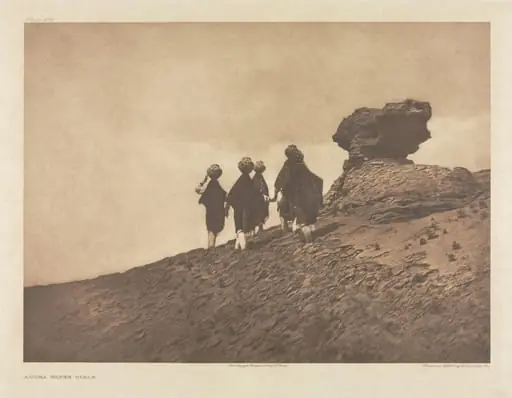 Portfolio XVI, Plate 573: Acoma Water Girls
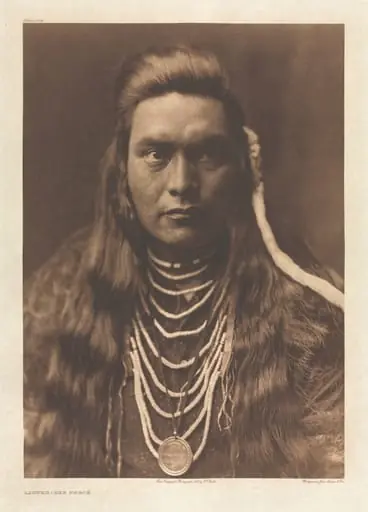 Portfolio VIII, Plate 264: Lawyer - Nez Percé
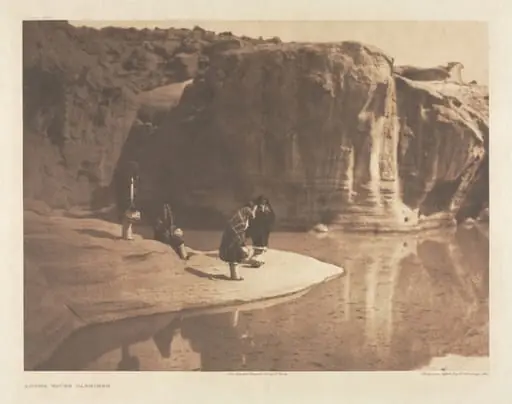 Portfolio XVI, Plate 568: Acoma Water Carriers
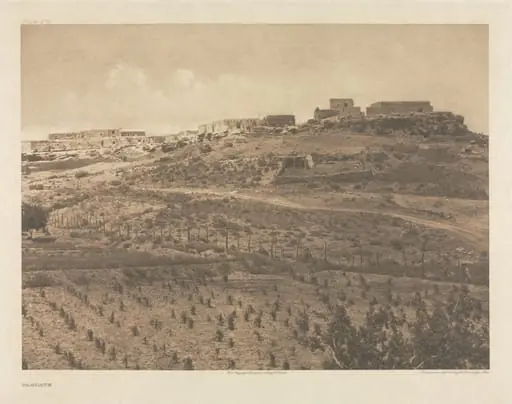 Portfolio XVI, Plate 574: Paguate
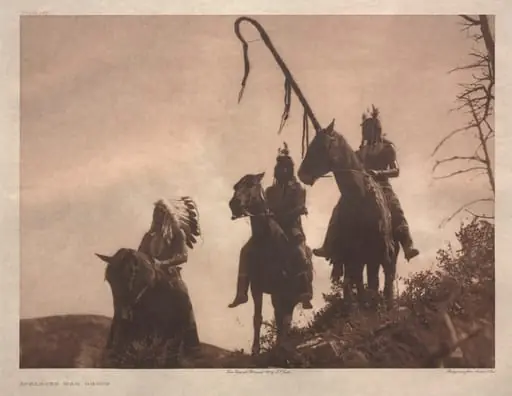 Portfolio IV, Plate 147: Apsaroke War Group
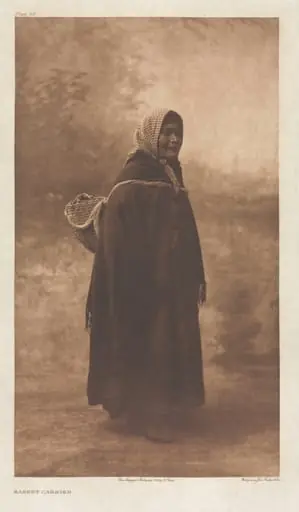 Portfolio IX, Plate 311: Basket Carrier
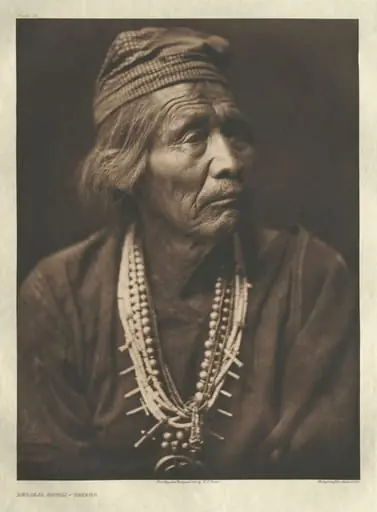 Portfolio I, Plate 31: Nesjája Hatáli-Navaho
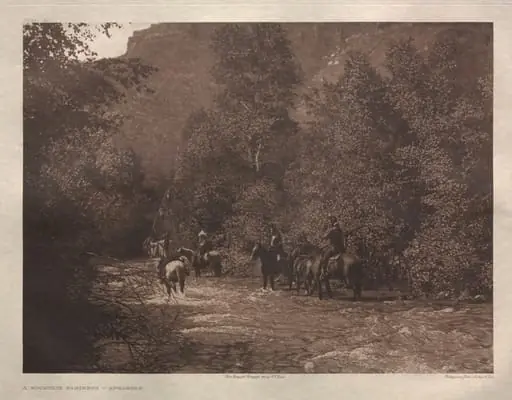 Portfolio IV, Plate 140: A Mountain Fastness--Apsaroke
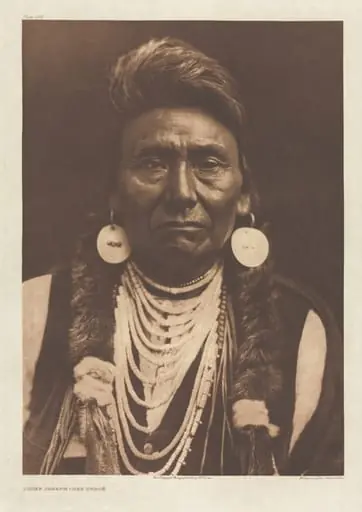 Portfolio VIII, Plate 256: Chief Joseph - Nez Percé
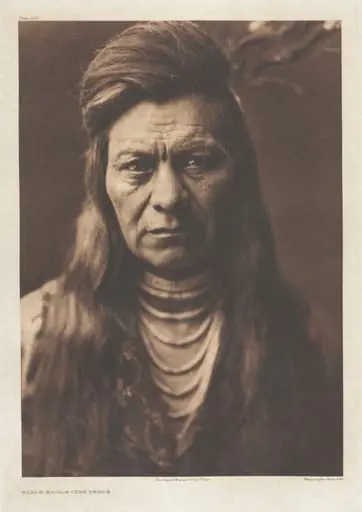 Portfolio VIII, Plate 265: Black Eagle - Nez Percé
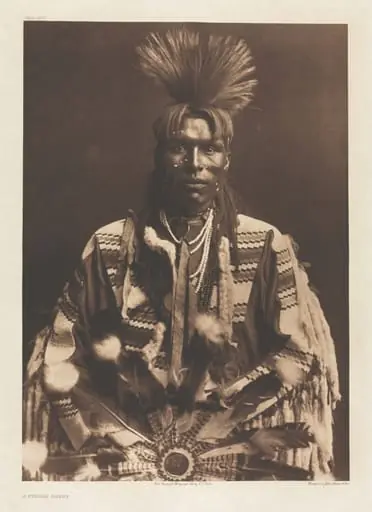 Portfolio VI, Plate 208: A Piegan Dandy
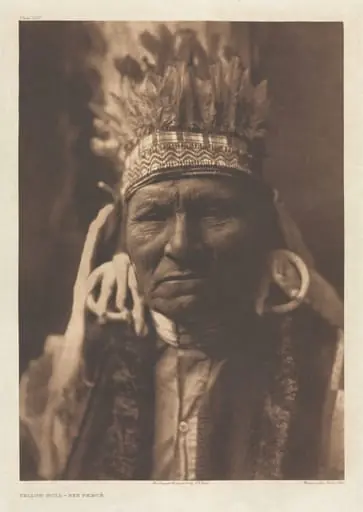 Portfolio VIII, Plate 257: Yellow Bull - Nez Percé
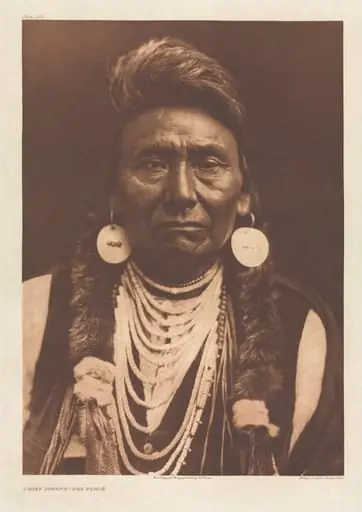 Portfolio VIII, Plates 256- 292
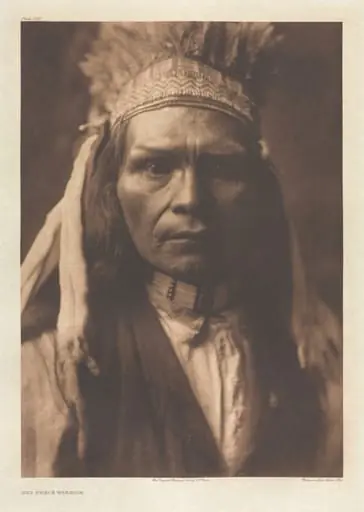 Portfolio VIII, Plate 262: Nez Percé Warrior
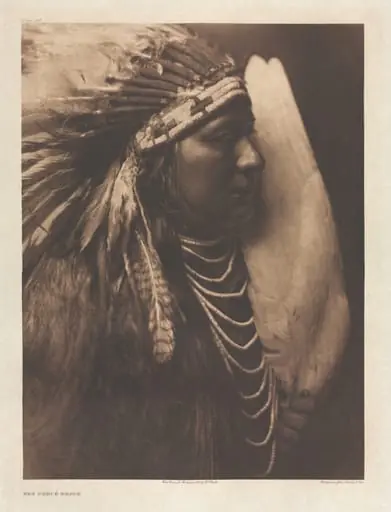 Portfolio VIII, Plate 263: Nez Percé Brave
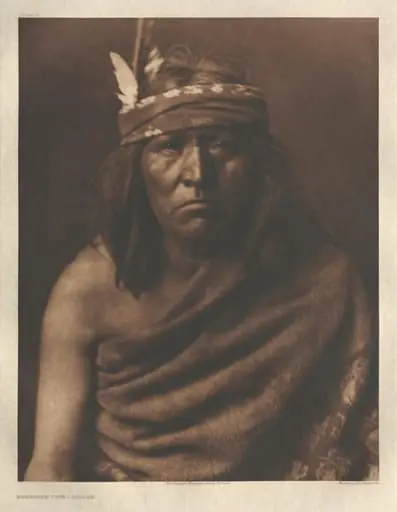 Portfolio I, Plate 12: Renegade Type-Apache
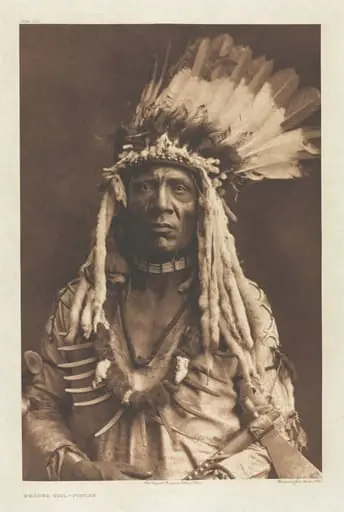 Portfolio VI, Plate 203: Weasel Tail - Piegan
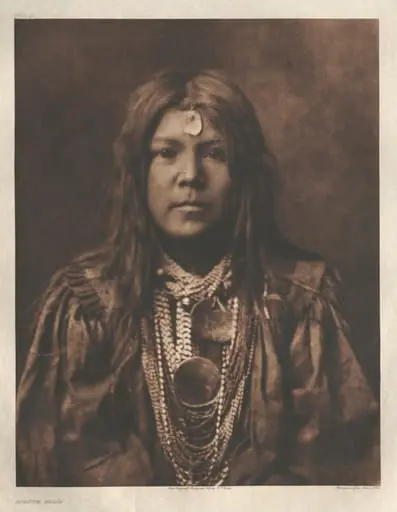 Portfolio I, Plate 15: Apache Nalin