Artwork
Pygmy Anteater
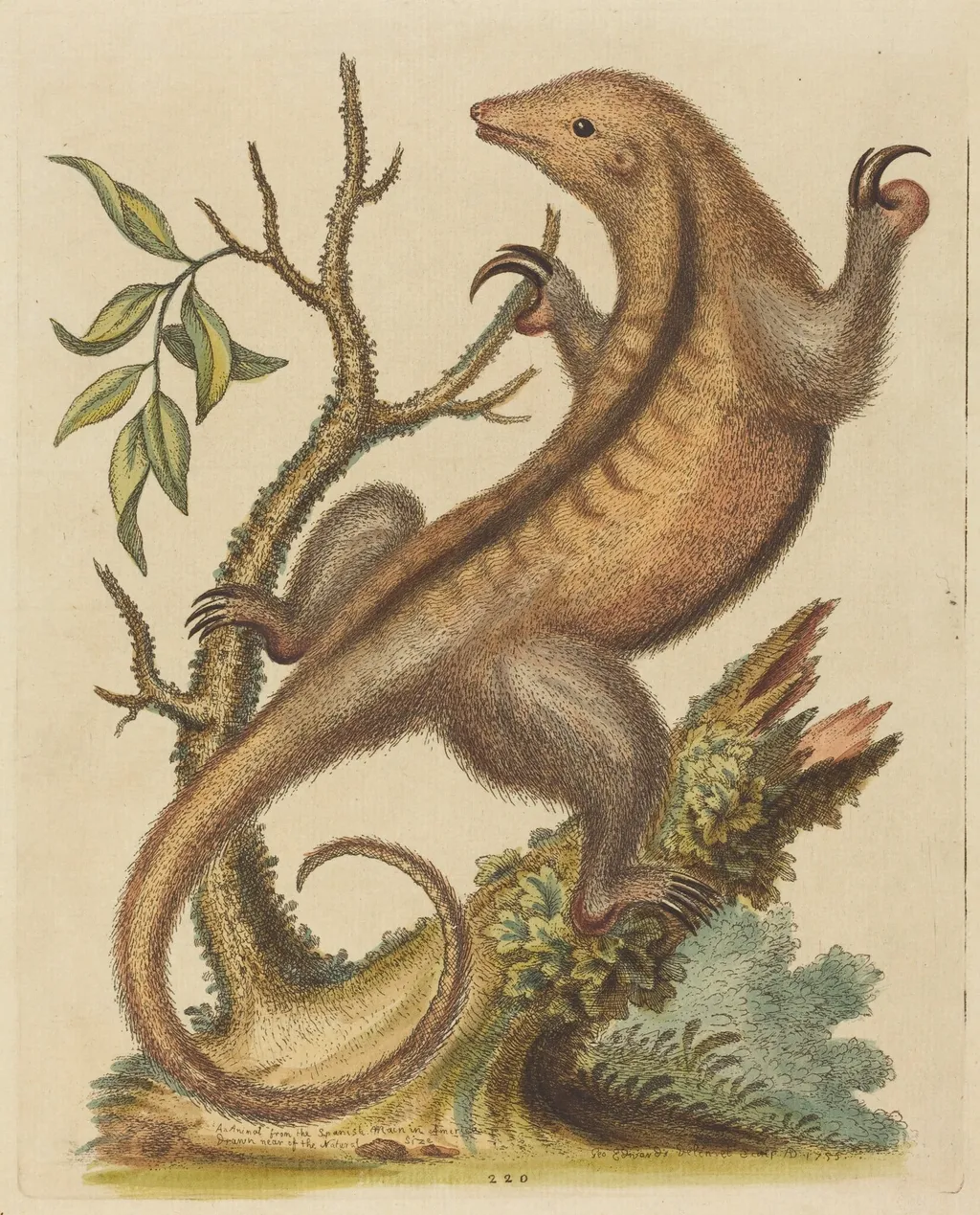
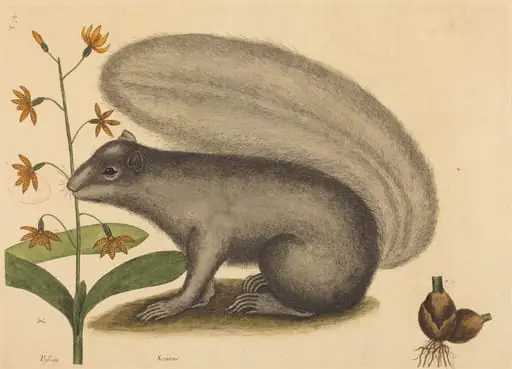
Pygmy Anteater is an ink print by the Romanticist artist George Edwards. It dates from 1755 and is held in the collection of the National Gallery of Art.
About this work
Overview
Executed on laid paper, the print measures a modest size and was originally intended for inclusion in a natural‑history volume.
George Edwards’ hand‑colored etching titled *Pygmy Anteater* dates from 1755. Executed on laid paper, the print measures a modest size and was originally intended for inclusion in a natural‑history volume. The image depicts a diminutive, fur‑covered mammal with an elongated snout, perched on a twisted branch and surrounded by foliage, illustrating the artist’s interest in cataloguing exotic species.
Subject & Meaning
The work portrays a small anteater, likely a species now known as the silky anteater, shown climbing a gnarled branch. Its curled tail and grasping claws emphasize its arboreal habits, while the surrounding leaves suggest a tropical habitat. By rendering the creature in a naturalistic pose, Edwards aimed to convey both scientific observation and the animal’s delicate adaptation to its environment.
Technique & Style
Edwards employed a fine etching line to render the animal’s fur and the bark’s texture, then applied hand‑applied color washes to differentiate fur, foliage, and background. The use of laid paper provides a subtle ribbed surface that enhances line definition. The meticulous cross‑hatching and delicate shading reflect the 18th‑century tradition of illustrative precision in natural history prints.
History & Provenance
Created for inclusion in a contemporary zoological publication, the etching bears a small inscription at its base indicating its source from an animal book. Copies of the print circulated among scholars and collectors of natural history in the mid‑1700s, and surviving examples are now held in several museum and library collections that specialize in early scientific illustration.
Artist & collection


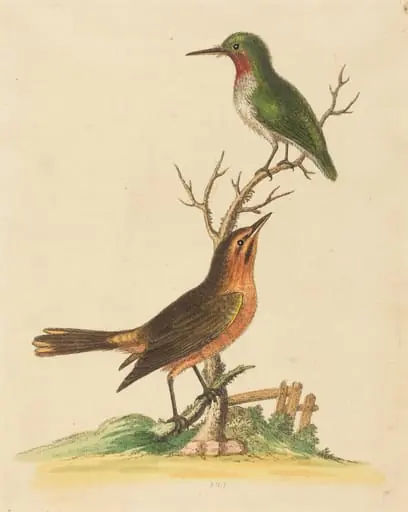 Green Bird with Red Throat and Brown and Orange Bird
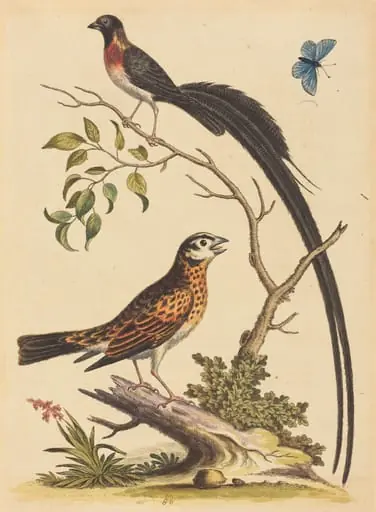 Two Birds, One with Very Long Tailfeathers, and Blue Butterfly
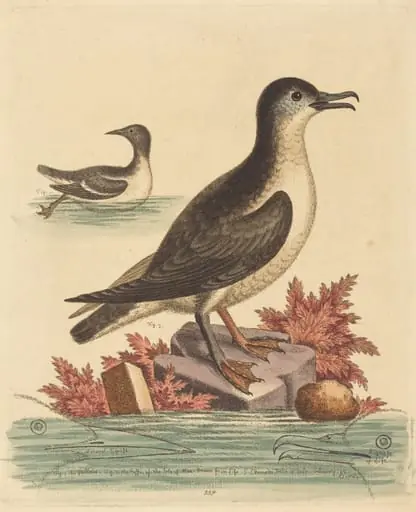 The Guillemot and the Puffin of the Isle of Man
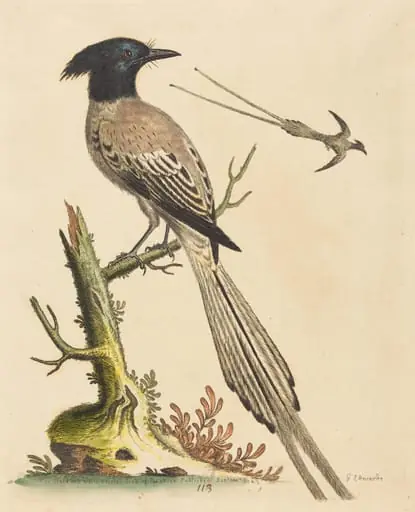 The Black and White Crested Bird of Paradise
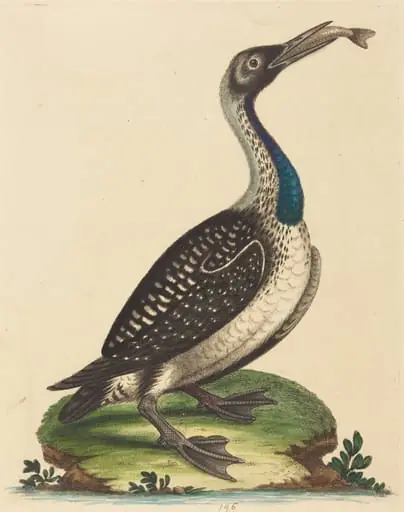 Black and White Water-Fowl with Blue Throat
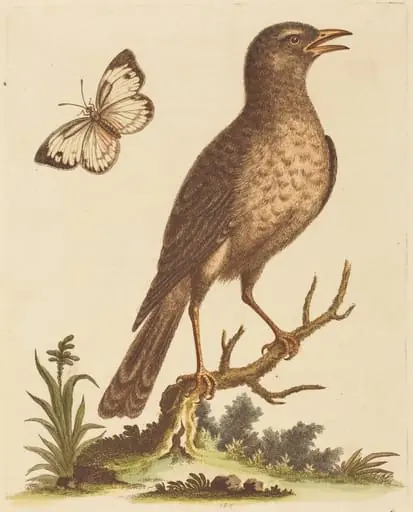 Brown Bird with a Butterfly
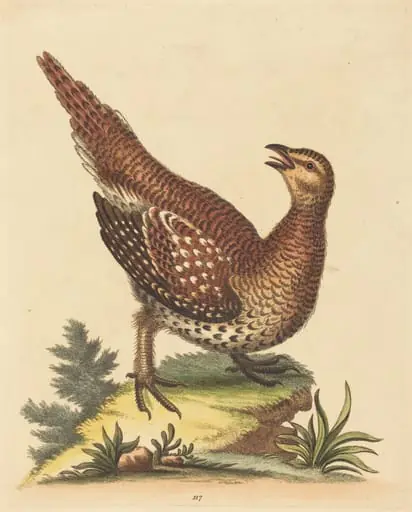 Brown Speckled Bird
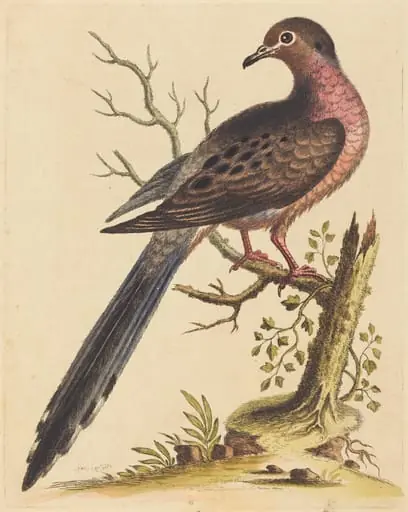 Fedoa Americana pectore ruso
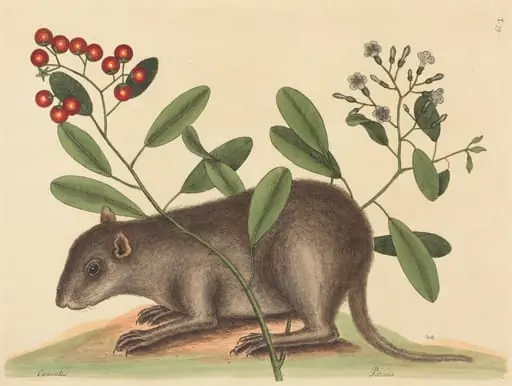 The Bahama Coney (Mus Monax)
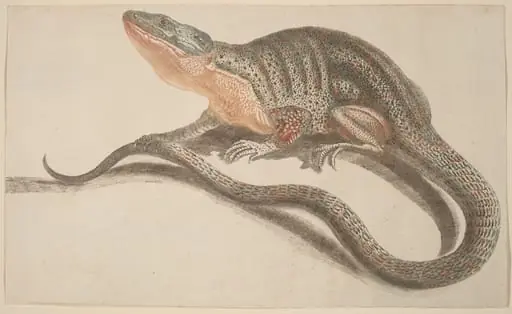 Lizard
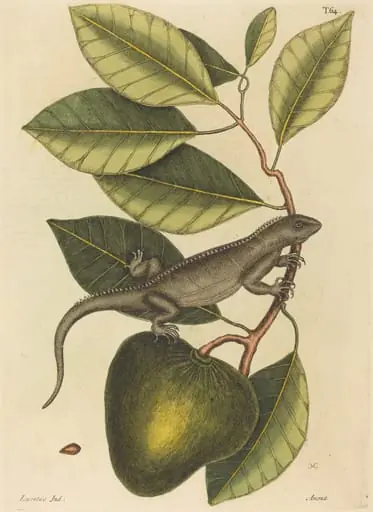 The Guana (Lacerta Iguana)
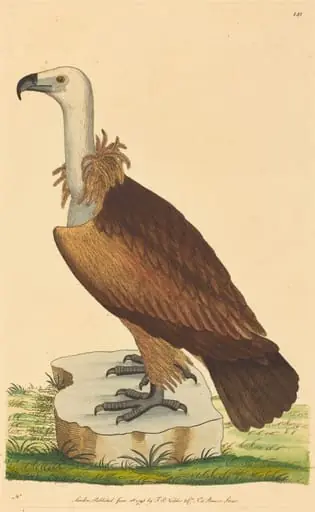 The Alpine Vulture
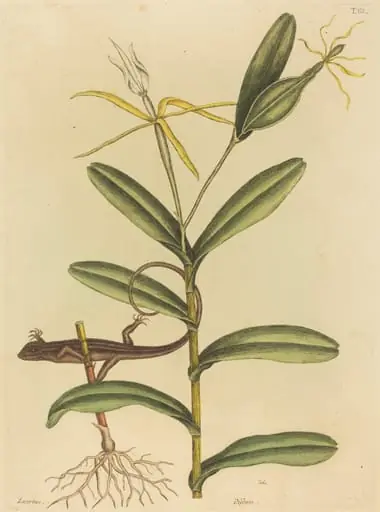 The Lyon Lizard (Lacerta 6-lineata)
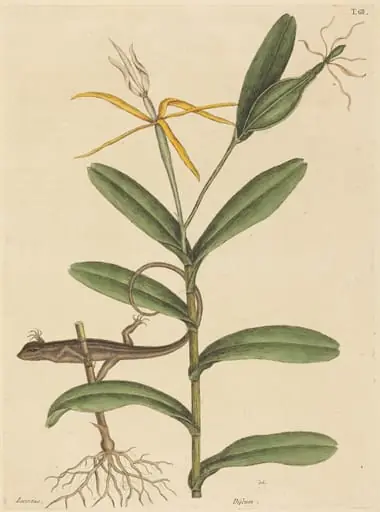 The Lyon Lizard (Lacerta 6-lineata)
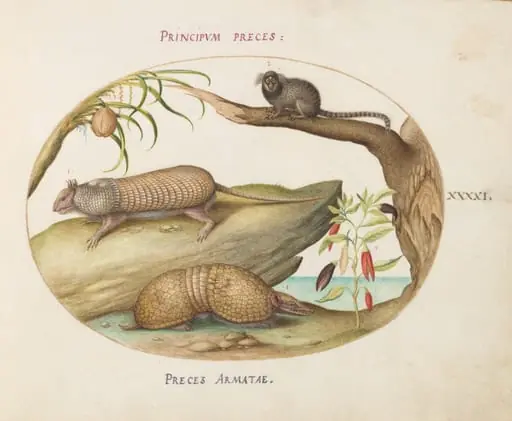 Plate 41: Two Types of Armadillos with a Marmoset, a Coconut Palm, and a Pepper Plant
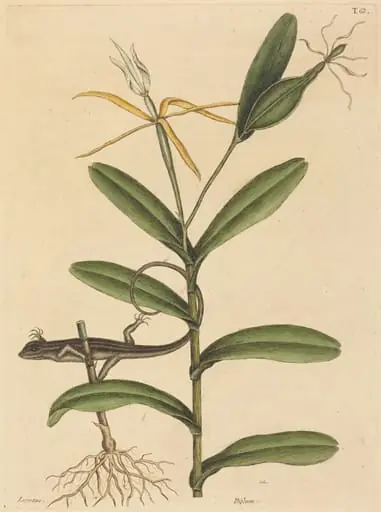 The Lyon Lizard (Lacerta 6-lineata)
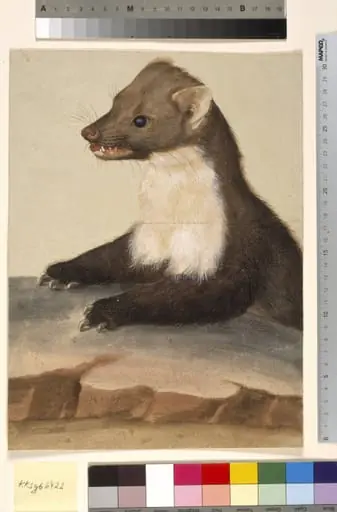 En mår
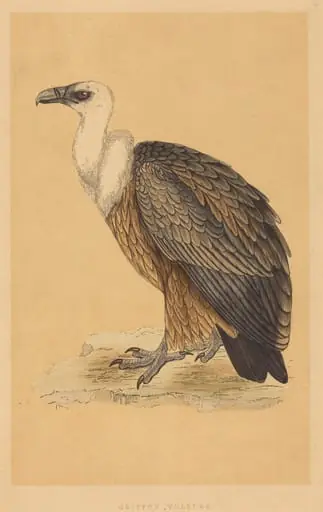 Griffon Vulture
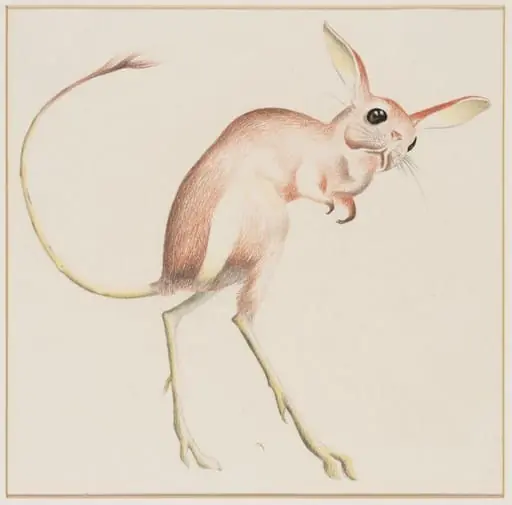 Jerboa
 The Grey Fox Squirrel (Sciurus cinereus)