Artwork
<i>Daphne mezereum</i> with butterfly
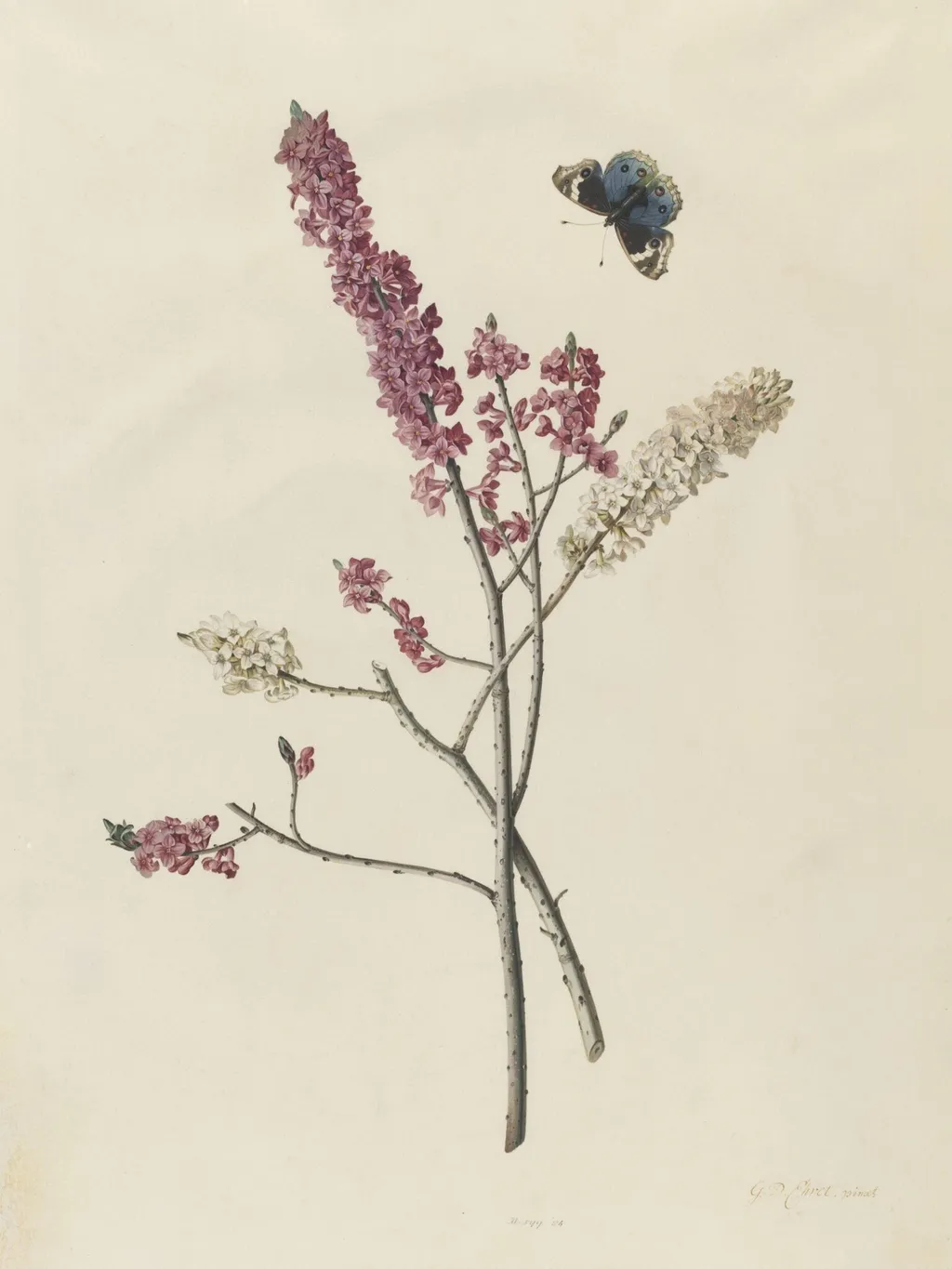
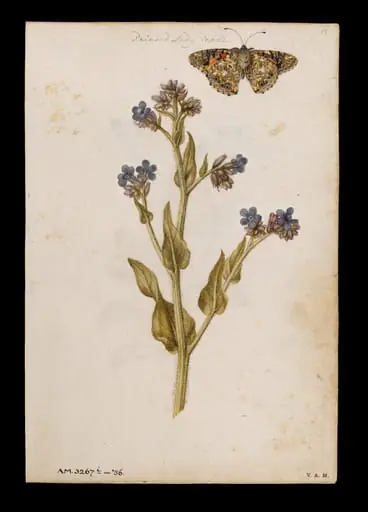
<i>Daphne mezereum</i> with butterfly is a watercolor work on paper by the Rococo painting artist George Dionysus Ehret. It dates from 1750 and is held in the collection of the Victoria and Albert Museum. This mid‑eighteenth‑century watercolour depicts the shrub Daphne mezereum accompanied by a butterfly.
About this work
The artist likely made it for decoration, not just science, because of how the stems are grouped and the butterfly added.
This painting is called <i>Daphne mezereum</i> with butterfly.
It's a watercolour from the mid 18th century.
The artist likely made it for decoration, not just science, because of how the stems are grouped and the butterfly added.
The way the stems are arranged and the inclusion of a butterfly are notable.
This suggests the artist wanted to make it visually pleasing.
You can learn more about this style by looking at the work of Ehret, George Dionysus.
Overview
This mid‑eighteenth‑century watercolour depicts the shrub Daphne mezereum accompanied by a butterfly. Executed in delicate washes, the composition presents the plant’s stems in a clustered arrangement that emphasizes visual harmony over strict botanical accuracy.
Subject & Meaning
The illustration combines a flowering shrub with an insect, a pairing that was common in decorative botanical art to suggest vitality and the interdependence of flora and fauna. The butterfly, rendered with fine detail, serves as a focal point that draws the eye and adds a sense of movement.
Technique & Style
Rendered in transparent watercolour, the work employs soft gradients and fine line work to model leaves and petals. The stems are grouped in a stylized manner, creating a balanced, ornamental composition rather than a dispassionate scientific rendering.
History & Provenance
The piece is attributed to Georg Dionysius Ehret, a leading botanical illustrator of the 1700s who contributed to numerous seminal plant publications. Ehret was an active advocate of the Linnaean binomial system, and his illustrations often bridged scientific documentation and aesthetic presentation.
Context
During the Enlightenment, botanical illustration served both scholarly and decorative purposes. Artists like Ehret produced works that could adorn the walls of learned salons while also supporting the dissemination of Linnaeus’s classification. This watercolour exemplifies that dual role, marrying accurate plant depiction with decorative appeal.
Artist & collection
Artist
George Ehret carried a magnifying glass like a sixth finger, squinting at petals until colors hummed.

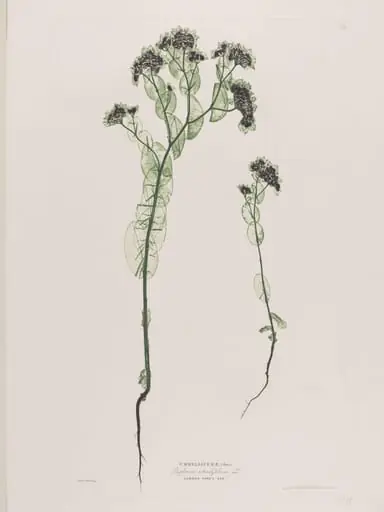 Umbelliferae (Buphorum rotundifolium, Lo.)
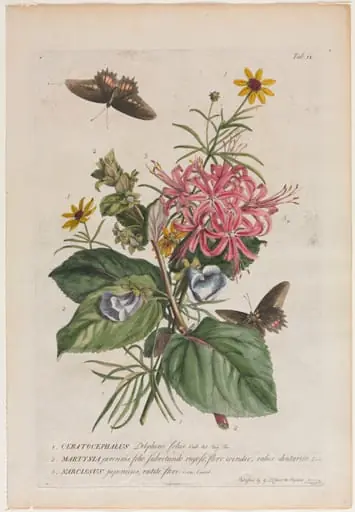 Plantae et papiliones rariores: No. 9
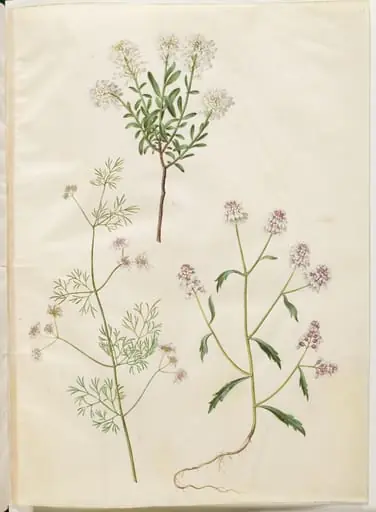 Iberis sempervirens (snepude); Coriandrum sativum (almindelig koriander); Iberis amara (bitter sløjfeblomst)
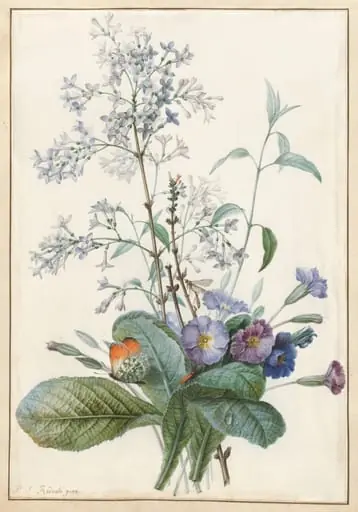 A Bouquet of Flowers with Insects
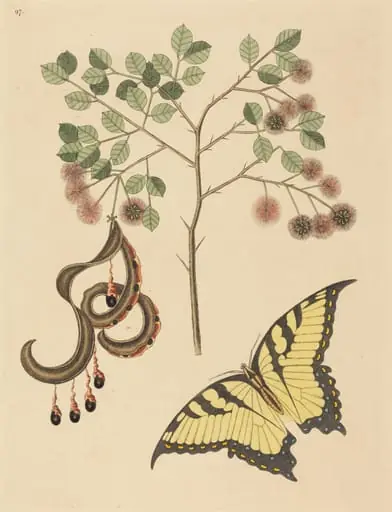 Cat's Claw (Mimosa circinalis)
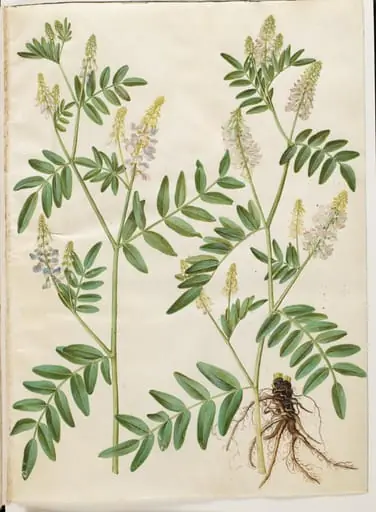 Galega officinalis (læge-stregbælg)
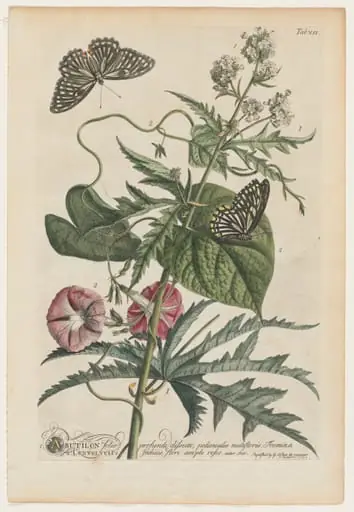 Plantae et papiliones rariores: No. 7
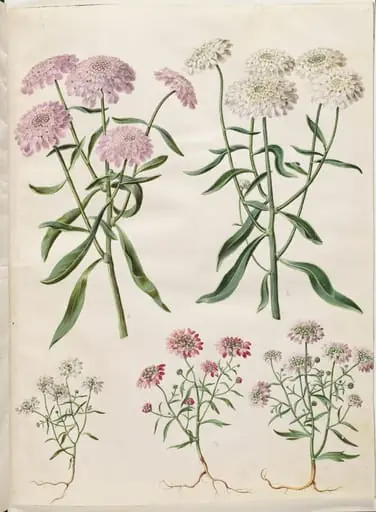 Iberis umbellata (skærm-sløjfeblomst); Iberis amara (bitter sløjfeblomst)
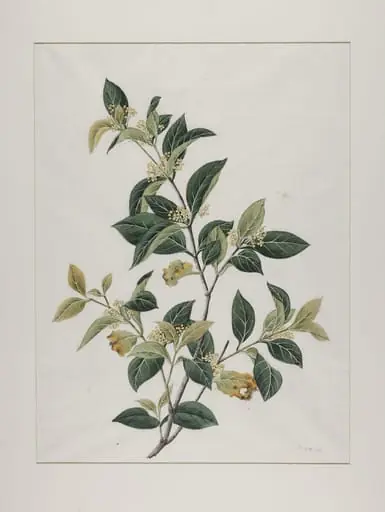 Mock lime (aglaia odorata), zhen zhu lan or mi zi lan
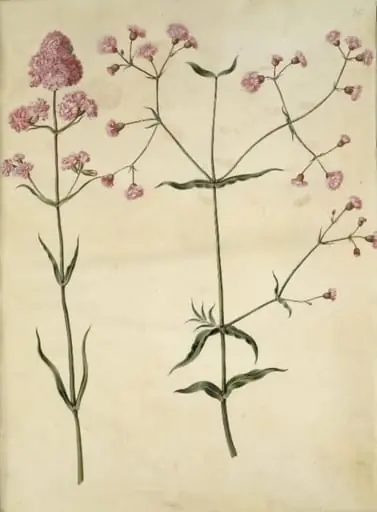 Silene viscaria (almindelig tjærenellike); Silene (trævlekrone)
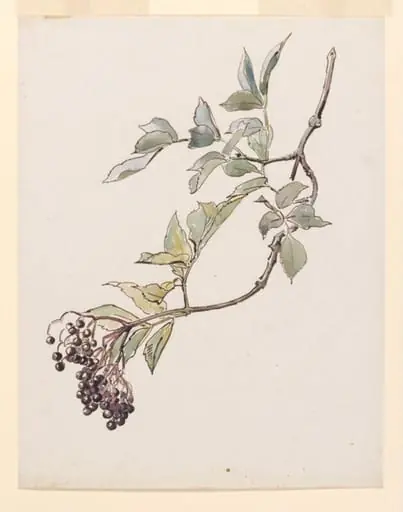 Study of a spray of elderberries
 Bugloss and painted lady butterfly; Heartsease or wild pansy