Artwork
Cat's Claw (Mimosa circinalis)
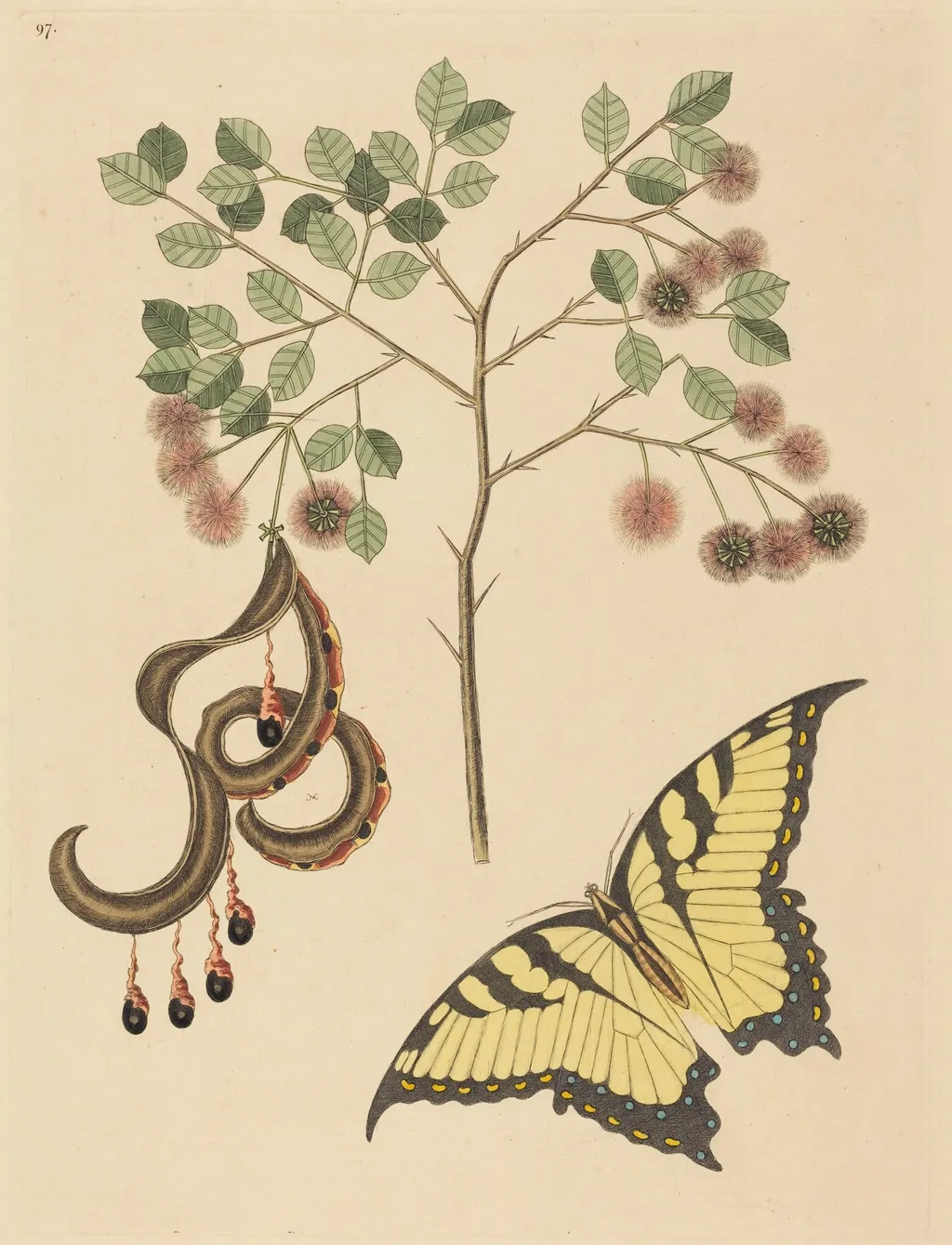
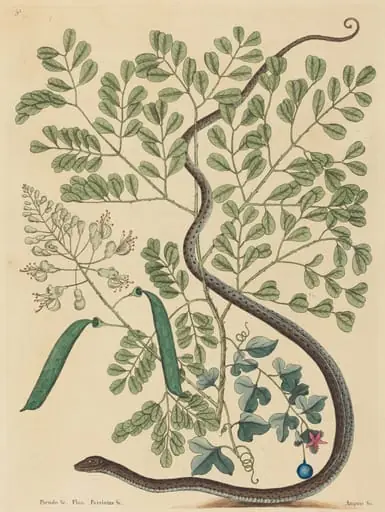
Cat's Claw (Mimosa circinalis) is an ink print by the Baroque artist Mark Catesby. It dates from 1737 and is held in the collection of the National Gallery of Art.
About this work
Overview
Created in 1737 by English naturalist Mark Catesby, *Cat’s Claw* (Mimosa circinalis) is a hand‑colored etching and engraving on laid paper. The print forms part of Catesby’s extensive visual record of North American plants and animals, which later appeared in his multi‑volume work *Natural History of Carolina, Florida and the Bahama Islands*.
Subject & Meaning
The image depicts a branch bearing green foliage and soft pink blossoms, from which a coiled snake with reddish‑brown bands hangs. A vivid yellow and black butterfly, speckled with blue‑yellow dots, rests on the ground nearby, illustrating the intertwined relationships of flora and fauna in the region.
Technique & Style
Catesby combined copper‑plate etching with engraving, then applied watercolor pigments by hand to achieve naturalistic coloration. The use of laid paper provides a textured background that enhances the fine line work and the delicate details of the plant’s leaves and the animal figures.
History & Provenance
The print was produced during the decade-long compilation of Catesby’s *Natural History*, a pioneering illustrated survey of the southeastern United States and the Bahamas. The work, issued in installments from 1729 to 1747, presented 220 plates, establishing the first comprehensive printed record of North American natural history.
Context
Catesby’s observations were made while traveling through the colonies, where he collected specimens and sketched them in situ. His publications catered to European audiences eager for scientific knowledge of the New World, blending empirical observation with artistic craftsmanship.
Artist & collection

Artist
Mark Catesby (24 March 1683 – 23 December 1749) was an English naturalist who studied the flora and fauna of the New World.

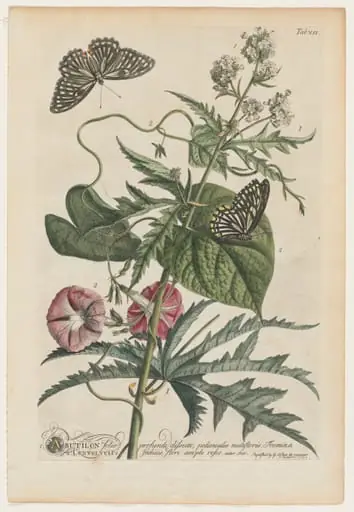 Plantae et papiliones rariores: No. 7
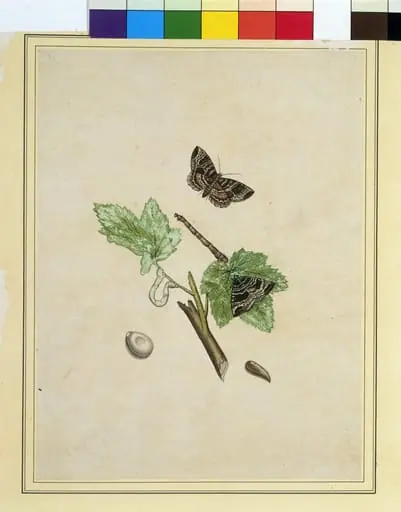 Geometrid moths
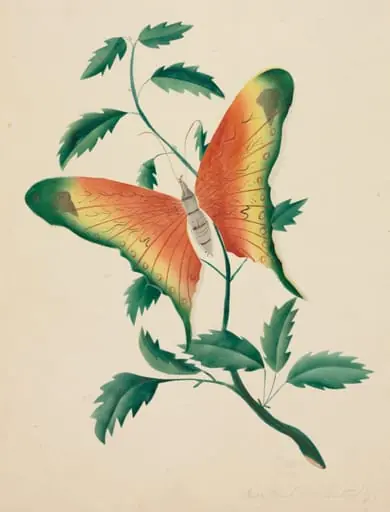 Rose Bush and Butterfly
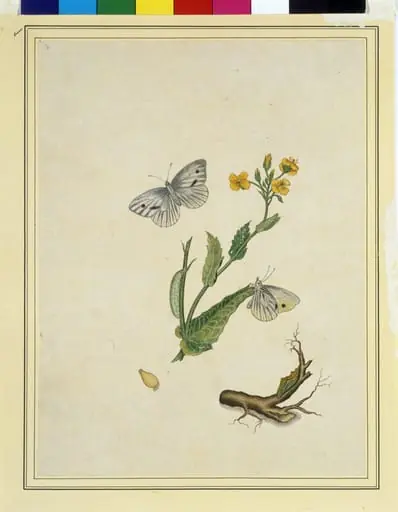 Cabbage worms
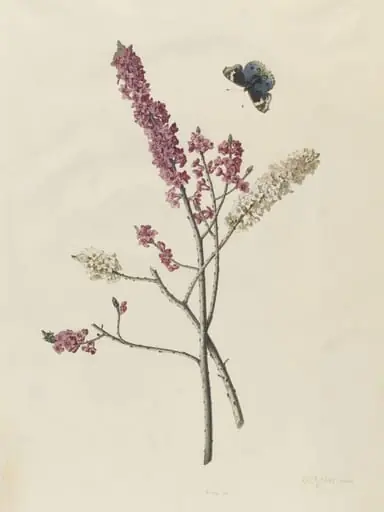 <i>Daphne mezereum</i> with butterfly
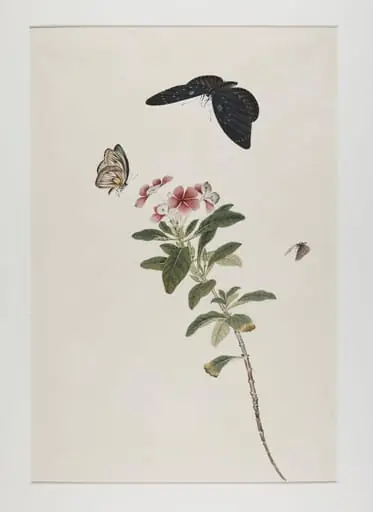 Madagascar periwinkle (catharanthus roseus) and butterflies
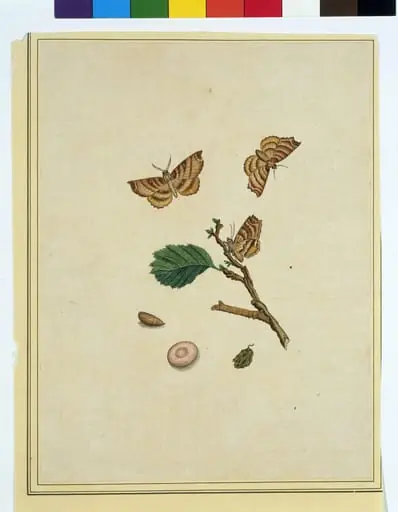 Butterflies
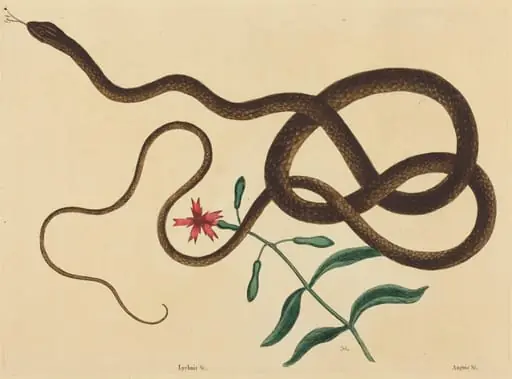
 The Spotted Ribbon Snake (Coluber nebulosus?)
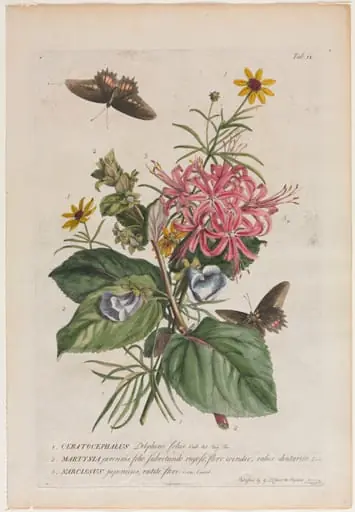 Plantae et papiliones rariores: No. 9
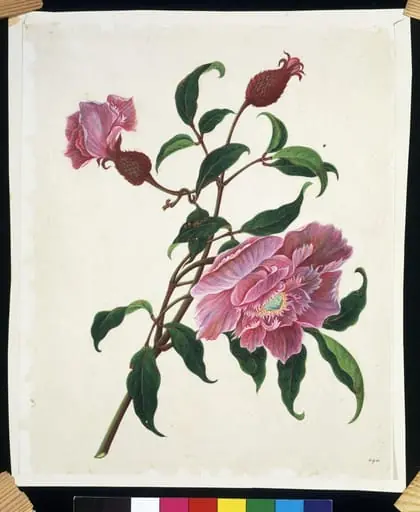 Chinese rose
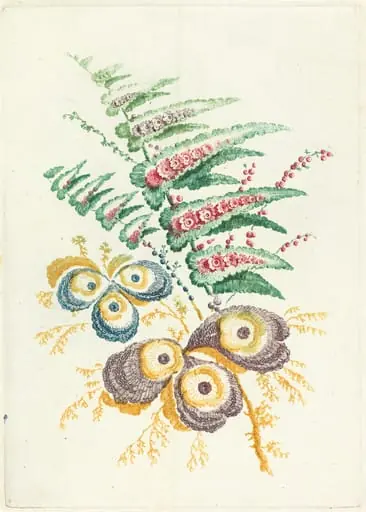 Fantastic Flowers with Oyster-shell Blossoms
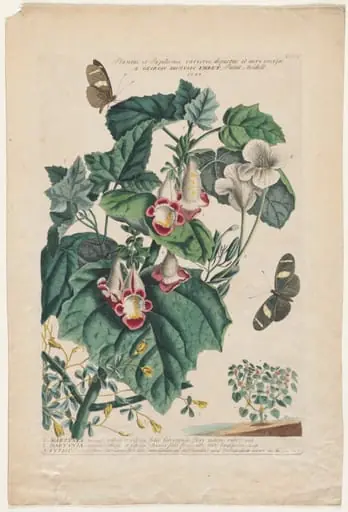 Plantae et Papiliones rariores: Martynia