Artwork
William Dobson, Portrait Painter
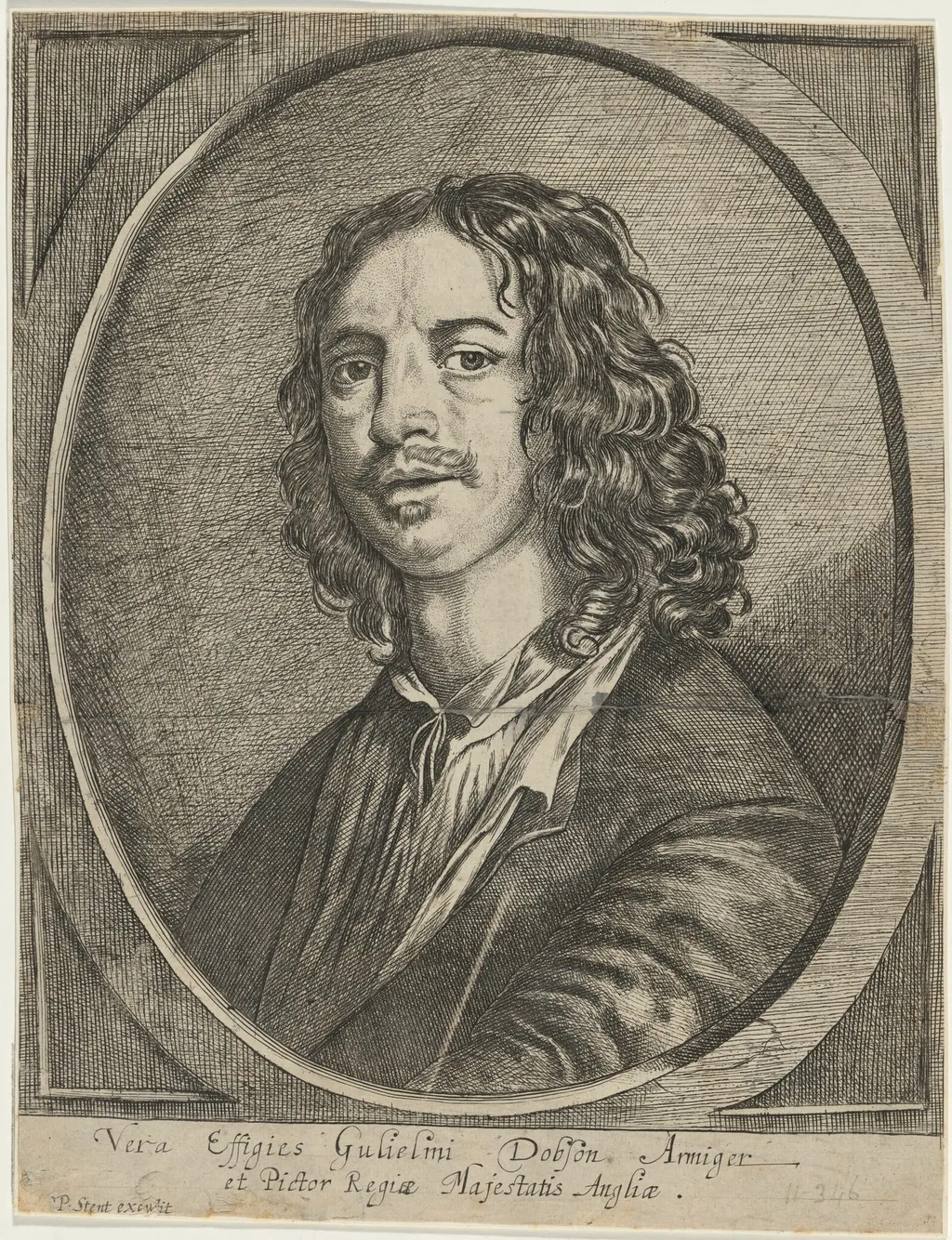
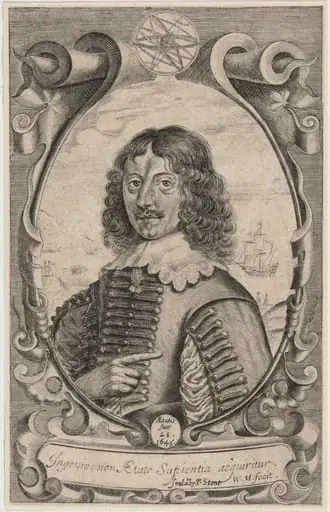
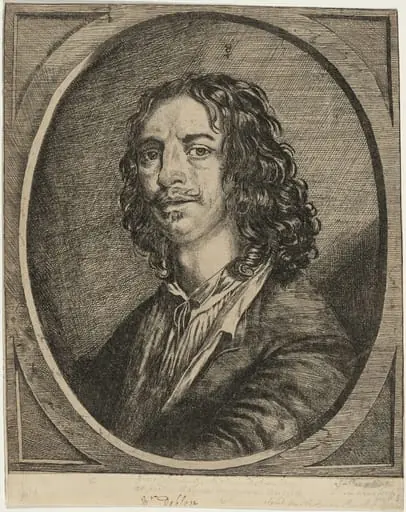
William Dobson, Portrait Painter is an ink print by the Baroque artist Josias English. It dates from 1674 and is held in the collection of the National Gallery of Art. This 1674 print presents a black‑and‑white portrait of the English painter William Dobson.
About this work
Overview
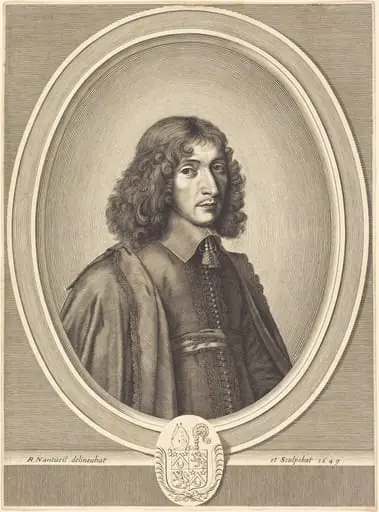
This 1674 print presents a black‑and‑white portrait of the English painter William Dobson. Executed as an engraving, the image shows Dobson’s face and shoulders within an oval frame, his curly hair and moustache framing a composed expression. The work is signed by the engraver Josias English, whose hand is evident in the fine line work that renders the sitter’s features.
Subject & Meaning
The portrait identifies its subject explicitly as William Dobson, a noted portraitist of the mid‑seventeenth century. By depicting Dobson in a dignified pose, the image underscores his status as a professional artist, offering a visual self‑representation that aligns with the conventions of contemporary portraiture, where the sitter’s occupation often informed the composition’s seriousness.
Technique & Style
English employed traditional engraving methods, using a burin to incise fine parallel lines that build up tonal variation through cross‑hatching.
English employed traditional engraving methods, using a burin to incise fine parallel lines that build up tonal variation through cross‑hatching. The dense network of strokes creates subtle gradations of light and shadow, giving the face a three‑dimensional quality. The crisp delineation of the jawline and collar, contrasted with softer shading on the hair, exemplifies the precision characteristic of late‑Baroque printmaking.
History & Provenance
Created in 1674, the print emerged shortly after Dobson’s death in 1664, suggesting it may have been intended as a commemorative image. Josias English, an active engraver of the period, produced the work for circulation among collectors and fellow artists. Surviving copies are found in several European print collections, indicating its distribution in the late seventeenth‑century art market.
Artist & collection