Artwork
The Immaculate Conception
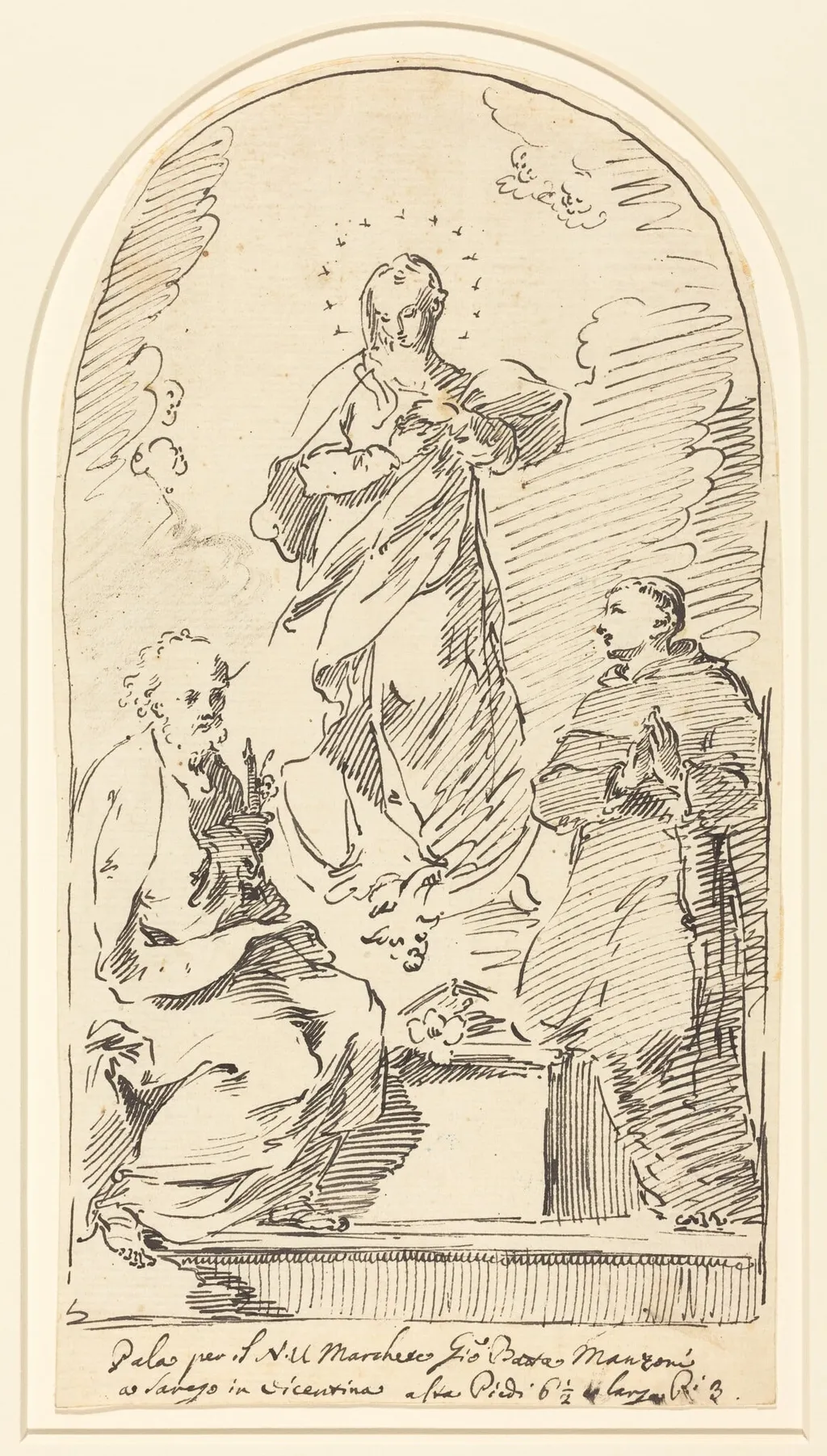
The Immaculate Conception is an ink drawing by the Baroque artist Pietro Antonio Novelli. It dates from 1766 and is held in the collection of the National Gallery of Art.
About this work
Overview
Created in 1766, this drawing by Pietro Antonio Novelli depicts the Virgin Mary as the Immaculate Conception. Executed in pen and black ink with black chalk on laid paper, it reflects the artist’s skill in delicate linear expression and tonal gradation. The medium allows for both precision and atmospheric depth, characteristic of 18th-century Italian draftsmanship.
Subject & Meaning
The subject portrays the Virgin Mary standing atop a crescent moon, surrounded by clouds and celestial light, symbolizing her purity and freedom from original sin. Angels and cherubs frame her form, reinforcing her divine status. This iconography, rooted in Catholic doctrine, was widely used in Counter-Reformation art to affirm Marian devotion.
Technique & Style
Novelli employs fine pen lines to define contours and intricate drapery, while black chalk adds soft shadows and volume. The use of laid paper provides a subtle texture that enhances the ink’s absorption. His approach balances clarity of form with lyrical fluidity, typical of late Baroque drawing practices in Venice and its surroundings.
History & Provenance
The drawing was completed in 1766 during Novelli’s active period in Venice. Its early provenance is undocumented, but it likely originated as a preparatory study or devotional piece for a larger commission. It entered public collections in the 20th century, where it is now preserved as an example of Venetian religious draftsmanship.
Context
In mid-18th-century Venice, religious themes remained central to artistic production despite growing secular trends. Novelli, trained in the Venetian tradition, responded to enduring devotional needs through refined graphic works. This drawing aligns with a broader trend of artists using drawing to explore theological imagery with personal interpretation.
Legacy
Though not widely exhibited, the work contributes to understanding how Venetian artists sustained religious iconography through intimate media. Novelli’s handling of ink and chalk influenced later draftsmen in the region, preserving a link between Baroque expressiveness and emerging Neoclassical clarity in sacred subjects.
Artist & collection


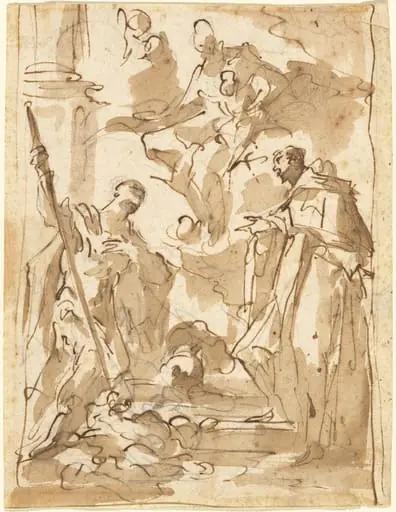 The Madonna and Child in Glory with Saint Theodore and a Monastic Saint
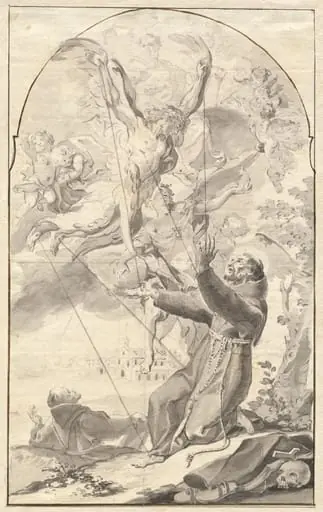 The Stigmatization of Saint Francis
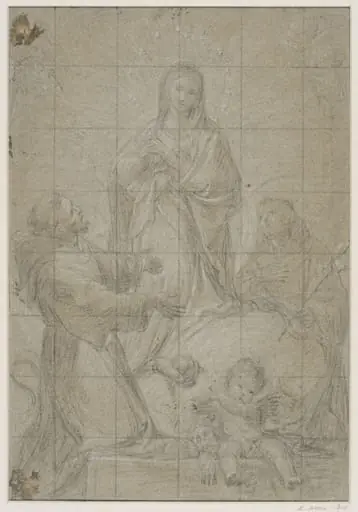 Saints adoring the Virgin Mary
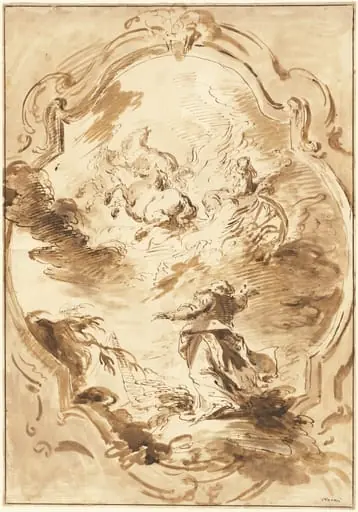
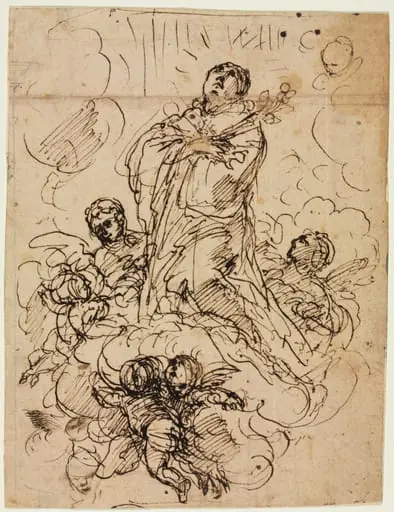 Apotheosis of a Saint
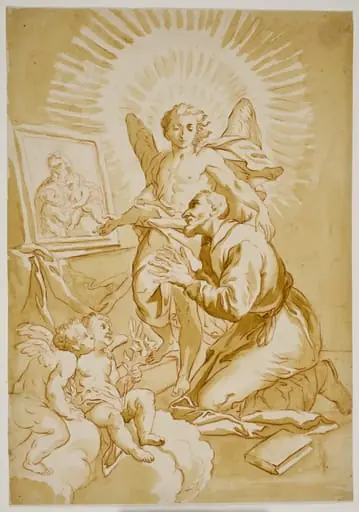 St Philip Neri adoring a painting of the Madonna shown to him by an angel
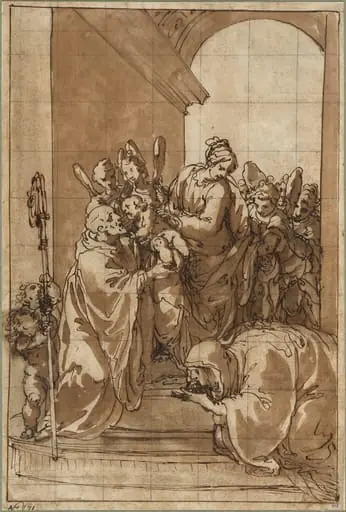 Madonna and Child with Angels, Saint Benedict, and Saint Scholastica
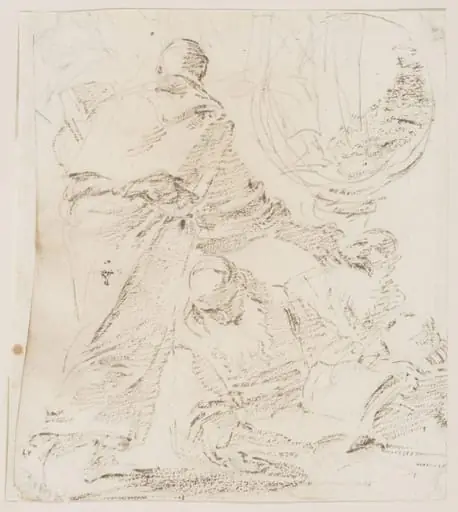 Recto: Three monks; verso: Slight sketch of a woman reclining, above: The lower portion of another figure
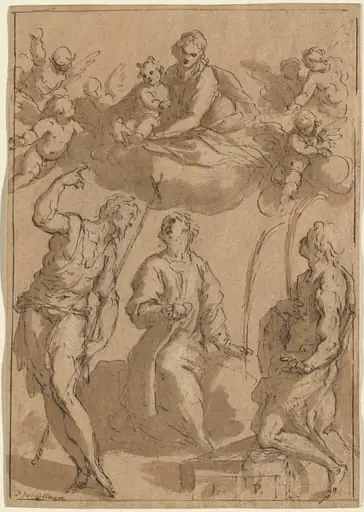 Madonna and Child in Glory with Saints John the Baptist, Stephen, and Lawrence
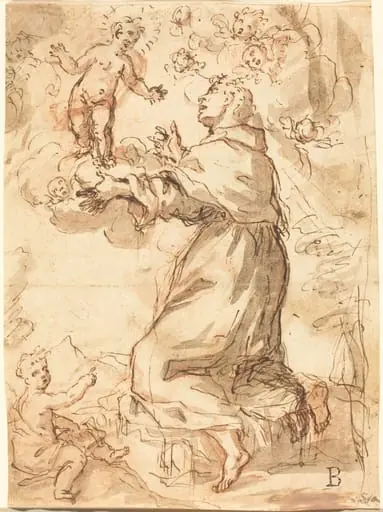 The Christ Child Appearing to Saint Francis
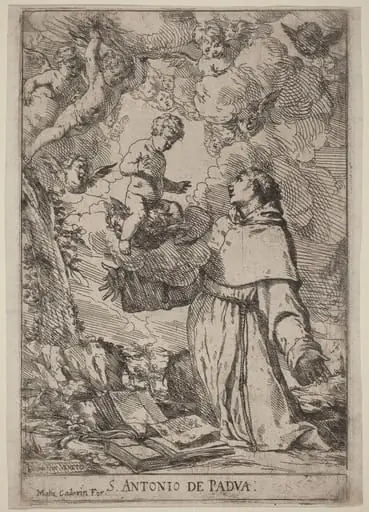 Saint Anthony of Padua
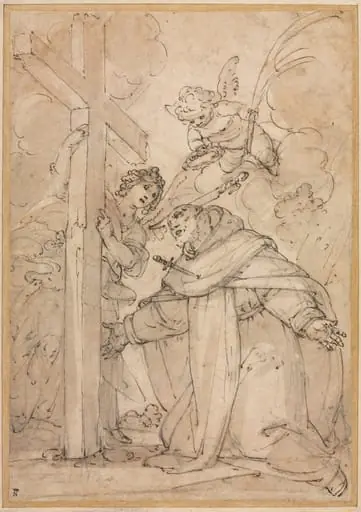 Saint Peter Martyr
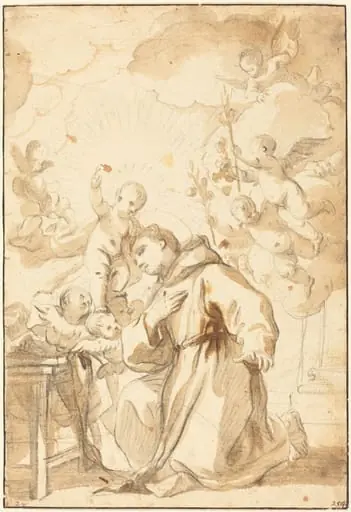 Saint Anthony of Padua