Artwork
Untitled
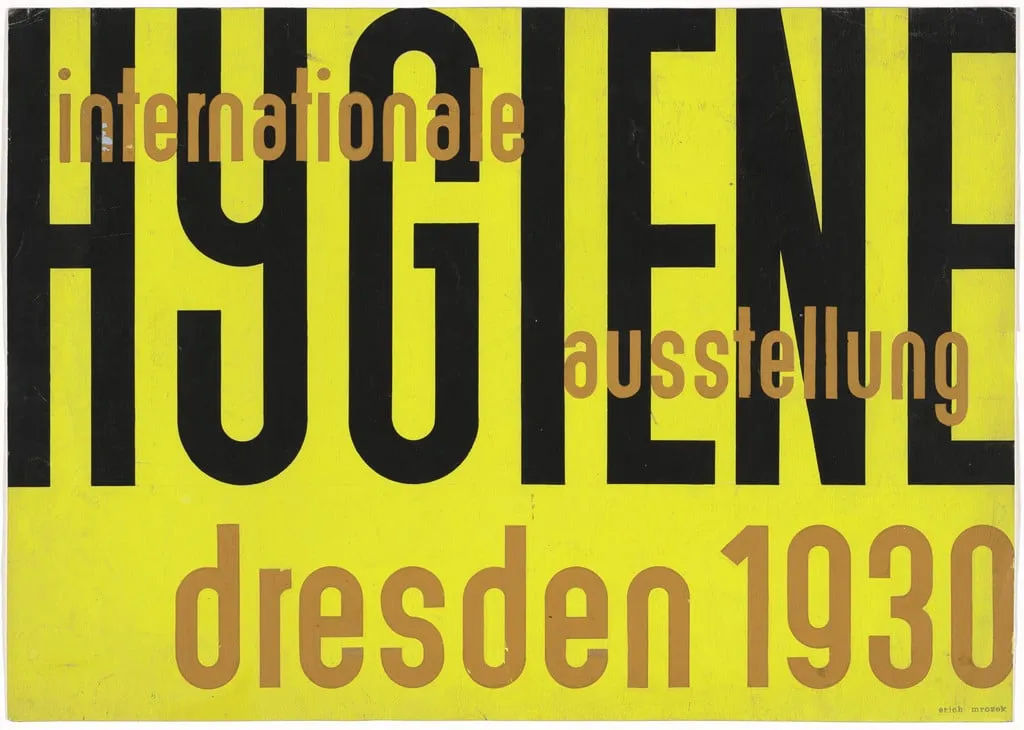
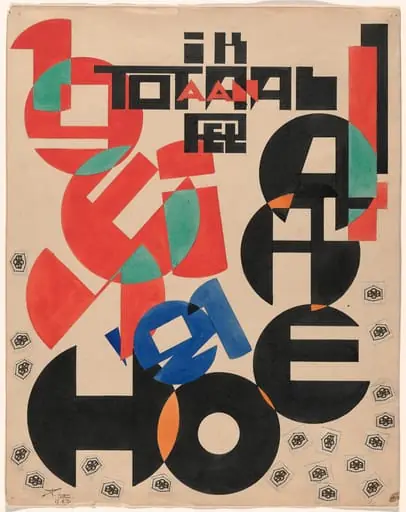
Untitled is a gouache drawing by Erich Mrozek. It dates from 1930 and is held in the collection of the Museum of Modern Art.
About this work
The words "internationale hygiene-ausstellung" are stacked in uneven, chunky letters.
This poster is bright yellow with bold black and rust-colored text. The words "internationale hygiene-ausstellung" are stacked in uneven, chunky letters. Below, "dresden 1930" stands out in a different brown shade. The text looks hand-painted, with rough edges and uneven spacing.
The words mean "International Hygiene Exhibition," which was a big fair in Dresden. The rough, uneven letters give it a raw, homemade feel.
Look up gouache to see how this matte, opaque paint works.
Overview
Created in 1930, this gouache on paper work by Erich Mrozek serves as a promotional piece for the International Hygiene Exhibition in Dresden. Its simple composition and hand-rendered typography reflect the functional aims of interwar graphic design, prioritizing immediate legibility over decorative refinement. The work is held in the collection of The Museum of Modern Art, where it represents the intersection of advertising and visual culture in early 20th-century Europe.
Subject & Meaning
The piece advertises a major public health exposition held in Dresden that year, promoting hygiene as a societal ideal. The text—'internationale hygiene-ausstellung' and 'dresden 1930'—is the sole visual content, functioning as both announcement and artifact. The deliberate irregularity of the lettering suggests urgency and accessibility, aligning the exhibition’s message with grassroots engagement rather than institutional formality.
Technique & Style
Gouache, an opaque water-based paint, was applied by hand to create bold, flat areas of color. The bright yellow background contrasts with black and rust-toned lettering, enhancing visibility. The uneven strokes, rough edges, and inconsistent spacing imply direct brushwork, avoiding mechanical reproduction. This manual approach lends the design a tactile, almost provisional quality, characteristic of some avant-garde posters of the period.
History & Provenance
Produced for the 1930 Dresden exhibition, the work likely circulated as a poster or flyer before entering institutional collections. Its preservation in The Museum of Modern Art reflects a mid-20th-century shift in recognizing commercial graphic design as worthy of archival attention. The piece’s survival is notable, given the ephemeral nature of such promotional materials during a time of political and economic upheaval.
Context
The 1930 Dresden Hygiene Exhibition was part of a broader European movement to publicize public health reforms through mass communication. Designers increasingly used bold typography and saturated color to reach diverse audiences. Mrozek’s work aligns with contemporaneous efforts in Germany to merge educational messaging with visual immediacy, often borrowing from Constructivist and Expressionist aesthetics while retaining a distinctly local character.
Legacy
Though not widely known outside specialized circles, the work contributes to the understanding of how public health campaigns employed graphic design to shape civic behavior. Its handmade aesthetic distinguishes it from later, mass-produced posters, offering insight into the transitional phase between artisanal and industrial visual communication in interwar Europe.
Artist & collection