Artwork
The Transformations of God: The Divine Beggar
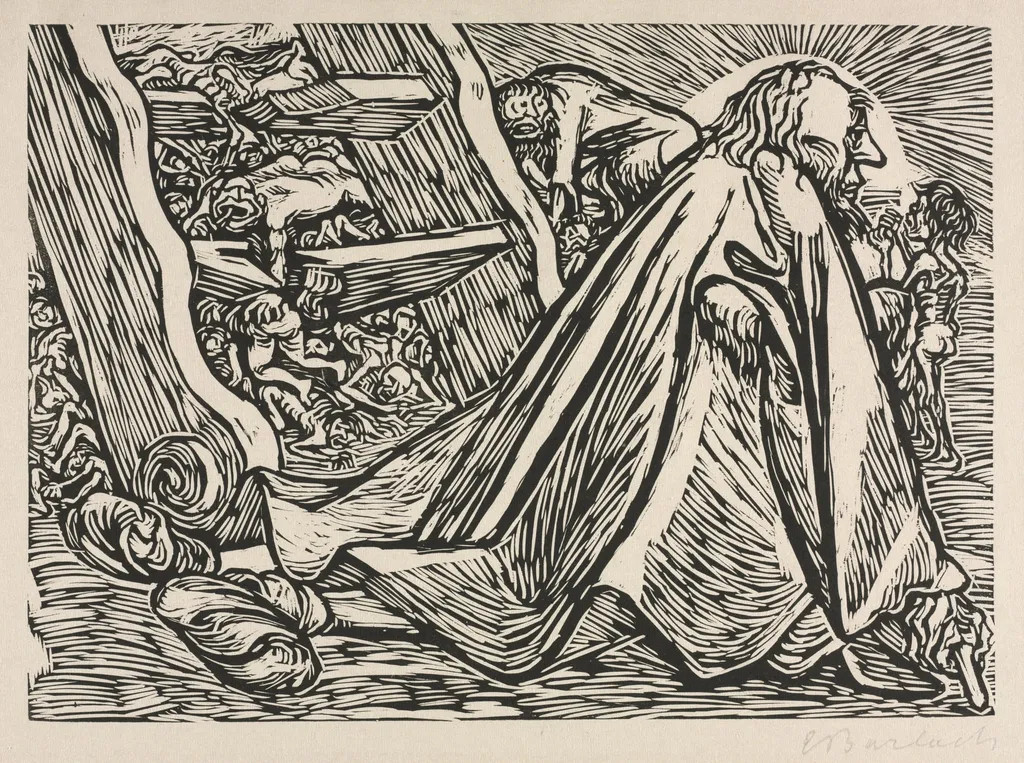
The Transformations of God: The Divine Beggar is a print by Ernst Barlach. It dates from 1921 and is held in the collection of the Cleveland Museum of Art.
About this work
Overview
The Transformations of God: The Divine Beggar, a 1921 print by Ernst Barlach, embodies the German Expressionist style, characterized by emotive intensity and social commentary. The work reflects Barlach's post-World War I shift towards pacifism, departing from his earlier nationalist leanings.
Subject & Meaning
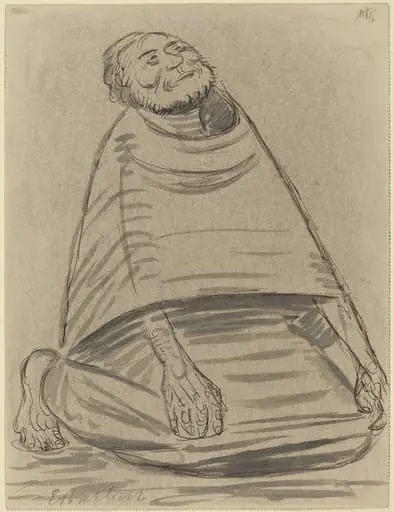
Depicting a humble, praying figure set against a backdrop of swirling clouds and radiant light, the print conveys themes of spiritual reflection and human suffering, common in Barlach's oeuvre. The figure's bowed head and clasped hands emphasize devotion and vulnerability.
Technique & Style
Barlach's distinctive style blends realism with expressive abstraction. The figure's robes are defined by bold, expressive lines, contrasting with the softer, ethereal treatment of the celestial background, creating a sense of dynamic energy.
History & Provenance
Housed in the Cleveland Museum of Art, this print is part of Barlach's multifaceted output, which spanned sculpture, printmaking, and literature. Its creation in 1921 marks a period of profound thematic transformation in the artist's work.
Context
Emerging from Barlach's experiences in World War I, The Divine Beggar reflects the broader Expressionist movement's focus on emotional truth and social critique, distinguishing it from the artist's pre-war nationalist themes.
Legacy
As a quintessential work of German Expressionism, it influences subsequent movements in its emphasis on expressive form and thematic depth, while also representing a pivotal moment in Barlach's evolution as a pacifist artist.
Artist & collection
Artist
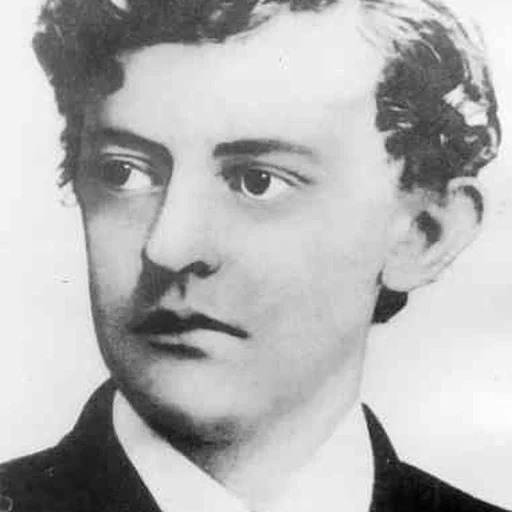
Ernst Heinrich Barlach (2 January 1870 – 24 October 1938) was a German expressionist sculptor, medallist, printmaker and writer.

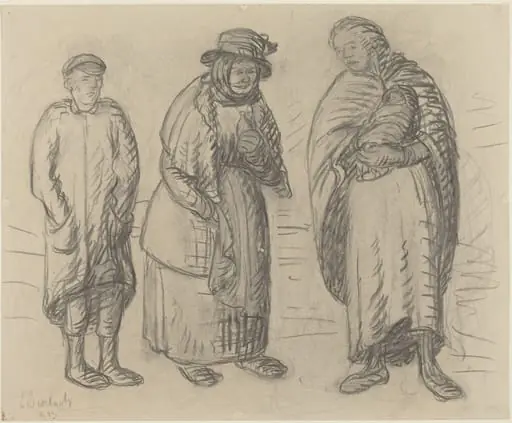
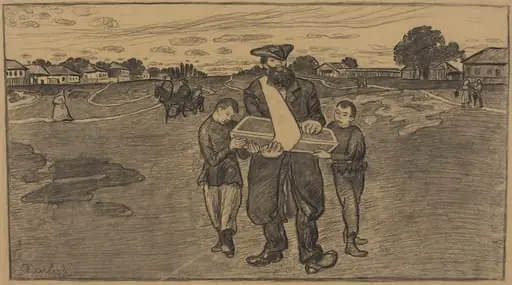
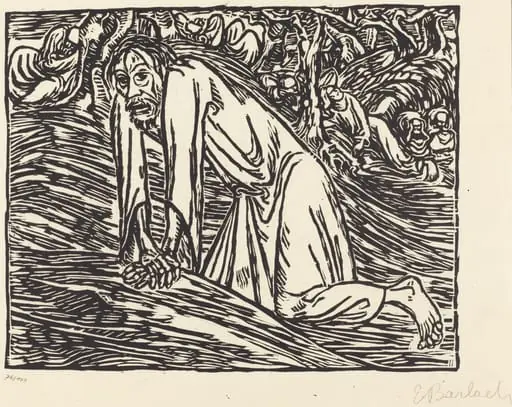 Christ in Gethsemane
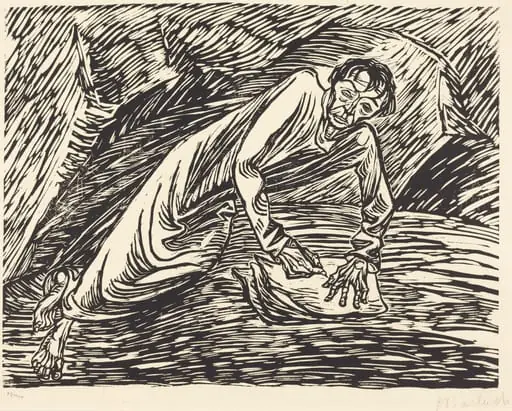 The Writing Prophet (Saint John on Patmos)
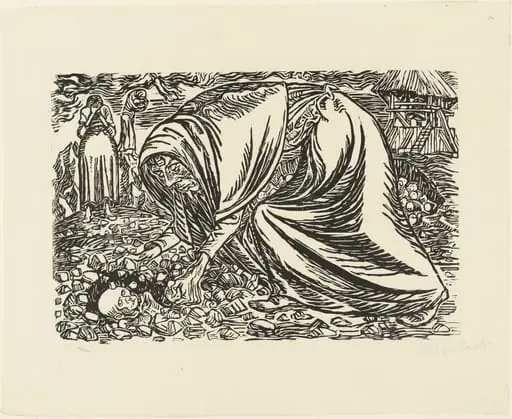 Untitled
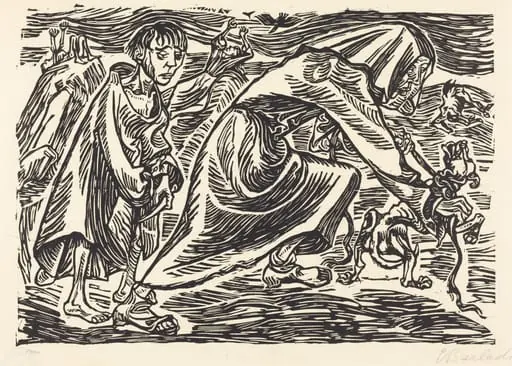 The Dog Catcher
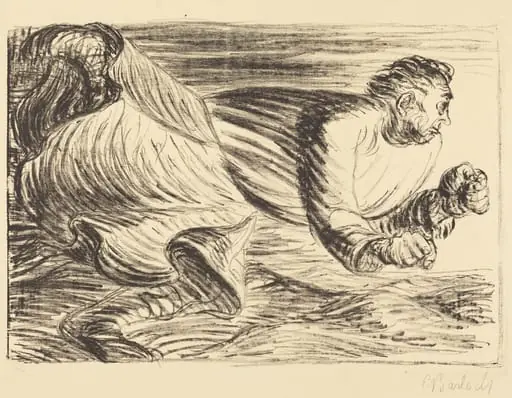 The Raging Barbarian
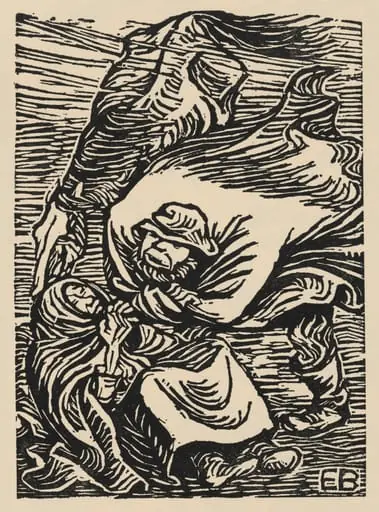 Gruppe im Sturm (Couple in a Storm) from Deutsche Graphiker der Gegenwart (German Printmakers of Our Time)
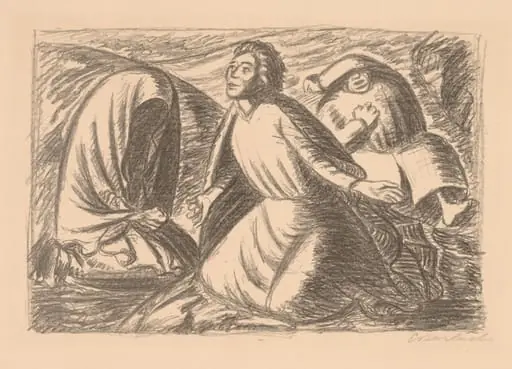 Hope and Despair II
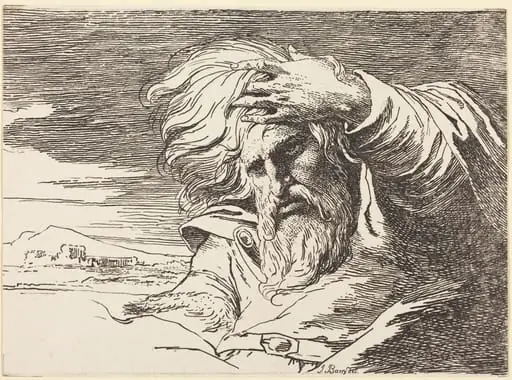 Eastern Patriarch
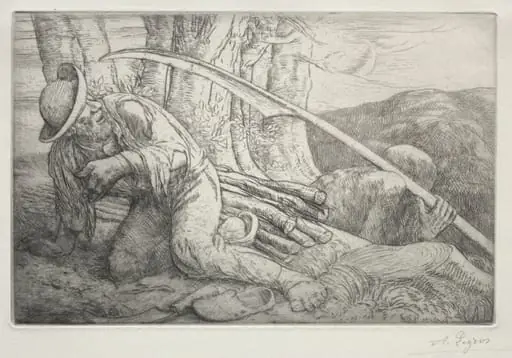 La Mort et le Bûcheron (5th Plate)
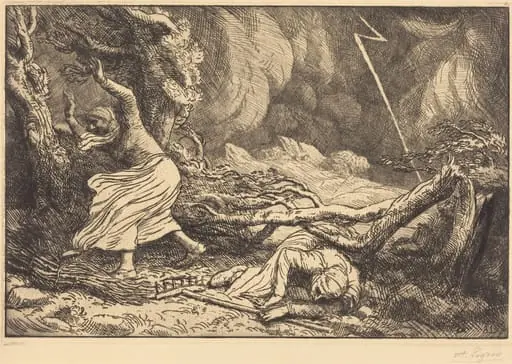 Victims of the Lightning (Victimes de la foudre)
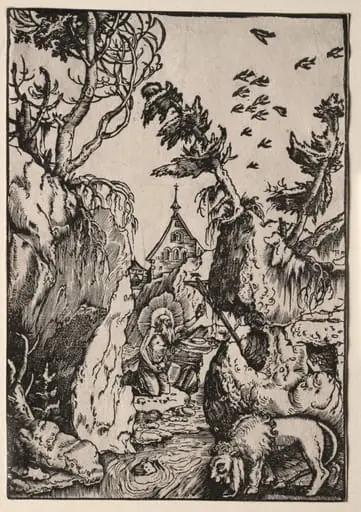 St. Jerome in the Wilderness
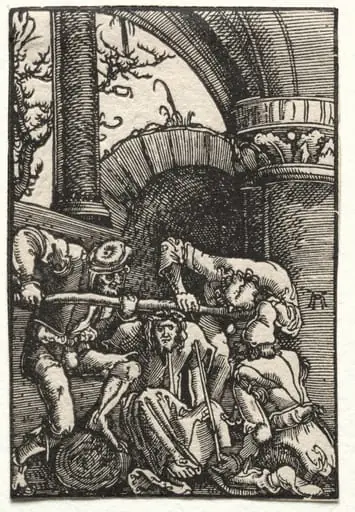 The Fall and Redemption of Man: Christ Crowned with Thorns