Artwork
Landscape with Cattle (recto) Cattle (verso)
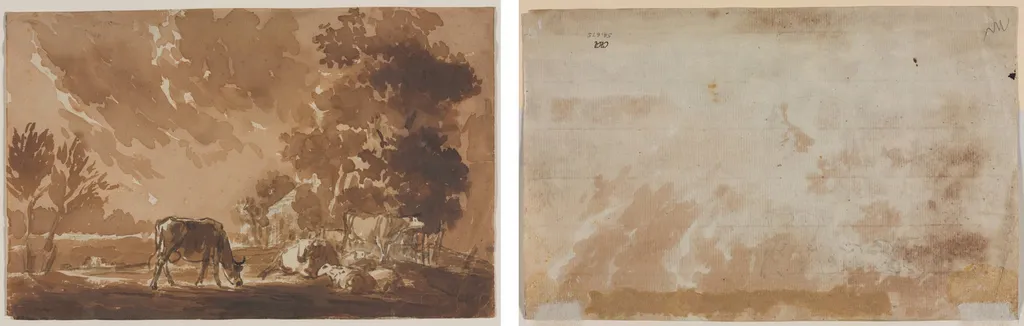
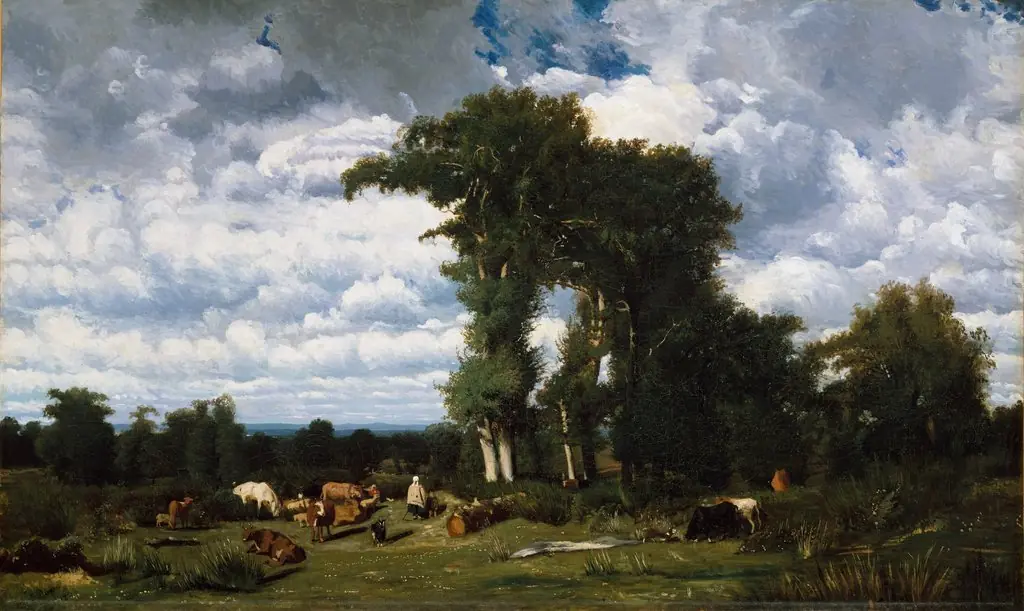
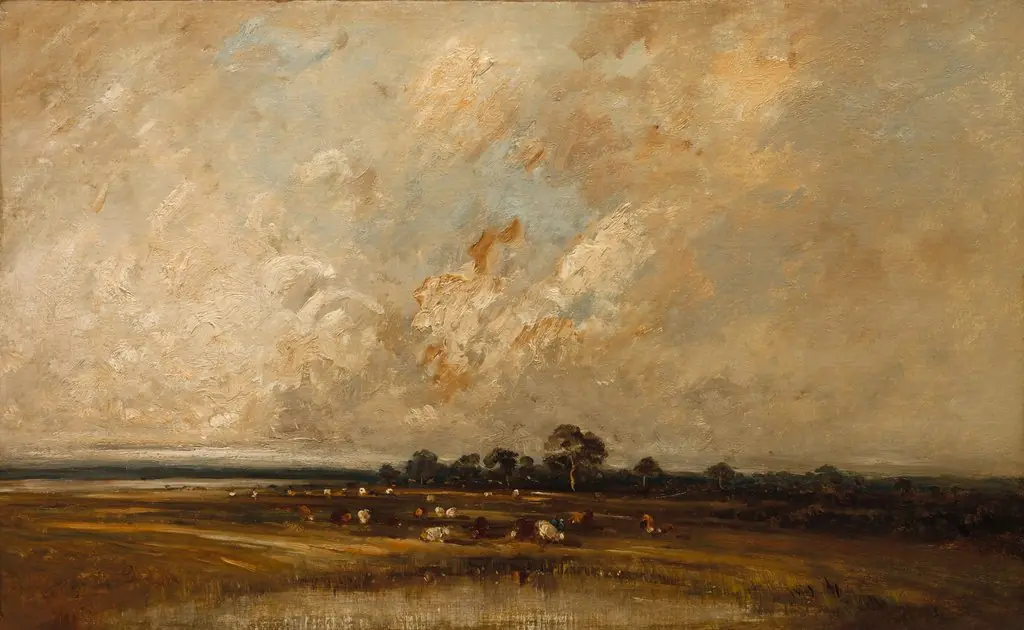
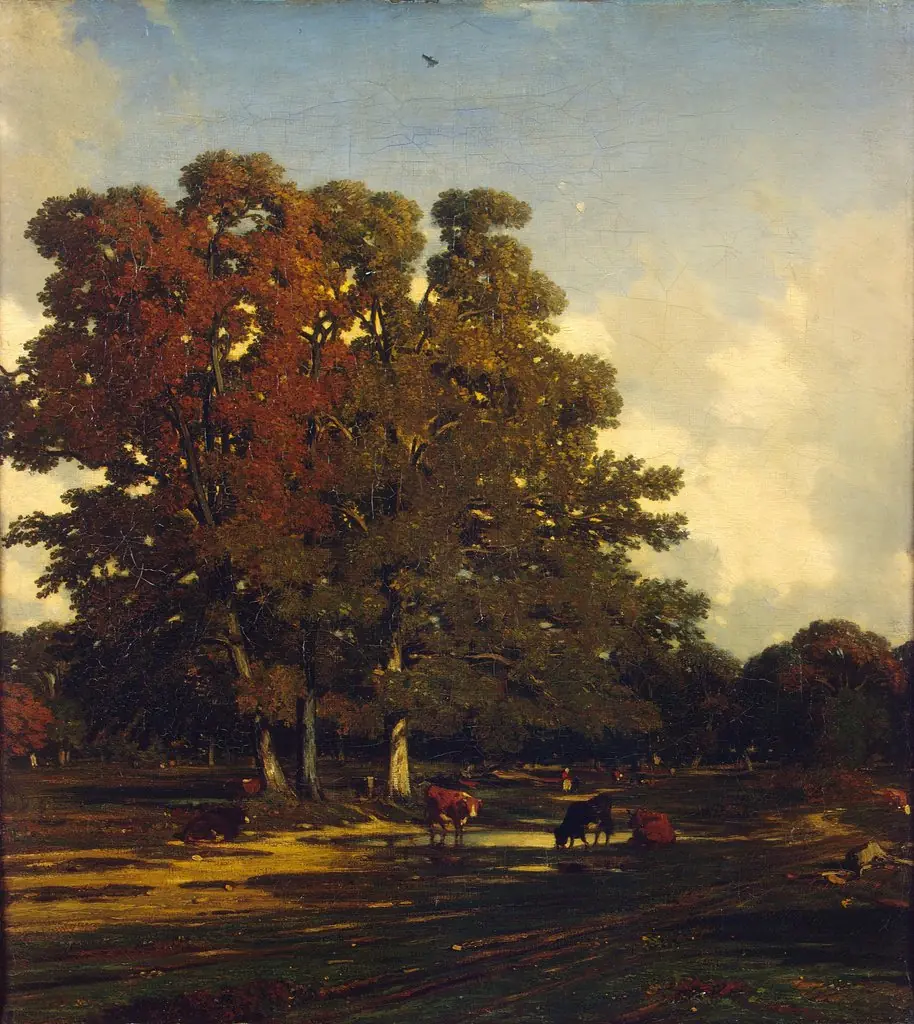
Landscape with Cattle (recto) Cattle (verso) is a drawing by the Romanticist artist Jules Dupré. It dates from 1804 and is held in the collection of the Cleveland Museum of Art.
About this work
Overview
This double-sided drawing by Jules Dupré features a landscape with grazing cattle on the front and a separate study of cattle on the reverse.
This double-sided drawing by Jules Dupré features a landscape with grazing cattle on the front and a separate study of cattle on the reverse. Created in the early 19th century, it reflects Dupré’s engagement with rural scenes and his role in the Barbizon school. The work is held in the collection of The Cleveland Museum of Art, where it serves as an example of French landscape drawing from the period.
Subject & Meaning
The drawing captures quiet moments of rural life: cattle resting or grazing in a pastoral setting under an open sky. There is no narrative or human presence, emphasizing instead the dignity and stillness of animals within their natural environment. The focus on everyday rural existence aligns with the Barbizon artists’ interest in authentic, unidealized nature.
Technique & Style
Dupré employed loose, expressive strokes in pencil or chalk to suggest form and movement, avoiding rigid detail. Subtle tonal variations create depth and atmospheric perspective, with soft transitions between foreground and distant hills. The technique prioritizes mood over precision, reflecting a sensitivity to light and the transient qualities of the natural world.
History & Provenance
The drawing was produced during Dupré’s formative years as a landscape artist, likely in the 1830s or 1840s, not 1804 as previously stated. It entered the Cleveland Museum of Art’s collection through documented acquisitions, though its earlier ownership remains unrecorded in public sources. Its survival as a two-sided work suggests it was used for study rather than public display.
Context
Dupré worked alongside other Barbizon painters who rejected academic idealism in favor of direct observation of nature. This drawing reflects a broader 19th-century shift toward depicting rural life with emotional sincerity. While often associated with Romanticism, the Barbizon approach was more grounded, focusing on the ordinary rather than the sublime.
Legacy
As a study in naturalism, this drawing exemplifies the Barbizon school’s influence on later movements, including Impressionism. Its emphasis on light, atmosphere, and unembellished subject matter helped redefine landscape art in France. Though not widely exhibited, such works remain important for understanding the evolution of modern landscape practice.
Artist & collection
Artist
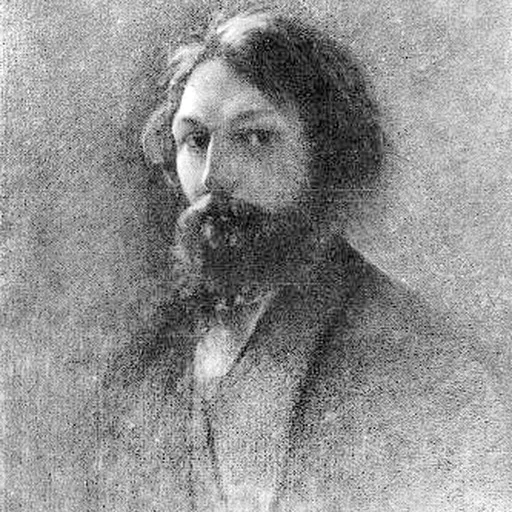
Jules Louis Dupré (French pronunciation: ; April 5, 1811 – October 6, 1889) was a French painter, one of the chief members of the Barbizon school of landscape painters.

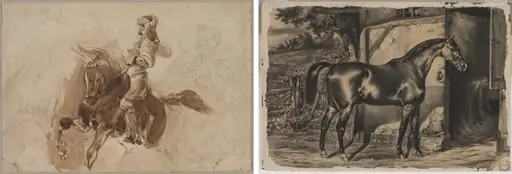 Armored Figure on Horseback (recto); Horse in Front of a Barn (verso)
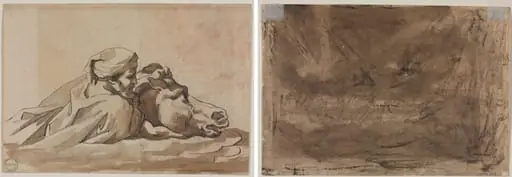 Man Clutching a Horse in Water, after Poussin's "Deluge" (recto); Compositional Study? (possibly for "Poussin's Deluge") (verso)
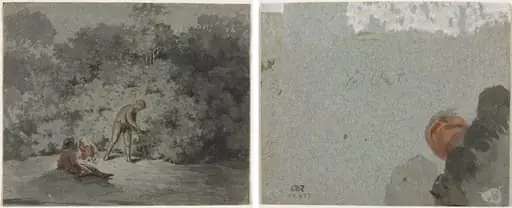 Faggot Gatherer (recto) Study of a Head seen from Below (verso)
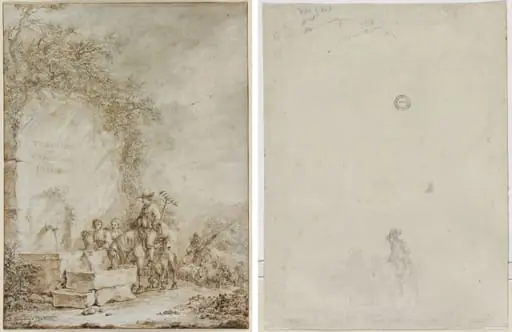 Frontispiece for an Album of Drawings: Peasants at a Fountain (recto); Sketch of Peasants at a Fountain (verso)
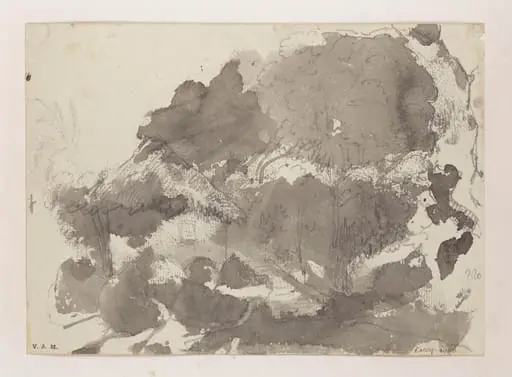 A thatched dwelling amid trees, Bengal
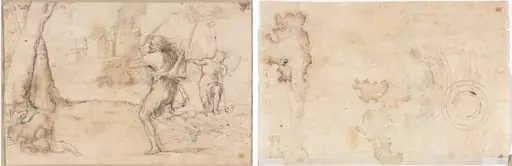 Romulus and Remus Found by Faustulus (recto) Concentric Circles (verso)
 Study of Heads (recto); Crenelated Fortress (verso)
 The Gardens of the Villa Medici
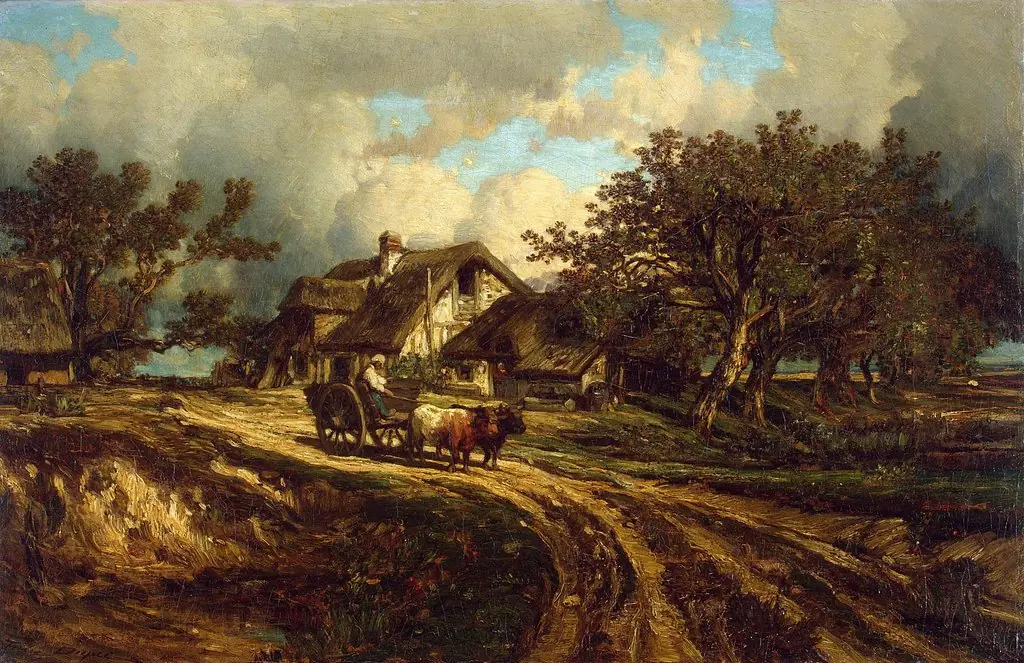
 Peasant's Cottage (recto); Bridge and Gate (verso)
 View of Lake Nemi (recto) Small Group of Roman Ruins (verso)
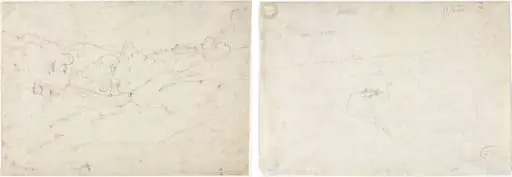 View of Marino (recto); Sketch for a Landscape (verso)
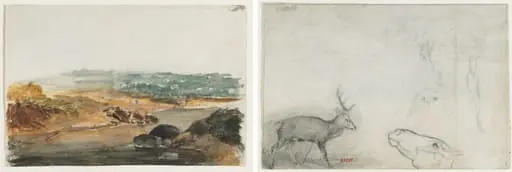 Landscape (recto); Studies of Animals (verso)