Artwork
Eglise Saint-Jean, Thiers
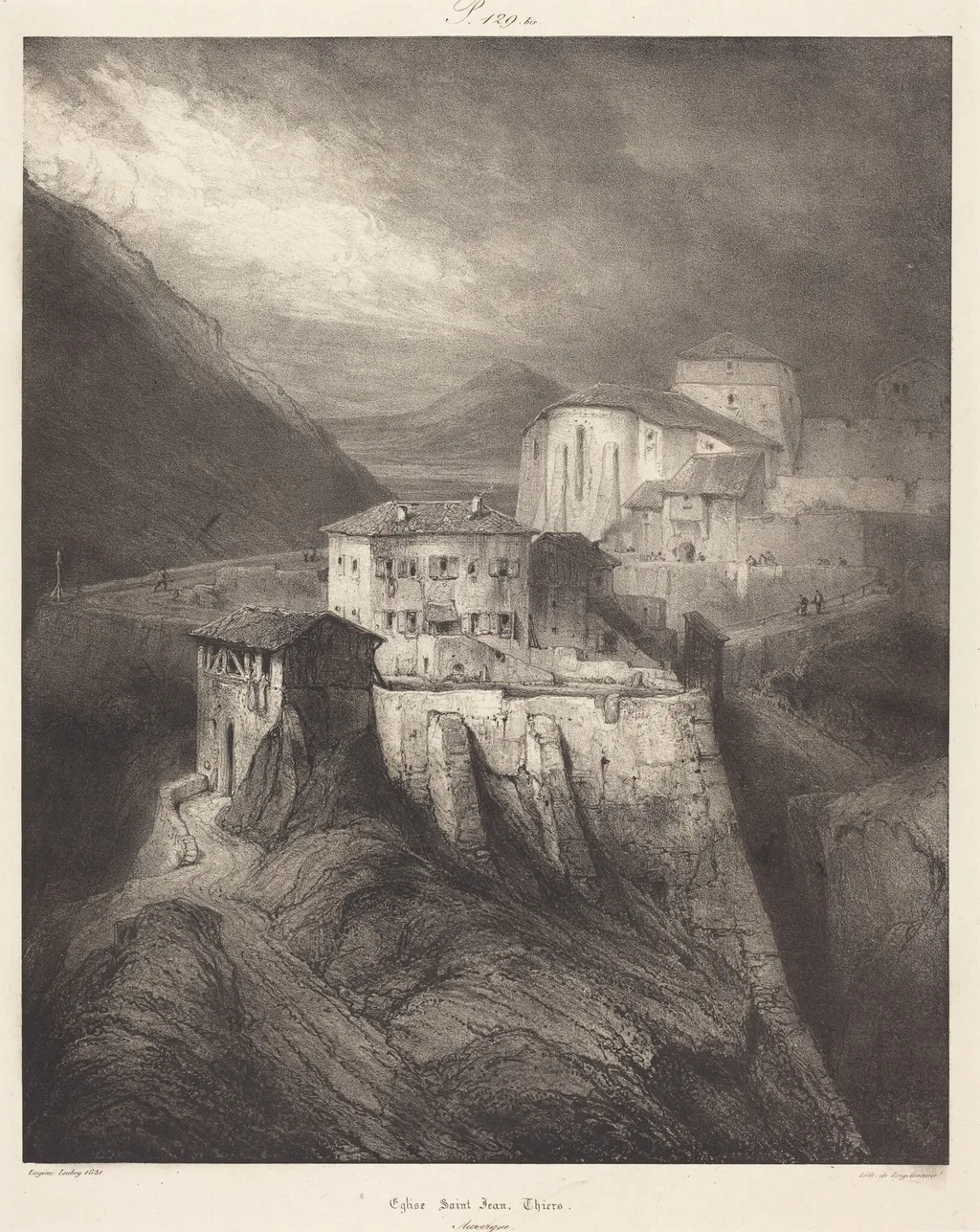
Eglise Saint-Jean, Thiers is an ink print by the Romanticist artist Eugène Isabey. It dates from 1831 and is held in the collection of the National Gallery of Art.
About this work
Overview
Eglise Saint-Jean, Thiers is a lithograph created by French artist Eugène Isabey in 1831, exemplifying the Romantic style through its depiction of a Gothic church and surrounding landscape.
Subject & Meaning
The print focuses on the Gothic Eglise Saint-Jean in Thiers, situated atop a rocky hillside with a village. The scene reflects the Romantic era’s fascination with medieval architecture and picturesque, often dramatic, natural settings.
Technique & Style
Isabey utilized lithography to achieve detailed, expressive shading, emphasizing the ruggedness of the rocks and the solidity of the buildings. The dark, swirling sky enhances the dramatic ambiance, characteristic of Romantic aesthetics.
History & Provenance
Created in 1831 by Eugène Isabey, a prominent painter and lithographer known for his architectural and landscape themes, with a focus on atmospheric detail.
Context
This work aligns with the 19th-century Romantic movement’s interest in medieval revival and the emotional potential of landscape. Isabey’s choice of subject and technique situates the piece within the broader European fascination with historical and natural beauty.
Artist & collection
Artist
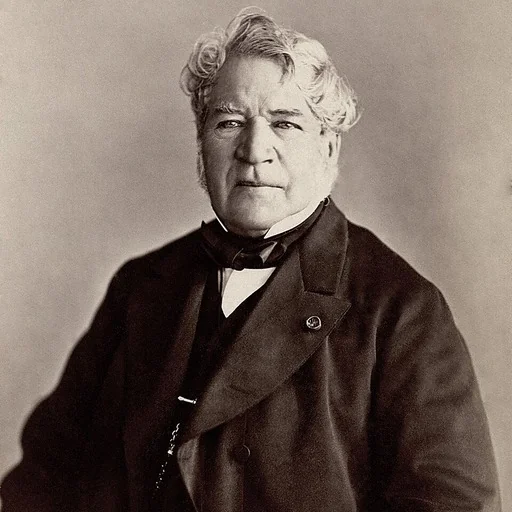
Eugène Louis Gabriel Isabey (French pronunciation: ; 22 July 1803 – 25 April 1886) was a French painter, lithographer and watercolorist in the Romantic style.

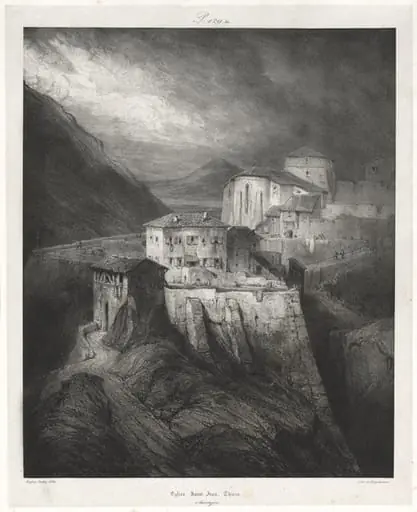 Picturesque and Romantic Journeys in Old France: Auvergne (vol. II): St. John Church, Thiers, Plate 129
 Rocca Giovane
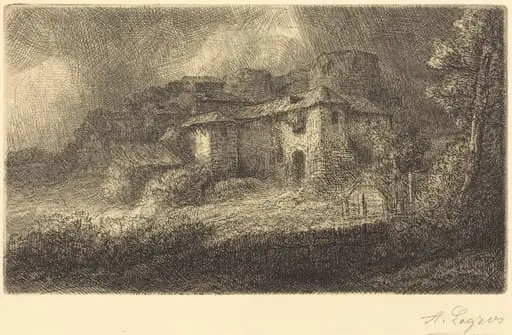 Ruins of a Chateau (Les ruines du chateau)
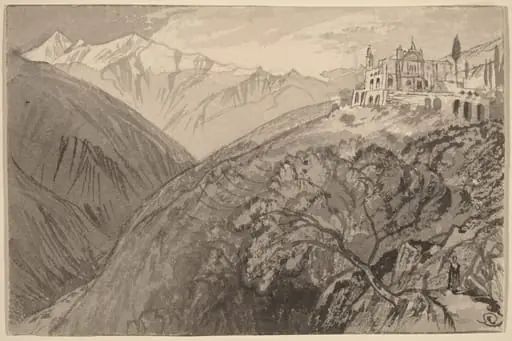 A Town on a Hilltop (Sanctuary of Lampedusa)
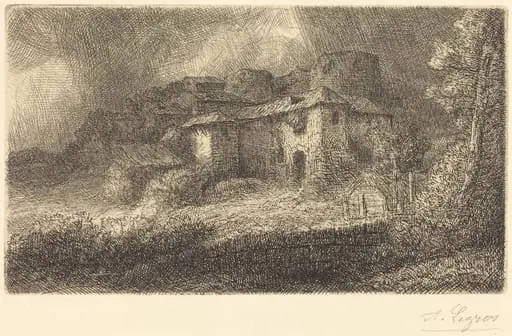 Ruins of a Chateau (Les ruins du chateau)
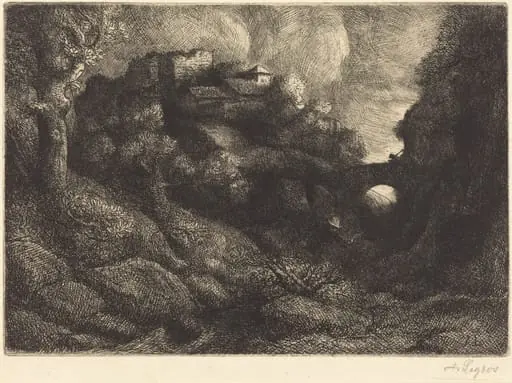 Remembrance of Italy (Souvenir d'Italie)
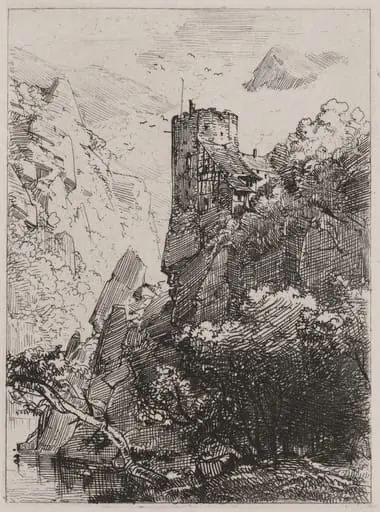 Watchtower on a Cliff with a Stream
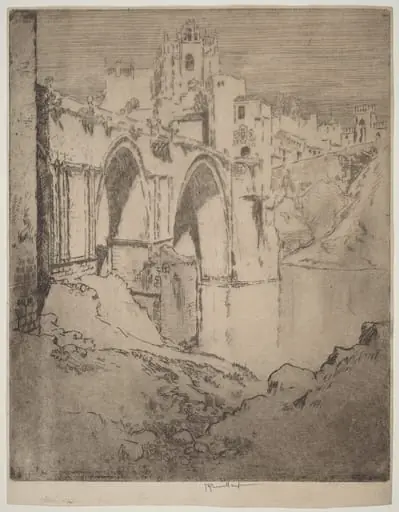 Bridge of San Juan D'Los Reyos, Toledo
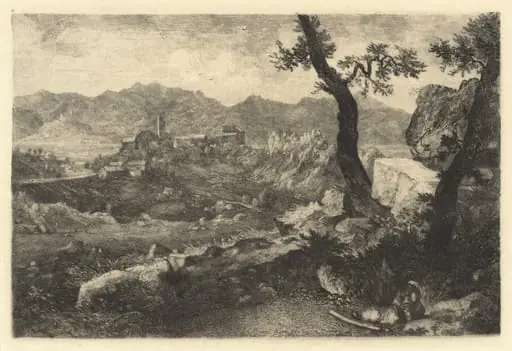 A View Near Rome
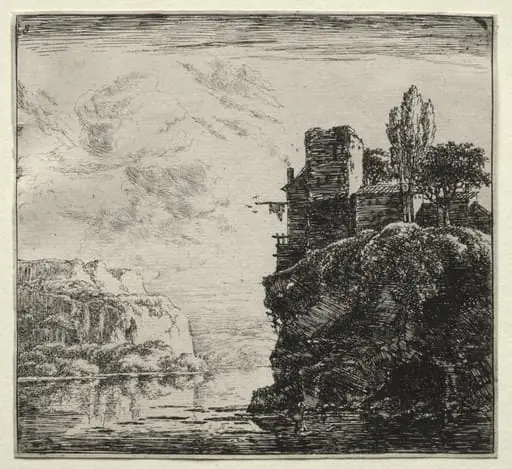 The River between the Rocks
 Via Porta Pinciana, Rome
 Abside de l'église de Saint-Nectaire