Artwork
The Cedars of Lebanon
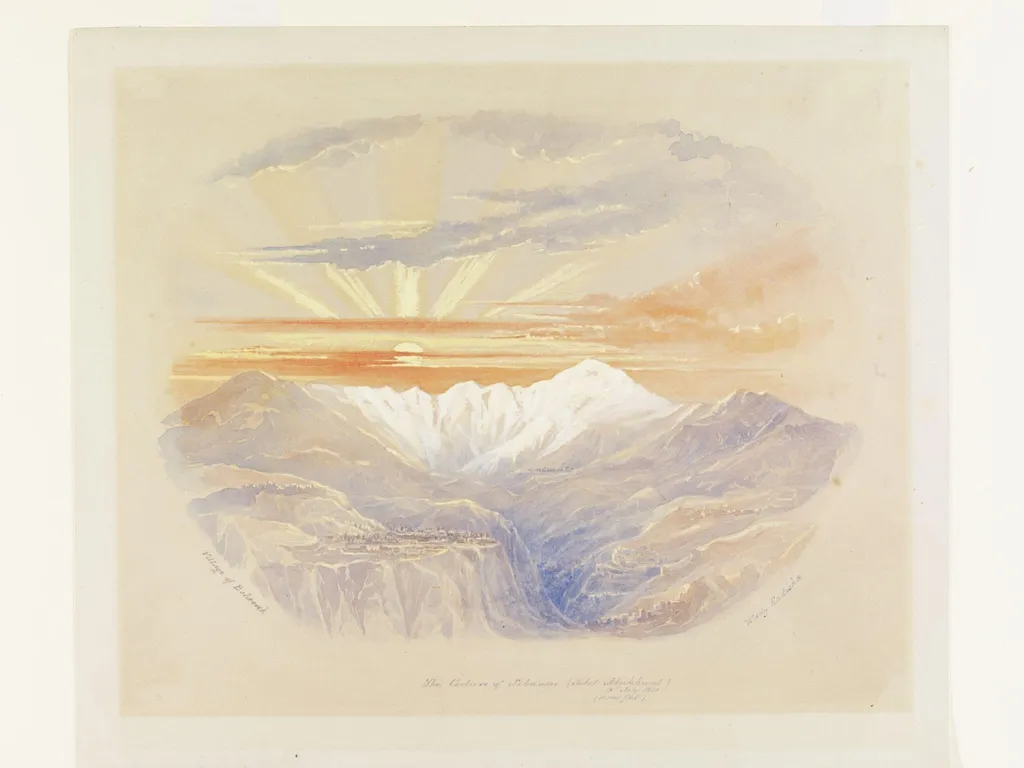
The Cedars of Lebanon is a watercolor work on paper by the British Romanticist artist Charles Joseph Frederick Ewart. It dates from 1861 and is held in the collection of the Victoria and Albert Museum.
About this work
Overview
The Cedars of Lebanon is a watercolour created by Vice Admiral Charles Joseph Frederick Ewart around 1860, capturing a serene landscape inspired by his Mediterranean service.
Subject & Meaning
The work depicts a snow-capped mountain with greenery at its base, a small valley village, and a soft, cloudy sky with warm horizon light. While titled after the famous cedars, the painting emphasizes a broader, peaceful landscape rather than the trees themselves.
Technique & Style
Ewart employed light, airy colors and loose, watery brushstrokes, conveying a sense of tranquility. The artist's signature and title inscription are neatly integrated into the composition.
History & Provenance
Created circa 1860 during Ewart's command of HMS Melpomene, the piece was later acquired by A. Mathews in May 1973 for £50. A related watercolour of the HMS Melpomene at Malta from the same year contextualizes Ewart's naval inspirations.
Context
Similar works can be found at the Victoria and Albert Museum, suggesting the piece's style and themes align with mid-19th-century British watercolour traditions of landscape and travel art.
Legacy
The Cedars of Lebanon represents a modest yet characteristic example of Ewart's artistic output during his naval career, reflecting the intersection of military life and amateur artistic practice among British officers of the time.
Artist & collection
Artist
Charles Joseph Frederick Ewart
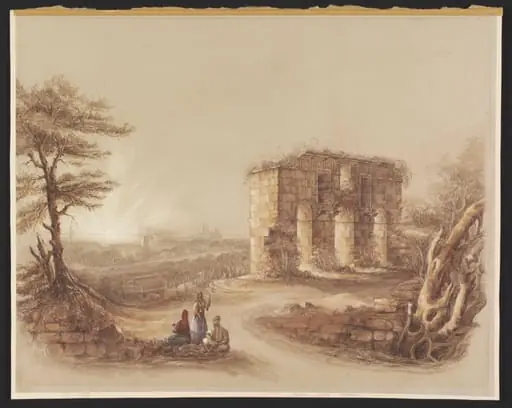
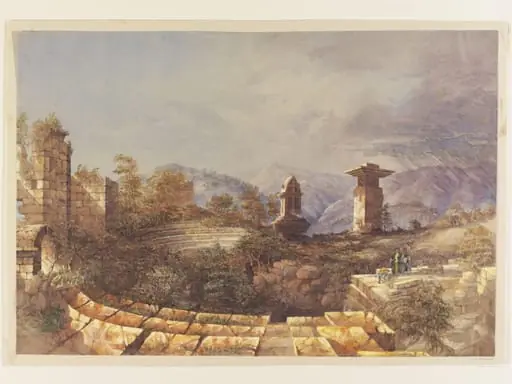
Charles Joseph Frederick Ewart painted quiet watercolours of ancient ruins and landscapes.

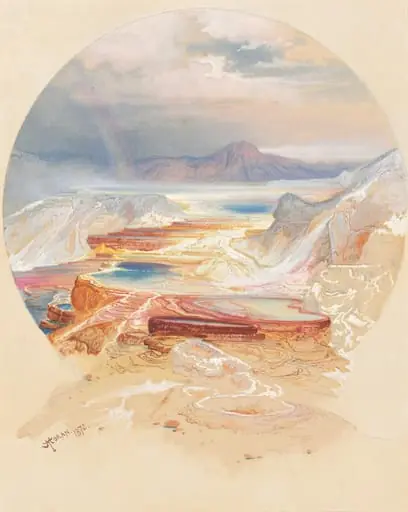 Minerva Terrace, Yellowstone
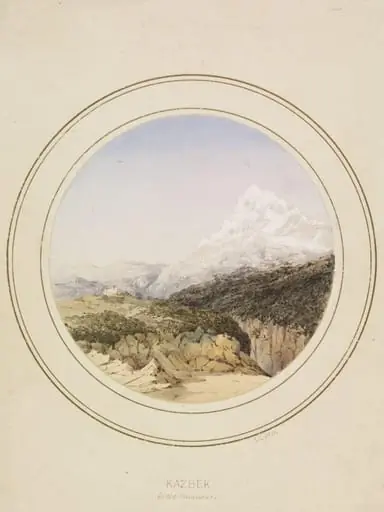 Kazbek in the Caucasus
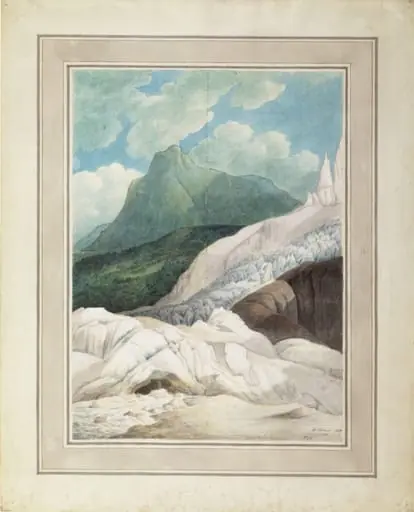 The Source of the Arveiron, with Mont Blanc in the Background
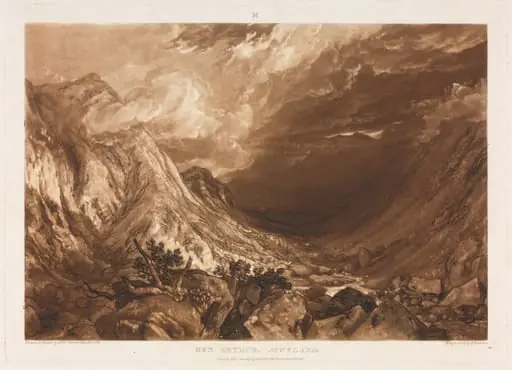 Liber Studorium: Ben Arthur, Scotland
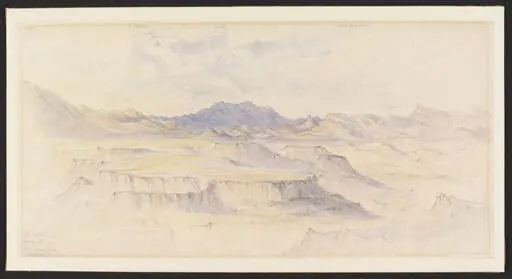 The Sinai Mountains
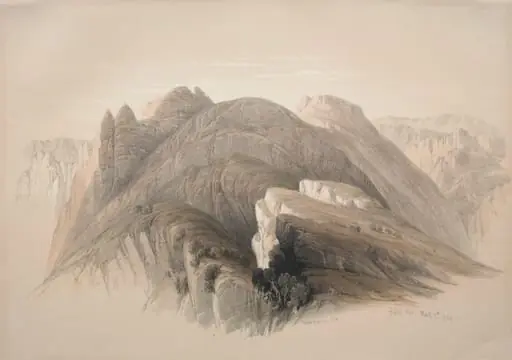 Gebil Hor. Mount Hor, from the Cliffs Encircling Petra
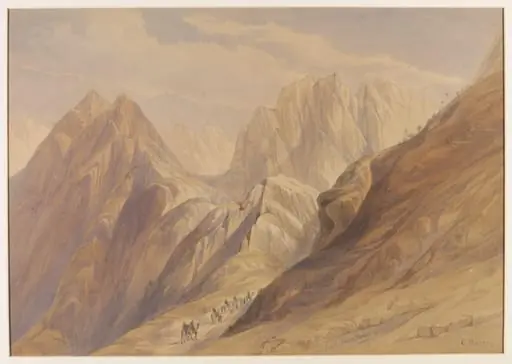 Ascent of the Lower Range of Sinai
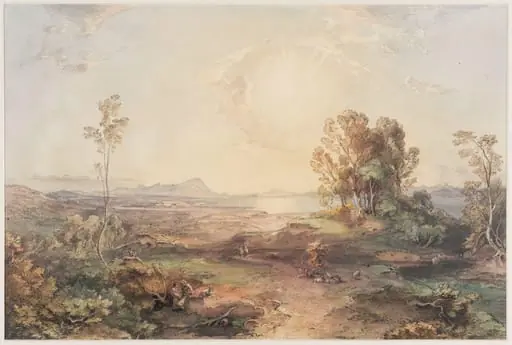 Landscape with figures, sheep and goats
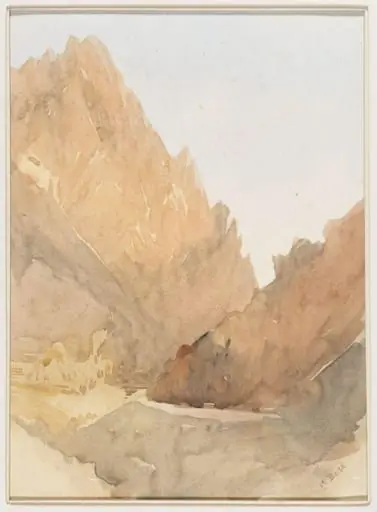 The Gate of the Desert
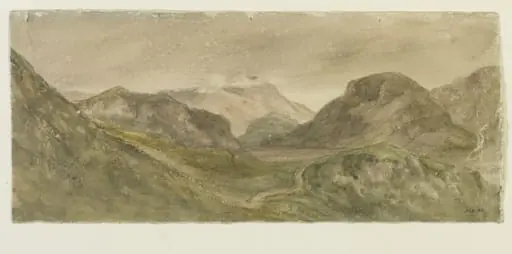 Hellvellyn
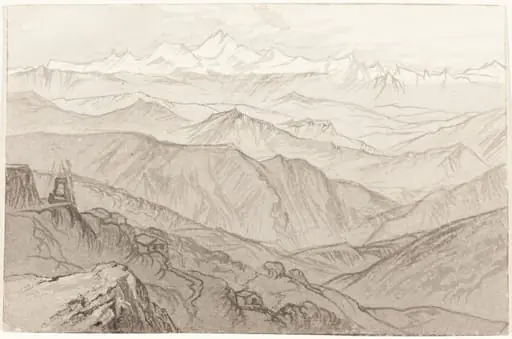 Mount Kinchinjunga (All Things Fair)
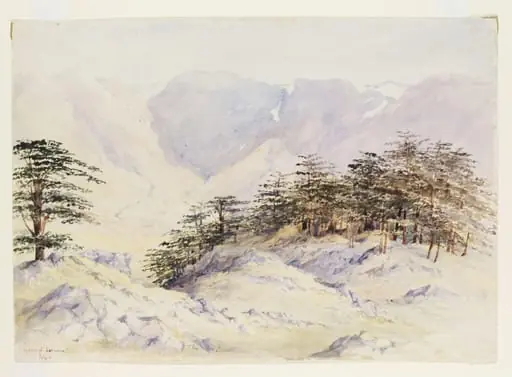 Cedars of Lebanon