Artwork
Theatre, with the Sarcophagus and Harpy Tombs, Xanthus
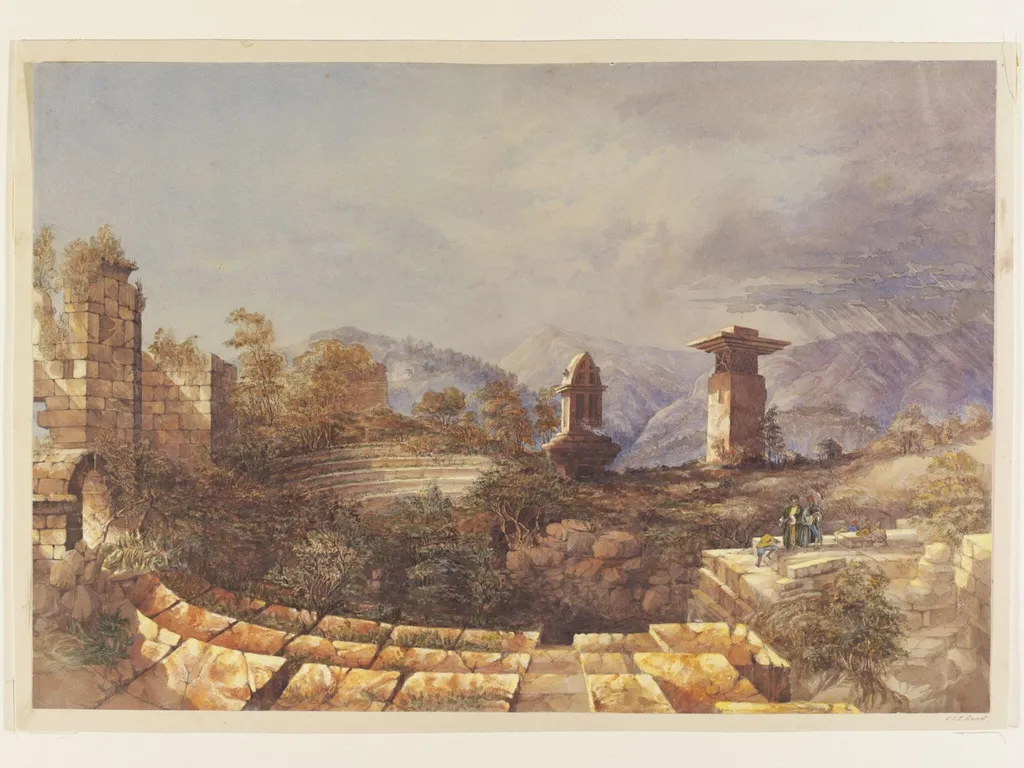
Theatre, with the Sarcophagus and Harpy Tombs, Xanthus is a watercolor work on paper by the Romanticist artist Charles Joseph Frederick Ewart. It dates from 1842 and is held in the collection of the Victoria and Albert Museum.
About this work
Overview
The work reflects a topographical interest common among military officers engaged in archaeological expeditions of the period.
This watercolour, created in 1842 by Charles Joseph Frederick Ewart, captures the Harpy Tomb at Xanthus shortly after its sculpted reliefs were removed by Charles Fellows. Executed during Ewart’s service aboard HMS Monarch, the piece documents the site in a transitional state—stripped of its ancient carvings but still standing amid the Lycian landscape. The work reflects a topographical interest common among military officers engaged in archaeological expeditions of the period.
Subject & Meaning
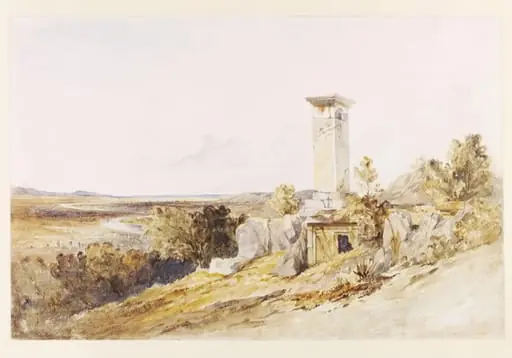
The painting centers on the Harpy Tomb, a monumental Lycian funerary structure, now devoid of its original reliefs. Surrounding elements—fallen stones, sparse vegetation, and distant mountains—emphasize the ruin’s isolation and the passage of time. Rather than celebrating the relics’ removal, the image conveys quiet decay, framing the tomb as a silent witness to cultural displacement and imperial collection practices.
Technique & Style
Ewart employed watercolour to render a subdued, atmospheric scene with soft washes and delicate tonal transitions. The light appears diffused, enhancing the sense of stillness and melancholy. Brushwork is restrained, avoiding sharp detail in favor of mood, aligning with Romantic-era sensibilities that favored emotional resonance over archaeological precision. The composition balances foreground ruins with expansive, hazy backgrounds to deepen spatial depth.
History & Provenance
Created during the transport of the tomb’s sculptures to England, the watercolour served as a visual record of the site post-removal. The reliefs were later reassembled in the British Museum. Ewart’s work remained in private hands until its acquisition by the museum from the dealer Appleby in May 1971, where it now functions as both historical document and artistic artifact from the early colonial archaeology era.
Context
The painting emerged amid British efforts to excavate and relocate antiquities from Anatolia during the 1840s. Fellows’ expeditions, supported by the British Museum, reflected broader imperial interests in classical heritage. Ewart’s depiction, though personal and quiet, aligns with a wave of travel art that documented ancient sites before or after their removal, contributing to European perceptions of the East as a repository of lost civilizations.
Legacy
Though not widely exhibited, the watercolour endures as a rare contemporary record of Xanthus in the immediate aftermath of its most significant sculptures’ removal. It offers insight into how British officers visually processed archaeological intervention—not as triumph, but as quiet erasure. Its preservation in a major institution underscores its value as evidence of early colonial collecting practices and their visual documentation.
Artist & collection
Artist
Charles Joseph Frederick Ewart
Charles Joseph Frederick Ewart painted quiet watercolours of ancient ruins and landscapes.

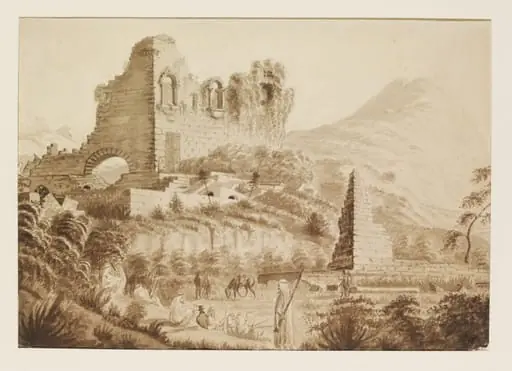 Villa Sevillana on the Road from Bona to Constantine
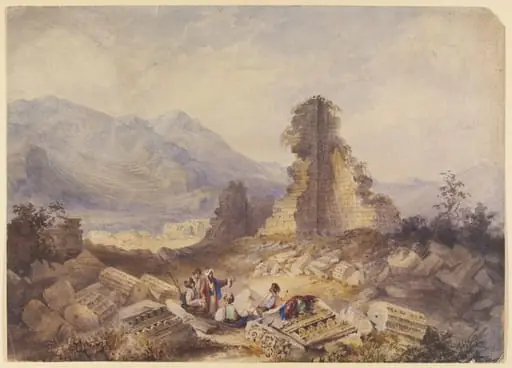 Ephesus (Ruins of the Temple of Diana)
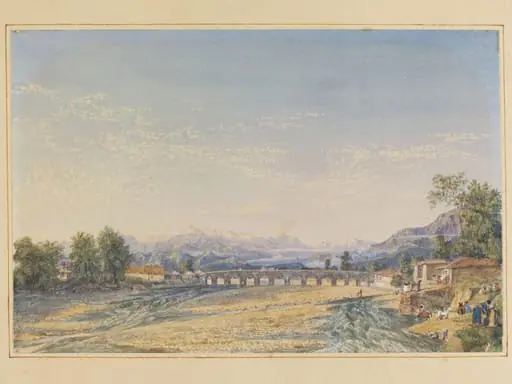 Bridge over the river Herauz at Amol, a town of Mazunderan
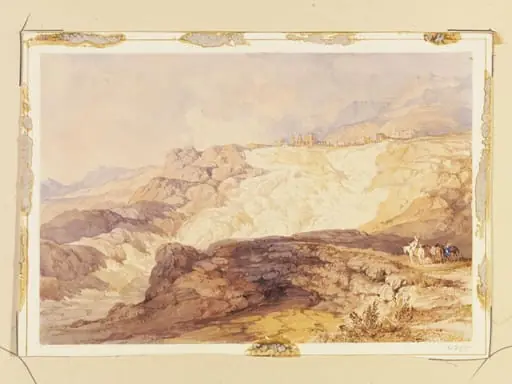 The Ruins of Hierapolis
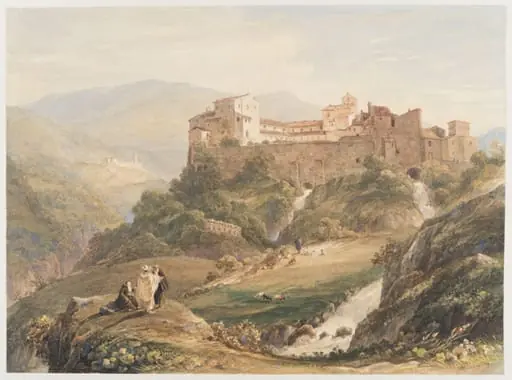 Italian landscape
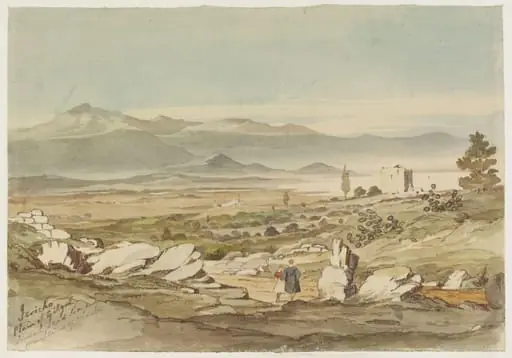 Jericho Plain of Gilgal, Jordan, Dead Sea, and Mountains of Moab
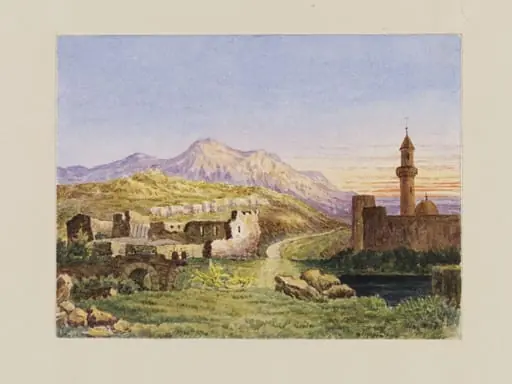 Emmaus
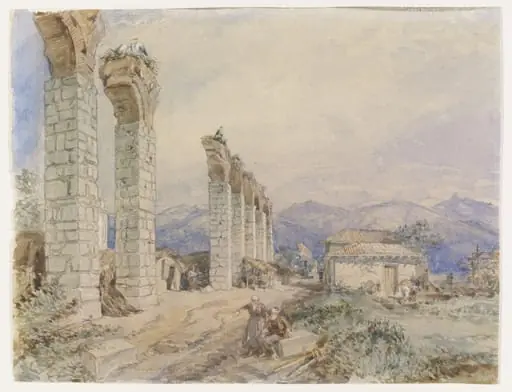 The Aqueduct - Ephesus
 Street of the Tombs, Pompeii
 Olevano
 Xanthus