Artwork
Ostend (Seul avec l'ocean sous le regard de Dieu!)
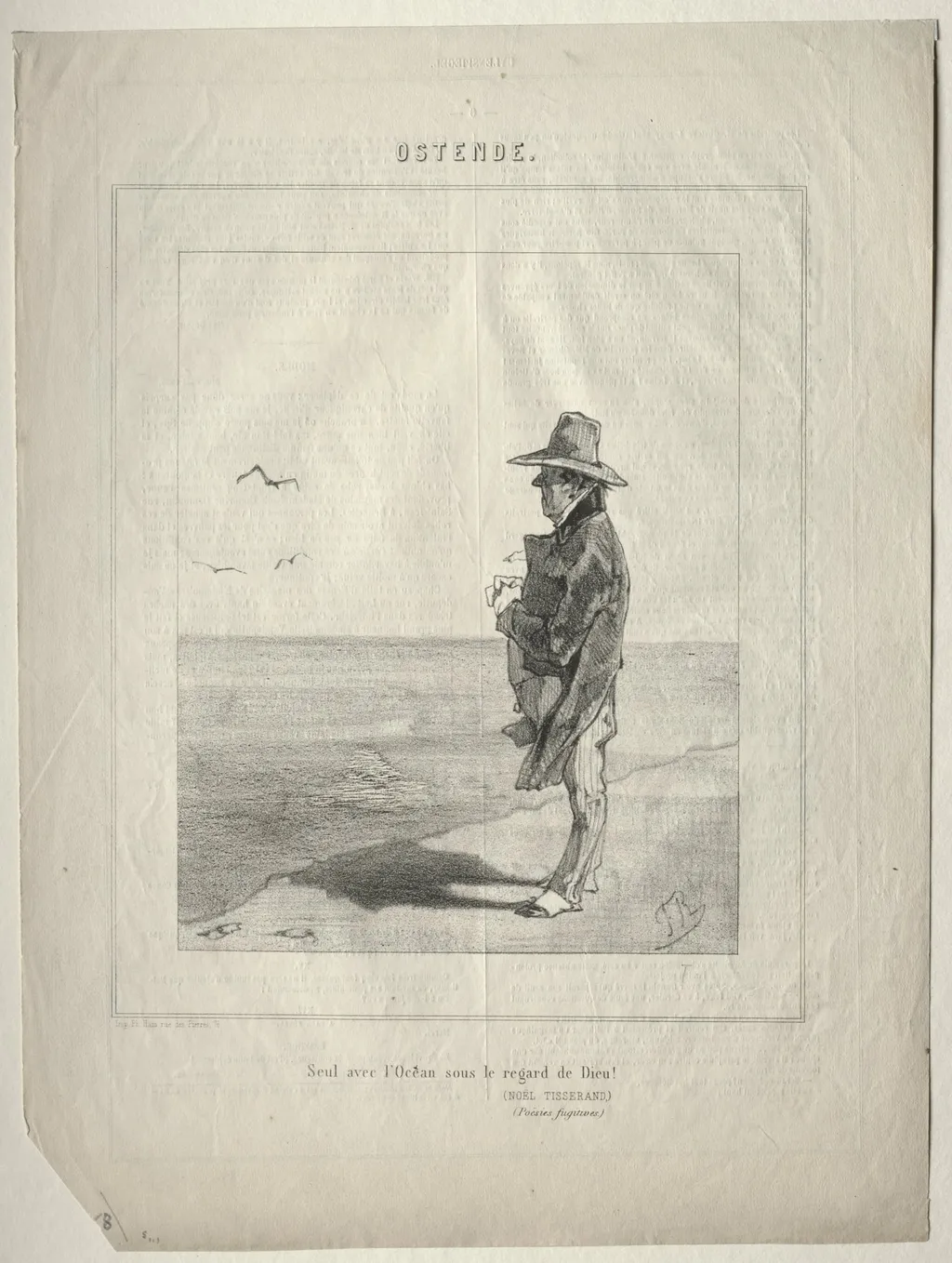
Ostend (Seul avec l'ocean sous le regard de Dieu!) is a print by the Impressionist artist Félicien Rops. It dates from 1856 and is held in the collection of the Cleveland Museum of Art.
About this work
Overview
Though often associated with Symbolism and Decadence later in his career, this early work reveals Rops’s engagement with quiet, atmospheric scenes.
Created around 1856 by Belgian artist Félicien Rops, this print captures a solitary figure on a coastal shore. Though often associated with Symbolism and Decadence later in his career, this early work reveals Rops’s engagement with quiet, atmospheric scenes. Executed in intaglio, it reflects his technical mastery and interest in mood over narrative, aligning with emerging trends in European graphic art during the mid-nineteenth century.
Subject & Meaning
A lone man stands on a windswept beach, clad in a long coat and wide-brimmed hat, clutching a sheet of paper. His shadow stretches across the sand, emphasizing isolation. The vast, empty ocean and distant birds suggest a contemplative pause, perhaps a moment of introspection or existential stillness. The title, invoking divine observation, adds a layer of spiritual solitude without overt religious symbolism.
Technique & Style
Rops employed etching and drypoint to render fine gradations of light and texture. The shoreline and waves are suggested through delicate, incised lines, while the figure’s form is defined by bold, shadowed contours. The atmospheric depth is achieved not through color but through tonal contrast and sparse detail, reflecting a restrained realism that anticipates later printmaking innovations in the fin de siècle.
History & Provenance
This print emerged early in Rops’s career, before his association with literary and artistic circles in Paris. It was likely produced for private circulation or small-scale publication, consistent with his practice of distributing prints among intellectuals and collectors. Its survival in institutional collections suggests early recognition of its technical merit, though it remained outside mainstream public view during his lifetime.
Context
In the mid-1850s, European artists increasingly turned to nature and solitude as subjects, moving away from grand historical themes. Rops’s work aligns with this shift, sharing affinities with early Realist and proto-Impressionist sensibilities. While not part of any formal movement, his focus on individual experience within landscape resonated with broader cultural currents of introspection and modern alienation.
Legacy
Though less known than his later provocative works, this print demonstrates Rops’s foundational skill in graphic art and his sensitivity to psychological atmosphere. It influenced subsequent generations of printmakers who valued subtlety over spectacle. Its quiet intensity remains a quiet testament to the power of minimalism in conveying inner states through landscape.
Artist & collection
Artist
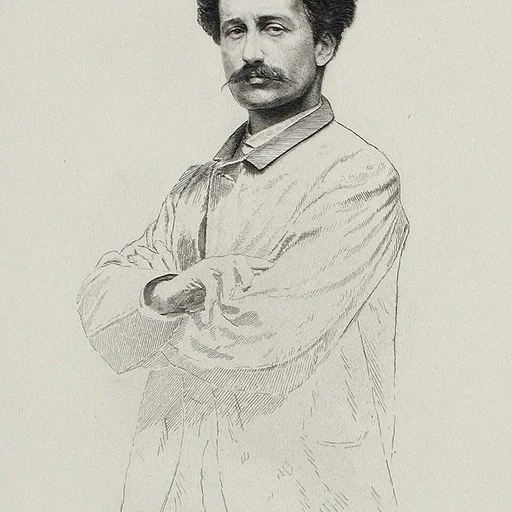
Félicien Victor Joseph Rops (French: ; 7 July 1833 – 23 August 1898) was a Belgian artist associated with Symbolism, Decadence, and the Parisian fin de siècle, and was a member of the Les XX group.

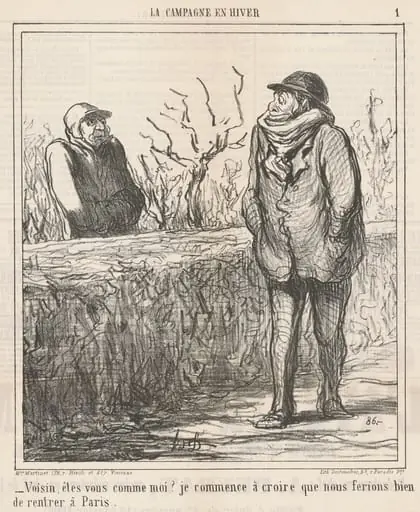 Voisin, êtes-vous comme moi? ...
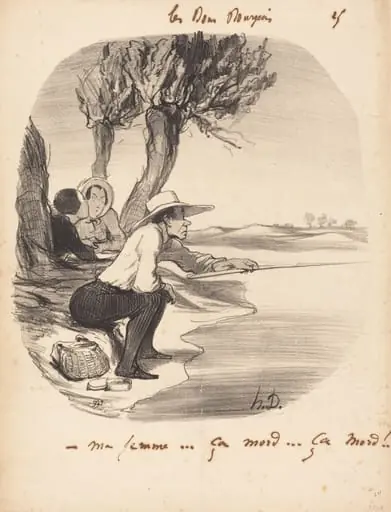 Ma femme... ça mord... ça mord!
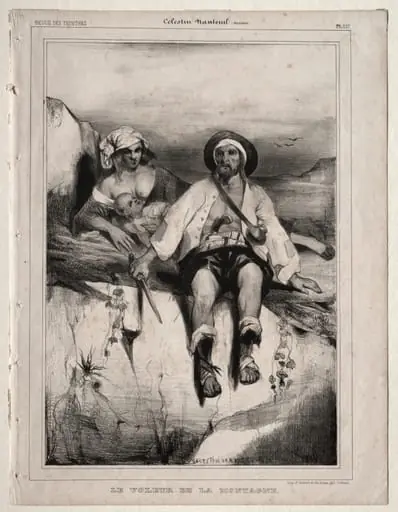 The Robber from the Mountain
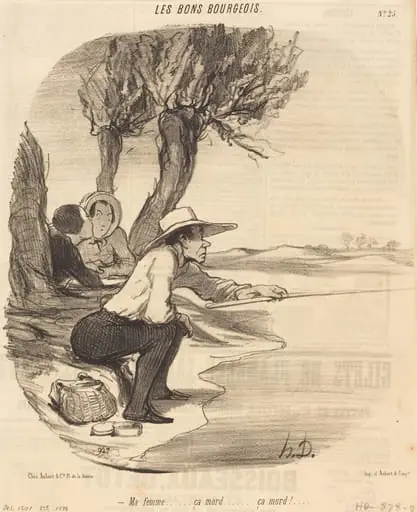 Ma femme... ça mord... ça mord!
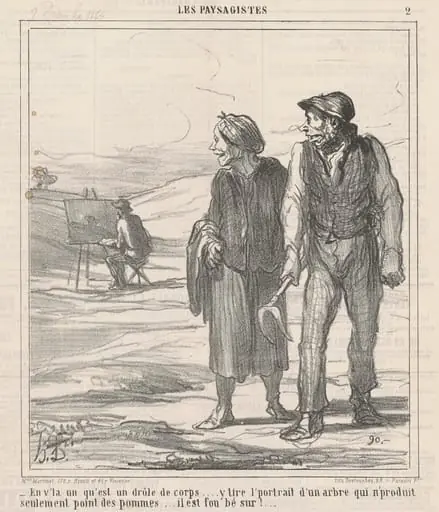 En v'la un qu'est un drole de corps ...
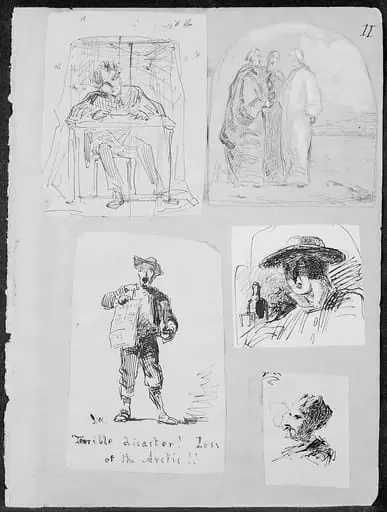 Christ and Two Disciples on the Road to Emmaus (from Sketchbook)
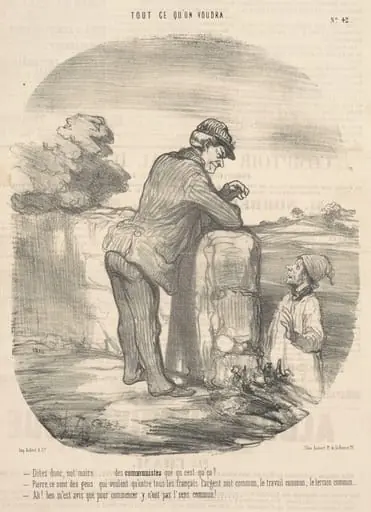 Dites donc, not'maire ... des communistes qué qu'c'est ça?
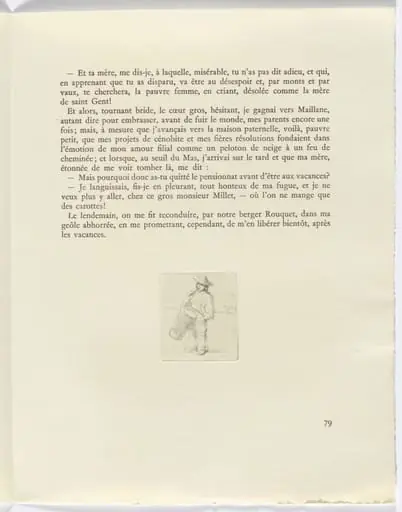 Frédéric Mistral: Mémoires et Recits by Frédéric Mistral: boy playing drum (page 79)
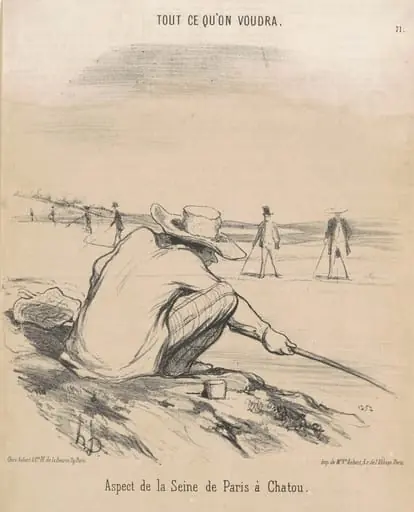 Aspect de la Seine de Paris a chatou
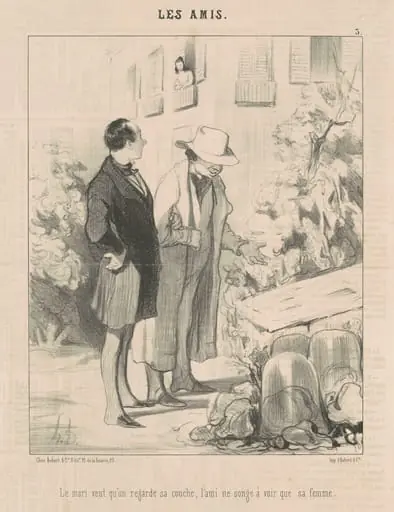 Le mari veut qu'on regarde sa couche ...
 A hopeful
 Un homme sans asile ...