Artwork
William Oughtred
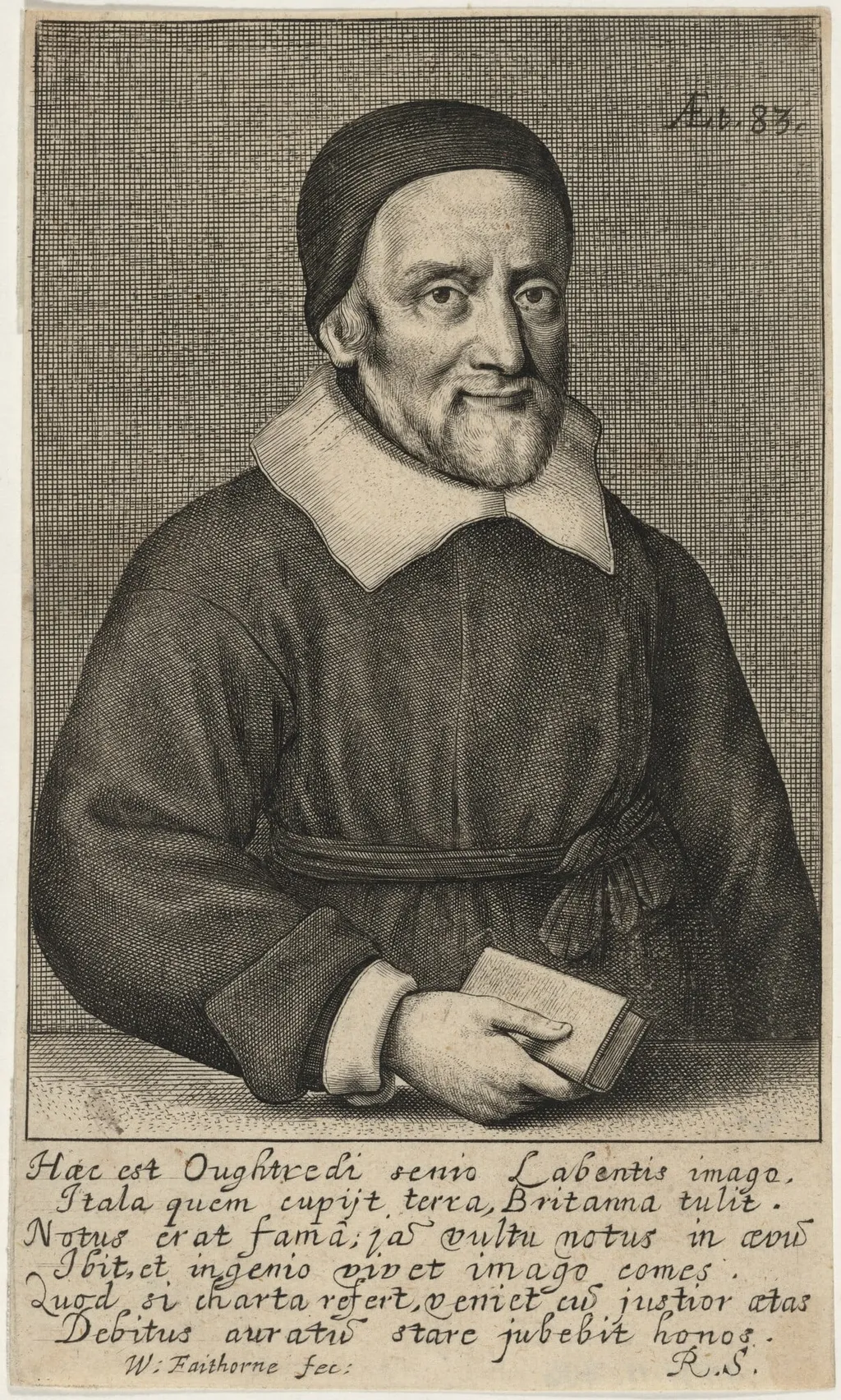
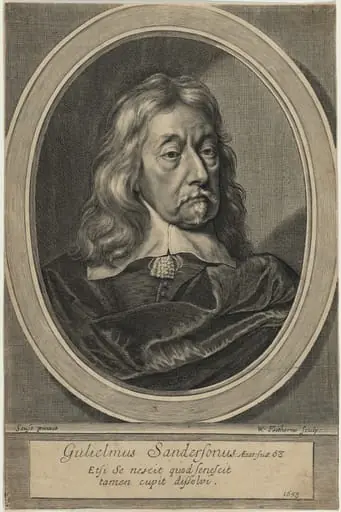
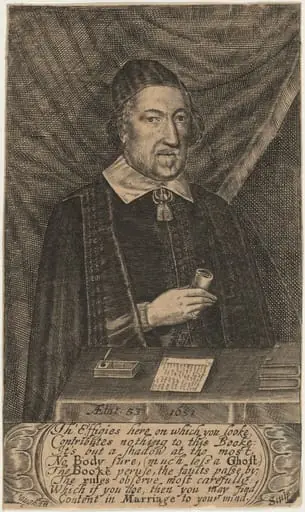
William Oughtred is an ink print by the Baroque artist William Faithorne. It dates from 1657 and is held in the collection of the National Gallery of Art.
About this work
Overview
The composition is tightly focused, with no distracting background elements, directing attention to the subject’s expression and gesture.
This 1657 engraving by William Faithorne depicts the English mathematician William Oughtred. Rendered in monochrome, the portrait emphasizes his facial features and hands through intricate line work. The composition is tightly focused, with no distracting background elements, directing attention to the subject’s expression and gesture. The medium is a printed intaglio impression, typical of portrait engravings in mid-17th-century England.
Subject & Meaning
Oughtred, a noted scholar and inventor of the circular slide rule, is portrayed as a man of learning. His right hand rests on an open book, suggesting intellectual engagement. The formal attire—dark robe with white lace collar—signals his status as a learned gentleman. The calm, direct gaze conveys authority and introspection, aligning with his reputation as a teacher and writer of mathematical texts.
Technique & Style
Faithorne employed fine, intersecting lines—cross-hatching—to model form and texture. The technique builds tonal gradations without pigment, relying solely on inked lines etched into copper. Delicate strokes define the beard’s texture, the fabric’s folds, and the subtle contours of the face. The precision reflects the engraver’s skill in translating three-dimensional presence into flat, linear detail.
History & Provenance
Created in 1657, the engraving was likely made to accompany Oughtred’s published works or to commemorate his scholarly influence. Faithorne, a leading English engraver of the period, often produced portraits of intellectuals and public figures. The print circulated among academic circles and was later collected by institutions preserving scientific heritage, ensuring its survival into modern archives.
Context
In mid-17th-century England, engraved portraits served as both personal commemoration and scholarly documentation. As scientific inquiry gained institutional support, images of thinkers like Oughtred helped legitimize their contributions. This print aligns with a broader trend of visualizing the Republic of Letters, where knowledge was tied to the visible presence of its practitioners.
Legacy
Faithorne’s engraving remains one of the most recognizable images of Oughtred, frequently reproduced in histories of mathematics and scientific portraiture. Its clarity and restraint have made it a standard reference for his appearance. Though not widely known outside academic circles, it endures as a quiet testament to the visual culture of early modern scholarship.
Artist & collection
Artist
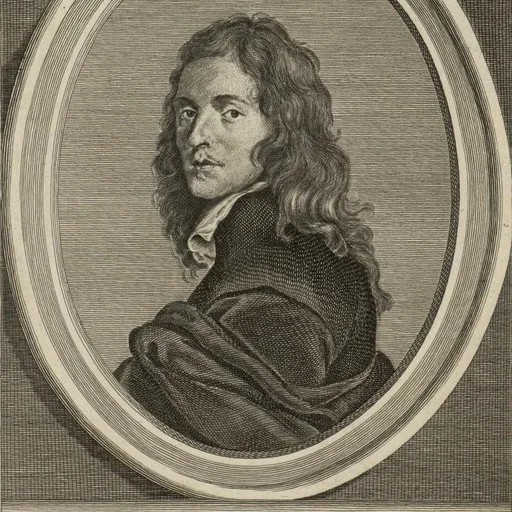
William Faithorne (1616–1691) was a British artist, born in Greater London.