Artwork
Saint Jerome
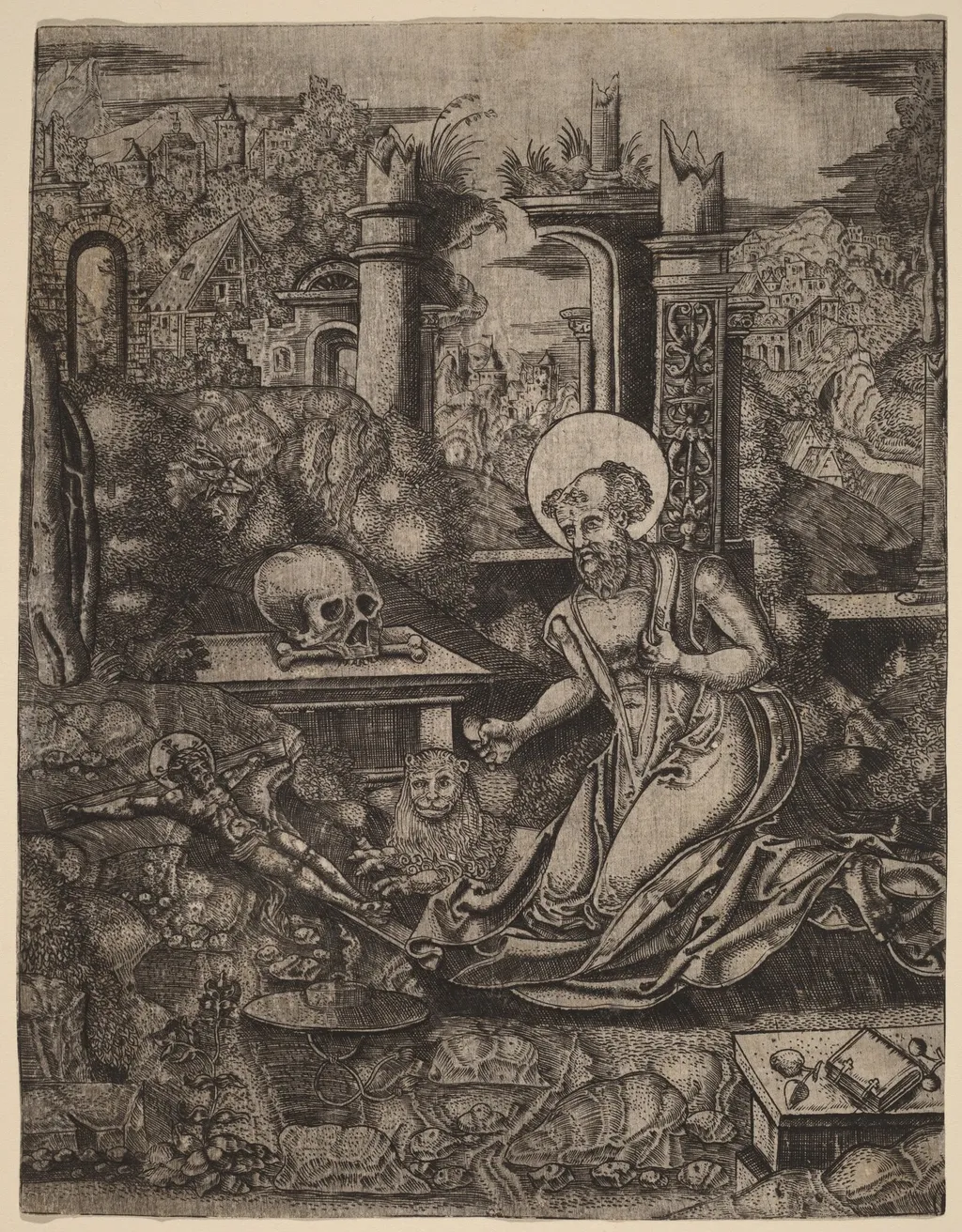
Saint Jerome is an ink print by the Renaissance artist Netherlandish 16th Century. It dates from 1510 and is held in the collection of the National Gallery of Art.
About this work
Overview
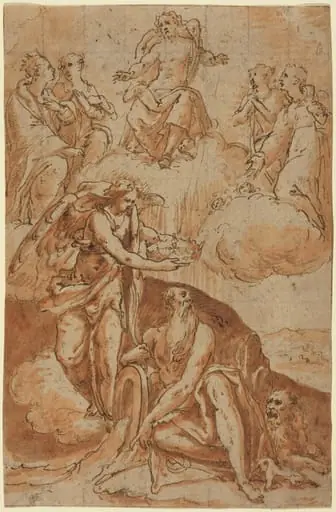
The print is an engraving portraying a seated figure, likely Saint Jerome, in a meditative posture. He is surrounded by symbolic objects—a skull, a book, and a lion—while a distant cityscape with trees forms the background. The composition relies on fine cross‑hatching to convey depth and texture.
Subject & Meaning
The central figure, traditionally identified as Saint Jerome, is shown in contemplation, a pose associated with his scholarly and ascetic reputation. The skull signifies mortality, the book references his biblical translations, and the lion alludes to the legend of his taming of a wild beast.
Technique & Style
Executed in engraving, the work employs dense cross‑hatching to model forms and suggest atmospheric perspective. The meticulous line work creates subtle gradations of tone, rendering the figure, objects, and distant architecture with a high degree of detail characteristic of early modern printmaking.
History & Provenance
The print is catalogued as a standalone work titled “Saint Jerome.” No specific date, artist, or collection information is provided, limiting its documented provenance to the description of its medium and subject.
Context
Engravings of saints were common in devotional print series, serving both as objects of private contemplation and as illustrations for religious texts. The inclusion of scholarly and penitential symbols aligns the image with the humanist interest in Saint Jerome’s role as a translator and hermit.
Artist & collection

Artist
This artist carved scenes with fine lines, mostly religious and mythological ones.

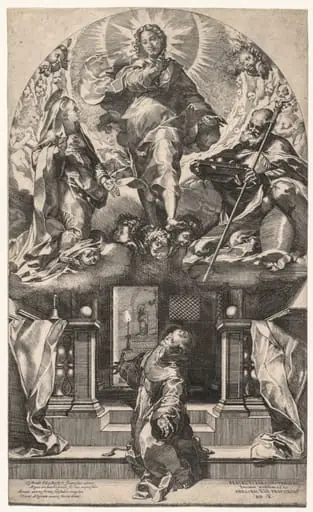 The Vision of St. Francis
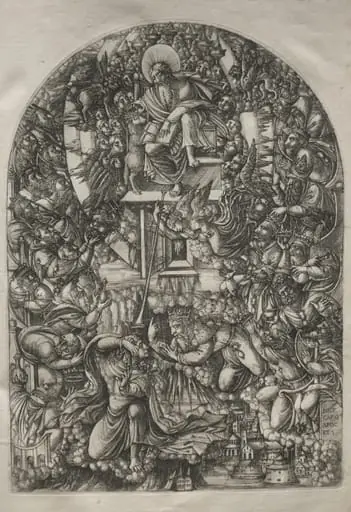 The Apocalypse: St. John Summoned to Heaven
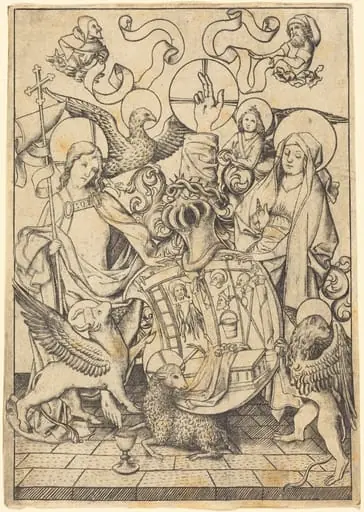 Coat of Arms of the Passion
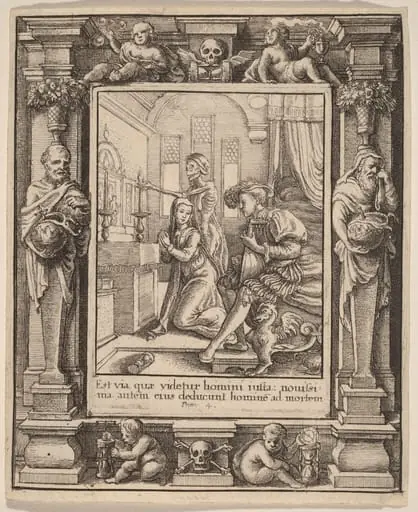 Nun
Nun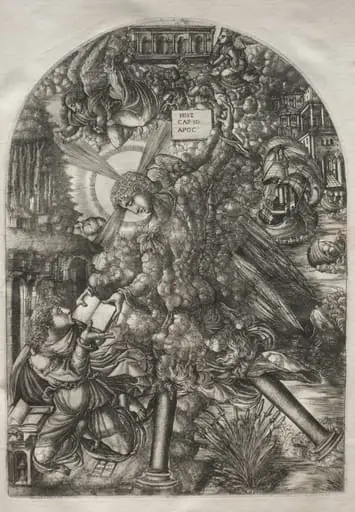 The Apocalypse: The Angel Gives St. John the Book to Eat
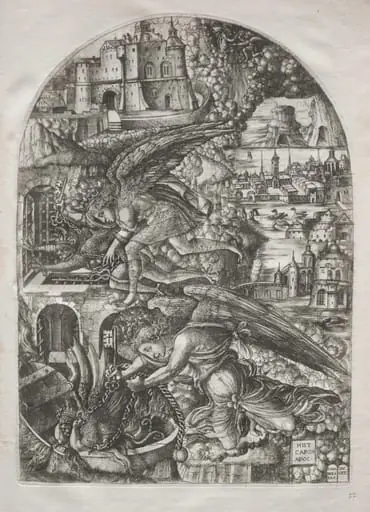 The Apocalypse: Satan Bound for a Thousand Years
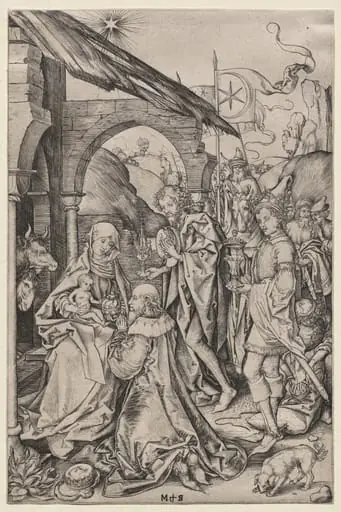 Adoration of the Magi
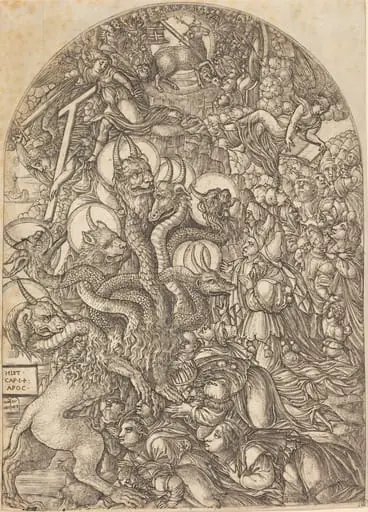 The Beast with Seven Heads and Ten Horns
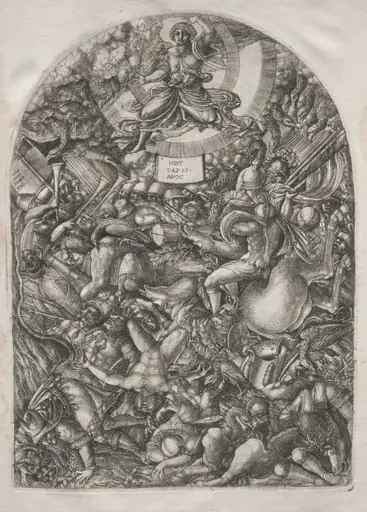 The Apocalypse: The Angel in the Sun Calling the Birds of Prey
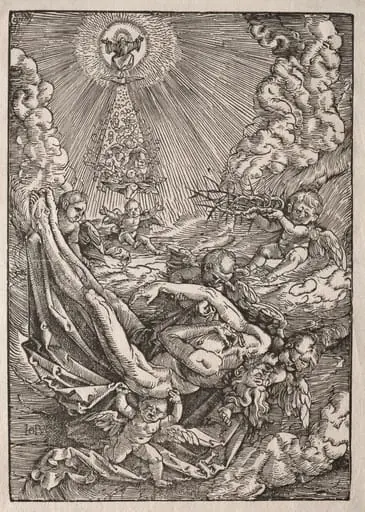 Christ Carried to Heaven by Angels
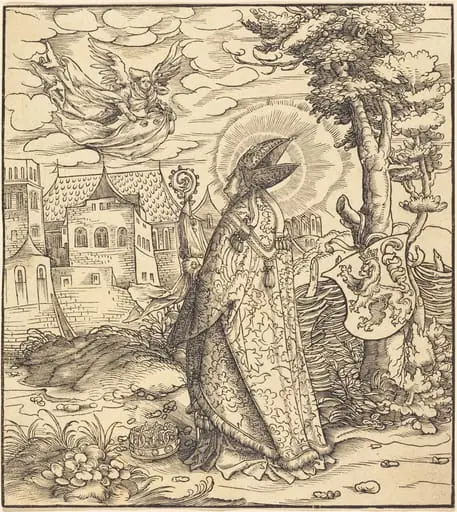 Saint Goericus
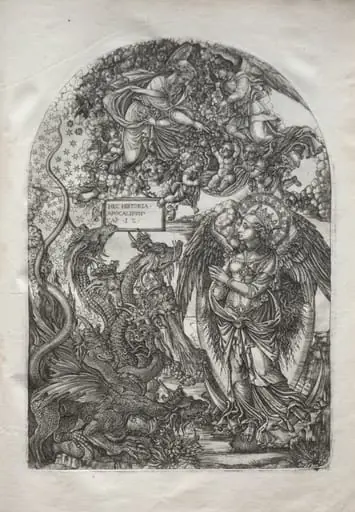 The Apocalypse: St. Michael and the Dragon