Artwork
King's Palace
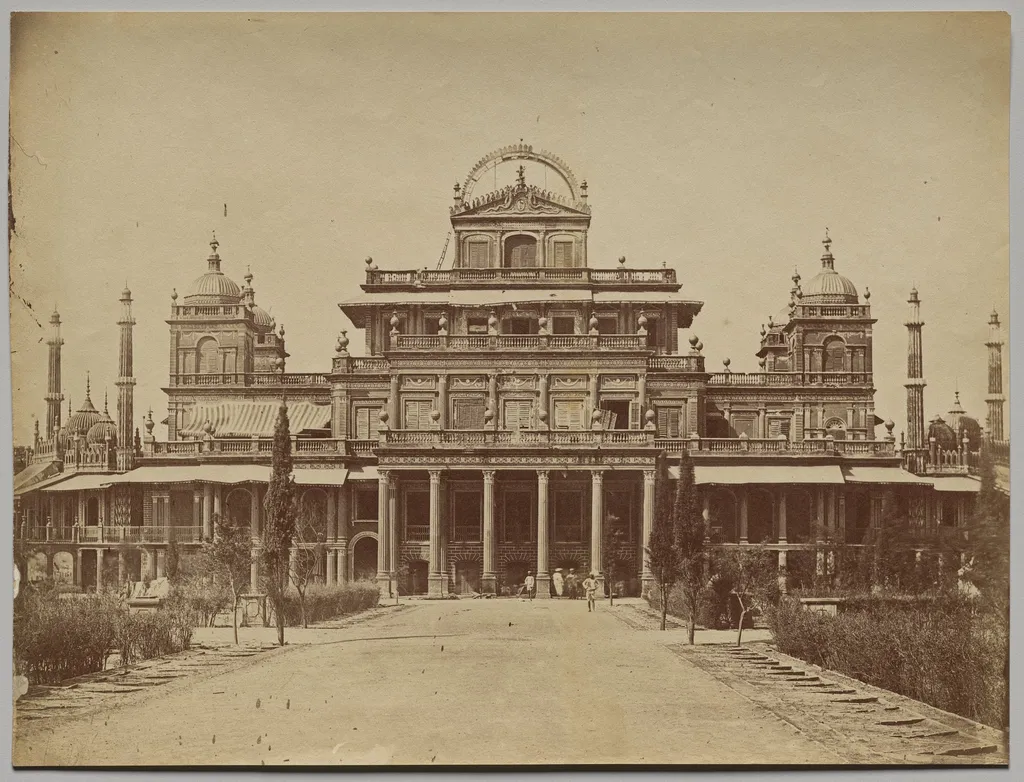
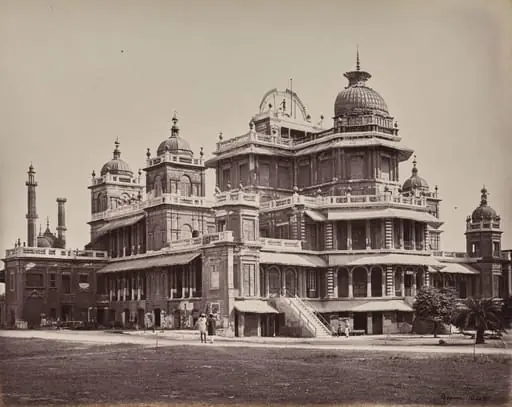
King's Palace is a photography by the Impressionist artist Felice A. Beato. It dates from 1858 and is held in the collection of the Cleveland Museum of Art.
About this work
Overview
It captures an architectural complex likely located in India or Southeast Asia, reflecting Beato’s documentation of colonial-era structures.
King's Palace is a photographic work by Felice A. Beato, produced in 1858 during his travels in Asia. It captures an architectural complex likely located in India or Southeast Asia, reflecting Beato’s documentation of colonial-era structures. The image is part of a broader effort to record foreign landscapes and monuments for Western audiences, using the emerging medium of photography to convey spatial and structural detail with precision.
Subject & Meaning
The subject is a grand palace complex characterized by a central domed structure flanked by lower wings with pointed roofs. Its scale and symmetry suggest royal or administrative significance. The photograph does not depict human activity, emphasizing the building’s presence as a symbol of authority and cultural heritage. The absence of people invites contemplation of the structure’s endurance and historical weight.
Technique & Style
Beato employed the wet-plate collodion process, which allowed for fine detail and tonal range in early photography. The image exhibits careful composition, with balanced horizontals and verticals that reinforce architectural order. Light and shadow are used to model surfaces, enhancing the texture of stone and ornamentation. The monochrome palette reflects the technical limits of the medium, not a stylistic choice.
History & Provenance
Created during Beato’s time in India following the 1857 Rebellion, the photograph was likely made as part of a commission or personal project to document sites of political and cultural interest. It entered the collection of The Cleveland Museum of Art through acquisition, possibly from a private collector or institutional transfer in the 20th century. Its preservation reflects early photographic archives valued for historical record.
Context
Beato’s work emerged amid European colonial expansion, when photography became a tool for ethnographic and architectural documentation. His images were circulated in albums and publications, shaping Western perceptions of non-European societies. King's Palace reflects this trend: it records a local structure not as a lived space, but as an object of imperial curiosity and visual evidence.
Legacy
The photograph stands as an early example of architectural documentation through photography, influencing later ethnographic and archaeological imaging. It contributes to the historical record of colonial-era buildings, many of which have since altered or been lost. As a preserved artifact, it invites critical reflection on how photography shaped the representation of foreign cultures in the 19th century.
Artist & collection
Artist
Felice A. Beato and Felice Antonio Beato are collective signatures used by the brothers Felice Beato and Antonio Beato, who were both pioneering photographers in the 19th century. They were noted for their depictions of…

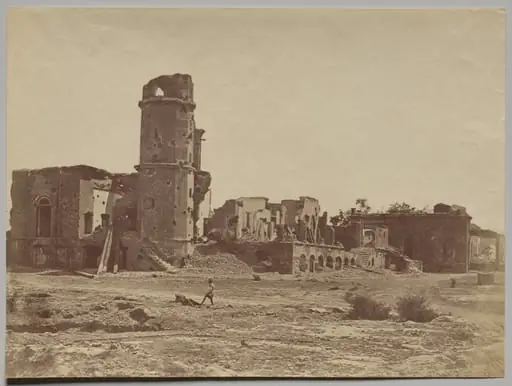 The Residency, Taken from the Redan Battery
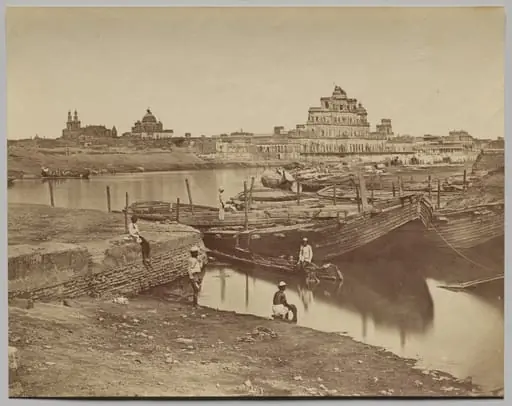 Bridge of Boats over the Gumti River near the Chattar Manzil and Fusseed Bakah or Old Palace
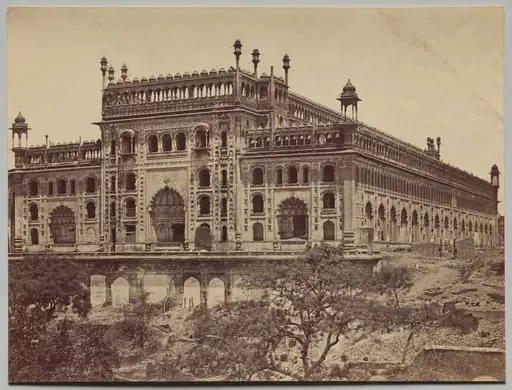 Exterior of Asaf-ud-Daula's Imambara, or Tomb
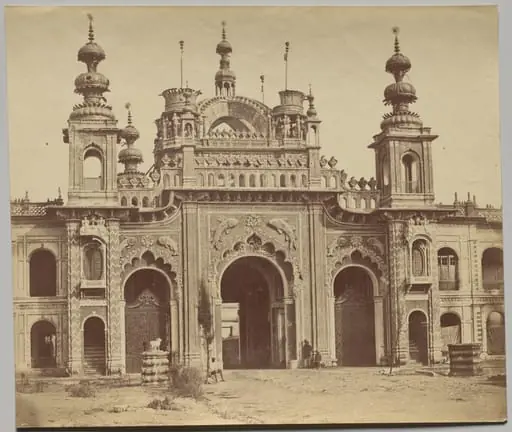 The Great Gateway of the Kasierbagh
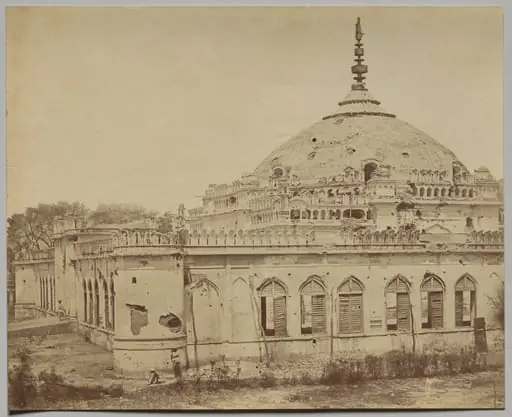 Shah Najaf
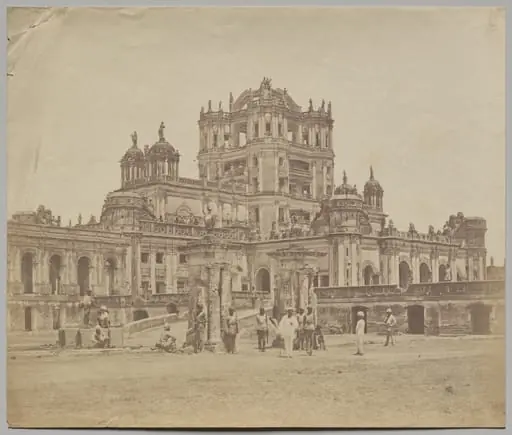 The Martinière College
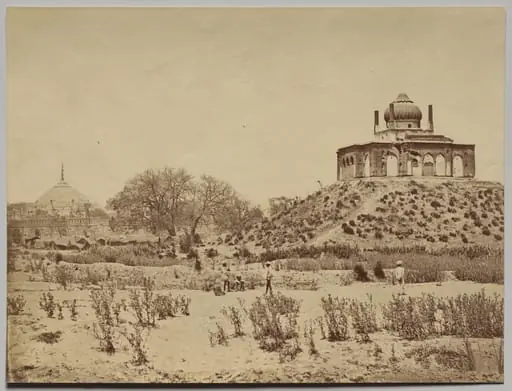 The Kudmsee Russol
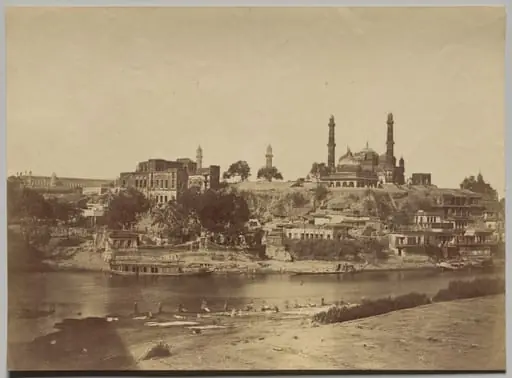 The Muchee Bhawan Fort and the Gomti River Taken from the Stone Bridge