Artwork
The Muchee Bhawan Fort and the Gomti River Taken from the Stone Bridge
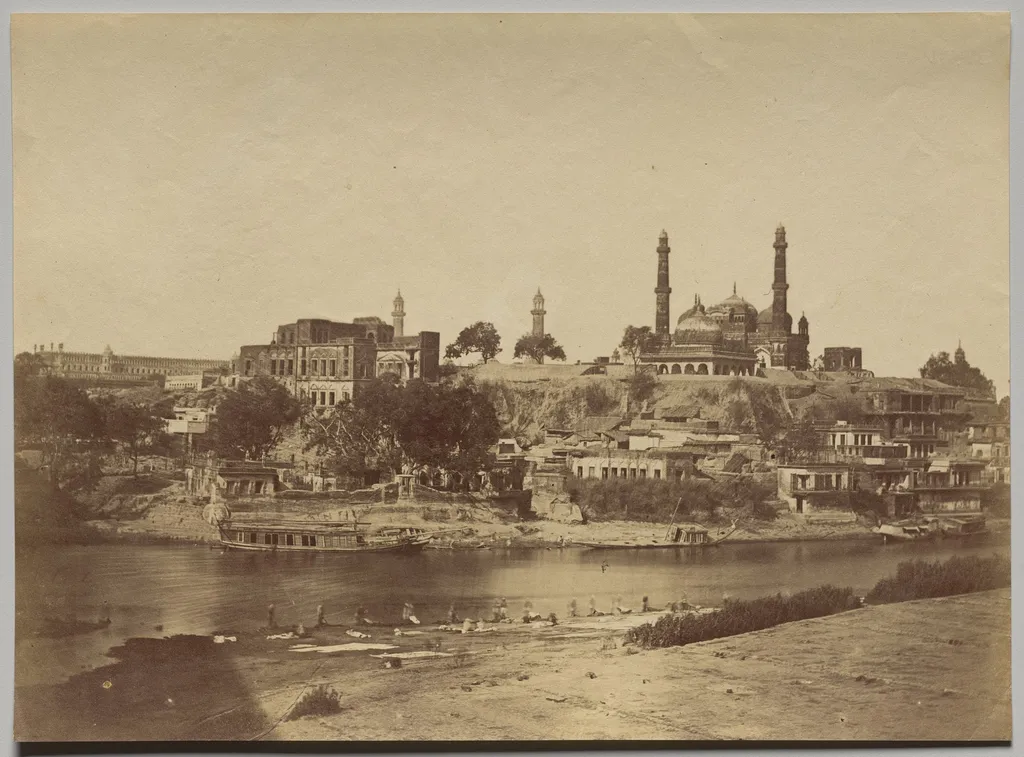
The Muchee Bhawan Fort and the Gomti River Taken from the Stone Bridge is a photography by the Impressionist artist Felice A. Beato. It dates from 1858 and is held in the collection of the Cleveland Museum of Art. Felice A.
About this work
Overview
Beato’s 1858 photograph, titled *The Muchee Bhawan Fort and the Gomti River Taken from the Stone Bridge*, presents a sepia‑toned view of a riverbank scene.
Felice A. Beato’s 1858 photograph, titled *The Muchee Bhawan Fort and the Gomti River Taken from the Stone Bridge*, presents a sepia‑toned view of a riverbank scene. The image captures the calm waters of the Gomti River, a stone bridge in the foreground, and a distant hillside punctuated by a cluster of historic buildings and a prominent domed structure with spires. The work is part of the collection of the Cleveland Museum of Art.
Subject & Meaning
The picture documents a bustling riverside environment, where pedestrians and small boats share the shore. The architectural elements—particularly the large domed edifice—suggest a site of civic or religious significance, while the surrounding hills and scattered trees frame the scene within a typical North Indian landscape. The composition reflects both the daily life along the river and the prominence of the fort‑like complex.
Technique & Style
Beato employed the wet‑plate collodion process, common in mid‑nineteenth‑century photography, resulting in the characteristic sepia tones and fine detail. The perspective from the stone bridge offers a clear, linear view of the river and hillside, emphasizing depth. The balanced arrangement of human activity, water, and architecture demonstrates the photographer’s documentary intent combined with an aesthetic concern for compositional harmony.
History & Provenance
The photograph was produced in 1858, during a period when European photographers were documenting the Indian subcontinent for audiences back home. After its creation, the image entered the market for photographic prints and eventually was acquired by the Cleveland Museum of Art, where it remains in the museum’s photographic holdings.
Context
Taken during the British colonial era, the image reflects the interest of Western travelers in recording India’s architectural landmarks and riverine commerce. The Muchee Bhawan Fort, visible on the horizon, was a notable structure in the region, and the Gomti River served as a vital transportation route, linking settlements along its banks.
Artist & collection
Artist
Felice A. Beato and Felice Antonio Beato are collective signatures used by the brothers Felice Beato and Antonio Beato, who were both pioneering photographers in the 19th century. They were noted for their depictions of…

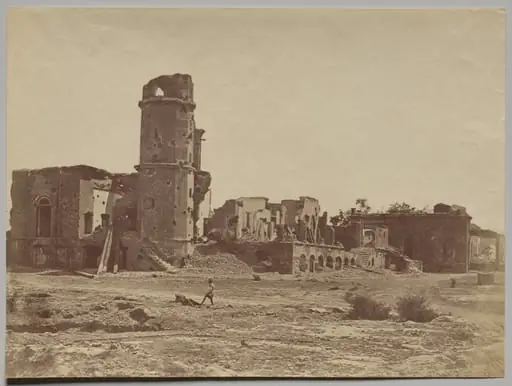 The Residency, Taken from the Redan Battery
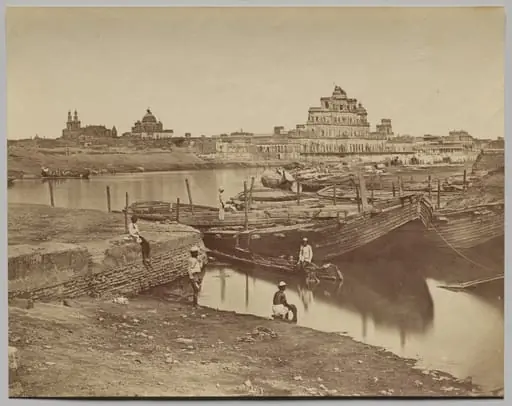 Bridge of Boats over the Gumti River near the Chattar Manzil and Fusseed Bakah or Old Palace
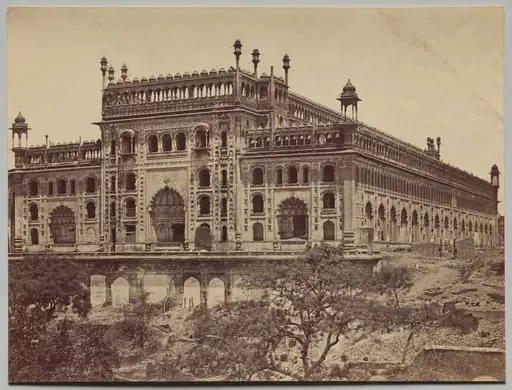 Exterior of Asaf-ud-Daula's Imambara, or Tomb
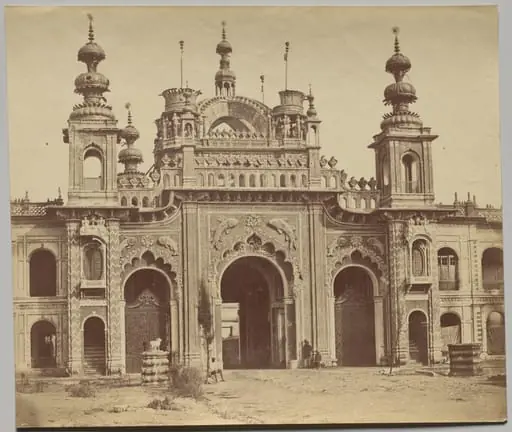 The Great Gateway of the Kasierbagh
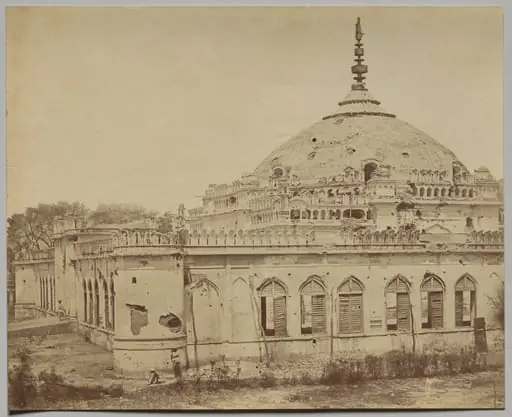 Shah Najaf
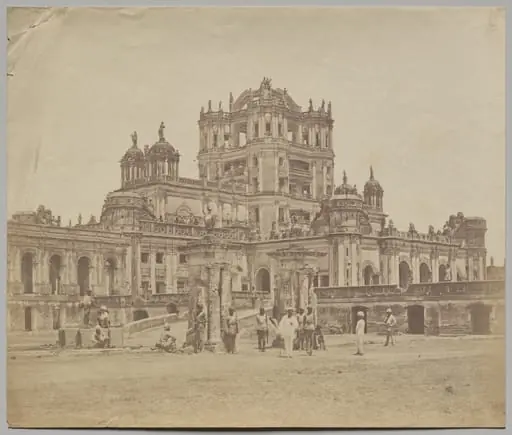 The Martinière College
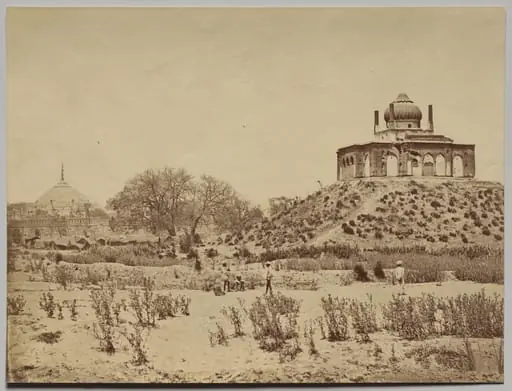 The Kudmsee Russol
 Japanese Temple Graveyard, Shuntoji, Nagasaki
 The City of Benares, on the Ganges, View of the Great Mosque of A (?) and Adjoining Landing Places
 Asyut, View from the Mountain
 Battery Near the Begum Kotie
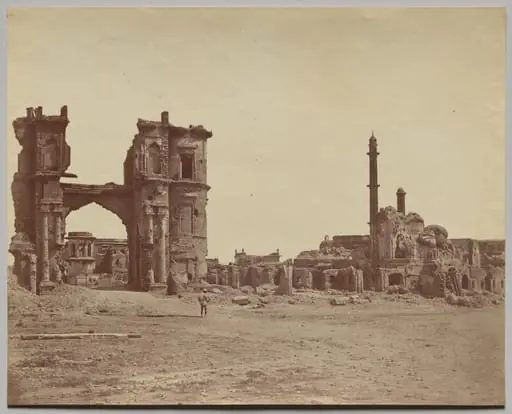 The Clock Tower in Front of the Bailee Guard Gate
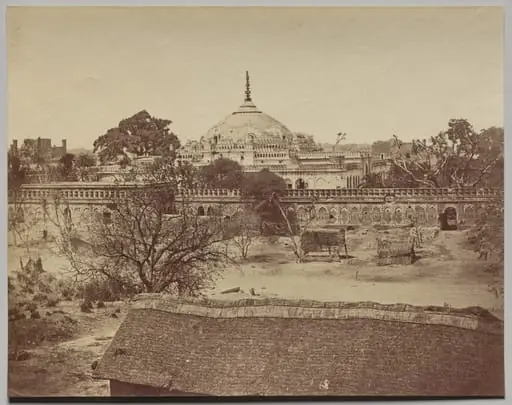 The Shah Nyjuff or Najaf
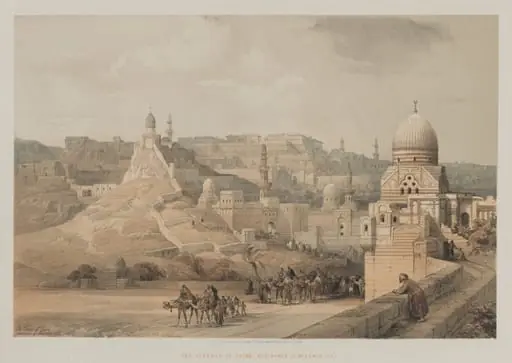 Egypt and Nubia, Volume III: The Citadel of Cairo, Residence of Mehemet Ali
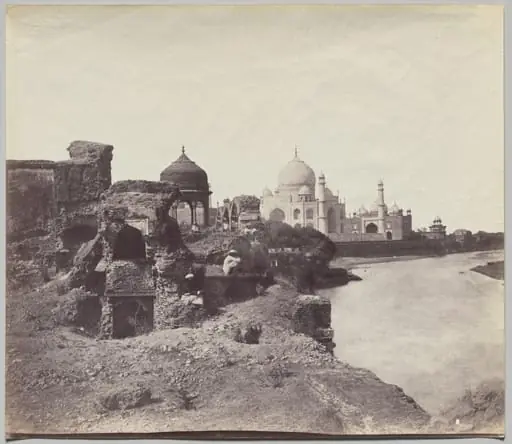 The Taj Mahal
 India. Benares. Aurangzeb's Mosque, after a photo by Dr. Kurt Boeck
 Mahmud Gawan Madrasa, Bidar
 The Secundra Bagh, Showing the Breach and Gateway