Artwork
Lucknow. The Kaiser Pass and Southeast View
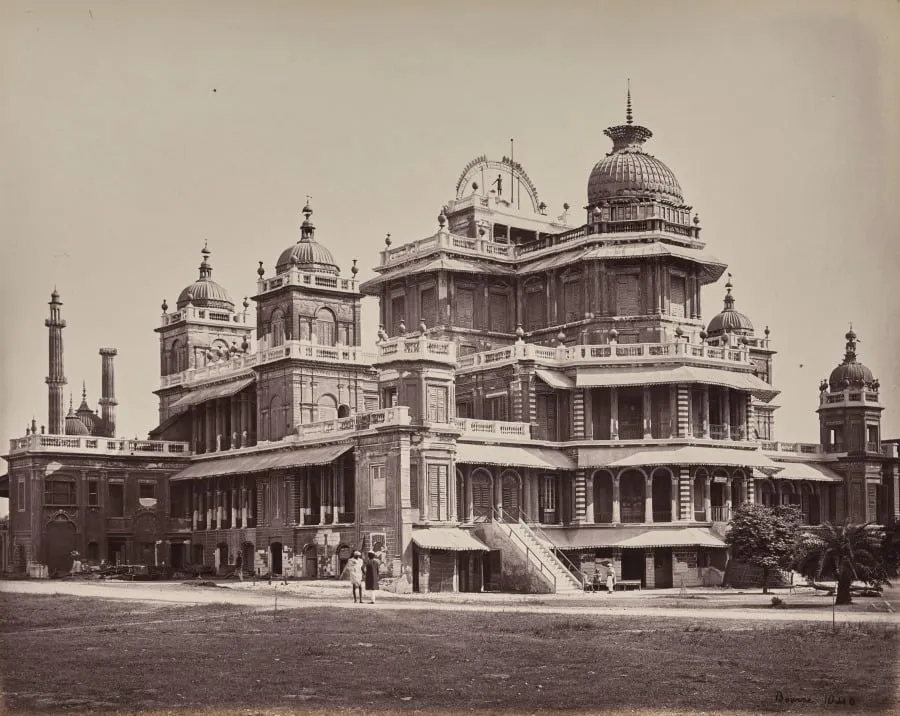
Lucknow. The Kaiser Pass and Southeast View is a photography by the Impressionist artist Samuel Bourne. It dates from 1866 and is held in the collection of the Cleveland Museum of Art.
About this work
The photo shows what the Taj Mahal and Mughal mosques looked like before later repairs—like a time machine.
You see a black-and-white photo of a winding mountain road cutting through steep cliffs near Lucknow.
This was taken in the 1860s, before cameras were common. Bourne lugged heavy gear up the Himalayas to document places most Brits would never visit. The photo shows what the Taj Mahal and Mughal mosques looked like before later repairs—like a time machine.
If you like old travel photos, look up Samuel Bourne (British, 1834–1912).
Overview
This photograph is one of fifty taken by Samuel Bourne in the 1860s, documenting landscapes and architecture across northern India. Captured during a period when photographic equipment was bulky and travel arduous, the images record sites from the Himalayan foothills to major urban centers. Bourne’s journey spanned regions now part of modern India and Pakistan, preserving visual records of places rarely seen by Western audiences at the time.
Subject & Meaning
The image depicts a narrow mountain road winding through rugged terrain near Lucknow, emphasizing the challenging geography of the region. Rather than focusing on grand monuments, it highlights the routes connecting them, suggesting the physical effort required to access and document these sites. The composition reflects a documentary intent, valuing topographical accuracy over aesthetic embellishment.
Technique & Style
Shot in black and white using large-format glass plate negatives, the photograph demonstrates the technical demands of 19th-century photography. Bourne’s method required careful handling of heavy equipment and long exposure times, especially in remote, high-altitude areas. The sharp detail and tonal range reveal a commitment to precision, typical of topographical photography of the era.
History & Provenance
The photograph was produced as part of a larger album commissioned during Bourne’s extended travels in India between 1863 and 1870. It was likely intended for private collectors and institutions in Britain, serving both as travel documentation and as evidence of British engagement with Indian heritage. The album’s survival offers a rare, contemporaneous visual archive of pre-restoration sites.
Context
In the 1860s, photography in India was still a novelty, and few Europeans ventured into remote regions with such equipment. Bourne’s work coincided with colonial efforts to catalog and preserve architectural heritage, though his approach was more observational than imperial. His images provided a reference for later scholars and conservators, particularly as many structures underwent significant changes in the 20th century.
Legacy
Samuel Bourne’s photographs remain a key resource for historians studying Indian architecture and landscape before modern interventions. His systematic documentation, though driven by personal curiosity, inadvertently preserved visual data lost to later restorations. His work is now held in major institutional collections and continues to inform conservation practices and historical research.
Artist & collection

Artist
Samuel Bourne was a British photographer known for his prolific seven years' work in India, from 1863 to 1870.

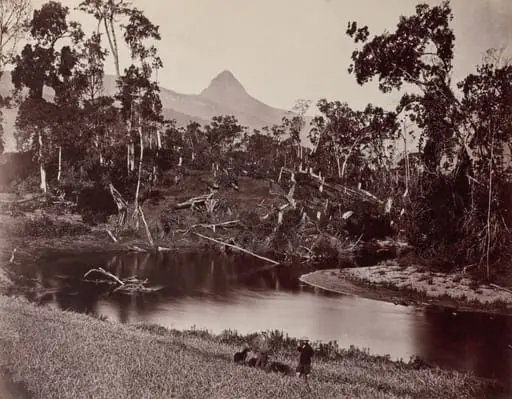 Ceylon Views to Adam's Tooth
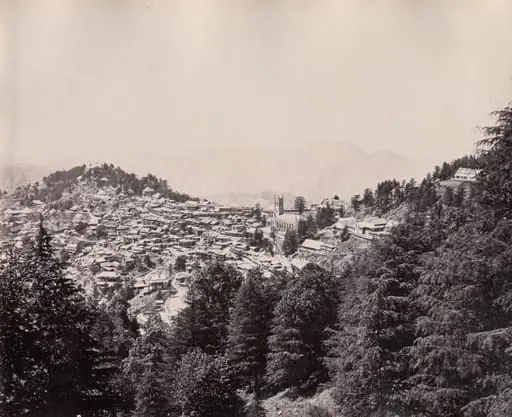 Shimla
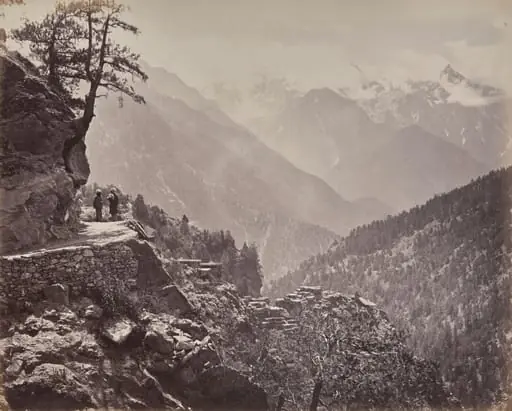 The Upper Himmalayahs. View on the New Road between India and China. Mt. Pangi with the Snowy Peaks of China in the Distance
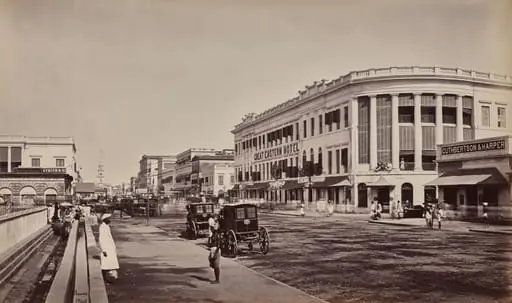 Calcutta. Old Court House Street
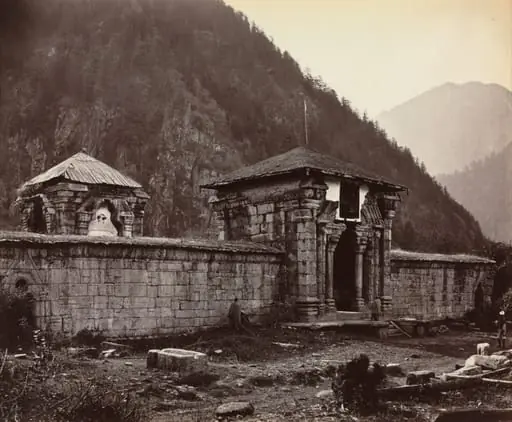 Temple at Naveshera, Kashmir, India
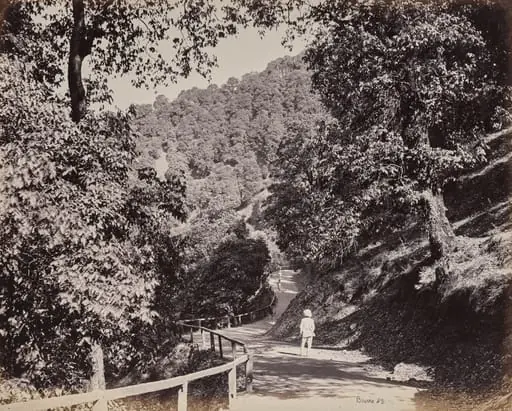 Shimla. The Mall near Rabq Lodge
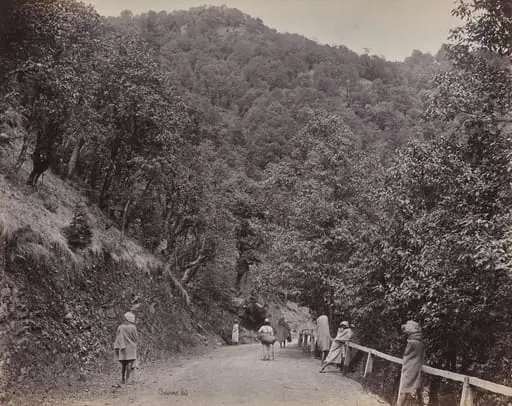 Shimla. The Mall or Principal
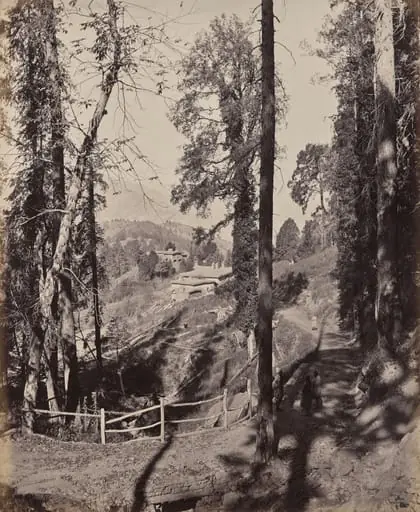 Murree. A Hill Station in the Himmalayahs, View Through the Forest
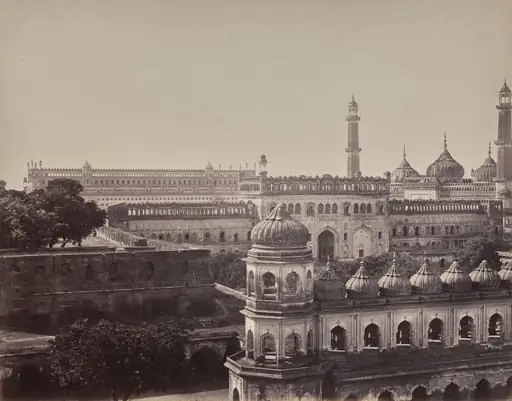 Lucknow. The Great Emambara and Mosque
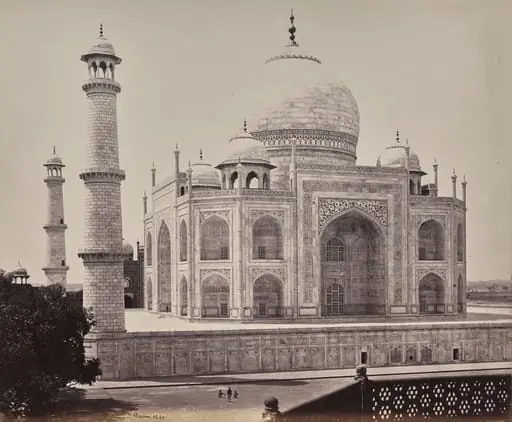 Agra. View of the Taj from a Corner in the Quadrangle
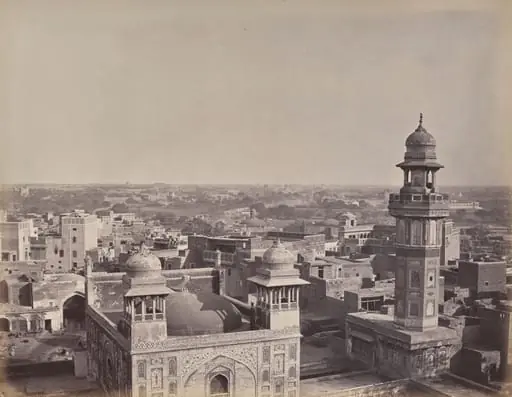 The City of Lahore. Another View Taken from Huzeer Khan's House
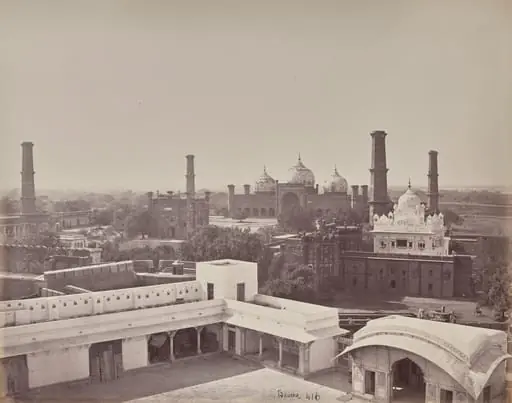 View of the City of Lahore Taken from the Roof of the Palace in the Fort
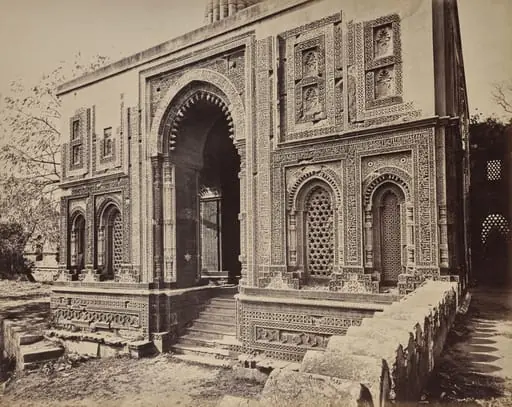 Delhi. Gateway of Allahood Deen's Palace, Old Delhi
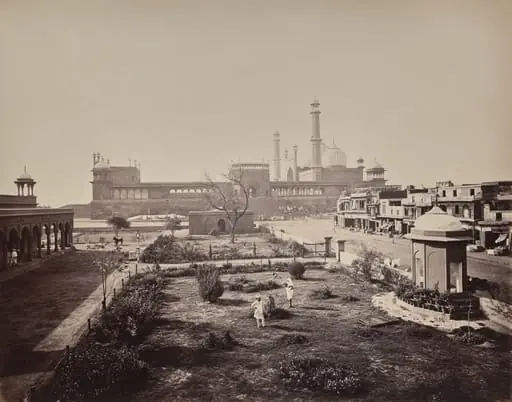 Delhi. View of North Side of the Jamma Musjid in Principal Mabonedau Place of Worship
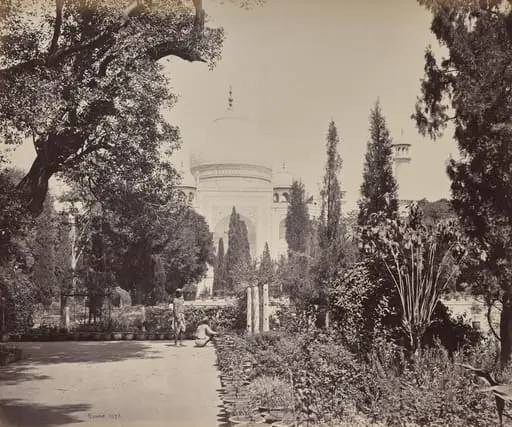 Agra. View of the Taj from the Garden