Artwork
Card players
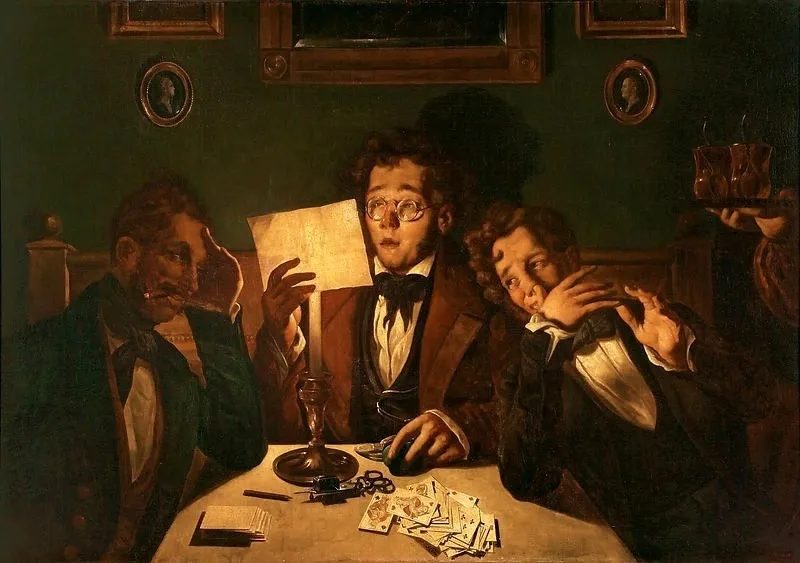
Card players is an oil painting by the Realist artist Feliks Pęczarski. It dates from 1843 and is held in the collection of the National Museum in Warsaw.
About this work
Overview
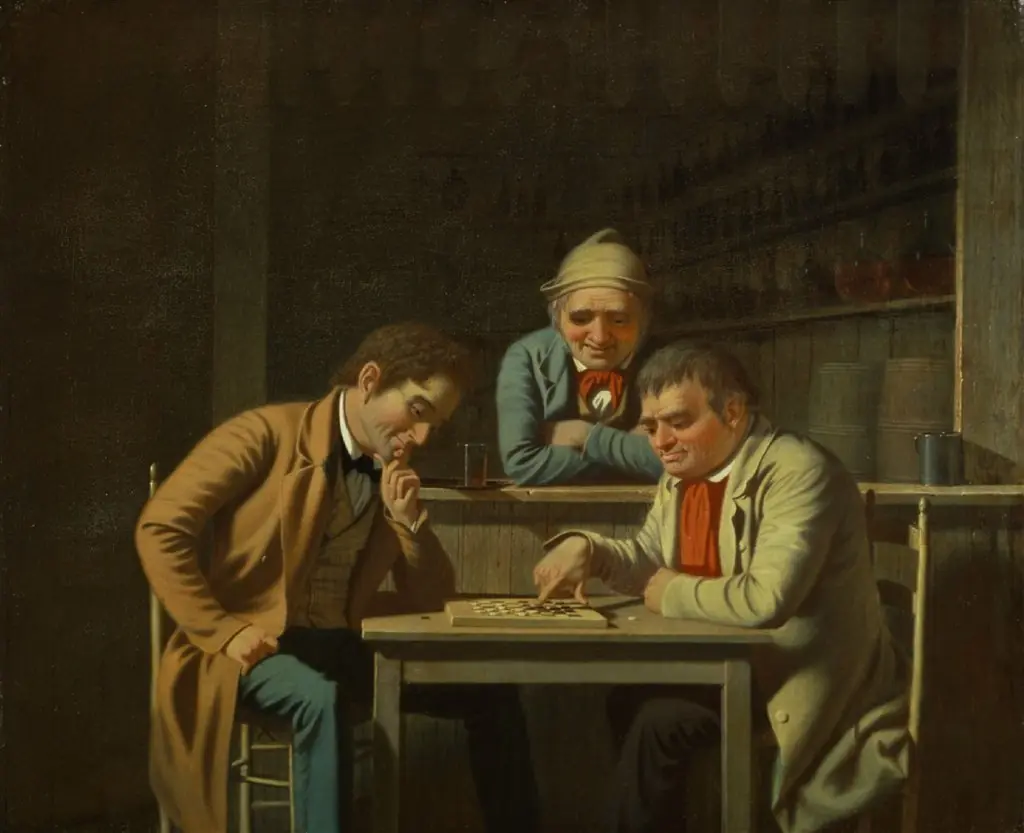
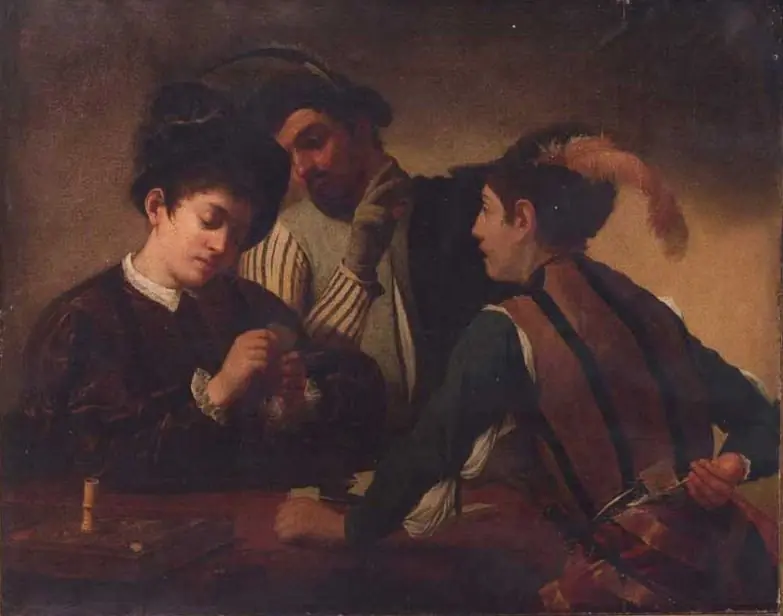
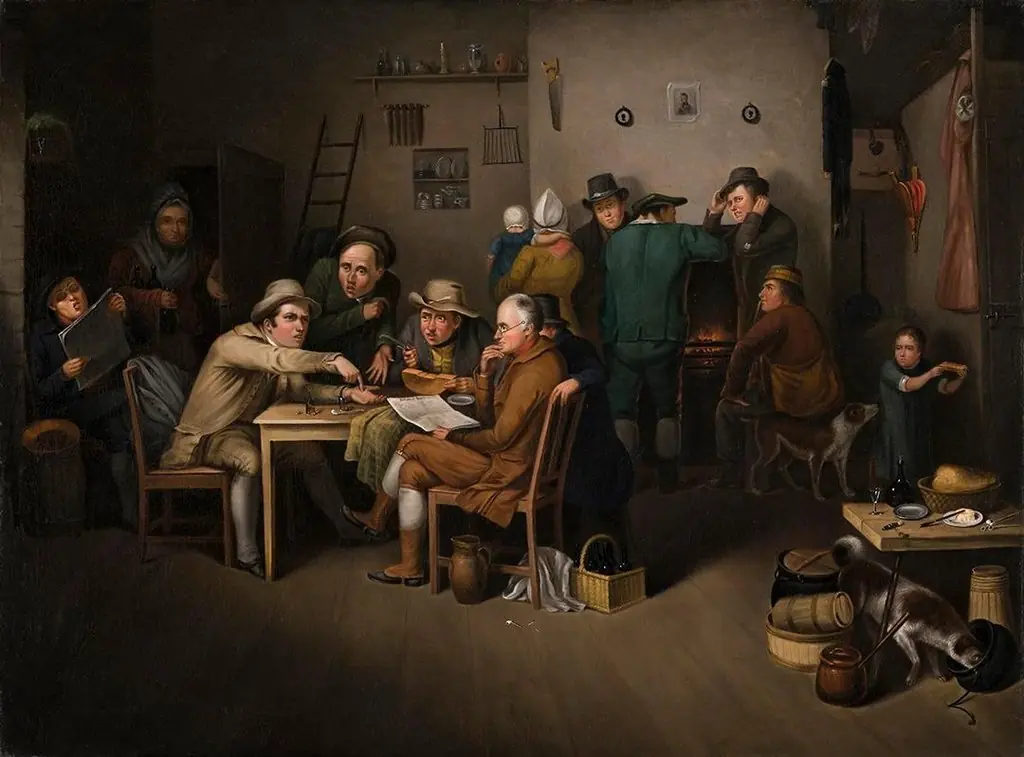
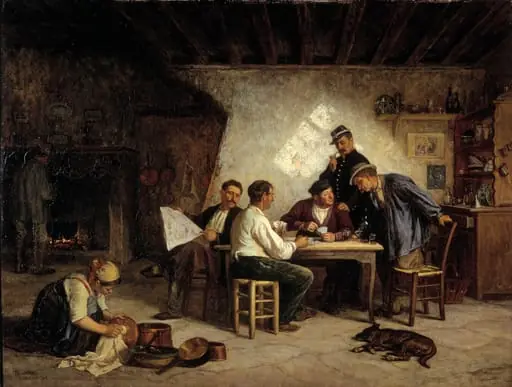
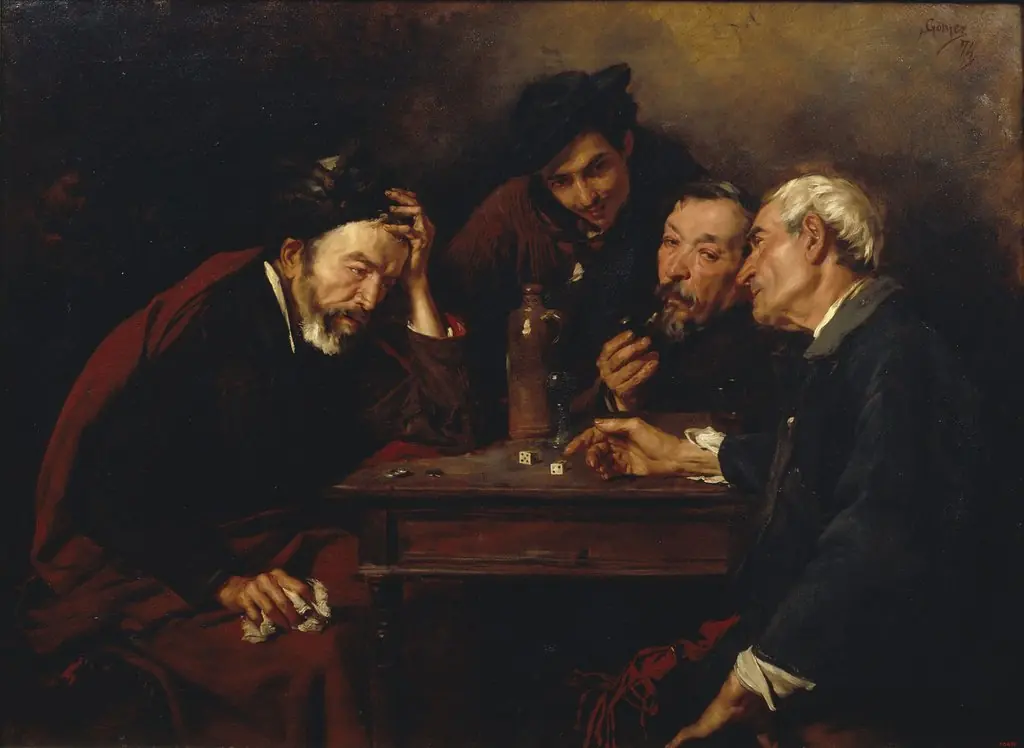
Painted in 1843 by Feliks Pęczarski, this oil on canvas depicts a quiet yet charged moment among three men playing cards. The work is part of the National Museum in Warsaw’s collection, where it remains a modest but compelling example of 19th-century Polish genre painting. Its subdued palette and intimate setting reflect a focus on everyday life rather than grand historical narratives.
Subject & Meaning
The scene captures a moment of psychological weight, where concentration and unspoken rivalry dominate the atmosphere.
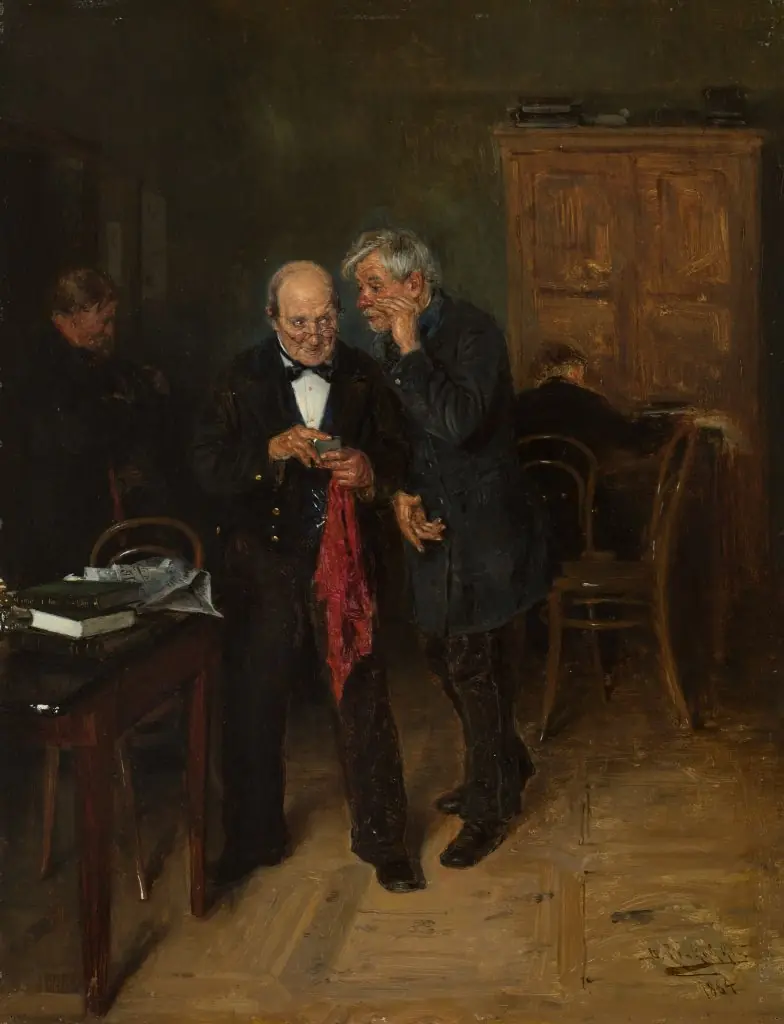
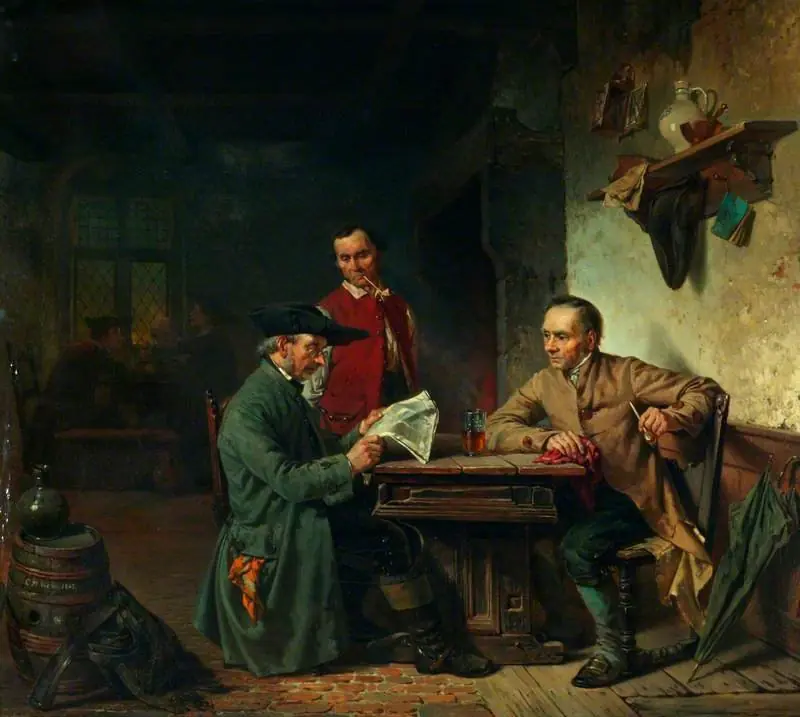
Three men are gathered around a wooden table, absorbed in a card game. One figure, seated right, displays visible tension—his posture and expression suggest anxiety or defeat. The central player holds a folded paper, possibly a score or note, hinting at stakes beyond mere recreation. The scene captures a moment of psychological weight, where concentration and unspoken rivalry dominate the atmosphere.
Technique & Style
Pęczarski employs a restrained chiaroscuro to model forms and deepen mood. Light falls selectively on faces and hands, contrasting with the dark green background and shadowed corners. Brushwork is precise but unobtrusive, emphasizing texture in fabric and wood without flourish. The cluttered table—cards, glasses, scattered objects—adds realism, grounding the scene in tactile detail.
History & Provenance
Created in 1843, the painting entered the National Museum in Warsaw’s holdings in the 19th century, likely through acquisition or donation. Its provenance remains largely undocumented beyond institutional records, but its preservation suggests early recognition as a representative work of Polish domestic genre painting during a period of national cultural consolidation.
Context
In mid-19th-century Poland, under foreign partition, artists often turned to intimate scenes of civilian life as a form of quiet cultural affirmation. Pęczarski’s focus on ordinary men in a private setting aligns with broader trends in Central European realism, avoiding political symbolism while preserving dignity in the mundane.
Legacy
Though not widely exhibited outside Poland, the painting contributes to the understanding of Pęczarski’s role in developing domestic genre painting in the region. Its restrained emotion and attention to psychological nuance influenced later artists interested in portraying human interaction without melodrama. It remains a quiet reference point in Polish art history.
Artist & collection