Artwork
Satire on drunkenness – allegorical scene
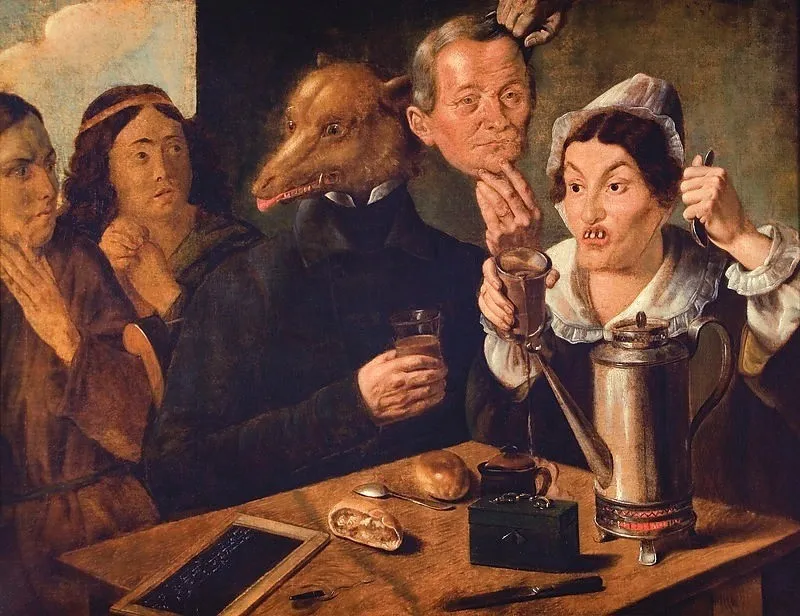
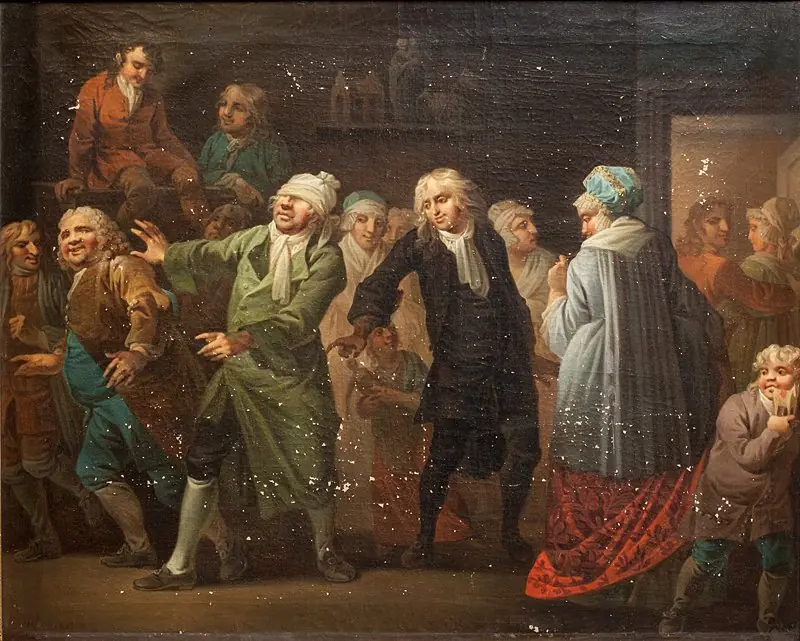
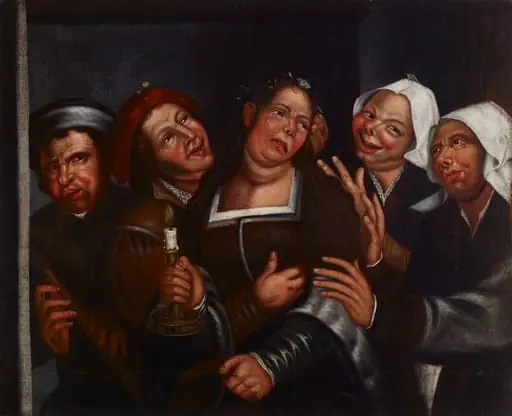
Satire on drunkenness – allegorical scene is an oil painting by the Realist artist Feliks Pęczarski. It dates from 1850 and is held in the collection of the National Museum in Warsaw.
About this work
Overview
It resides in the National Museum in Warsaw and presents a group of figures in a shadowy interior, their exaggerated behaviors serving as moral commentary.
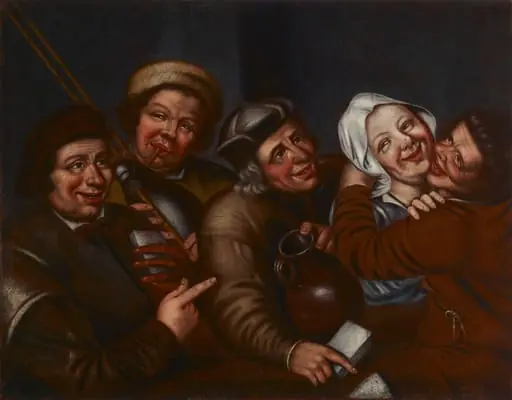
Painted around 1850 by Feliks Pęczarski, this oil-on-canvas work is an allegorical critique of excessive drinking. It resides in the National Museum in Warsaw and presents a group of figures in a shadowy interior, their exaggerated behaviors serving as moral commentary. The composition relies on stark contrasts of light and dark to isolate the figures, drawing attention to their absurd postures and expressions.
Subject & Meaning
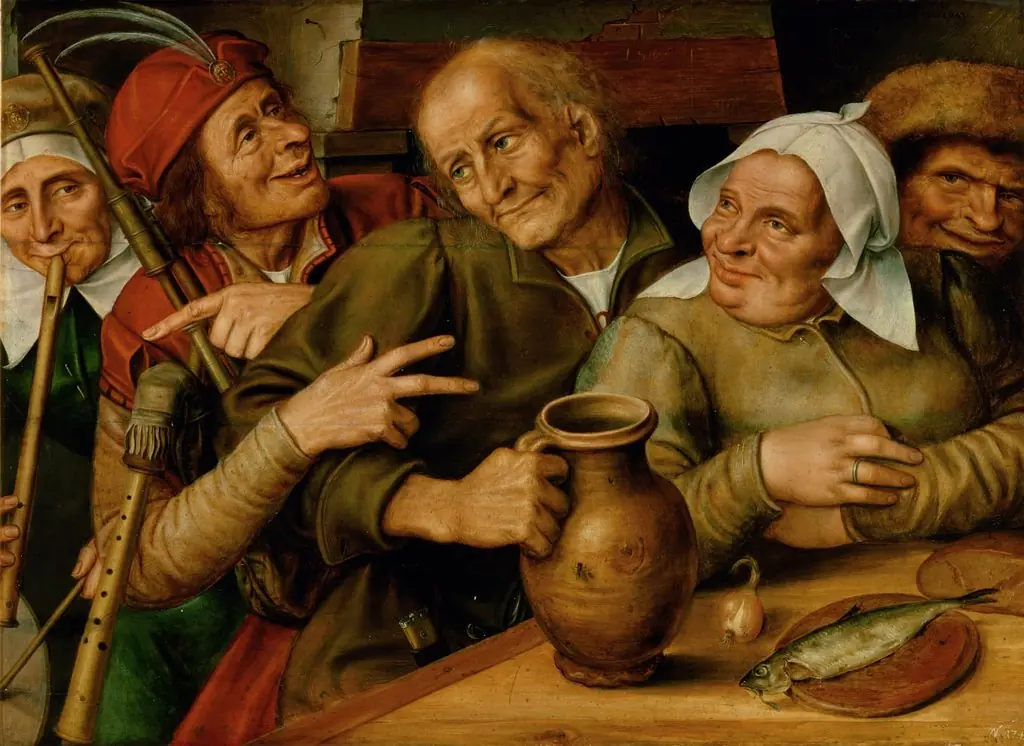
The scene depicts five individuals engaged in erratic conduct, symbolizing the degradation associated with intoxication. A figure with a donkey’s head represents folly, while another slumps in evident drunkenness. A woman in a white cap pours from a large pitcher, suggesting the source of their condition. Bread and a small box on the table hint at basic sustenance and perhaps lost dignity, reinforcing the painting’s cautionary tone.
Technique & Style
Pęczarski employs chiaroscuro to heighten the dramatic tension, illuminating faces and hands while plunging the surroundings into near darkness. The figures are rendered with a slightly caricatured realism, emphasizing their grotesque expressions without full distortion. The palette is muted, dominated by browns and grays, with only the skin tones and the pitcher catching the light, directing the viewer’s focus to the central actions.
History & Provenance
The painting entered the collection of the National Museum in Warsaw in the 19th century, likely acquired during a period of increased interest in moralizing genre scenes. Its attribution to Feliks Pęczarski, a lesser-known Polish artist of the time, suggests it was part of a broader cultural movement examining social vices through visual allegory, though its exact commission or early ownership remains undocumented.
Context
Created during a time when temperance movements gained traction across Europe, the painting reflects contemporary anxieties about alcohol’s social consequences. Similar allegories appeared in Dutch and German art of the 17th and 18th centuries, but Pęczarski’s version adapts the tradition to 19th-century Polish sensibilities, blending folk imagery with moral instruction in a domestic setting.
Legacy
Though not widely exhibited outside Poland, the work remains a notable example of 19th-century Polish moral allegory. It contributes to the understanding of how social critique was visualized in a period before photography and mass media. Its preservation in a national collection underscores its role as a historical document of cultural values and warnings about public behavior.
Artist & collection