Artwork
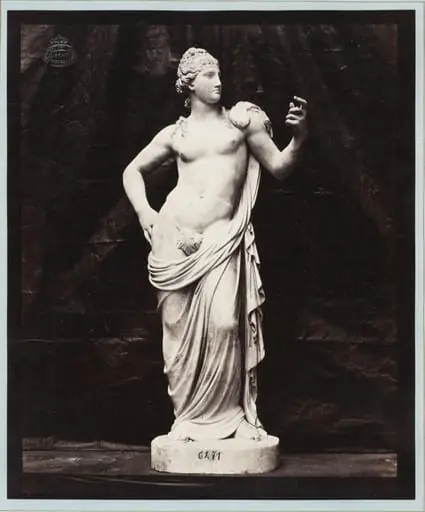
Marble statue of Aurelius Verus Ceasar
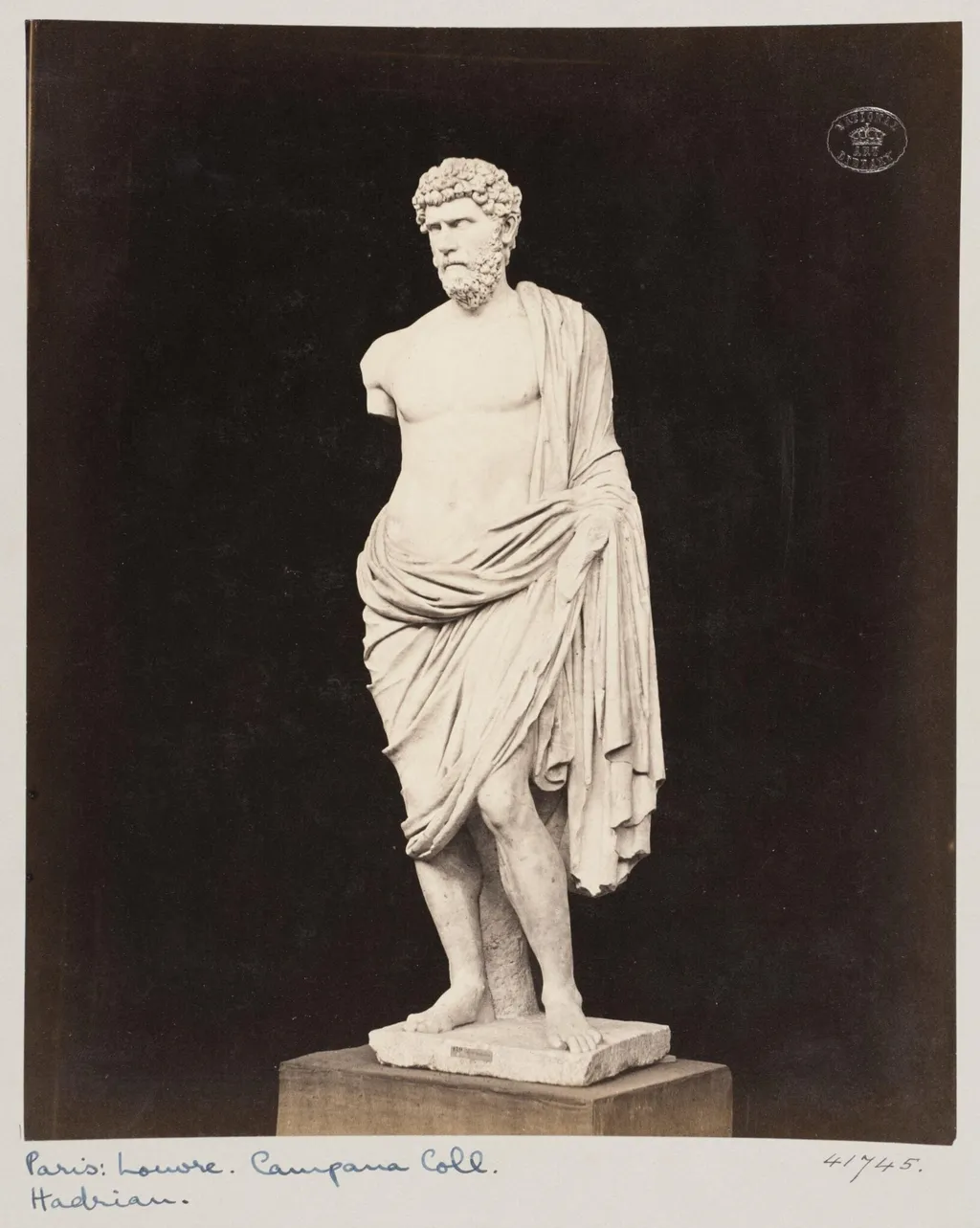
Marble statue of Aurelius Verus Ceasar is a photographic photography by the Impressionist artist Louise Laffon. It dates from 1864 and is held in the collection of the Victoria and Albert Museum. This photograph, taken between 1863 and 1864, captures a marble statue of Aurelius Verus Caesar.
About this work
The work blends Impressionism and Realism, two movements often seen together in 19th-century art.
This is a photograph from 1863–1864. It shows a marble statue of Aurelius Verus Ceasar. The work blends Impressionism and Realism, two movements often seen together in 19th-century art.
Louise Laffon, a French photographer, made this image. The Victoria and Albert Museum has held it since its early days. It’s part of one of the first photography collections in a museum.
Check out the work of Louise Laffon next.
Overview
This photograph, taken between 1863 and 1864, captures a marble statue of Aurelius Verus Caesar. It was acquired by the Victoria and Albert Museum in 1864 as part of a larger acquisition of 500 images from French photographer Louise Laffon. The photograph belongs to one of the earliest institutional photography collections in the world, assembled to support artistic study and museum documentation rather than as fine art.
Subject & Meaning
The subject is a Roman imperial portrait of Aurelius Verus Caesar, a co-emperor with Marcus Aurelius. The statue, originally sculpted in marble, was documented here not for its aesthetic value alone but as a historical artifact. The photograph served as a precise visual record, enabling scholars and students to study classical forms, drapery, and facial features without direct access to the original in Paris.
Technique & Style
Laffon employed a direct photographic process, likely a salted paper print or albumen print, to render the statue’s surface with clarity and tonal nuance. The lighting is even and controlled, emphasizing form over atmosphere. While the image reflects a documentary impulse, its composition and attention to texture align with emerging photographic standards of precision in the mid-nineteenth century.
History & Provenance
The photograph was produced by Louise Laffon during her documentation of the Campana Collection at the Musée Napoléon III in Paris. In 1864, the V&A purchased 500 such images through Parisian agent E. Cappe. These works entered the museum’s National Art Library collection, where they were used for educational reference. Laffon was among the first women professionally engaged in museum-related photography.
Context
At the time, the V&A was pioneering the use of photography as an educational tool, supplementing casts and drawings. Photographs like this one allowed for wider dissemination of classical sculpture among art students and curators. Laffon’s work was part of an international network of image exchange, linking British institutions with French collections during a period of growing interest in antiquities.
Legacy
Laffon’s photographs remain significant as early examples of institutional photographic documentation by a female practitioner. Her contribution helped establish photography’s role in museum archives. The V&A’s retention of these images underscores their value as historical records, preserving not only the appearance of antiquities but also the methods by which they were studied in the 19th century.
Artist & collection
Artist
Louise Laffon (1828–1885), was a French photographer and painter. She was one of the first female professional photographers in France. She had a studio in Paris between 1859 and 1876.

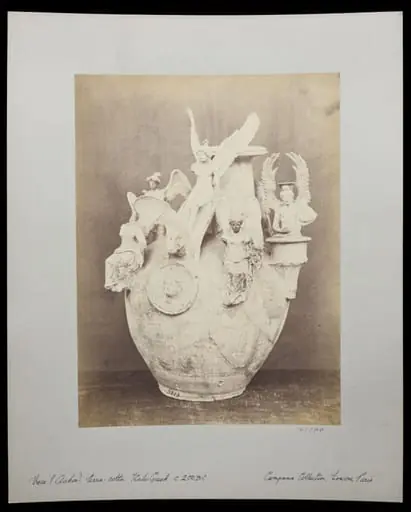 Perfume Burner in terra cotta
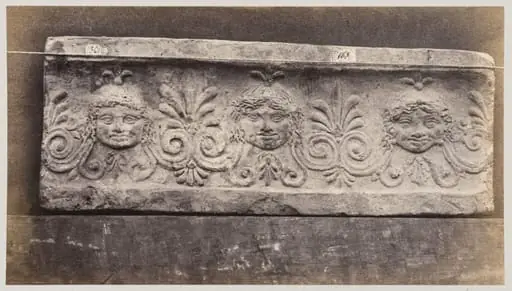 Three masques of gorgons in terra cotta
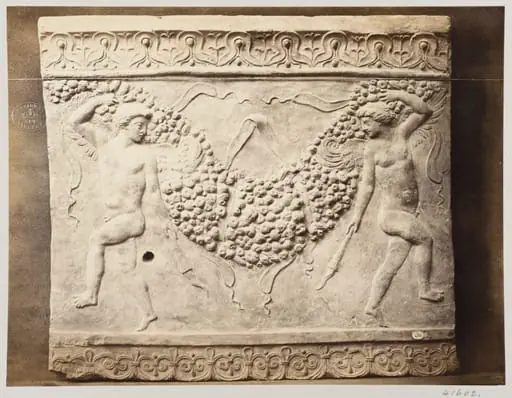 Bas-relief of portion of frieze of dancing figures with torches bearing festoon of fruit in terra cotta
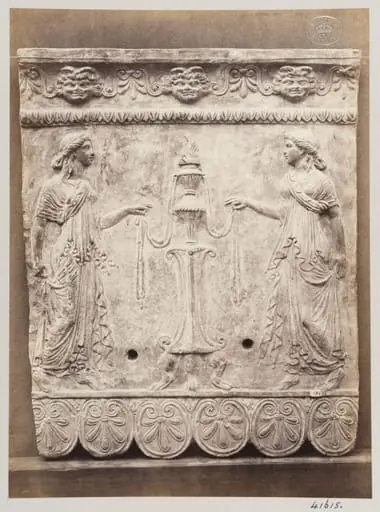 Bas-relief portion of a frieze of two draped females and an altar in terra cotta
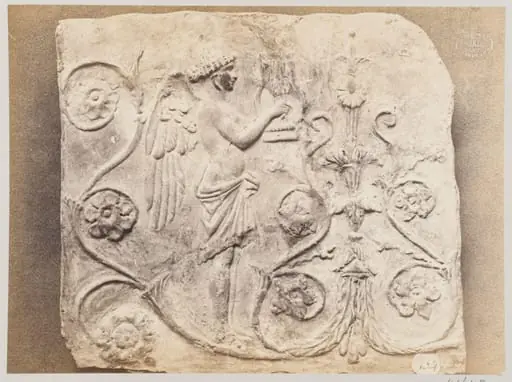 Bas-relief of a geni and a lyre in terra cotta
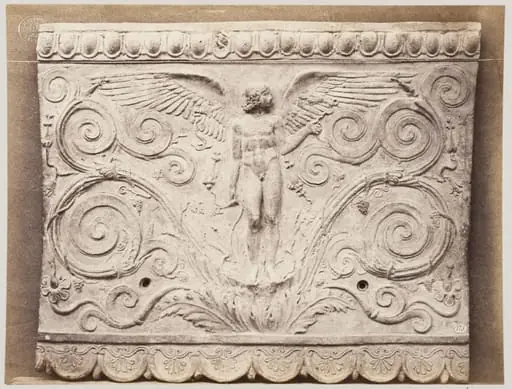 Bas-relief of a portion of frieze of Eros with scrollwork in terra cotta
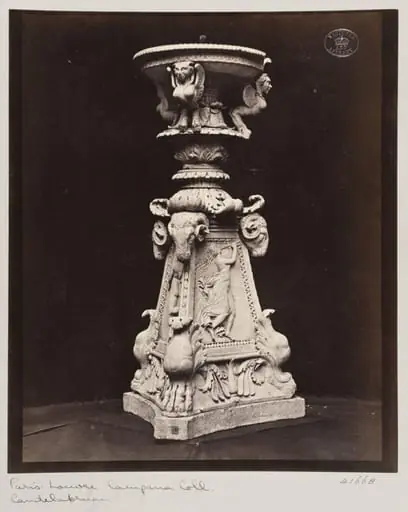 Marble sculptured fountain
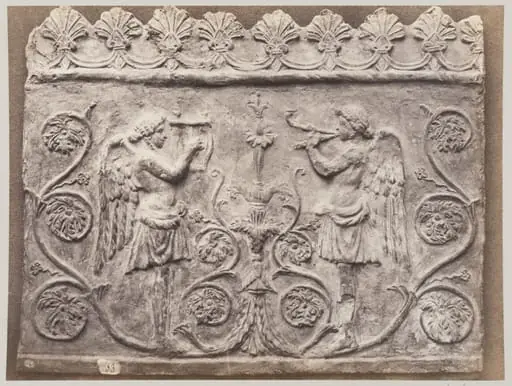 Bas-relief portion of frieze of Genii with double flutes and lyre
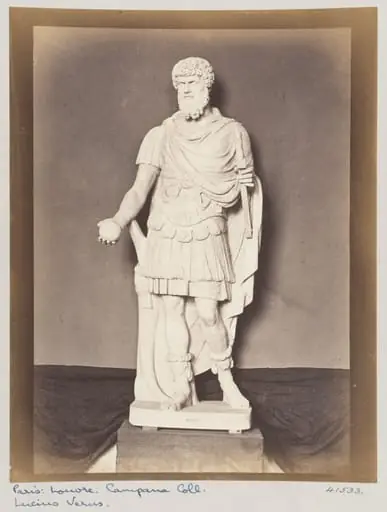 Marble Statue of Lucius Verus
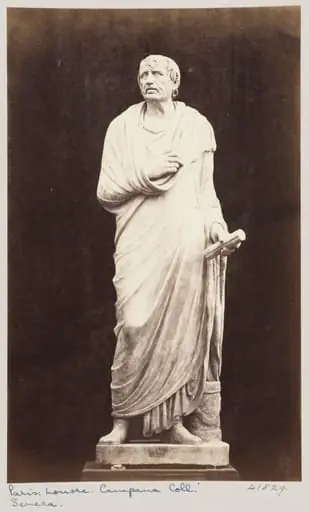 Marble Statue of Seneca
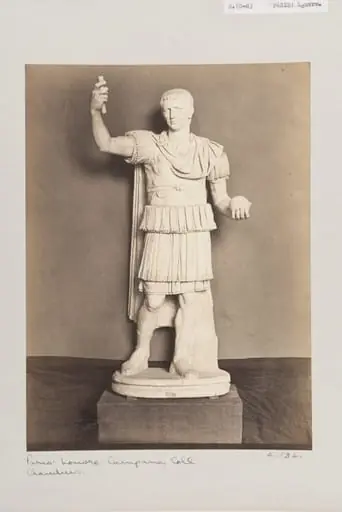 Marble Statue of Emperor Claudius
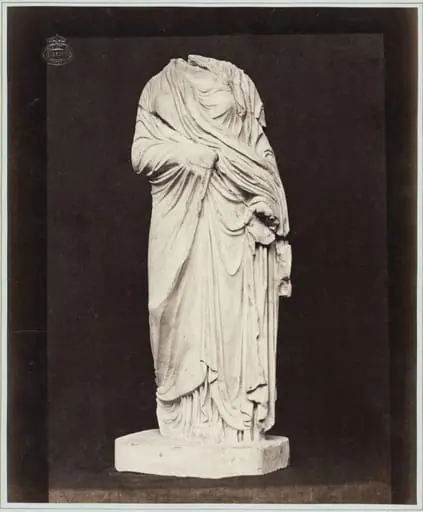 Marble statue of a headless draped figure
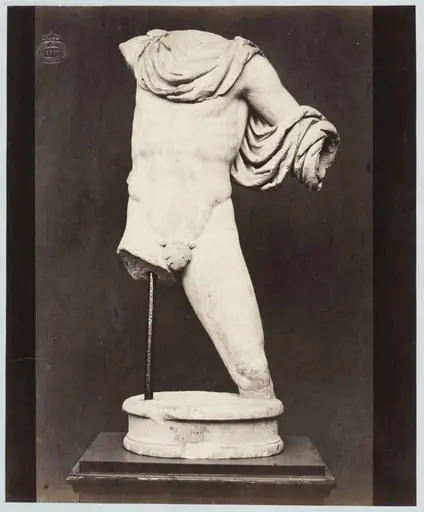 Fragment of a small marble statue
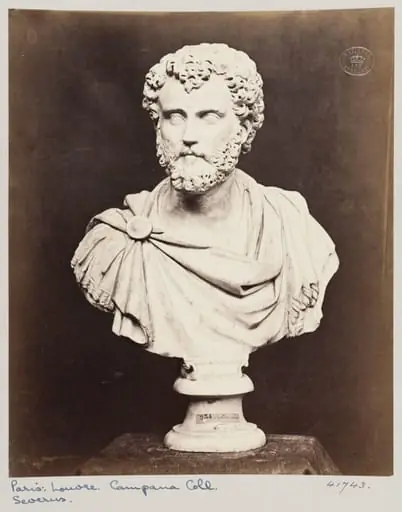 Marble bust of Septimus Severus
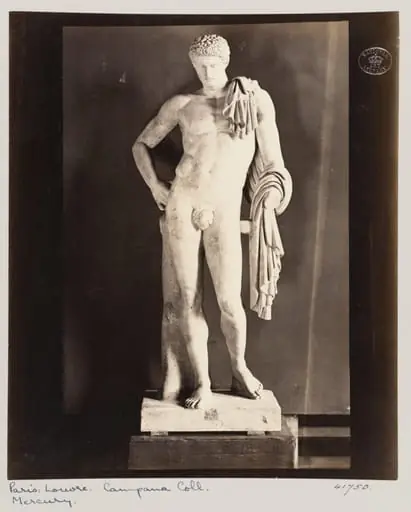 Marble statue of Theseus or Hercules
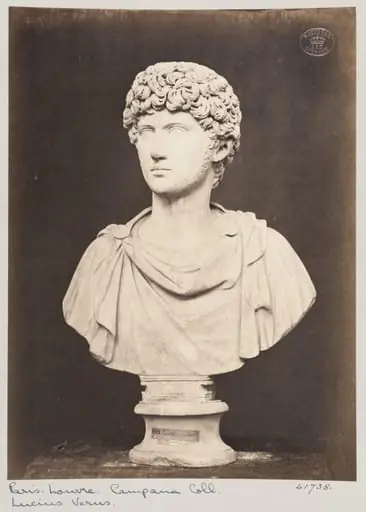 Marble bust of Lucius Verus
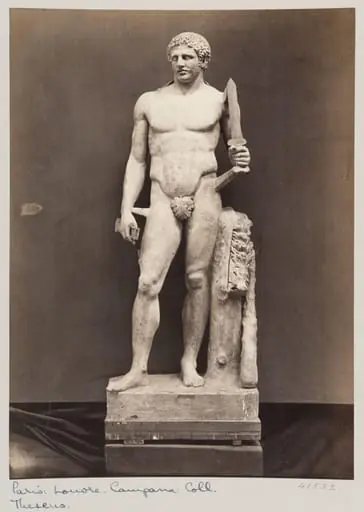 Marble Statue of Theseus
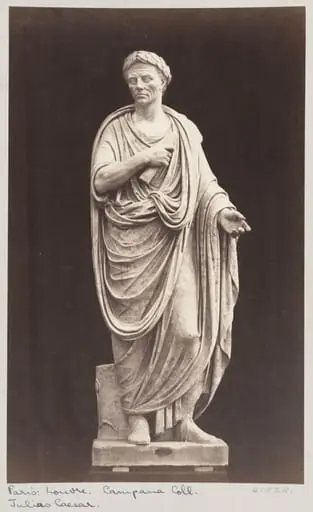 Marble Statue of Julius Caesar
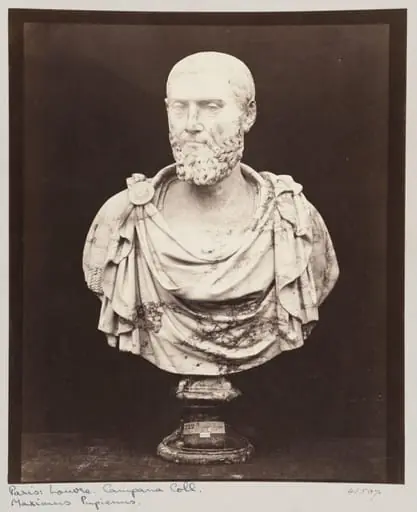 Marble Bust of the Emperor Pupienus
 Unidentified marble statue