Artwork
Portrait of María Josefa Ramona Herrera
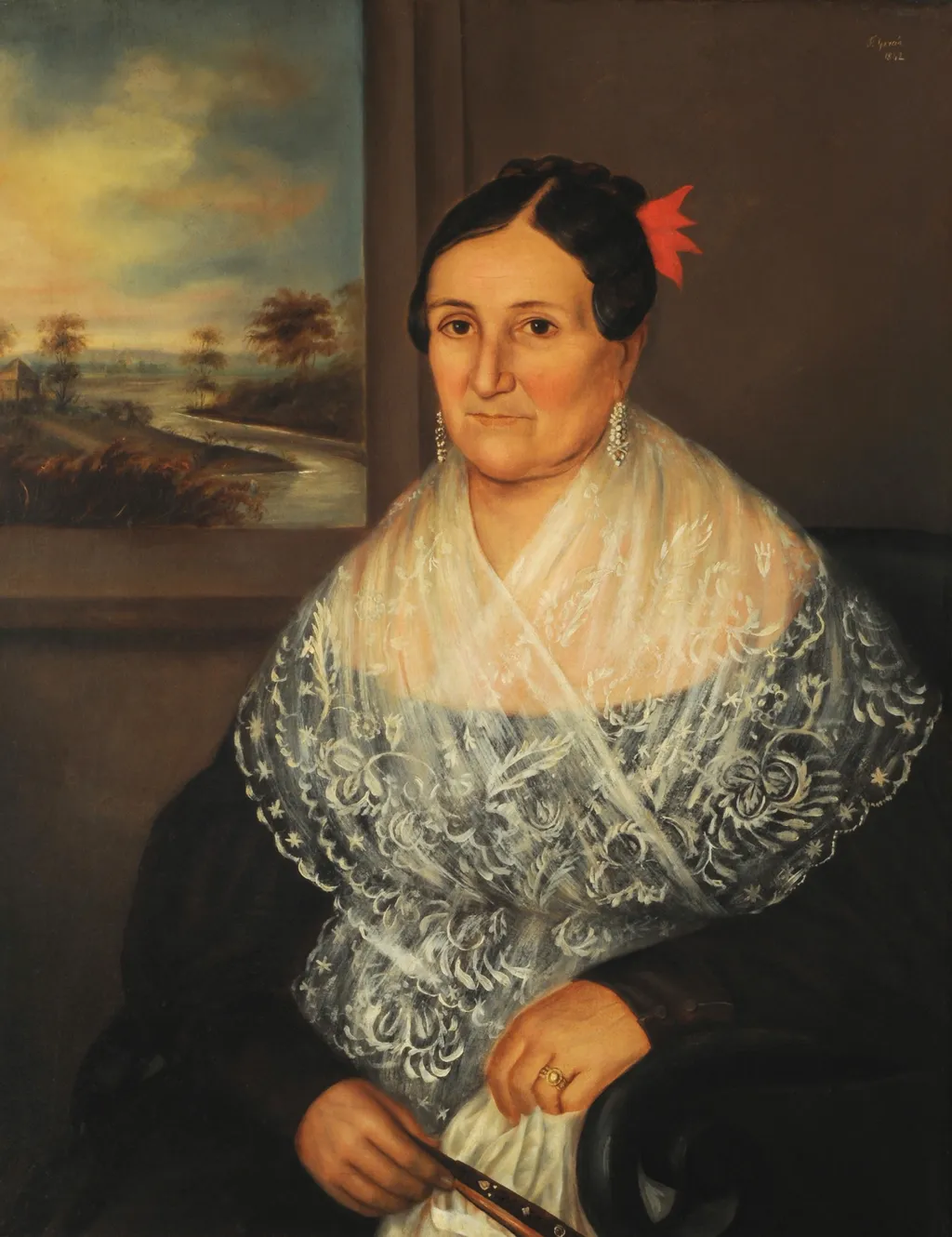
Portrait of María Josefa Ramona Herrera is an oil painting by the Impressionist artist Fernando García del Molino. It dates from 1897 and is held in the collection of the National Museum of Fine Arts, Argentina. Created in 1897, this oil portrait depicts María Josefa Ramona Herrera seated in an elegant pose.
About this work
If you're interested in learning more about this style of painting, you might want to explore the work of artist Fernando García del Molino.
This painting is a portrait of a woman, likely from the late 19th century. She is seated and wears a dark dress with a white shawl embroidered with floral patterns. Her dark hair is styled in an updo, adorned with a red flower. She holds a fan in her right hand and wears dangling earrings and a ring on her left hand.
The background of the painting features a landscape with trees and a body of water, which appears to be a lake or river. The overall atmosphere of the painting is one of elegance and refinement.
If you're interested in learning more about this style of painting, you might want to explore the work of artist Fernando García del Molino.
Overview
Created in 1897, this oil portrait depicts María Josefa Ramona Herrera seated in an elegant pose. She wears a dark gown complemented by a white shawl embroidered with delicate floral motifs, and a red flower adorns her up‑do hairstyle. A fan rests in her right hand, while earrings and a ring are visible on her left. The backdrop shows a tranquil landscape of trees and water, lending a refined atmosphere to the composition.
Subject & Meaning
The sitter, María Josefa Ramona Herrera, is presented as a figure of genteel poise, her attire and accessories suggesting social standing and cultivated taste. The inclusion of a fan and the floral shawl evoke contemporary notions of femininity and decorum, while the serene natural setting may allude to personal affinity with nature or an idealized domestic sphere.
Technique & Style
Fernando García del Molino employed a loose, impressionistic brushwork that softens the edges of the figure and landscape alike. The oil medium allows for subtle modulation of light across the fabric and skin, while the pastel palette—dominated by dark tones punctuated by the white shawl and red flower—creates a harmonious visual balance. The painter’s reliance on photographic sources is evident in the precise rendering of facial features.
History & Provenance
The portrait was executed by García del Molino, a Chilean‑born artist active in Argentina, known for producing likenesses from photographs and daguerreotypes during the late nineteenth century. After its creation, the work entered the collection of the National Museum of Fine Arts in Buenos Aires, where it remains part of the museum’s permanent holdings.
Context
Produced at the height of the Argentine elite’s engagement with European artistic trends, the painting reflects the diffusion of impressionist aesthetics beyond France. García del Molino’s practice of translating photographic images into painted portraits catered to a clientele seeking modern yet refined representations, situating this work within the broader cultural exchange between Latin America and the European art world of the 1890s.
Artist & collection
Artist
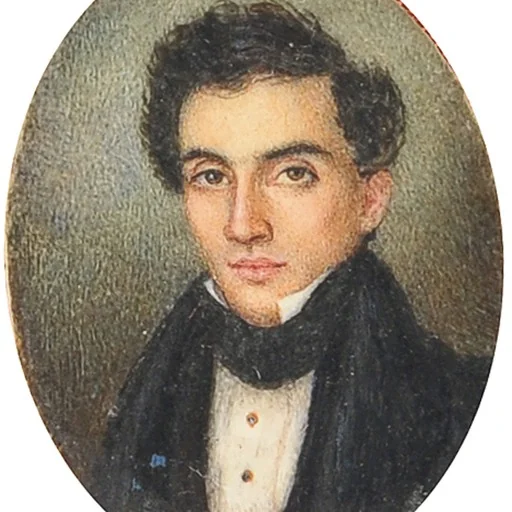
Fernando García del Molino (23 March 1813, Santiago — 1899, Buenos Aires) was a Kingdom of Chile-born (later naturalized Argentine) portrait painter, miniaturist and lithographer.

Museum
National Museum of Fine Arts, Argentina
Continue through works from the same source collection.
 Trinidad Saravia de Huergo
 Portretul Elenei Cuza
 Portrait of Rachela Romer née de Raes
 Cecilia Lindroos (os. Meyer) nuorena.
 Portrait of Doña Macedonia Escardo
 Portret de femeie
 Lady in Brown
 Soția lui Lazăr Kalinderu
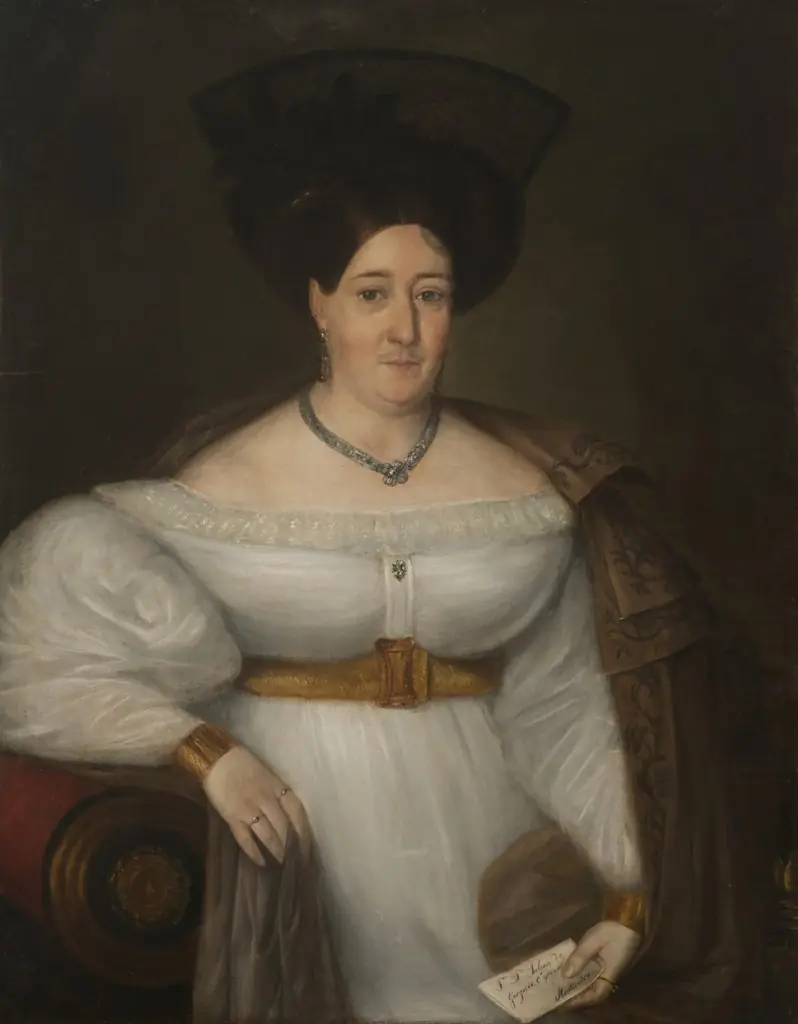 Candelaria Somellera de Espinosa
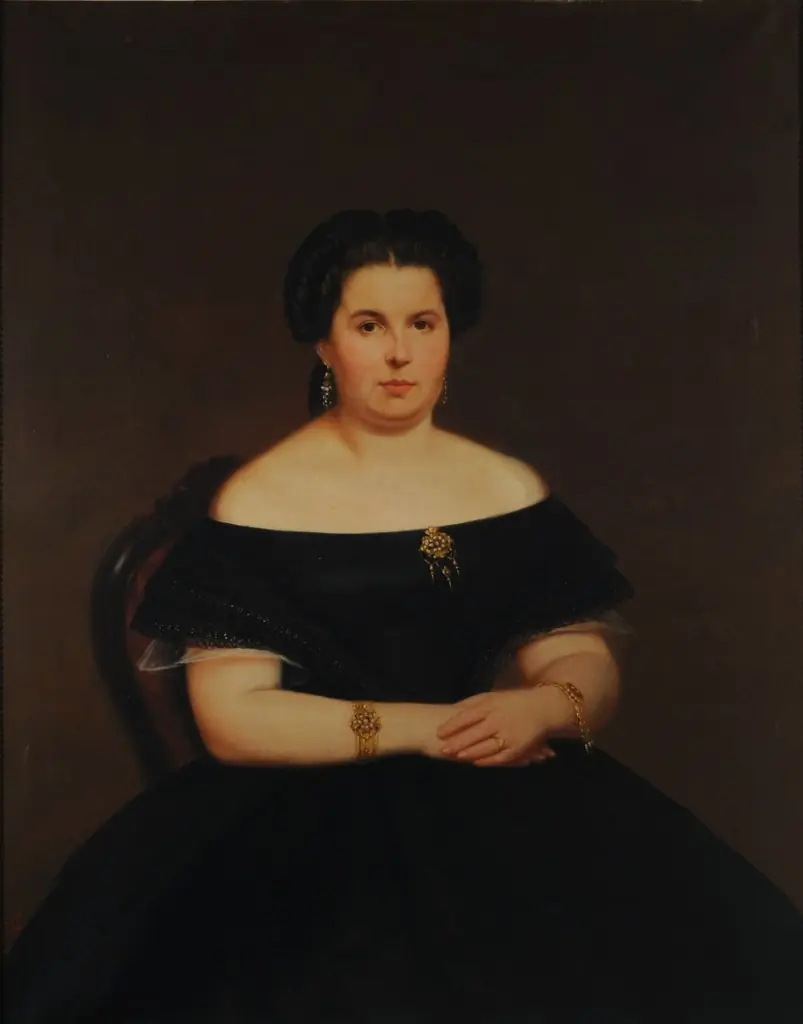 Portrait of Doña Inés N. de Aldao
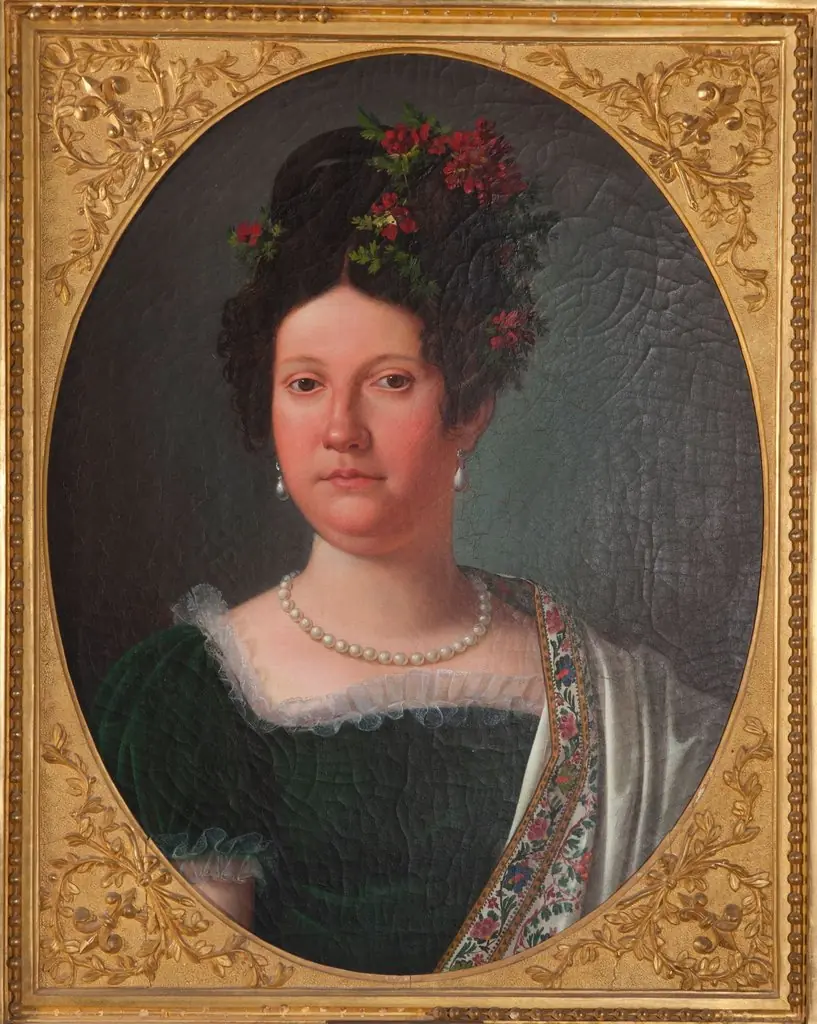 Portrait of María Isabella of Spain (1789-1848), Gueen of the Two Sicilies