Artwork
The Plague
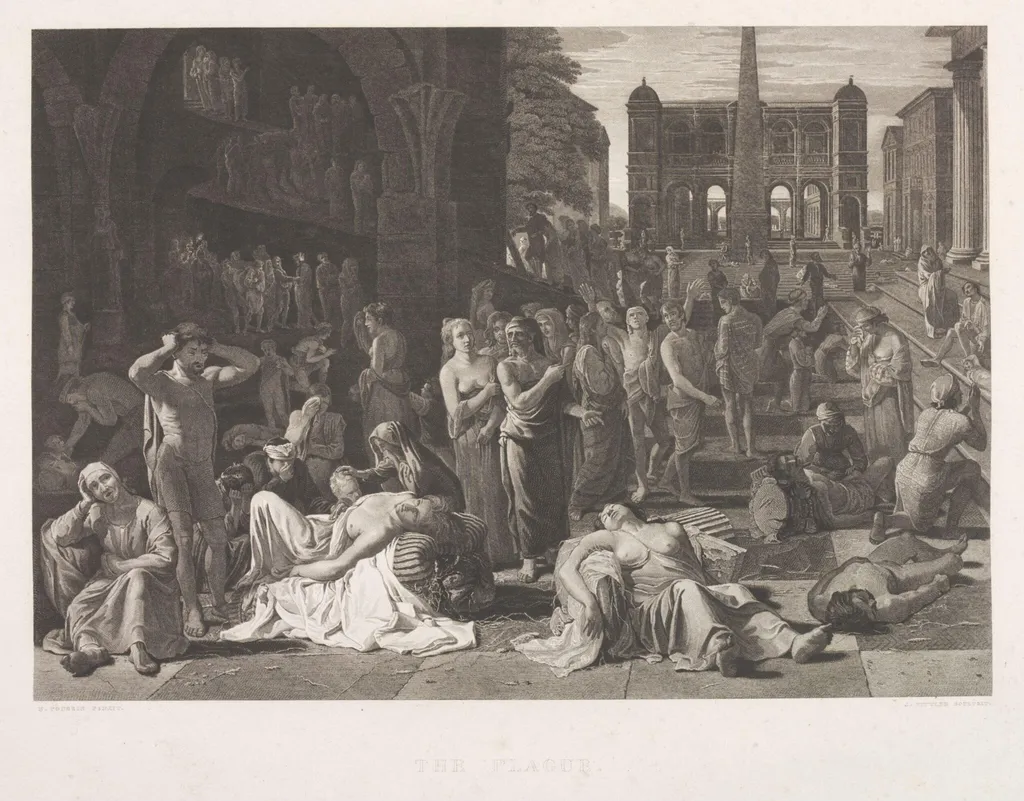
The Plague is a print by James Fittler. It dates from 1850 and is held in the collection of the Victoria and Albert Museum.
About this work
Overview
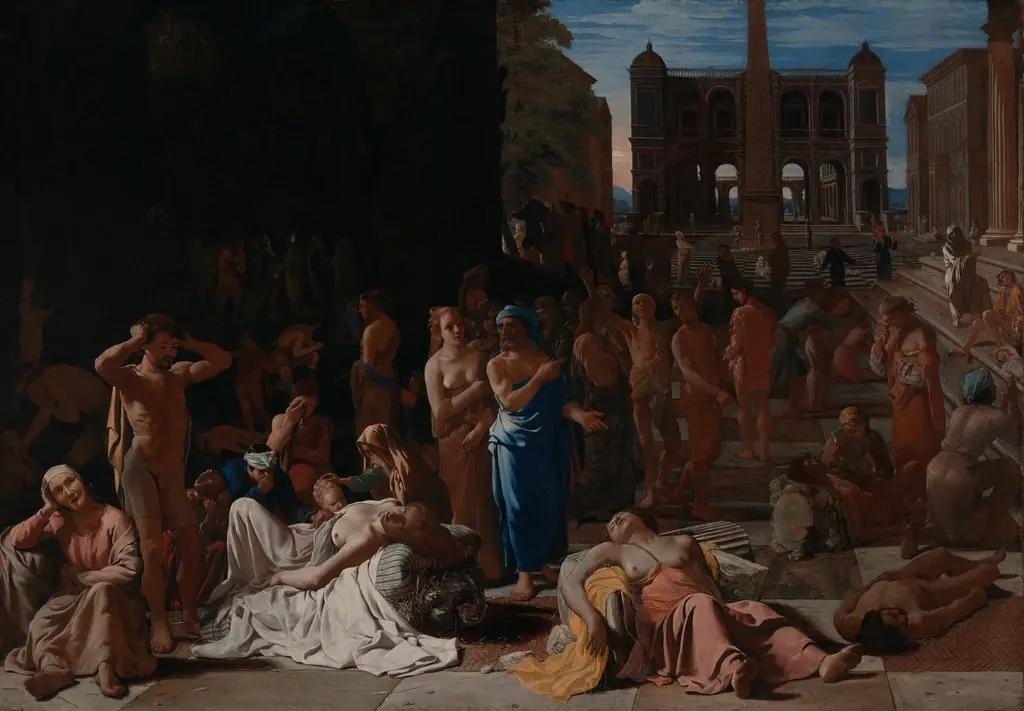
This 1850 print, titled *The Plague*, is a reproductive engraving by James Fittler based on a composition by Claude Lorrain.
This 1850 print, titled *The Plague*, is a reproductive engraving by James Fittler based on a composition by Claude Lorrain. Executed as a proof impression with open letters, it was likely an early state intended for review before final publication. The work is rendered on paper using etching and engraving techniques, characteristic of 19th-century printmaking practices that sought to disseminate classical compositions to wider audiences.
Subject & Meaning
The scene depicts a public space overwhelmed by the effects of plague, with figures collapsed, dying, or in distress. Amidst the chaos, some attempt aid while others recoil in fear or stand motionless. The presence of monumental architecture in the background contrasts with human vulnerability, suggesting the fragility of civilization in the face of disease. The composition evokes collective suffering without assigning blame or narrative resolution.
Technique & Style
Fittler employed fine linear engraving to render texture and form, emphasizing dramatic contrasts between light and shadow. Deeply incised lines create dense blacks, while delicate hatching suggests partial illumination, a method derived from chiaroscuro traditions. The foreground figures are rendered with heightened detail, pulling focus from the receding architectural elements, reinforcing emotional intensity through controlled visual hierarchy.
History & Provenance
The print originates from a 17th-century painting by Claude Lorrain, whose landscapes and historical scenes were widely reproduced in the 18th and 19th centuries. Fittler, a noted English engraver, produced this version in 1850 as part of a series after classical works. The open-lettered proof suggests it was an early impression, possibly used for approval or limited circulation before a final edition was issued.
Context
Produced during a period of renewed interest in historical epidemics and public health, the print reflects 19th-century anxieties about urban disease and social order. Though based on a Baroque composition, its reproduction in mid-Victorian England resonated with contemporary concerns over sanitation, overcrowding, and the limits of medical knowledge in the face of infectious outbreaks.
Legacy
Fittler’s engraving contributed to the continued circulation of Lorrain’s imagery in the 19th century, reinforcing classical motifs in popular visual culture. While not widely exhibited, such reproductive prints served as accessible references for artists and educated audiences. The work remains a document of how historical trauma was visually translated across centuries through the mechanics of print.
Artist & collection
Artist
James Fittler made fine engravings of people and scenes in the late 1700s and early 1800s.

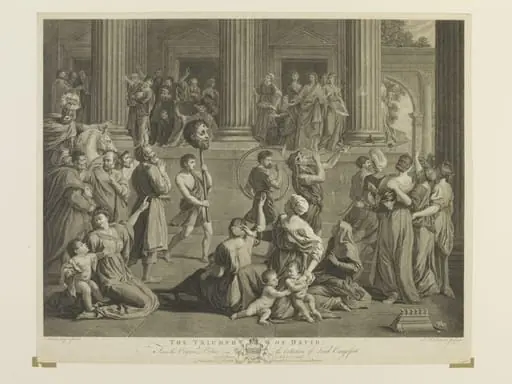 Triumph of David
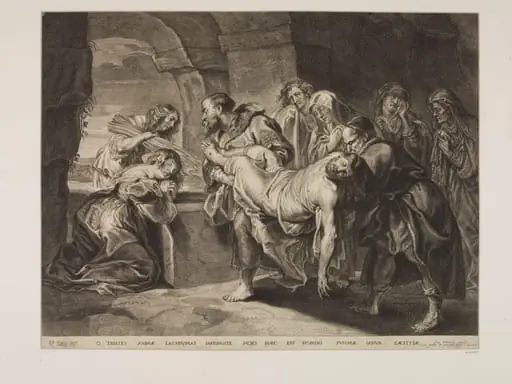 The Entombment
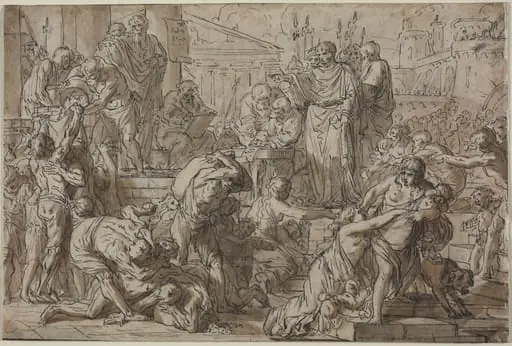 Roman Subject
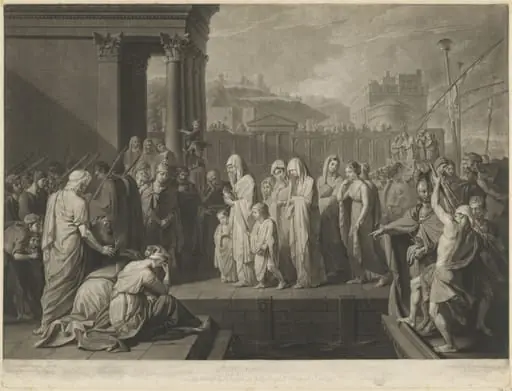 Agrippina Landing at Brindisi with the Ashes of Germanicus
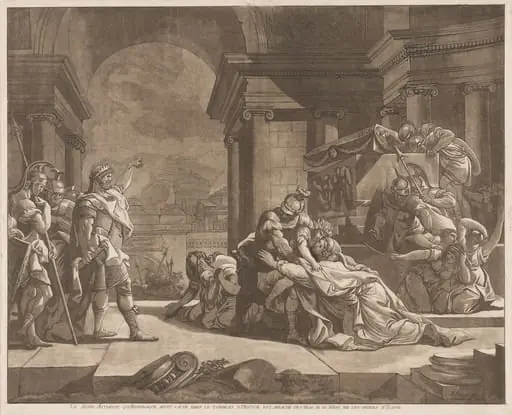 Le Jeune Astianax qu’Andromaque avoit caché dans le tombeau d’Hector est arraché des bras de sa Mere par les ordres d'Ulisse (Young Astianax, who Andromache Hid in Hector's Tomb, is Seized from his Mother's Arms by Ulysses' Orders)
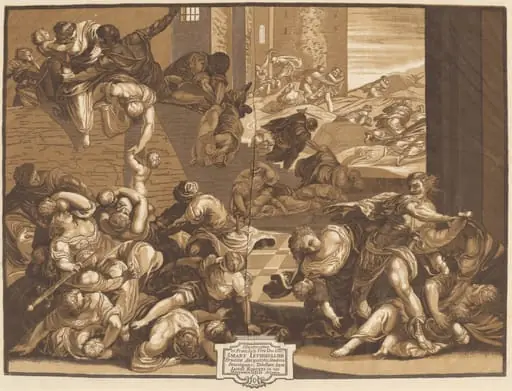 Massacre of the Innocents
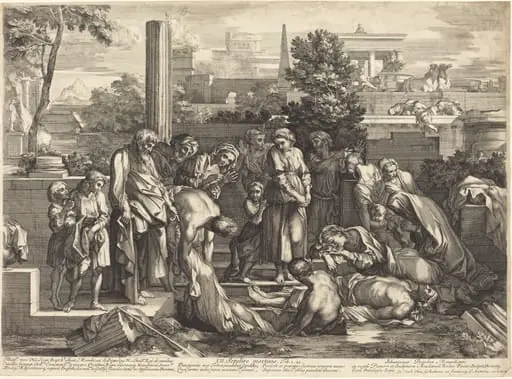 Sepelire mortuos
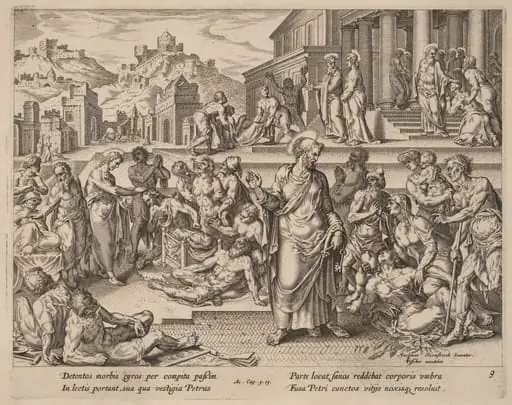 Saint Peter Healing the Sick with His Shadow
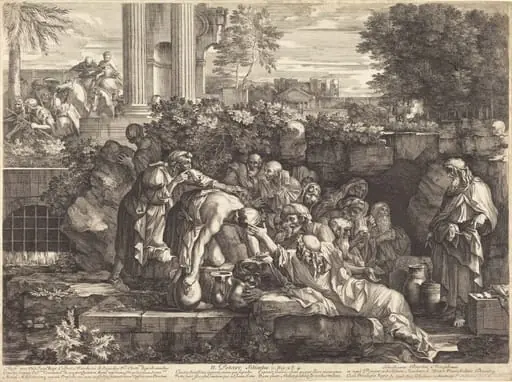 Potare sitientes
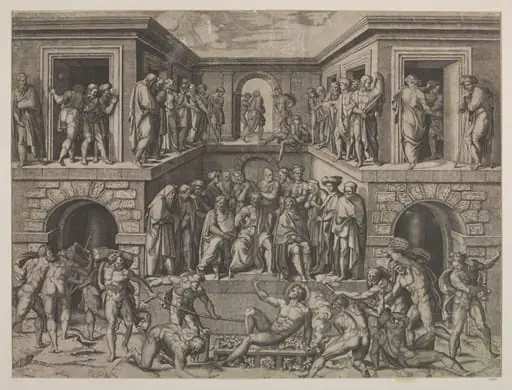 Martyrdom of St. Lawrence
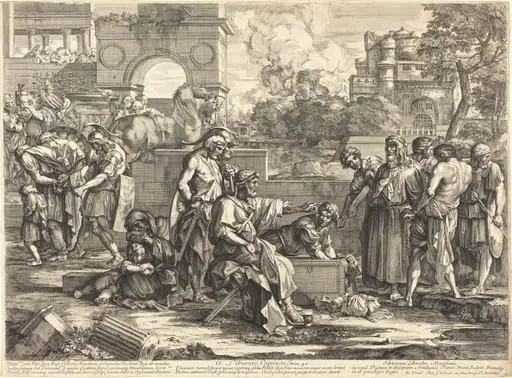 Liberare Captivos
 Plague in an Ancient City