Artwork
Three Groups of Figures (Parents and Children?)
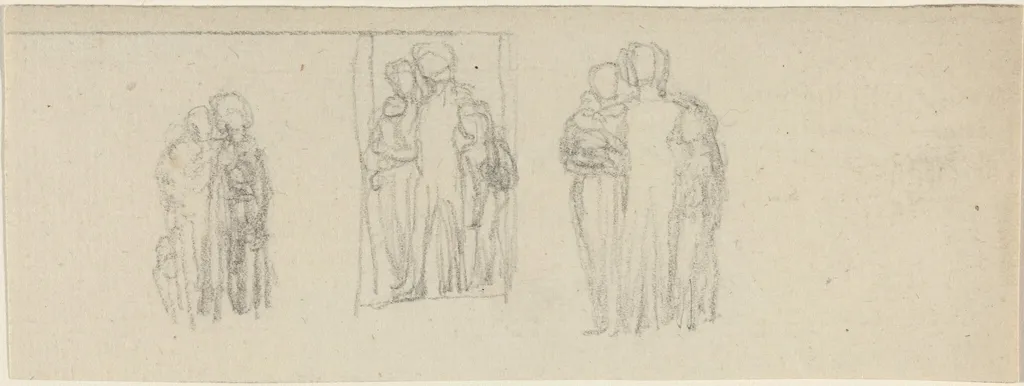
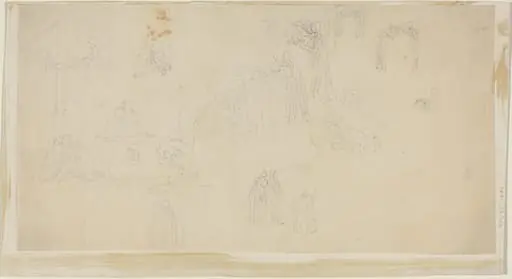
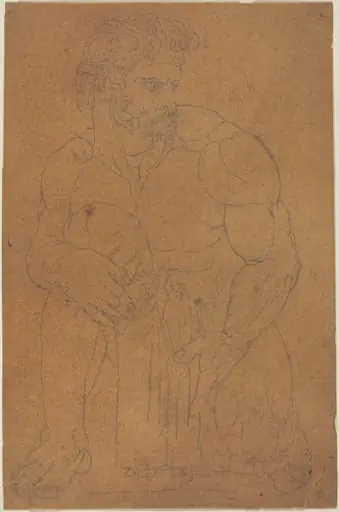
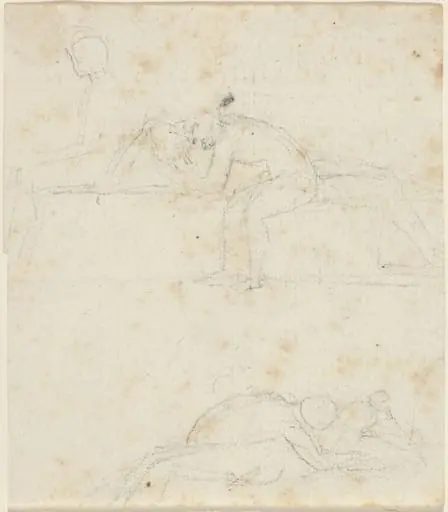
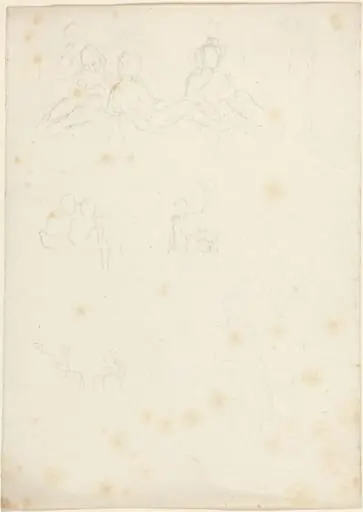
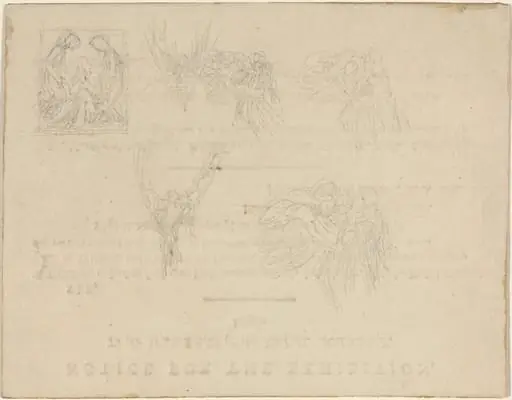
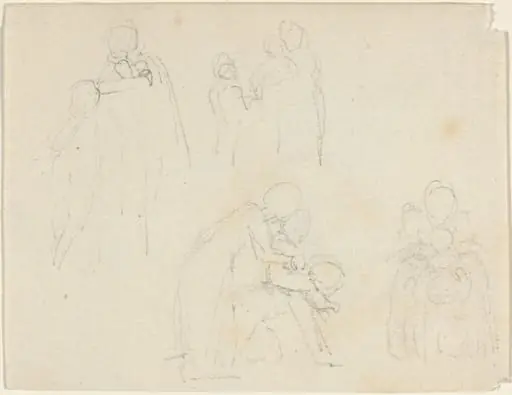
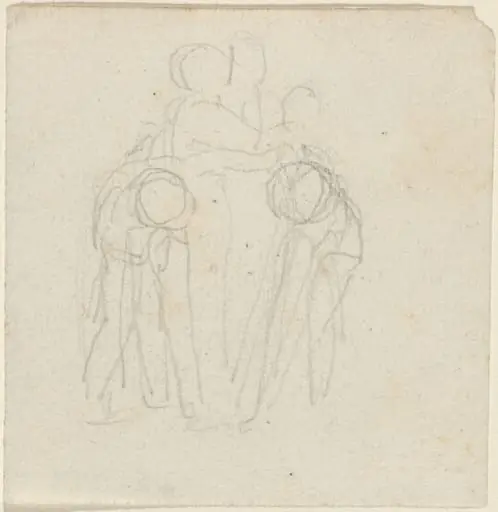
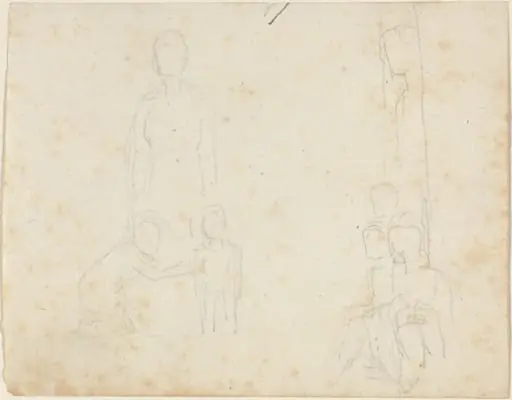
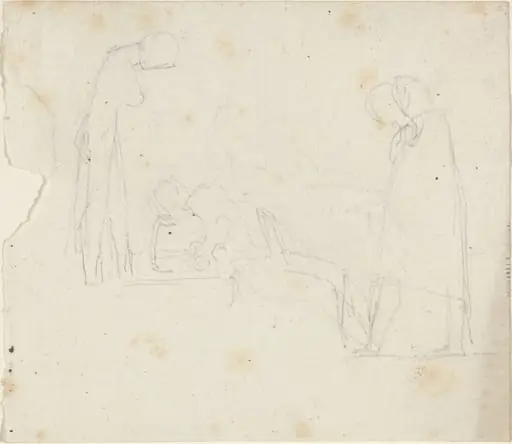
Three Groups of Figures (Parents and Children?) is a graphite drawing by the Romanticist artist John Flaxman. It dates from 1790 and is held in the collection of the National Gallery of Art. Three Groups of Figures (Parents and Children?
About this work
Overview
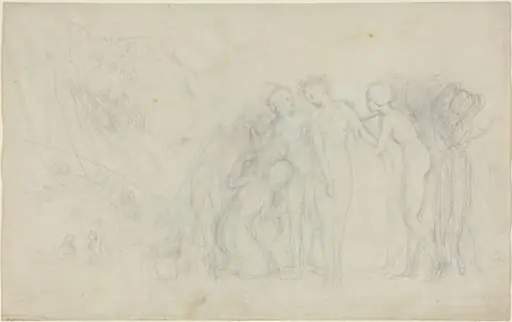
Three Groups of Figures (Parents and Children?) is a 1790 graphite drawing by John Flaxman, an English artist pivotal to the Neoclassical movement. The work depicts three simple groups of standing figures, possibly familial, rendered in a calm and quiet monochrome.
Subject & Meaning
The drawing's subject, while tentatively interpreted as parents and children, emphasizes serene human interaction. The simplicity of the scene focuses attention on the relationships between the figures, conveyed through subtle posture and grouping.
Technique & Style
Executed in delicate graphite, the drawing showcases Flaxman's distinctive linear Neoclassical style, developed during his time in Rome. The medium's monochrome quality contributes to the work's calm atmosphere, though it diverges from the chiaroscuro technique often associated with dramatic lighting effects.
History & Provenance
Created during a transitional period in Flaxman's career, as he expanded from sculpture into graphic arts, this drawing reflects his engagement with classical forms and compositional principles.
Context
Flaxman's early training with Josiah Wedgwood and later influences in Rome are evident in this work, blending industrial craftsmanship with classical ideals. The use of graphite, common during the late 18th century, suits the Neoclassical emphasis on clarity and restraint.
Legacy
As a Neoclassical piece, *Three Groups of Figures* contributes to the movement's broader influence on 19th-century art and design, though its specific impact is more nuanced due to its subtle, introspective nature.
Artist & collection
Artist
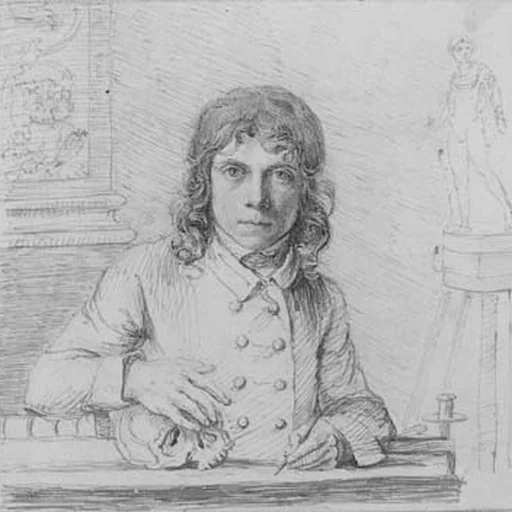
John Flaxman (6 July 1755 – 7 December 1826) was an English sculptor and draughtsman who was a leading figure in British and European Neoclassicism.