Artwork
The Birth of the Virgin
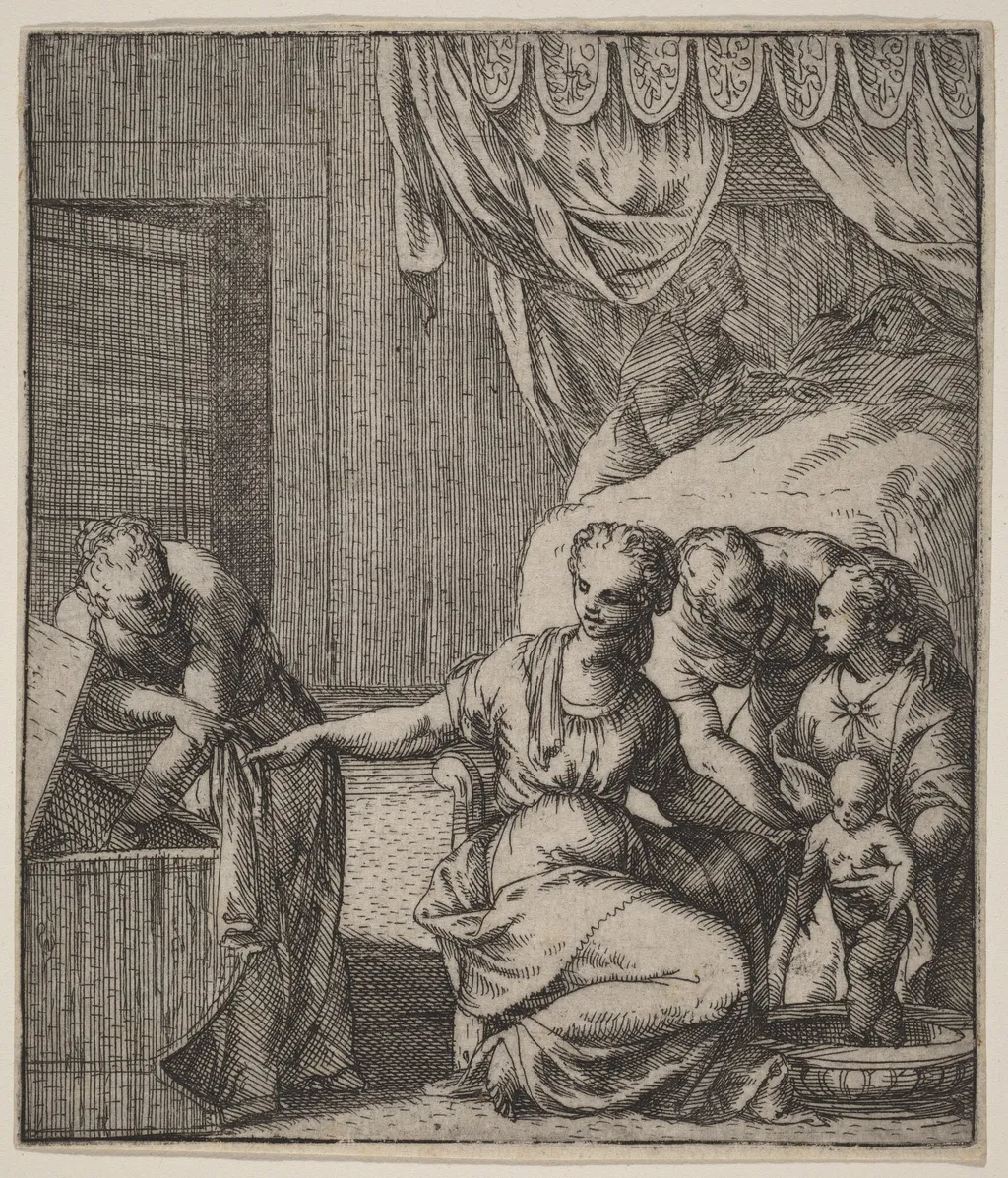
The Birth of the Virgin is an ink print by the Renaissance artist Giovanni Battista Fontana. It dates from 1556 and is held in the collection of the National Gallery of Art.
About this work
Overview
The Birth of the Virgin is a 1556 etching on laid paper by Giovanni Battista Fontana, an Italian artist influenced by Titian and Veronese. The work depicts the biblical scene of Mary's birth in a detailed, narrative composition.
Subject & Meaning
The etching illustrates the birth of the Virgin Mary, set in a dimly lit room with a group of attendants. The quiet, intimate atmosphere emphasizes the solemnity of the event, with figures arranged to convey reverence and care.
Technique & Style
Fontana employed fine lines to achieve nuanced shadows and textures, lending a near three-dimensional quality to the print. This approach aligns with Renaissance etching practices, where artists explored expressive shading and meticulous detail.
History & Provenance
Created in 1556, the etching predates Fontana's appointments in Austria (from 1562) and his role as court artist in Innsbruck (1575). The current location of the print is not specified.
Context
As a product of the Renaissance, the etching reflects the era's artistic innovations and biblical themes. Fontana's training under the influence of Titian and Veronese situates the work within the Venetian artistic tradition.
Legacy
While specific impact of *The Birth of the Virgin* is not detailed, it contributes to the broader legacy of Renaissance etching and Fontana's diverse artistic output across painting, engraving, and fresco.
Artist & collection

Artist
Giovanni Battista Fontana (1524 – 25 September 1587) was an Italian painter and engraver.

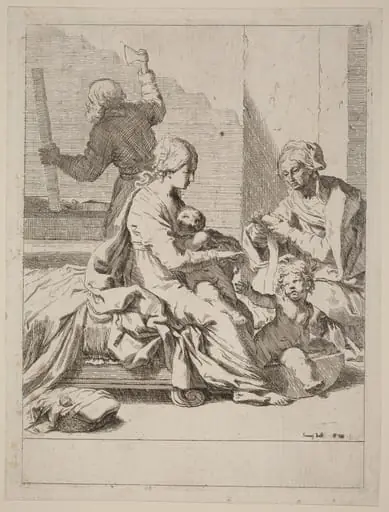 The Holy Family with Saint Elizabeth and Saint John the Baptist
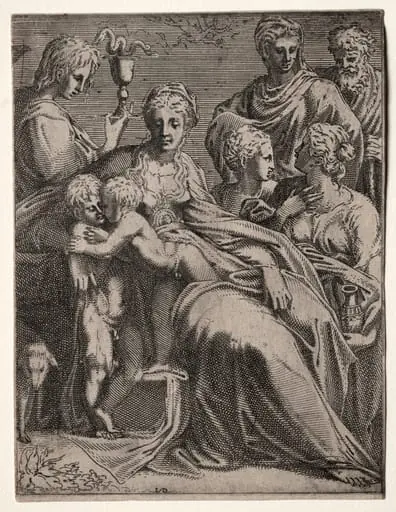 Sacred Conversation
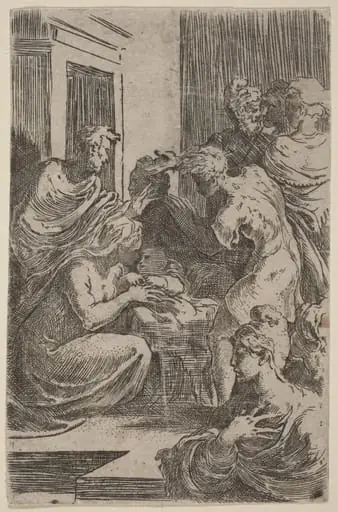 The Adoration of the Shepherds
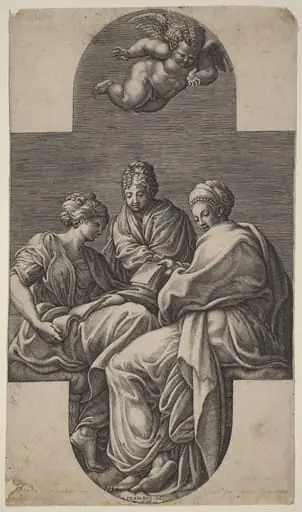 Three Muses and a Gesturing Putto
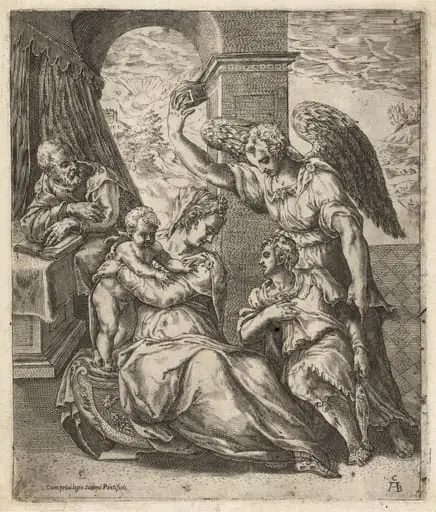 The Holy Family with Tobias and the Angel
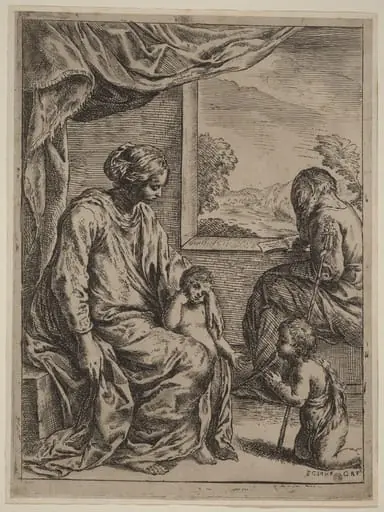 The Holy Family with Saint John the Baptist
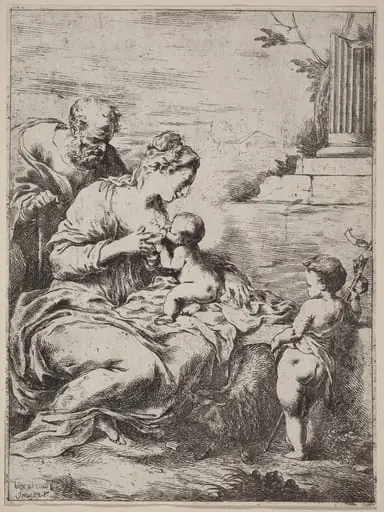 The Holy Family with Saint John
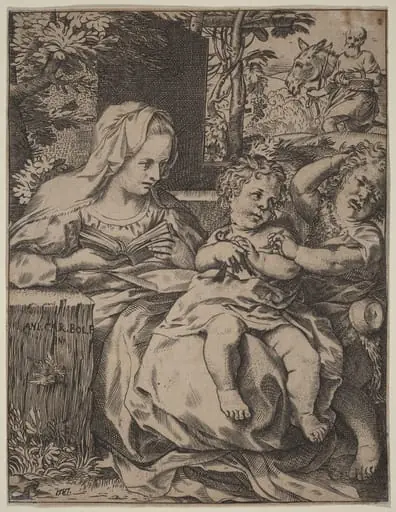 The Madonna of the Swallow
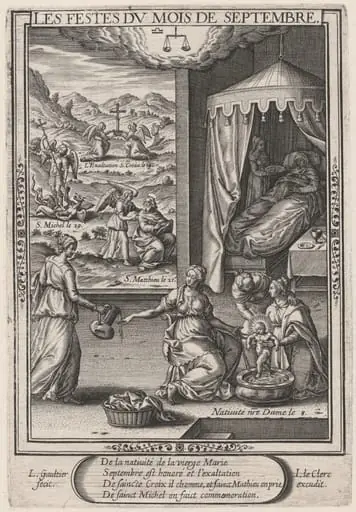 Les Festes du mois de Septembre (September: Birth of the Virgin)