Artwork
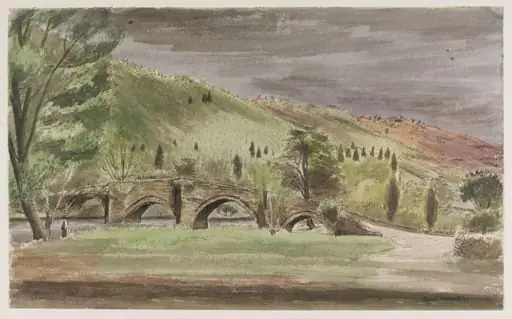
Pont Dol-y-moch and Pont dol Rhiw Gelen, over the River Goedel, Merionethshire
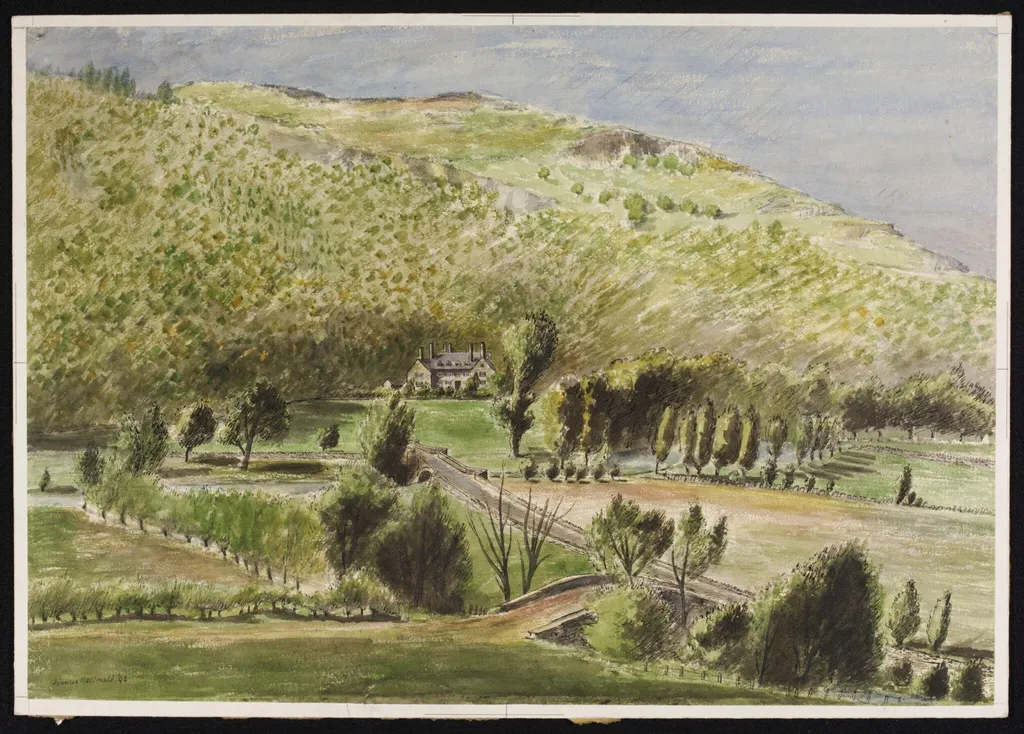
Pont Dol-y-moch and Pont dol Rhiw Gelen, over the River Goedel, Merionethshire is a watercolor work on paper by Frances Macdonald. It is held in the collection of the Victoria and Albert Museum.
About this work
Overview
The work is one of over 1,500 pieces commissioned by the Pilgrim Trust under the direction of Sir Kenneth Clark.
Created in 1942, this watercolour by Frances Macdonald captures two stone bridges crossing the River Goedel in Merionethshire, with a modest dwelling nestled against a sloping hillside. It was produced as part of the Recording Britain initiative, a wartime effort to visually archive rural landscapes and vernacular architecture at risk from conflict and modernization. The work is one of over 1,500 pieces commissioned by the Pilgrim Trust under the direction of Sir Kenneth Clark.
Subject & Meaning
The scene portrays a quiet, unassuming stretch of the Festiniog valley, where two modest bridges and a single farmhouse anchor the composition. These elements reflect everyday rural life in Wales, chosen not for grandeur but for their quiet endurance. The painting serves as a quiet testament to places deemed vulnerable during wartime, preserving a sense of place that might otherwise have been lost to destruction or change.
Technique & Style
Macdonald employed loose, fluid brushwork to convey the soft contours of the hills and the gentle flow of the river. Washes of pale green, muted brown, and cool blue create a light-filled atmosphere, while darker outlines define the trees and bridge structures without heavy detail. The technique emphasizes immediacy and observation, capturing the landscape’s tranquility through restrained, spontaneous strokes rather than polished finish.
History & Provenance
The watercolour was produced during the Recording Britain project (1940–1943), which commissioned artists to document at-risk sites across the country. It entered the collection of the Victoria and Albert Museum as part of this initiative, where it remains today. The project’s records confirm Macdonald’s participation and the work’s completion date, situating it within a broader national effort to preserve visual heritage during wartime.
Context
During the early 1940s, Britain faced the dual threats of aerial bombardment and accelerating industrial change. The Recording Britain project emerged as a cultural response, aiming to safeguard images of traditional landscapes and architecture before they vanished. Artists like Macdonald were sent to remote areas, often working in situ, to record scenes that embodied a sense of continuity and local identity.
Legacy
The Recording Britain collection endures as a significant archive of mid-20th-century British rural life. Macdonald’s contribution, though modest in scale, exemplifies the project’s quiet dedication to observation over spectacle. Today, her watercolour offers insight into how artists responded to national anxiety through attentive, unembellished depictions of ordinary places.
Artist & collection
Artist
Frances Macdonald MacNair (24 August 1873 – 12 December 1921) was a Scottish artist whose design work was a prominent feature of the Modern Style (British Art Nouveau style) during the 1890s.

 Bowerchalke
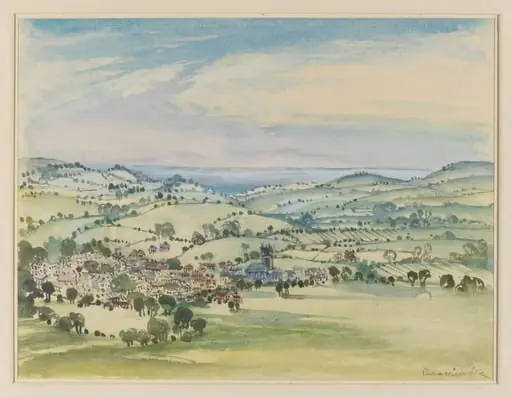 Beaminster
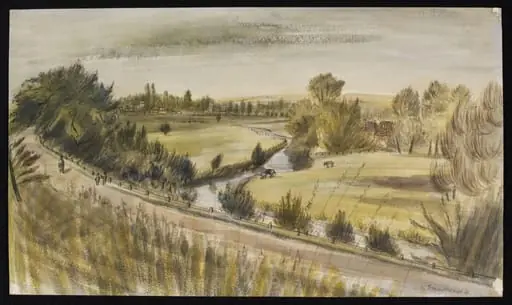
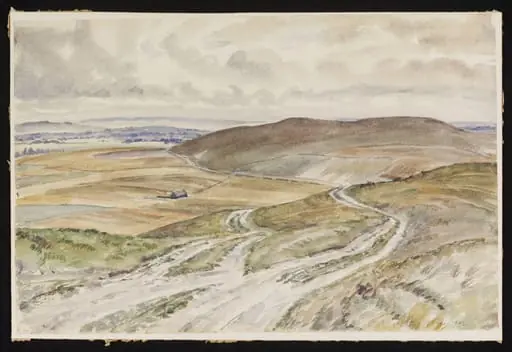 View from the Wansdyke in Stanton St. Bernard
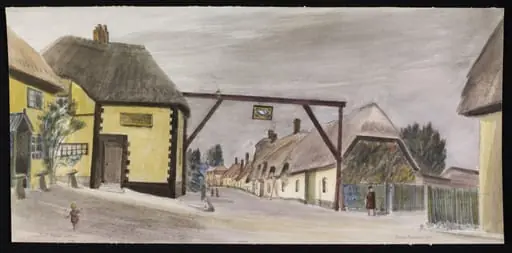
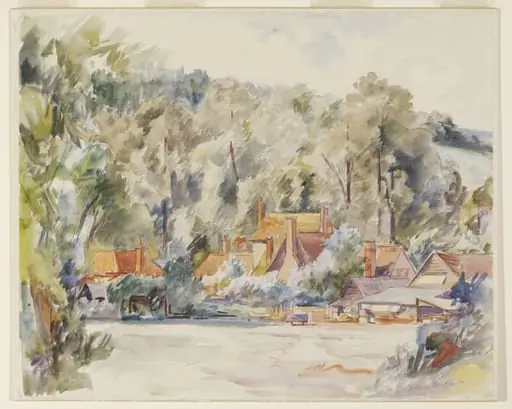 The Chequers Inn, Fingest
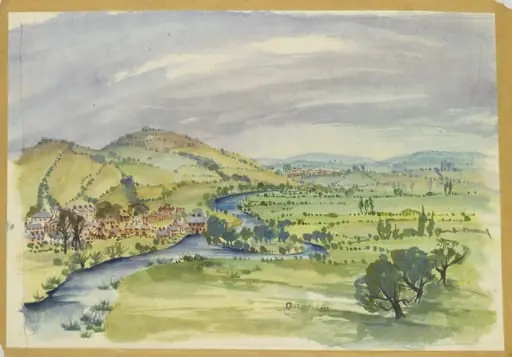 Durweston
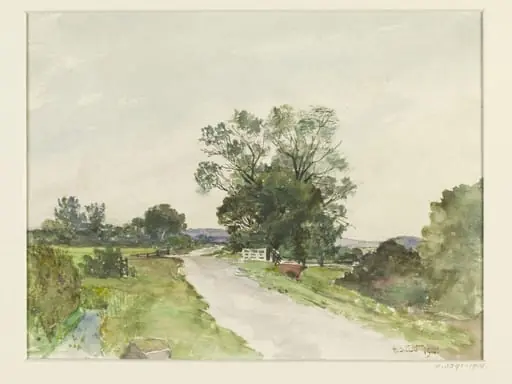 Landscape with road in flat country
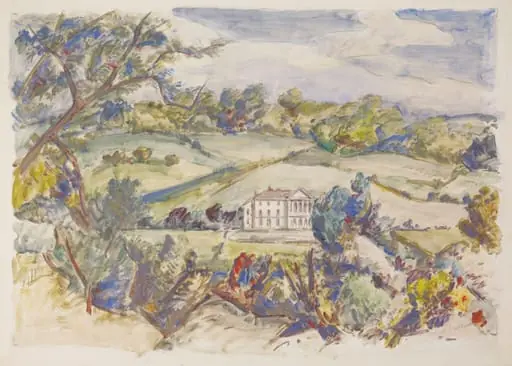 Dashwood House from West Wycombe Hill
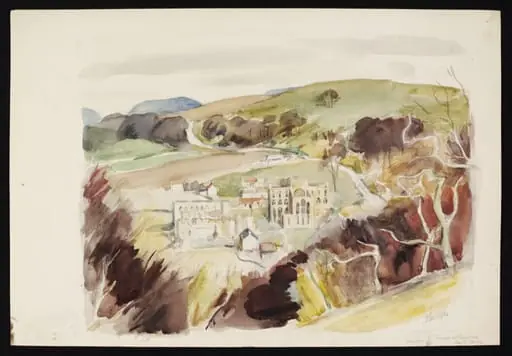 View from the Terrace, Rievaulx
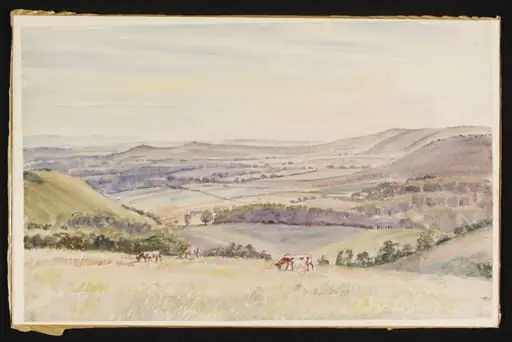 View over Pewsey Vale from Martinsell
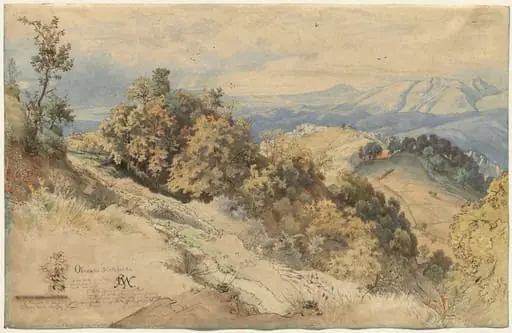 Sun and Rain in the Serpentara near Olevano
 Pont dol Rhiw Gelen (Bridge over the Goedel designed by Inigo Jones), Merionethshire