Artwork
Saint Lawrence
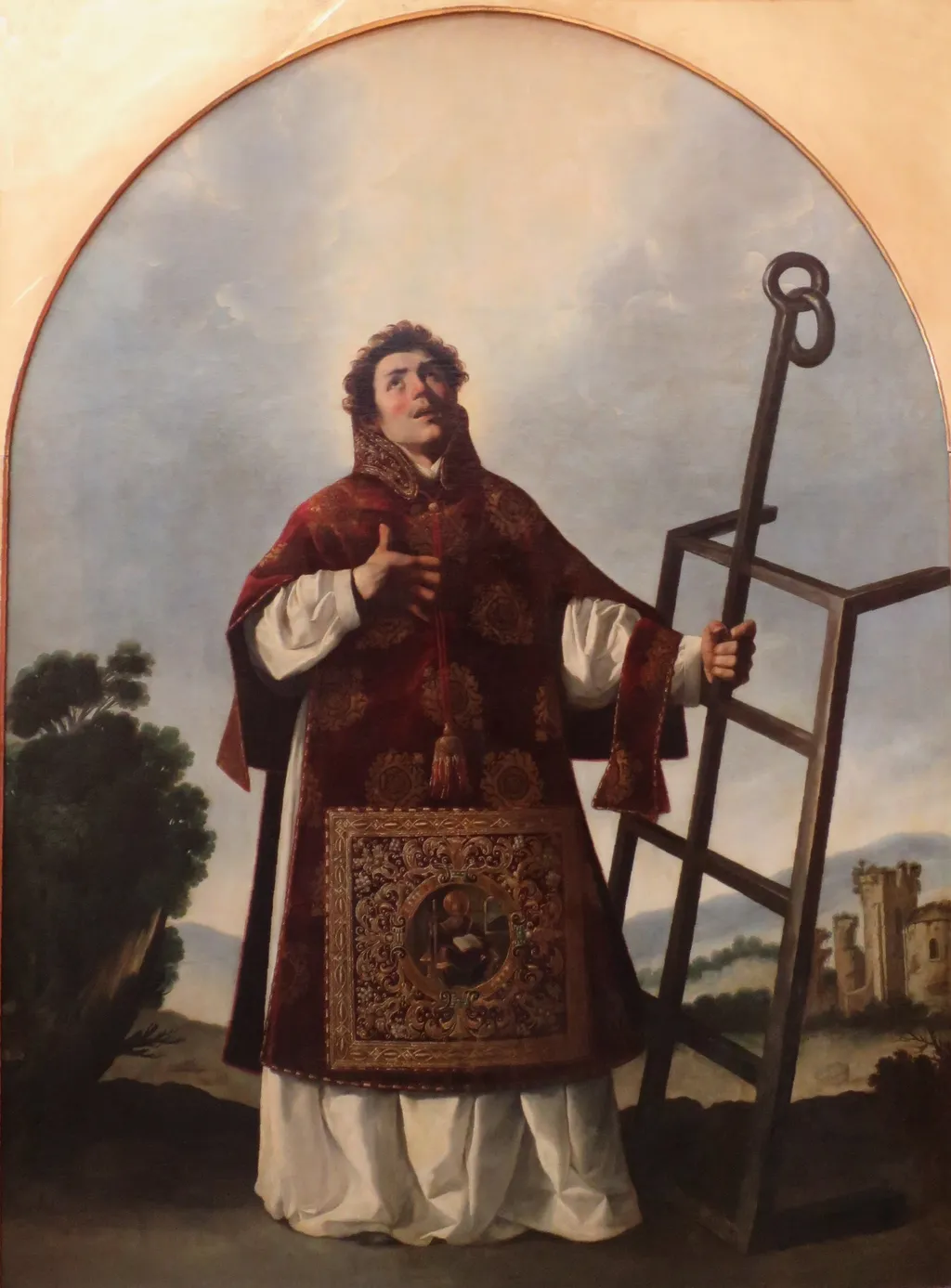
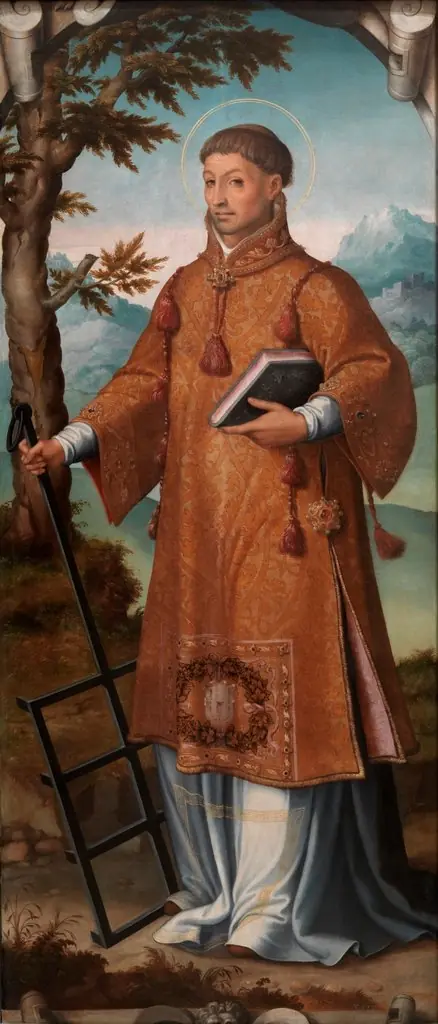
Saint Lawrence is an oil painting by the Early Baroque Italian artist Francisco de Zurbarán. It dates from 1636 and is held in the collection of the Hermitage Museum.
About this work
Overview
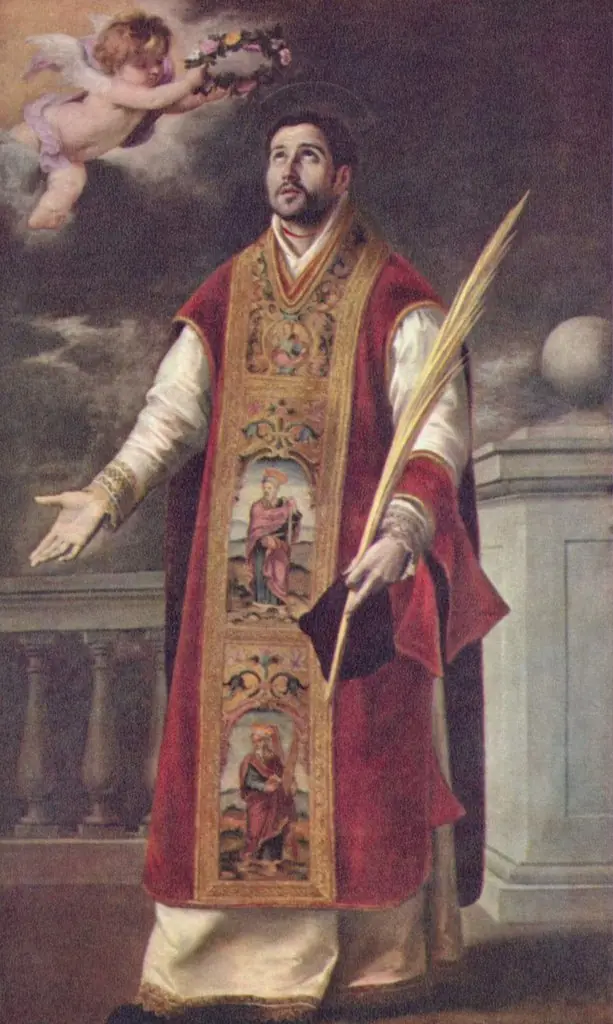
Francisco de Zurbarán painted Saint Lawrence between 1636 and 1639 using oil on canvas. The work depicts the 3rd‑century deacon in a richly embroidered red dalmatic, holding the gridiron that became his emblem of martyrdom. Dark, muted tones surround the figure, while the gold‑threaded details of his vestments catch the light, creating a solemn, contemplative presence.
Subject & Meaning
The saint is presented with the instrument of his death—a gridiron—signifying his willingness to suffer for faith. His dalmatic bears an embroidered image of Saint Paul, linking Lawrence’s missionary role to Paul’s outreach to the Gentiles. A maniple drapes his left wrist, recalling the chains placed on Christ during his arrest, reinforcing themes of sacrifice and redemption.
Technique & Style
Zurbarán employs a restrained chiaroscuro, allowing a narrow beam of light to illuminate Lawrence’s face and the gold embroidery while the background recedes into shadow. The painter’s handling of oil creates a smooth, almost tactile surface on the fabric, contrasting with the metallic sheen of the gridiron and the muted landscape beyond.
History & Provenance
The canvas entered the Hermitage Museum in St. Petersburg during the 19th century, where it remains on display. Its original commission is uncertain; scholars suggest either Cardinal Gabriele Paleotti, the archbishop of Bologna, or the Monastery of San José may have been the patron.
Context
Set against a distant landscape featuring ruined pagan architecture and verdant trees, the background alludes to the decline of Roman paganism and the promise of Christian resurrection. Such symbolic scenery was common in Counter‑Reformation art, reinforcing the triumph of the Church over antiquity.
Artist & collection
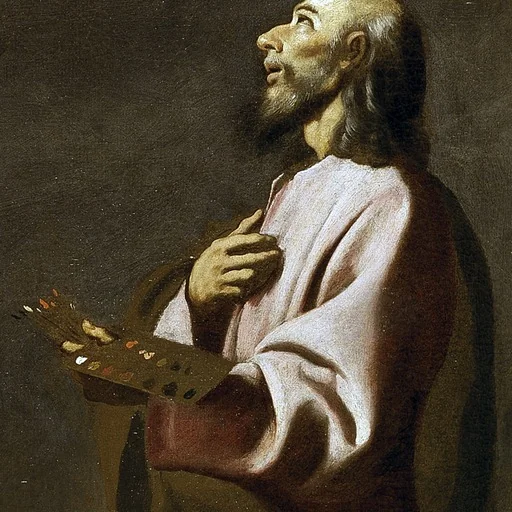
Artist
Francisco de Zurbarán was a Spanish Baroque painter. He is known primarily for his religious paintings depicting monks, nuns, and martyrs, and for his still-lifes. Zurbarán gained the nickname "Spanish Caravaggio",…