Artwork
Saint Lawrence
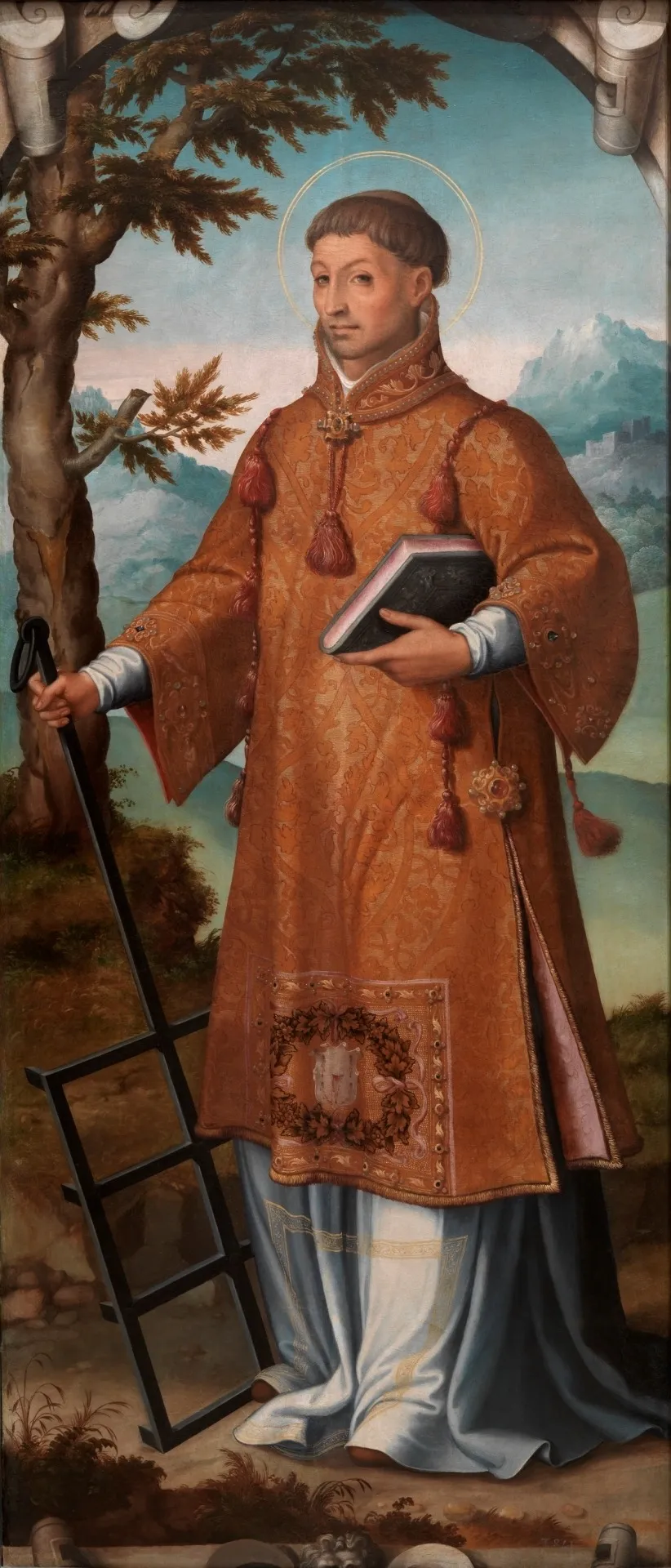
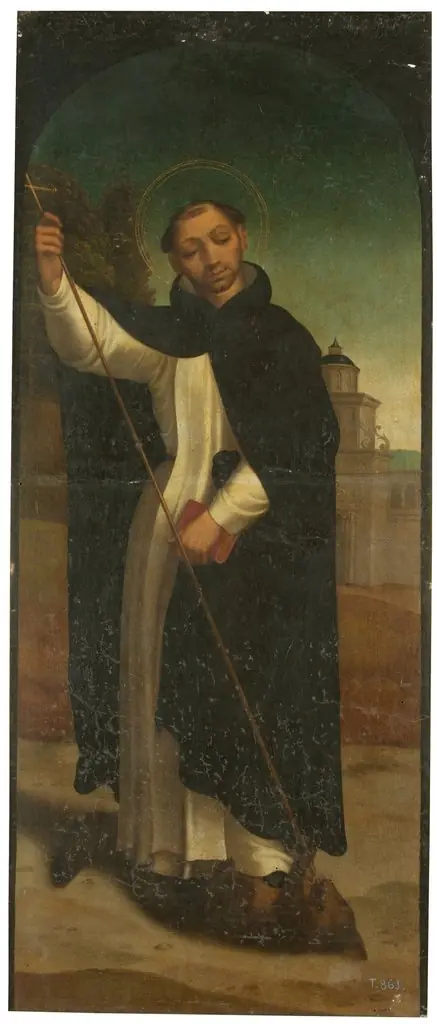
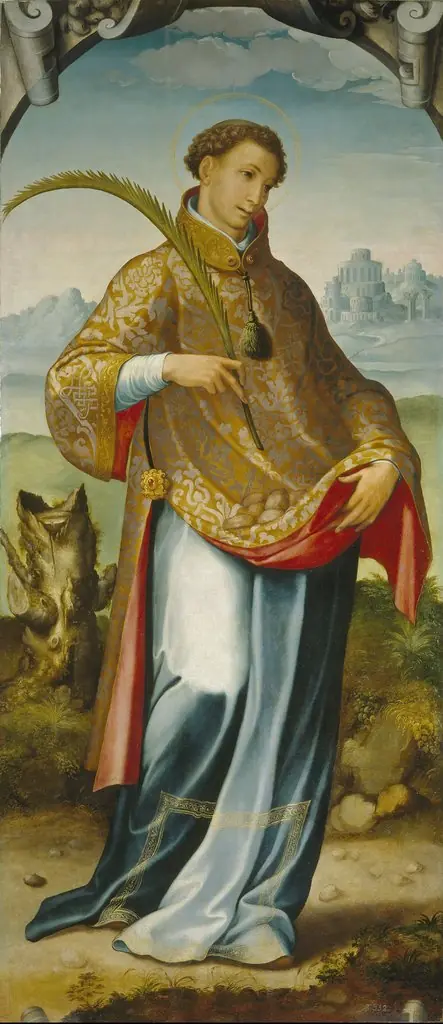
Saint Lawrence is an oil painting by the Mannerist artist Juan Correa de Vivar. It dates from 1559 and is held in the collection of the Museo del Prado.
About this work
Overview
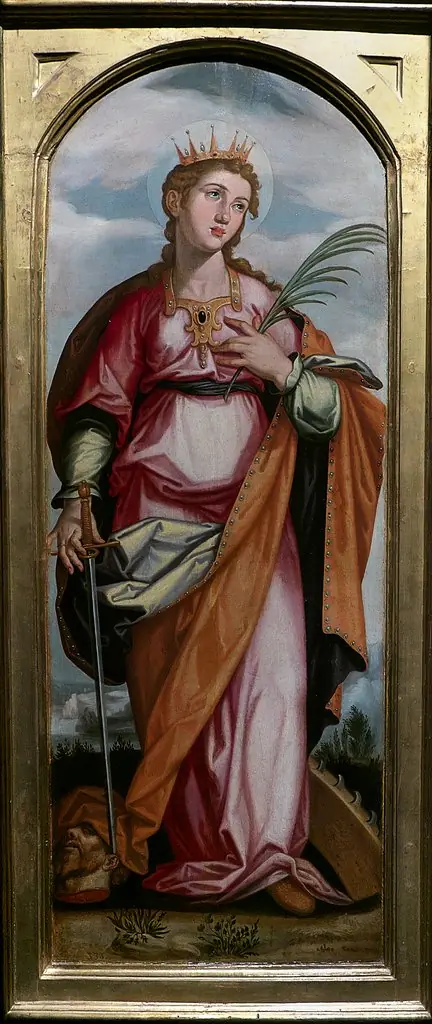
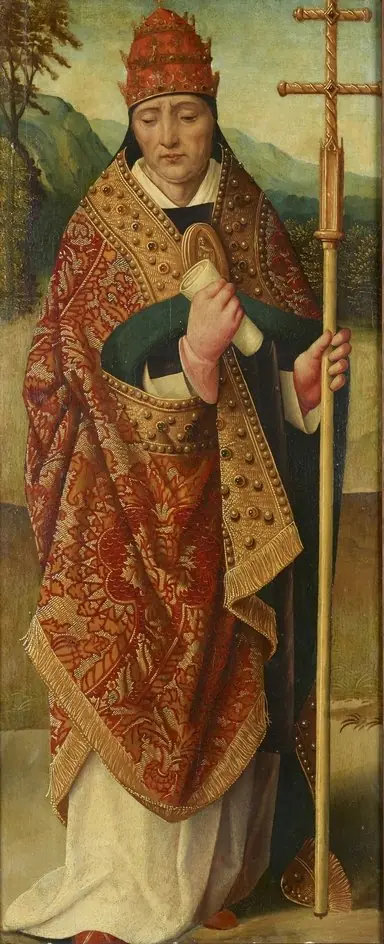
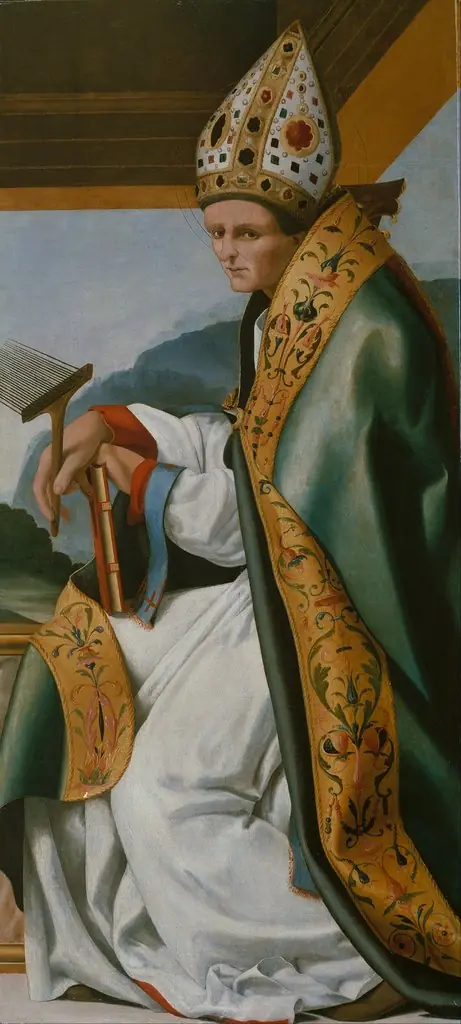
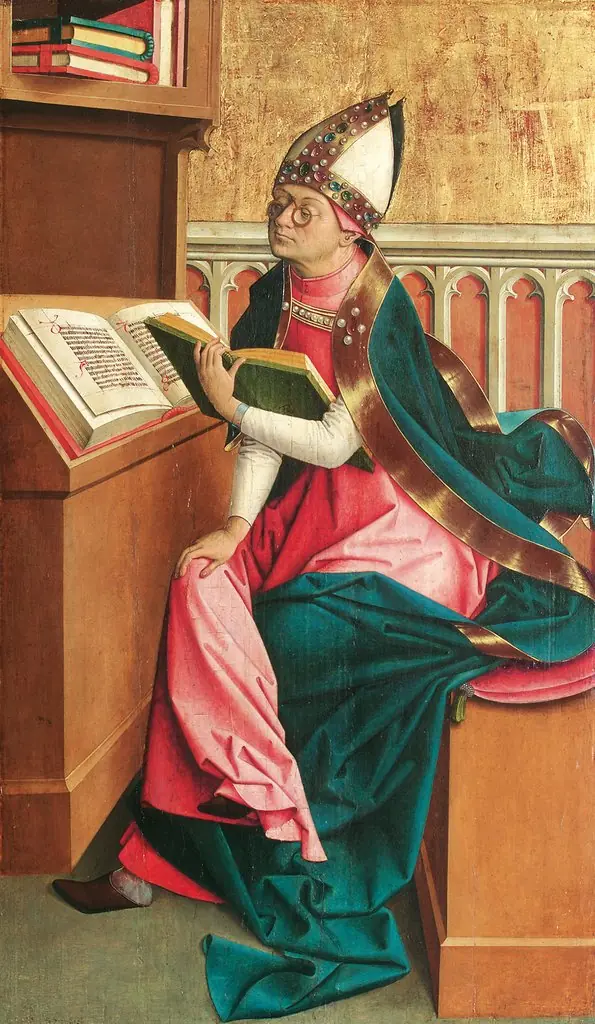
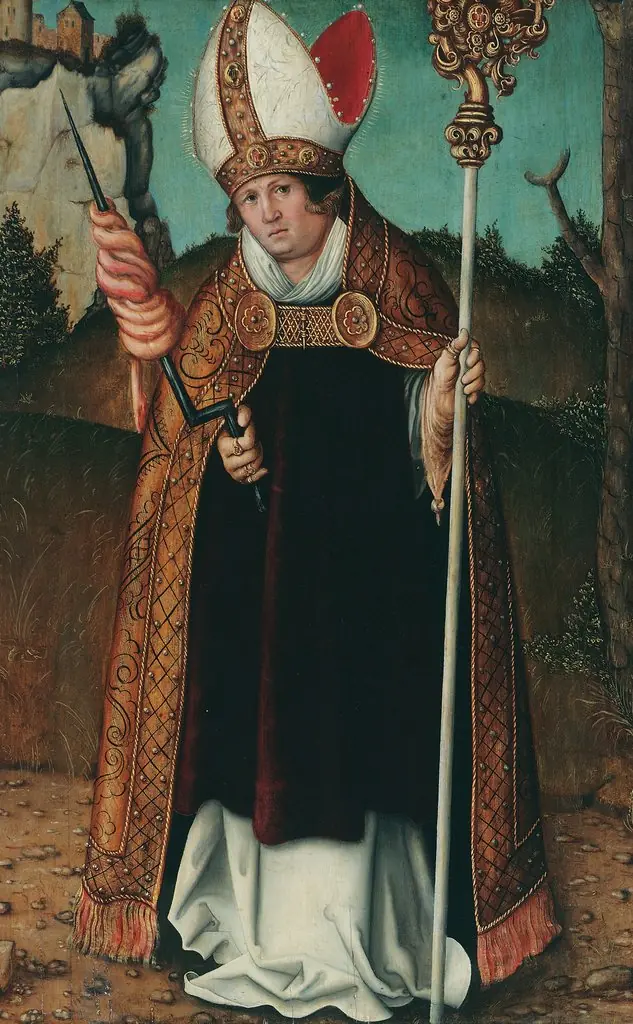
Juan Correa de Vivar’s oil on canvas, dated 1559, presents a solitary saint in a contemplative pose. The figure is rendered in a brown robe edged with gold, holding a book and a staff, while a golden halo crowns his head. A modest coat of arms is embroidered on the robe’s pocket. The work belongs to the collection of the Museo del Prado.
Subject & Meaning
The painting identifies the saint as Lawrence of Rome, a 3rd‑century martyr known for his charitable deeds. The book he carries alludes to his role as a deacon, and the staff symbolizes his ecclesiastical authority. The inclusion of a personal coat of arms suggests a patron’s involvement, linking the sacred narrative to contemporary devotion.
Technique & Style
Correa de Vivar employs a subtle chiaroscuro, allowing light to model the saint’s face and drapery, creating a sense of volume. The golden embroidery catches highlights, contrasting with the deep brown of the robe. The background recedes into muted blues and greens, with a solitary tree providing a quiet landscape that frames the figure without distracting from it.
History & Provenance
Executed in the mid‑16th century, the painting entered the Spanish royal collections before being transferred to the Museo del Prado, where it remains on display. Documentation traces its ownership through the Habsburg court, reflecting the work’s continued relevance to Spanish religious patronage.
Context
Created during the Spanish Renaissance, the work reflects the period’s emphasis on clear devotional imagery and the integration of personal heraldry. Correa de Vivar, active in Toledo, blended Italianate chiaroscuro with local iconographic conventions, catering to both ecclesiastical and lay audiences seeking visual reinforcement of saintly virtues.
Artist & collection