Artwork
Santa Inés
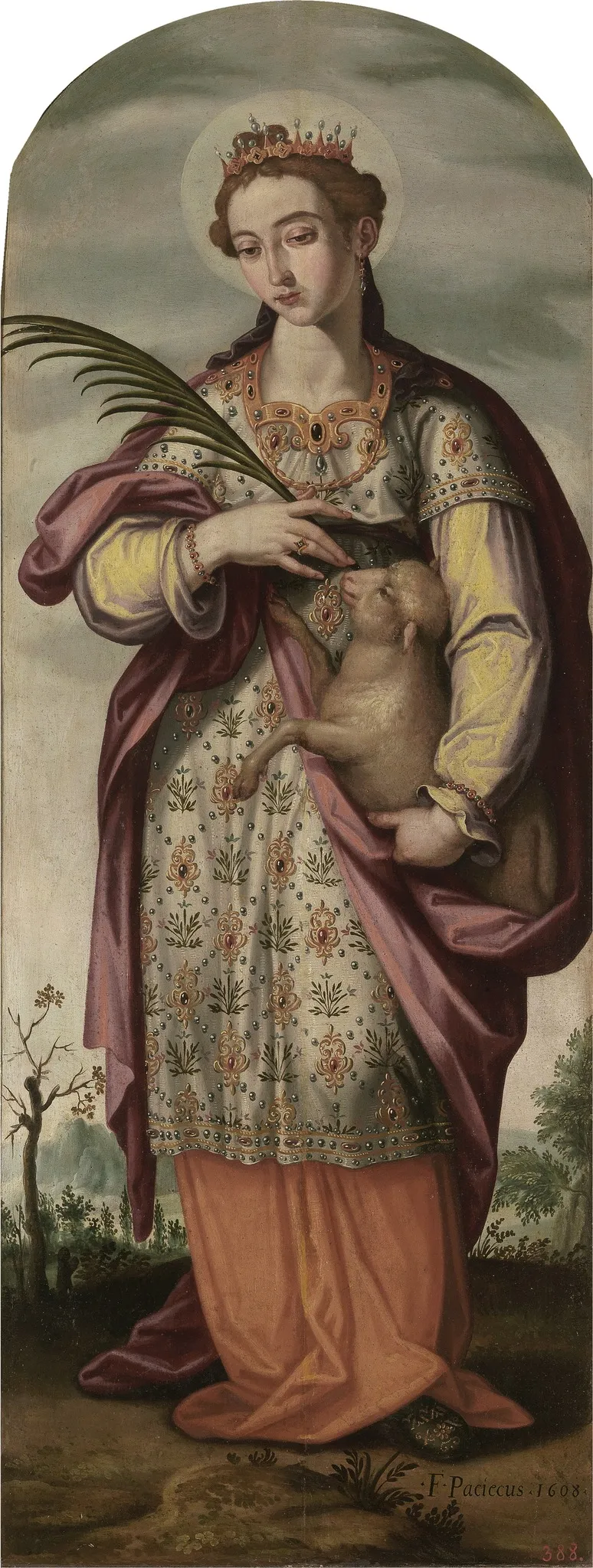
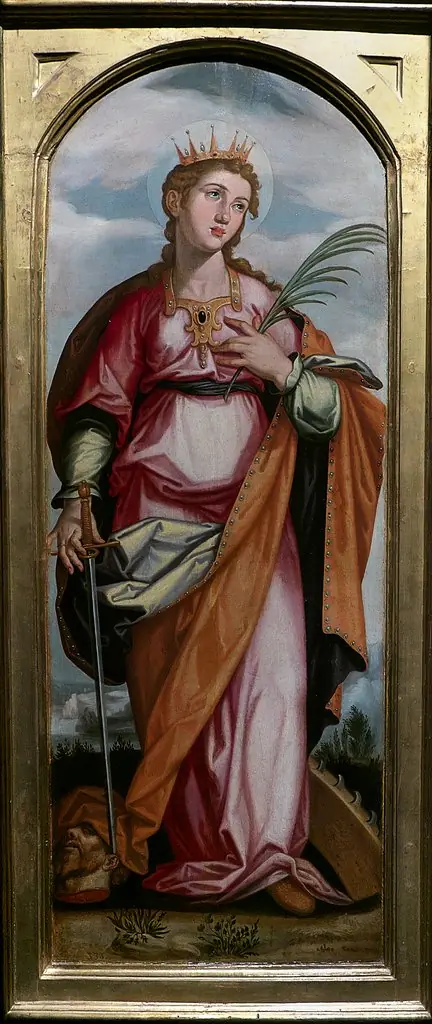
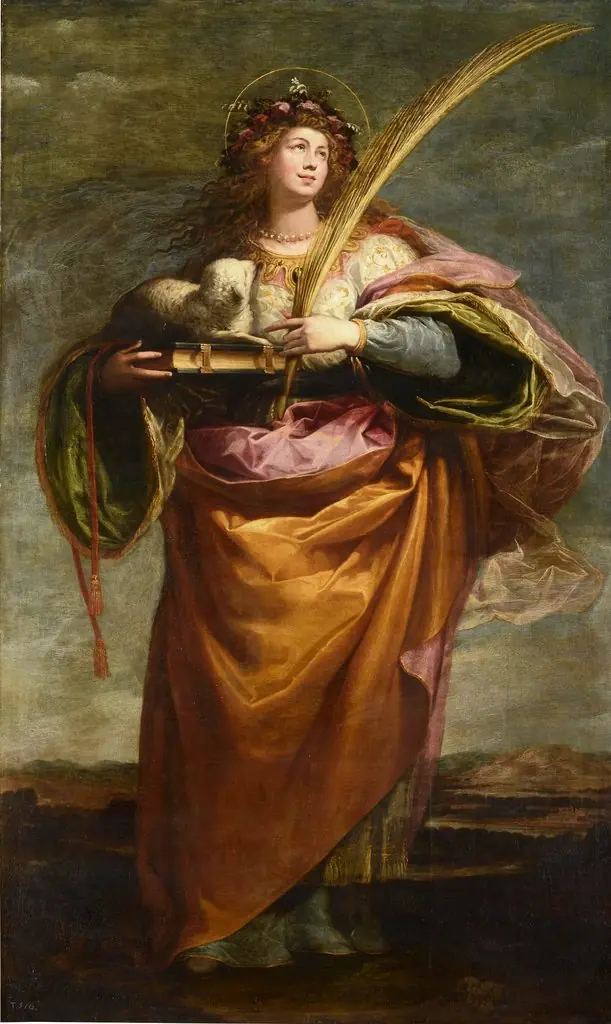
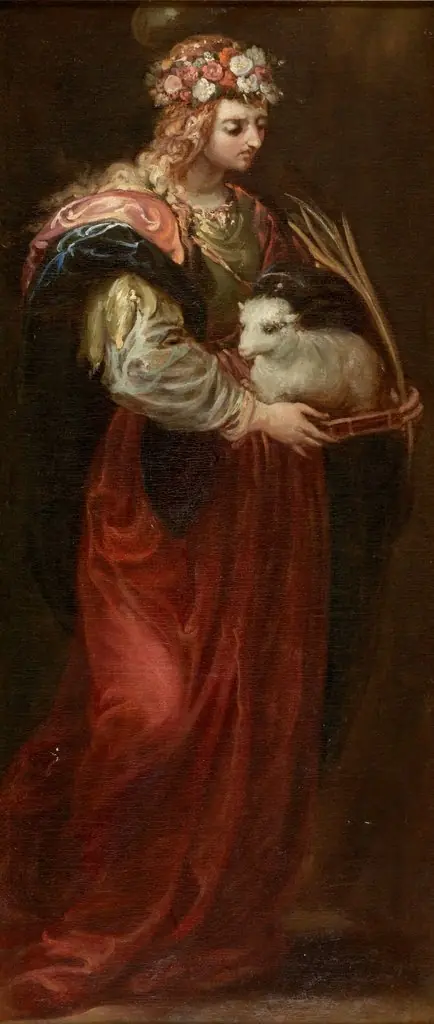
Santa Inés is an oil painting by the Early Baroque Italian artist Francisco Pacheco. It dates from 1608 and is held in the collection of the Museo del Prado.
About this work
She wears a fancy dress with gold embroidery and a red skirt, plus a yellow cloak.
A woman stands holding a small lamb in her arms. She wears a fancy dress with gold embroidery and a red skirt, plus a yellow cloak. Her hair is covered by a crown of leaves, and she has a soft, calm face. The background looks like a garden with trees and bushes.
The lamb she holds is often a symbol in religious art. The artist signed the painting with the year 1608.
Look up chiaroscuro to see how light and shadow create depth in paintings.
Overview
Created in 1608 by Spanish painter Francisco Pacheco, this oil on canvas presents a devotional scene centered on a young woman cradling a lamb. The figure is adorned in a richly embroidered gold bodice, a red skirt, and a yellow mantle, while a leafy crown rests on her head. A tranquil garden with trees forms the backdrop, lending a serene atmosphere to the composition.
Subject & Meaning
The central figure is identified as Saint Agnes, a virgin martyr traditionally associated with purity. The lamb she holds functions as an emblem of innocence and Christ’s sacrificial role, reinforcing the saint’s connection to divine grace. Her composed expression and gentle posture convey a contemplative devotion, inviting viewers to reflect on themes of chastity and spiritual steadfastness.
Technique & Style
Pacheco employs a restrained early Baroque idiom, drawing on Italian influences evident in his handling of light and shadow. Subtle chiaroscuro models the forms, giving volume to the drapery and the animal. The delicate brushwork in the foliage and the luminous rendering of the gold embroidery demonstrate a careful balance between realism and idealized elegance.
History & Provenance
The painting entered the Spanish national collection and is now housed in the Museo del Prado. Signed and dated by the artist, the work reflects Pacheco’s role as a teacher and a conduit of Counter‑Reformation iconography. Its presence in the Prado underscores its importance within the broader narrative of early 17th‑century Spanish religious art.
Artist & collection
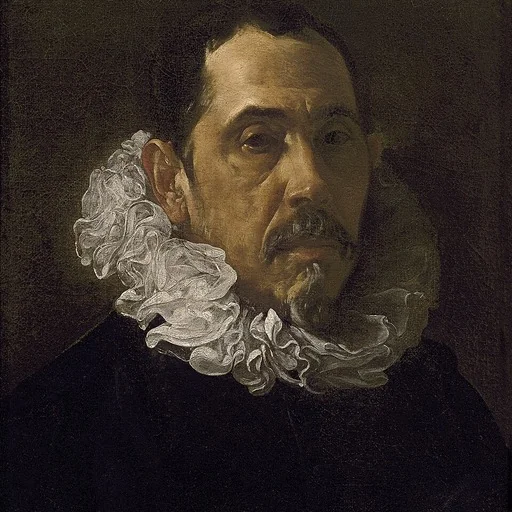
Artist
Francisco Pérez del Río (bap. 3 November 1564 – 27 November 1644), known by his pseudonym Francisco Pacheco, was a Spanish painter, best known as the teacher of Alonso Cano and Diego Velázquez, as well as the latter's…