Artwork
San Juan Evangelista
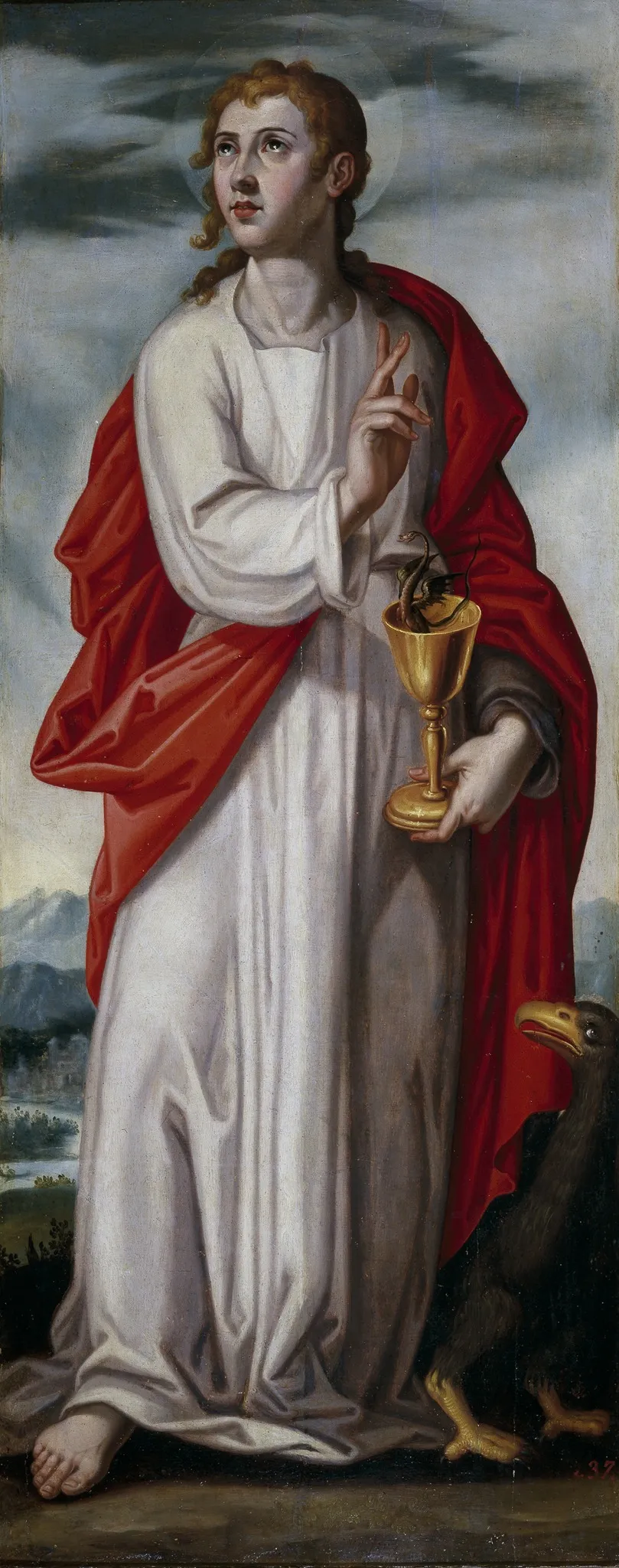
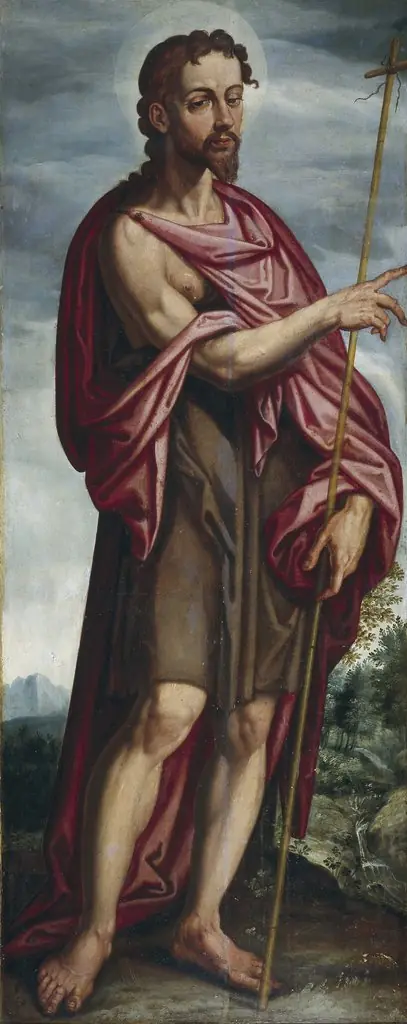
San Juan Evangelista is an oil painting by the Early Baroque Italian artist Francisco Pacheco. It dates from 1608 and is held in the collection of the Museo del Prado.
About this work
Overview
San Juan Evangelista, painted by Francisco Pacheco in 1608, is a religious oil painting executed in the early Baroque Italian style. It is part of the collection at Madrid’s Museo del Prado.
Subject & Meaning
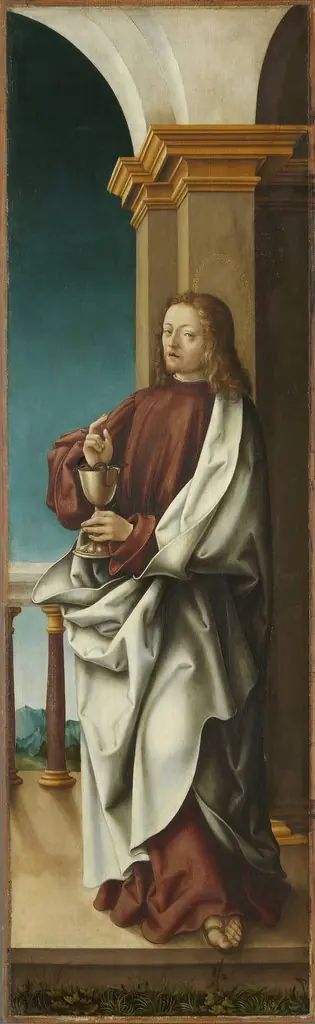
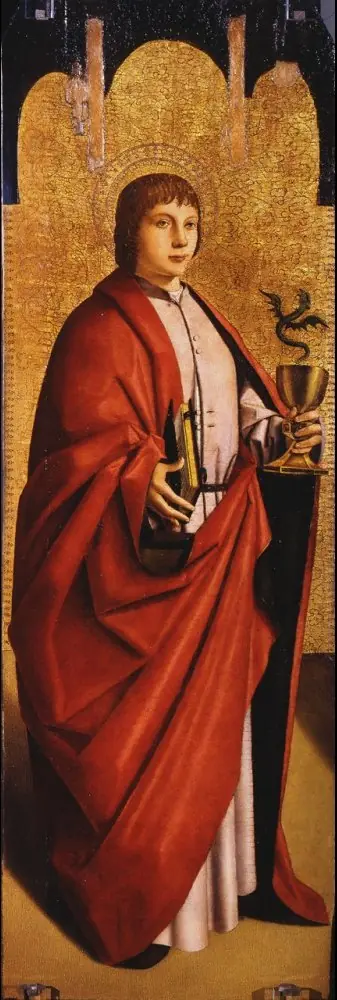
The painting portrays John the Evangelist, identifiable by the snake-encircled golden chalice he holds, a symbol central to his Christian iconography. His attire consists of a white tunic under a red cloak, with his hair tied back. The figure’s right hand is raised, pointing upwards.
Technique & Style
Pacheco utilized smooth brushstrokes to achieve rich, textured representations of the fabrics in the subject’s robes, characteristic of the early Baroque style.
History & Provenance
Created in 1608, the work is now housed in the Museo del Prado, Madrid. Pacheco, a notable painter and theorist, also taught artists like Diego Velázquez and authored the posthumously published *Art of Painting*.
Context
As a product of the early Baroque period, *San Juan Evangelista* reflects Pacheco’s adherence to Italian Baroque influences while contributing to 17th-century Spanish painting practices, as later detailed in his guide *Art of Painting*.
Legacy
While the painting’s direct influence is not broadly highlighted, it represents Pacheco’s artistic output and his broader impact on Spanish art through his teachings and writings.
Artist & collection
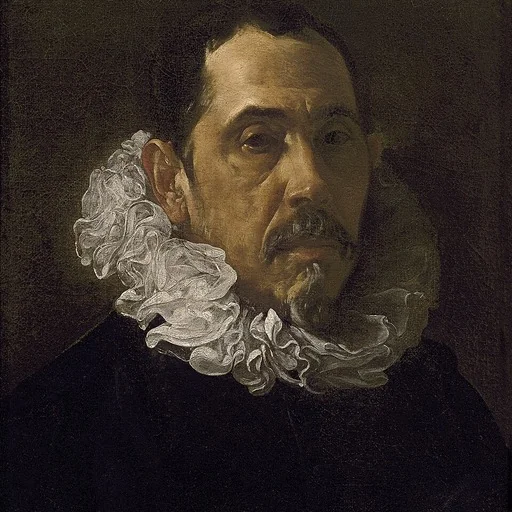
Artist
Francisco Pérez del Río (bap. 3 November 1564 – 27 November 1644), known by his pseudonym Francisco Pacheco, was a Spanish painter, best known as the teacher of Alonso Cano and Diego Velázquez, as well as the latter's…