Artwork
The Barbican
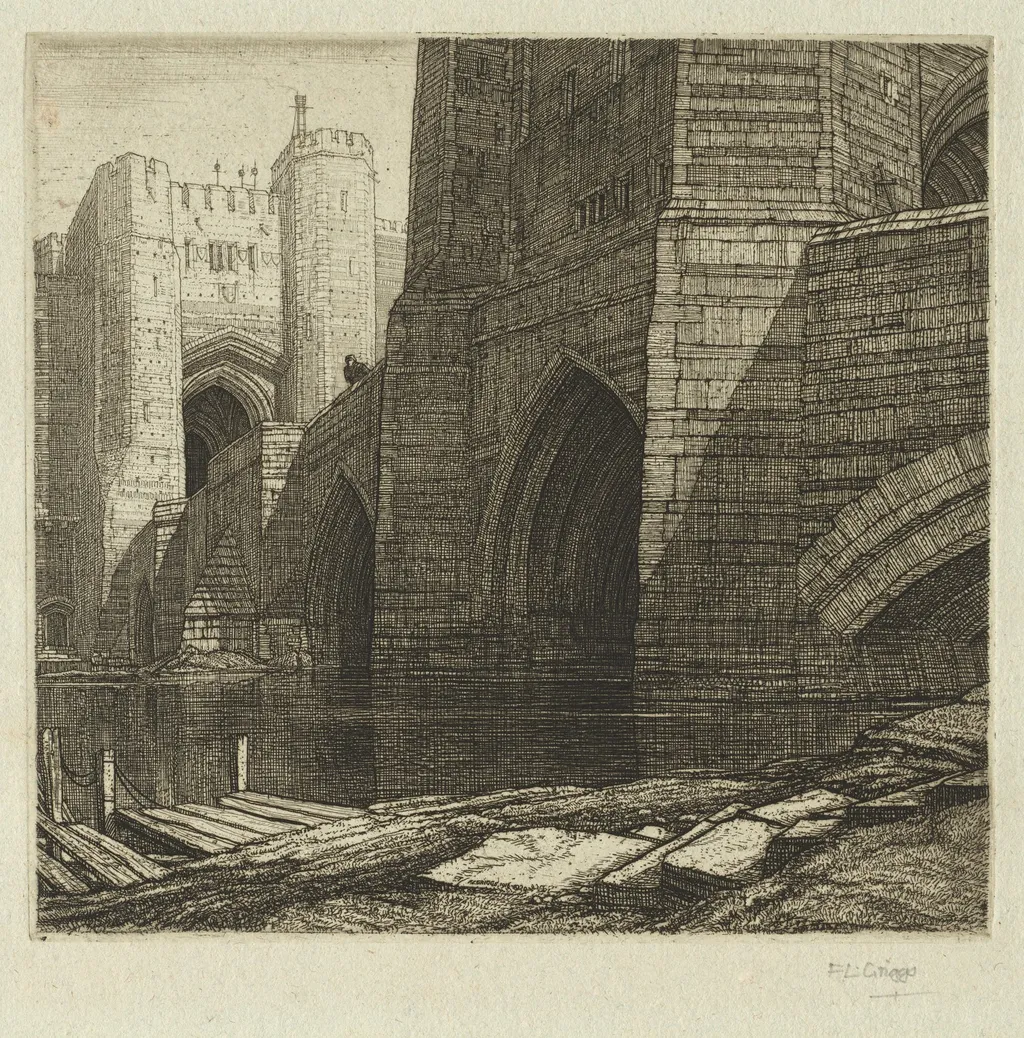
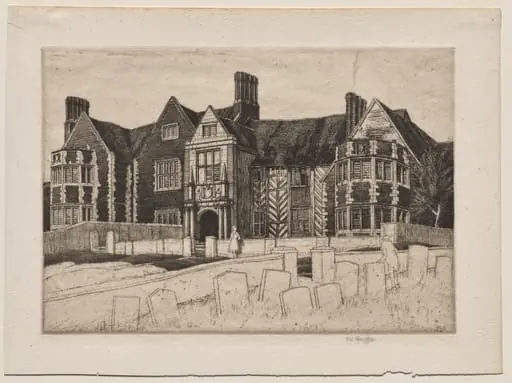
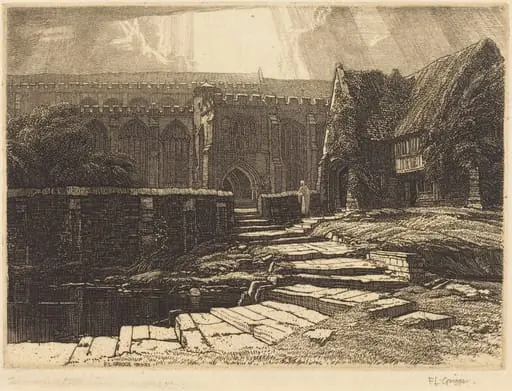
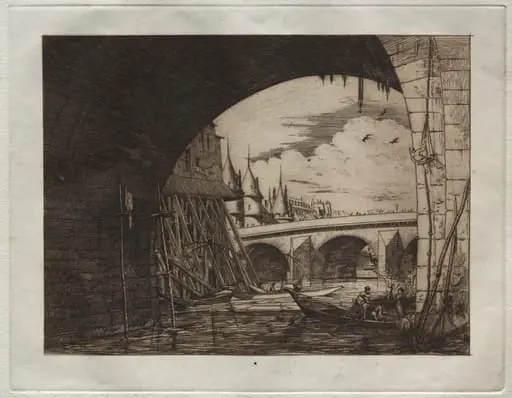
The Barbican is a print by Frederick Landseer Maur Griggs. It dates from 1920 and is held in the collection of the Cleveland Museum of Art.
About this work
Overview
The Barbican is an etching created by Frederick Landseer Maur Griggs in 1920, currently part of The Cleveland Museum of Art's collection.
Subject & Meaning
Depicting a tall, narrow building with a clock tower and arched doorway, the work contrasts a sunlit exterior with a dark, shadowy tunnel, evoking a sense of mystery and depth. A small river with boats and adjacent grassy bank add contextual layers.
Technique & Style
Griggs employed sharp lines and pronounced shadows to convey the building's solidity and the spatial tension between light and darkness, characteristic of his detailed approach to architectural subjects.
History & Provenance
Created in 1920, The Barbican is now held in the permanent collection of The Cleveland Museum of Art.
Context
As an etching from the early 20th century, The Barbican reflects Griggs' interest in capturing urban and architectural scenes through precise, expressive printmaking techniques.
Legacy
While specific legacy details of The Barbican are not widely highlighted, it contributes to the broader appreciation of Griggs' architectural etchings within The Cleveland Museum of Art's print collection.
Own this work as a print
Artist & collection
Artist
Frederick Landseer Maur Griggs
Frederick Landseer Maur Griggs was an English etcher, architectural draughtsman, illustrator, and early conservationist, associated with the late flowering of the Arts and Crafts movement in the Cotswolds, centred in Chipping Campden.

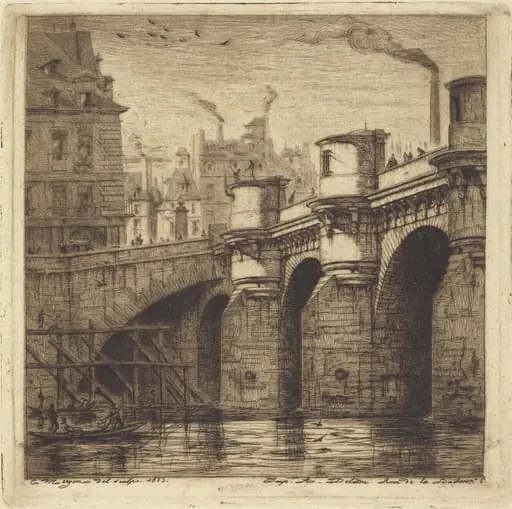 Le Pont Neuf, Paris
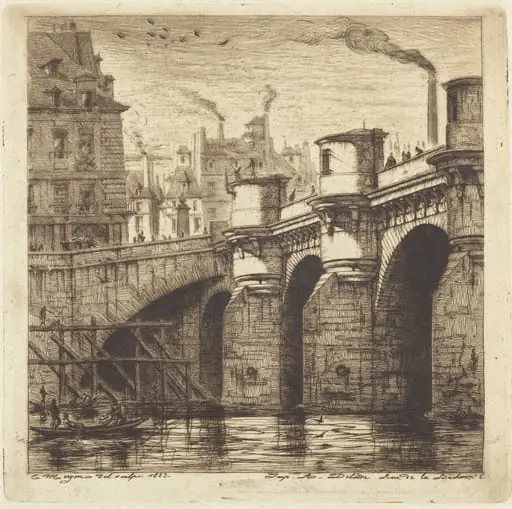 Le Pont-Neuf, Paris
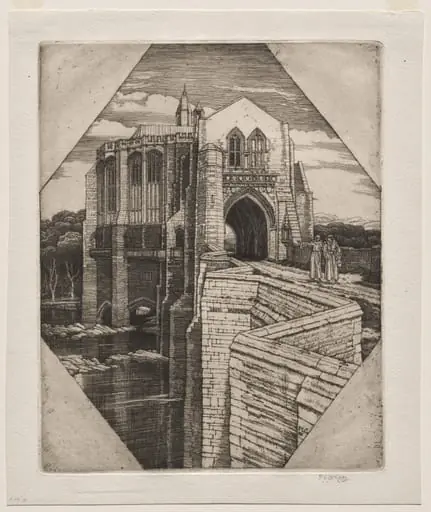 St. Botolph's Bridge No. 2
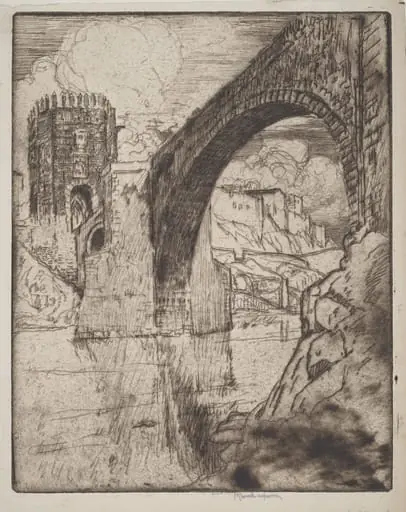 Arch of Bridge of Alcantara
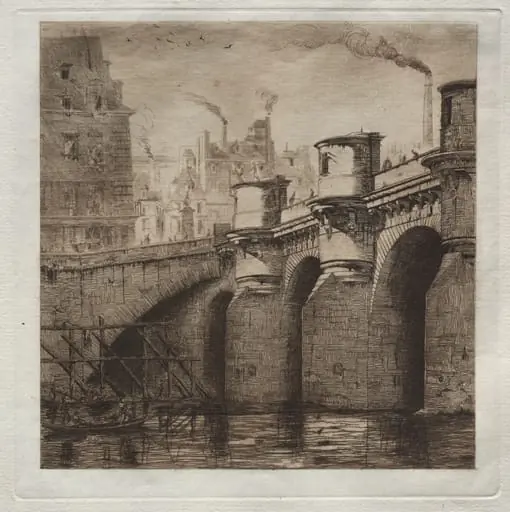 Le Pont Neuf
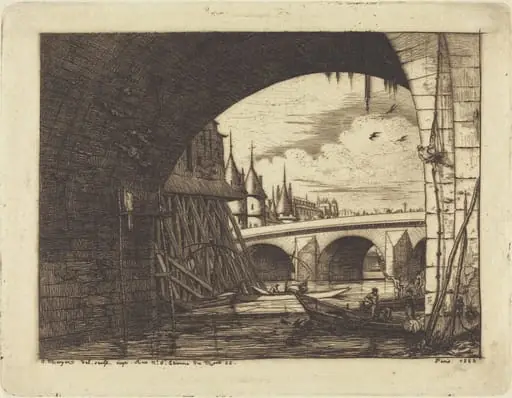 L'arche du Pont Notre-Dame, Paris (An Arch of the Notre-Dame Bridge, Paris)
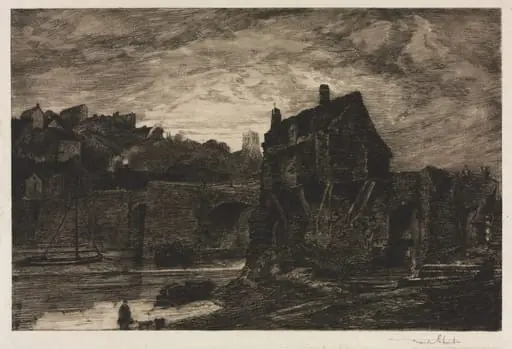 Bridgenorth
 Sellenger
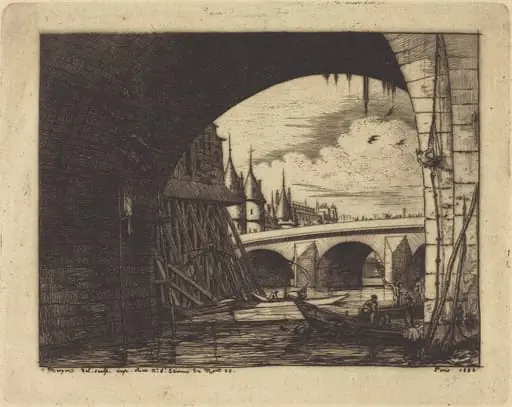 L'arche du Pont Notre-Dame, Paris (An Arch of the Notre-Dame Bridge, Paris)
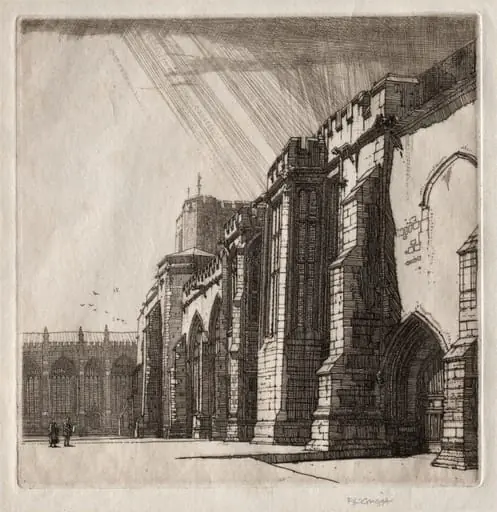 The Palace
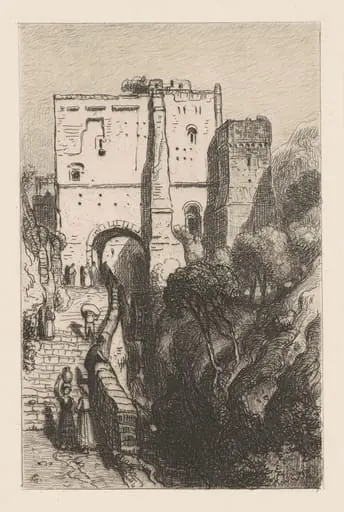 Untitled
 L'Arch du Pont Notre Dame