Artwork
The Crucifixion
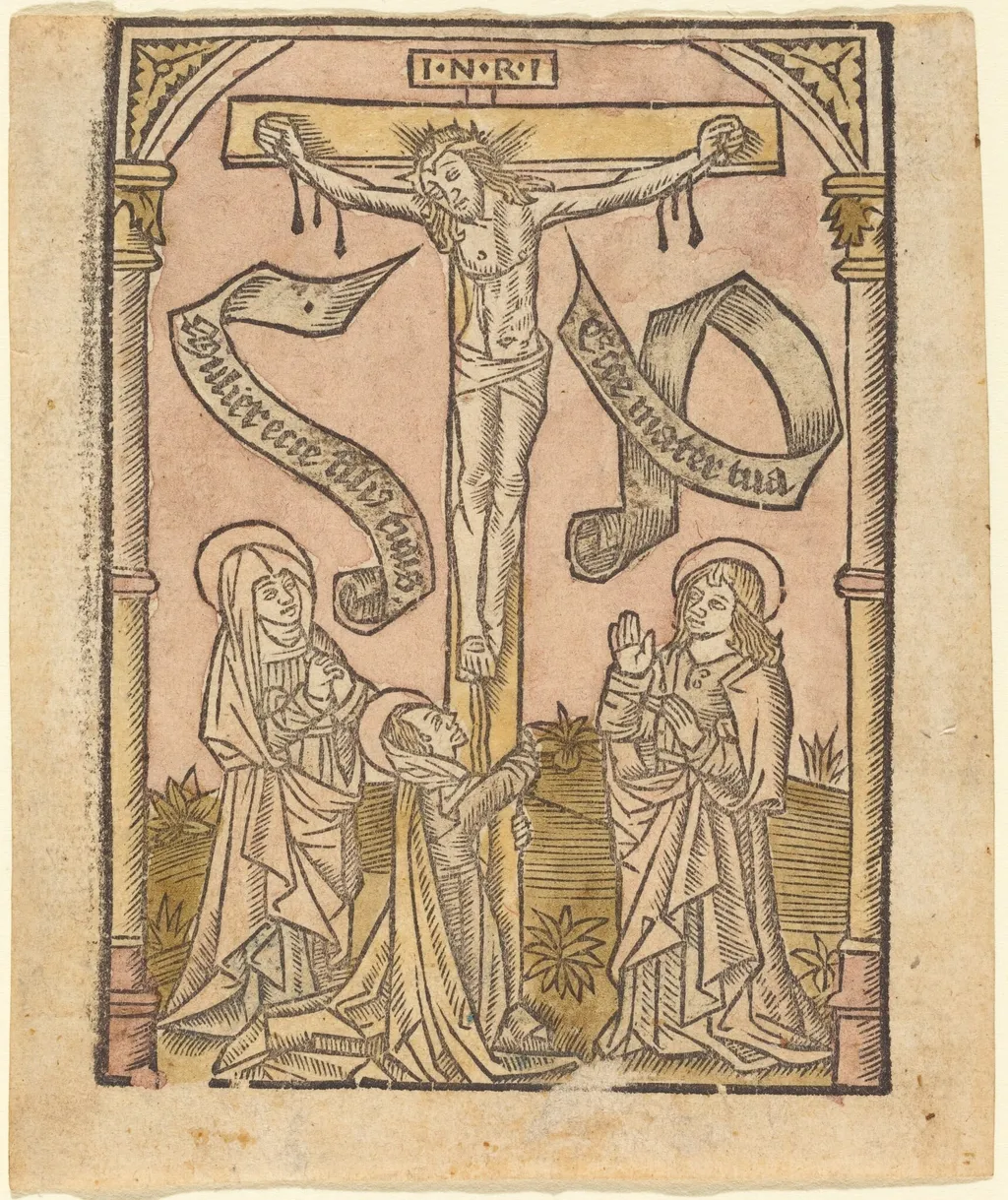
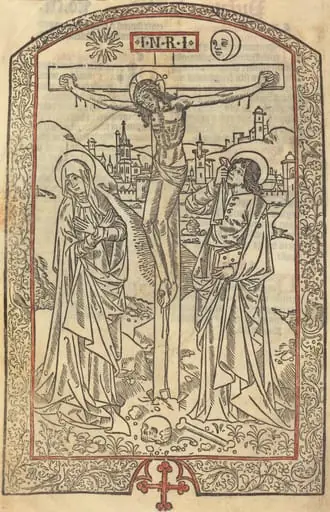
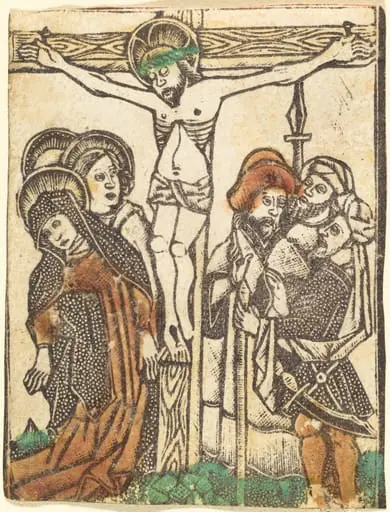
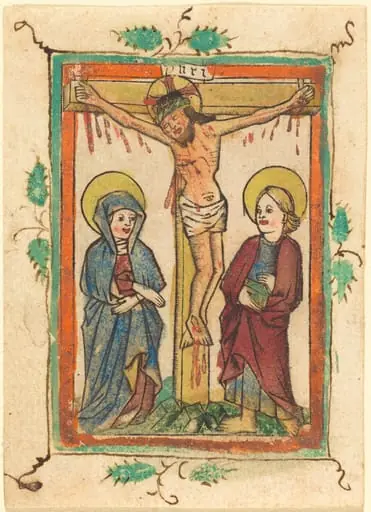
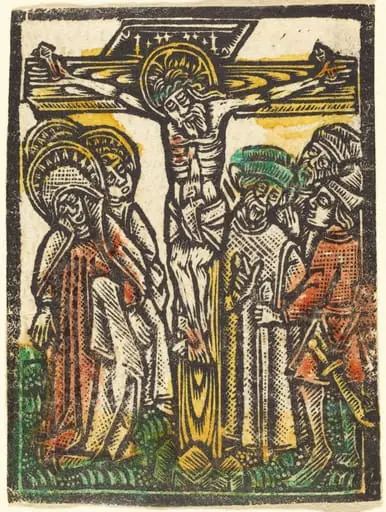
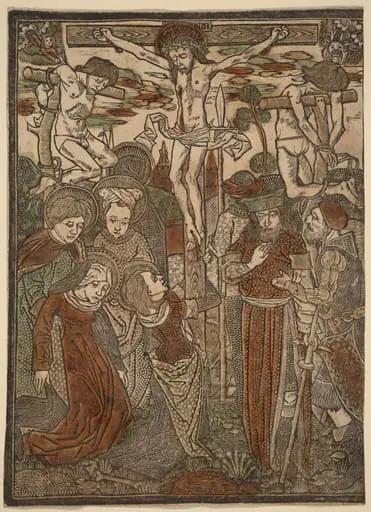
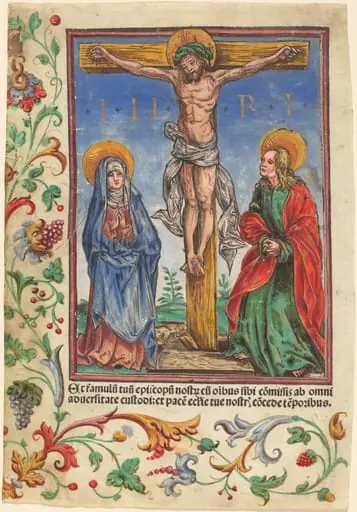
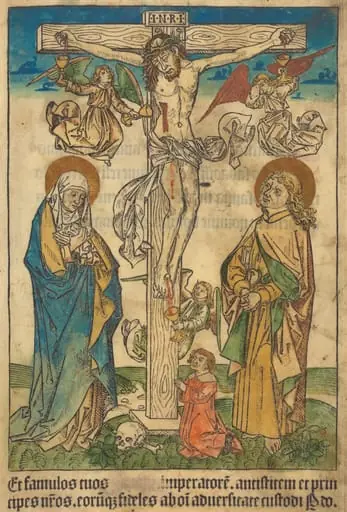
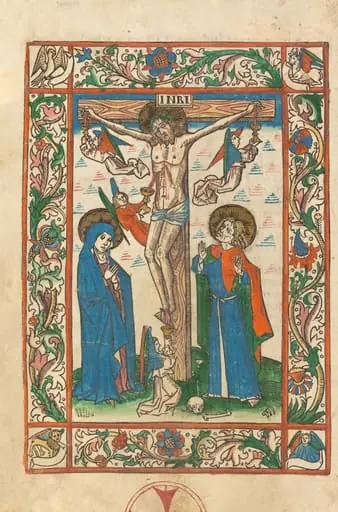
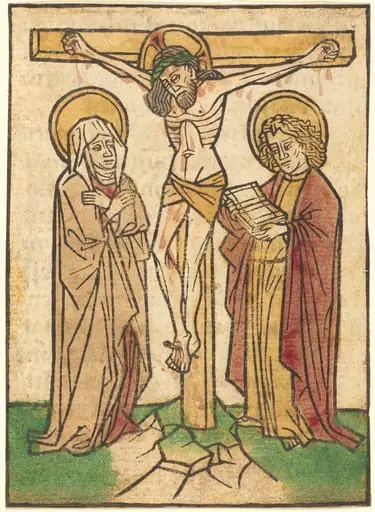
The Crucifixion is an ink print by the Renaissance artist French 15th Century. It dates from 1500 and is held in the collection of the National Gallery of Art.
About this work
Overview
This hand‑colored woodcut portrays the crucifixion of Jesus, rendered on laid paper. The central figure of Christ hangs on the cross, flanked below by two robed women and a man in a shorter tunic. A decorative border frames the composition, while a soft pink background and accents of brown and yellow provide visual contrast.
Subject & Meaning
The image focuses on the biblical moment of the crucifixion, emphasizing the presence of mourners alongside the crucified Christ. The inclusion of the two women, likely representing the Virgin Mary and Mary Magdalene, and the solitary male figure underscores themes of grief, devotion, and the human response to the Passion narrative.
Technique & Style
Executed as a woodcut, the work relies on carved wooden blocks to produce line and tonal variation, later enhanced by hand‑applied pigments in pink, brown, and yellow. The use of laid paper contributes a subtle texture, while the decorative border reflects a Renaissance‑inspired attention to ornamental framing.
Context
Produced within the broader Renaissance period, the piece reflects the era’s renewed interest in classical composition and the integration of color into printmaking. Hand‑coloring woodcuts was a common method to enrich otherwise monochrome images, allowing for greater emotional resonance and visual appeal in devotional works.
Artist & collection

Artist
This artist hid their best work inside old travel trunks. They glued vivid woodcuts into the lids of wooden boxes meant to be carried on horseback, like secret postcards from God. If you’ve ever pried open a cracked lid…